Category Archives: Countryside walks

Orange tip

I am of course referring to the butterfly, not an unsightly medical condition. I’ve spent plenty of time chasing them along hedgerows waiting for one to settle on a flower, but in vain, and you may recall that in a previous post I said that the orange tip was extremely difficult to photograph because they rarely settled.

That was until last weekend when, the weather was sunny, warm and calm so I went for a walk on Guns Lane to the north of Histon. I was rewarded fairly soon into my walk by a male orange tip settling on a plant on the edge of the pathway and allowing me to encroach within just a few inches:


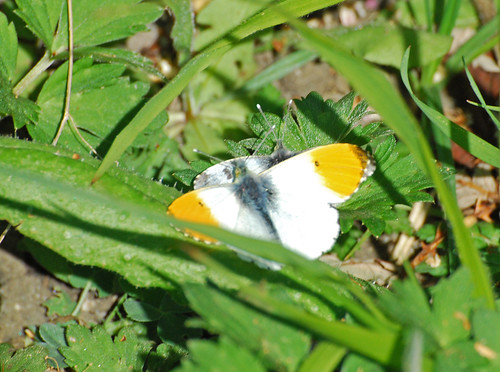
Male orange tip. I think his underwings are exquisite, and it’s perfect camouflage when he’s perched on a cow parsley flower head.

This fellow was a good omen. Several hundred metres further along the path where the dense hedgerow thinned out into more open territory lined with cow parsley there were many male and female orange tips and they were all intent on mating on this particular morning.


Another male orange tip, this time with his wings open. And the colours on top are gorgeous too.

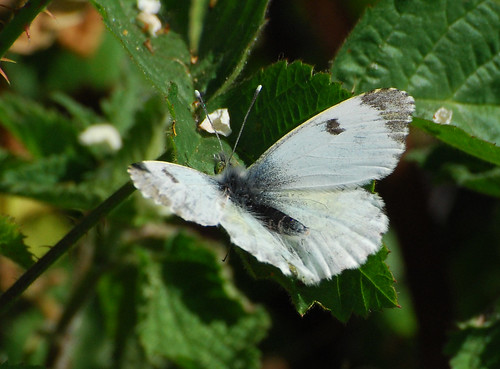
The female of the species doesn’t have the orange tips but is still distinctive from the other white butterflies:

Female orange tip. She is aware of the presence of males and is pointing her tail in the air in preparation for mating…

…and a few seconds later a male flew within a few centimetres and her reproductive organs are clearly visible opening up here in response to his presence.

The female above didn’t mate in this instance, but:

This pair were mating on the ground close by

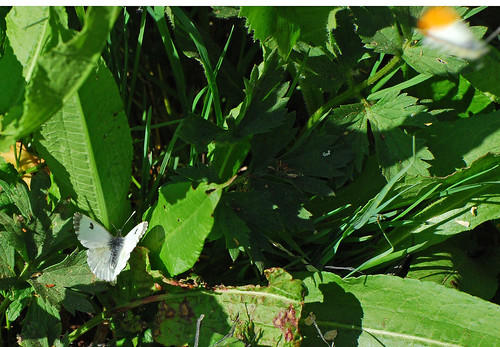
And another female sits on a leaf as the male beats a post-coital retreat top right

I promised some pictures a few weeks ago of orange tips in the post ‘Local Lepidoptera’ so I was very pleased to capture this series of the mating behaviour so soon after.

Nocturnal newts

I was in the pub last Friday with a good friend of mine enjoying a few pints but despite what you might be thinking this post is about amphibians. Mostly. We were talking about butterflies and other wildlife when he mentioned that he knows of a pond which is good for newts. So on our way back from the pub at around midnight we picked up torches and my camera and made for the pond.

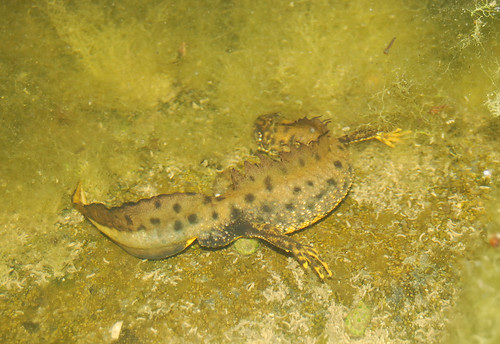
We weren’t disappointed. As we shone the torch in the water we could fairly soon see two of the three species of British newt: the great crested, Triturus cristatus and the smooth or common Lissotriton vulgaris – which looks a bit like a small great crested. The third species is the palmate newt, Lissotriton helveticus, which in the breeding season is fairly distinct from the other two species but is apparently uncommon in the east of England.


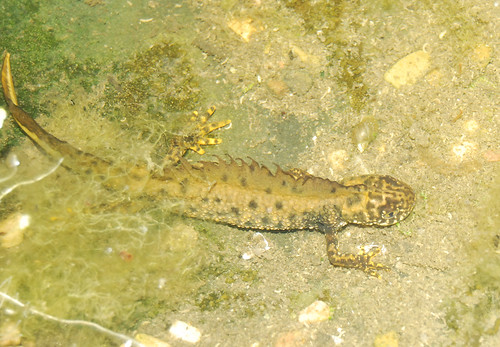
This great crested newt headed for the cover of some pondweed in response to our torchlight


And shortly after made for deeper cover with a flick of his tail. The ‘great crest’ can clearly be seen here

Great crested newts spend most of their time on dry land where they rest up under rocks or logs during the day and emerge at night when they feed on land or in water for worms, tadpoles, snails and insects. They return to the water to breed where the female will lay several hundred eggs over the course of 3-4 months. The juveniles and non-breeding adults live a predominantly terrestial existence where they hide up during the day in undergrowth or other cover and emerge to feed at night. They reach breeding age at 2-3 years old when they begin the cycle of aquatic and terrestrial life.

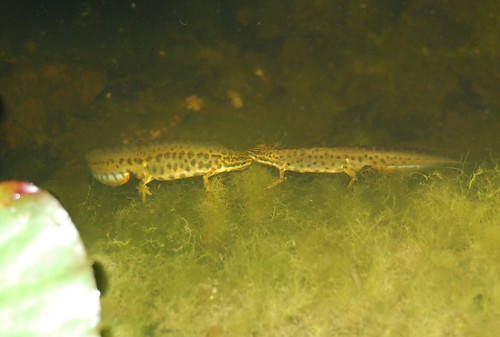
The smooth newts were not dissimilar in appearance to the great crested newts but are only up to 10cm long – considerably more diminutive than their great crested cousins. Both male and female great crested and smooth newts become rather more distinctive during the breeding season when the colours, spot patterns and crests are at their most flamboyant.


A pair of male smooth newts

I originally thought these were a pair in the throes of courtship, but I’ve since been informed by a reader, see Duncan’s comment below, that they are two males.

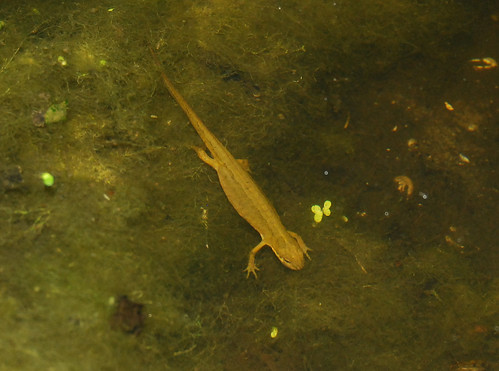
The palmate newt is approximately the same size as the smooth newt but the colouration of the palmate is rather more subdued. All three species of newt in the UK live a terrestrial lifestyle outside the breeding season, but at this time of year they all head to the water to breed.


Female palmate newt – the male has a smooth crest along his tail with a distinctive filament on the end. He also has webbed feet which this one doesn’t.

All newt species are protected in Europe, including the UK, with varying levels of protection. The great crested newt is considered to be the most in danger and therefore has the highest level of protection such that disturbing them or habitat where they are known to be, killing, possessing and selling live or even dead specimens, is illegal.

I’d never seen a newt of any species until this so it was great to see them and be able to get a few photographs too, after spending the evening prior in the pub in pursuit of the obvious topical simile!

April birdwatch

The activities of the birds in my garden have changed significantly in the last 2-3 weeks. Until then I was seeing multiple blackbird, robin, starling, goldfinch, chaffinch, dunnock, blue tit, great tit, collared dove and house sparrow with less frequent visits by long tailed tit. Since then a pair of wood pigeon have virtually taken up residence in my back garden and hoover up all the bird food before the smaller species get a look in. There is still the occasional dunnock and blackbird on the ground and much less frequent visits by blue tit, robin, starling and chaffinch but the goldfinch have all but vacated. This is interesting because when I’m outside I regularly see and hear groups of goldfinch in the trees around the garden but something seems to be keeping them away from my feeder.

My friend Chris told me he had a songthrush rearing chicks in a nest in a tree in his garden and she fledged four youngsters last week, which is very early in the year, so hopefully she’ll fit in another brood this year. But his garden has been subject to the attentions of a sparrowhawk in recent months so he was worried it would catch the fledglings, but clever use of carefully placed hanging bamboo canes has successfully deterred the hawk and all four fledglings seem to have successfully flown the coop. Songthrush 4, sparrowhawk nil.

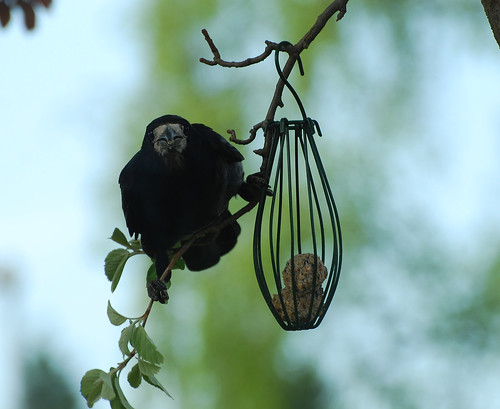
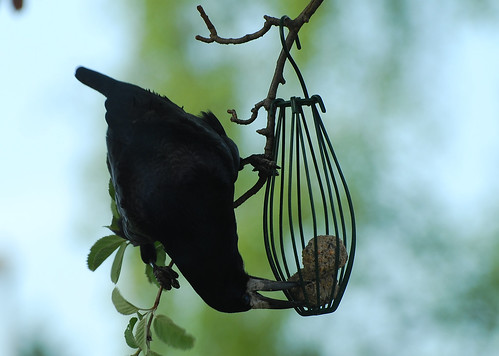
Continuing with garden birds, last week it occurred to me that the fat balls hanging in my front garden were requiring replenishment rather more frequently than usual so I guessed the nesting birds were feeding more often. The reason turned out to be rather more amusing:


One of the local rooks has worked out that these are edible…
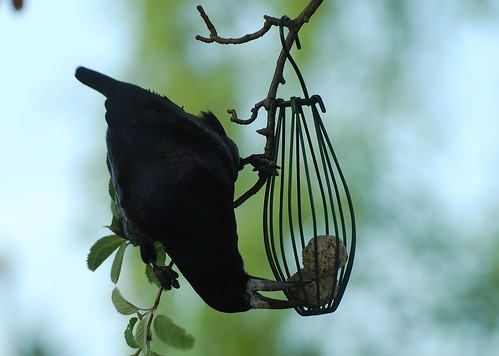
…and that it can reach them. And it takes alot of fat ball to fill a hungry rook!

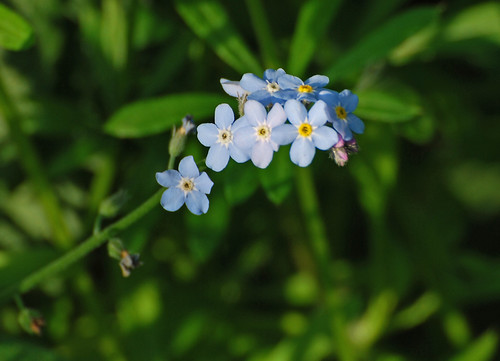
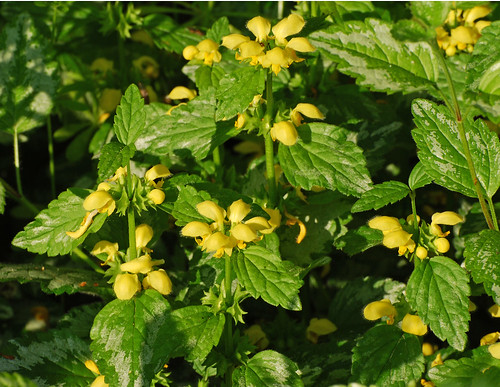
Slightly further afield in the hedgrows and scrub bordering the farmland around Histon it’s a very good time to survey the local wildlife. As I mentioned in a previous post many species of wild flower now including forget-me-not, yellow archangel…


Forget-me-not

Yellow archangel – Lamiastrum galeobdolon, this variegated version is an invading subspecies ‘argentatum’

…herb robert, cow parsley and periwinkle are all in bloom and lining the paths through the countryside filling them with a palette of colour.

And in the fields, trees and bushes there is an abundance of birdlife:


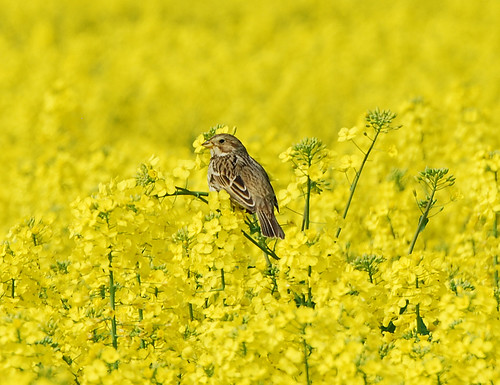
Corn bunting perched in the midst of a field of oil seed rape

The countryside is ablaze with the yellow of rape flowers right now and just occasionally a photographic opportunity such as this one arises. I’m not particularly keen on the vast swathes of rape but it created a lovely backdrop for this corn bunting which are becoming increasingly uncommon.

It’s not unusual to see and hear bullfinch in one patch of scrub near the church in Histon, which is a regular destination for my birdwatching outings. That makes me very happy because I used to see them all the time when I was a kid in the 1970’s but since the 80’s they seem to have been persecuted to near extinction in alot of the UK because of their fondness for the green shoots of commercial fruit trees. They are still fairly elusive but I managed to get this photograph of a male (just!):


Male bullfinch – the female has similar markings but they are not pink she is more pale grey/brown

And in the same field as the bullfinch linnet are in residence, as are willow warbler, chiffchaff and blackcap which have now returned from over wintering in Africa:


Blackcap male

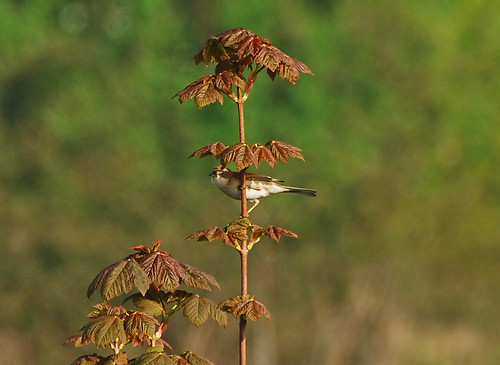
Chiffchaff

…as are whitethroat:


A female whitehroat, one of a pair patrolling a patch of brambles in the middle of the field

This field is an amazing place, I reckon it’s approximately 10-12 acres and it comprises several habitats including open-ish grass, it’s sorrounded by some old established trees: oak, ash and horse chestnut with hedgerow joining up the old trees consisting mainly of hawthorn and in the field itself there are alot of ash and other saplings and some large patches of bramble. Consequently it provides good supplies of food and cover for nesting for a number of different species. Green woodpeckers can be constantly heard yaffling to each other:

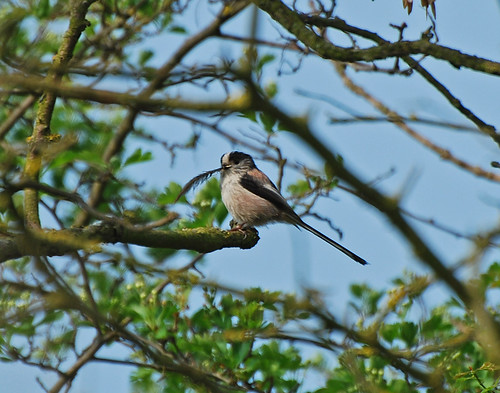
…and birds of prey including kestrel, sparrowhawk and buzzard are regularly in the skies above. The green woodpecker are there all year round and are usually hidden in the grass so I’ll flush one off the ground only for it to disappear into a tree too distant to allow a photograph. So this is about the best image I have of one. Most of the common or garden birds are regulars here too, house sparrow, dunnock, blue tit, great tit, long tailed tit:

…and chaffinch

…blackbird, songthrush, rook, crow and magpie are all present every day. So a small area of mixed scrub an the edge of the village supports a wonderful number of our birds.

There’s lots to see by simply look up in the village too. On the way back from the playground in Impington with my kids today we cycled along a road under a tree as a jay emerged from a silver birch on the other side of the road and landed in the tree a few metres over our heads. We all stopped to look at it and marvel at it’s amazing colours, and it looked at us for a minute or two before flapping off higher up the tree.

Wandering warblers

In the last two to three weeks I’ve seen several of our migrant bird species which have been returning from Africa and Eastern Europe for the breeding season in the UK. And in the sunny weather we’re experiencing this month lots of bird species, migrant and resident, can be seen during an early morning walk.

Last Sunday the weather was glorious, there was very little wind so there was no traffic noise so the only sound in the air was the buzzing of insects and the singing of birds. And there were plenty.

I set off with my friend from work, Dave, who is very knowledgeable about wildlife and a very good photographer too (check out his website here for some stunning images). Dave had come over so I could show him the local Histon wildlife and it didn’t disappoint. Within a couple of hundred metres of leaving my house we were watching a group of five blackcap chasing each other through the trees.


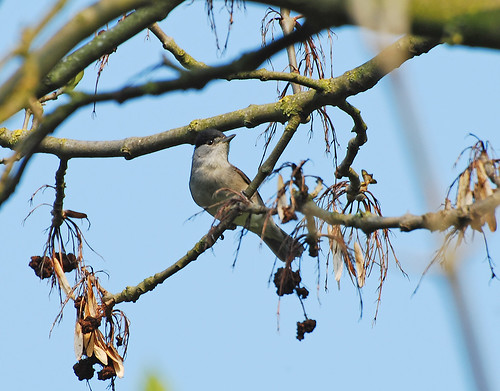
Male blackcap perched in an ash tree

Male blackcap are very aptly named, they have a very prominent black cap which stops just above the eye, the female and juveniles less so, theirs are a lovely rufous brown colour and also very distinctive. The blackcap is a short distance migrant in western and southern Europe and I’ve heard that there is now a population in eastern Europe which migrates to Western Europe and the UK instead of heading south. Maybe that’s down to global warming causing increased spring temperatures here.

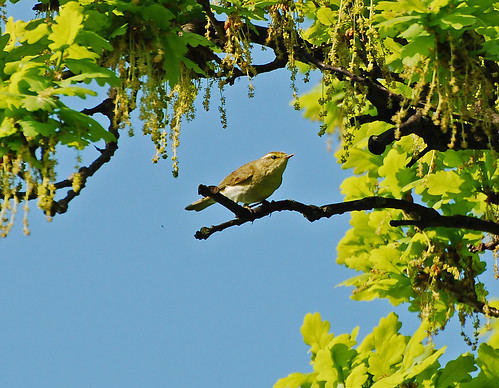
Other migrants which we saw in good numbers, and which I’ve seen around north Cambridge for the last three weeks or so, are chiffchaff, willow warbler and whitethroat. The chiffchaff heads south to the Mediterranean for winter and some individuals carry on to sub-Saharan Africa.

The willow warbler heads further south to tropical sub-Saharan Africa for the winter:


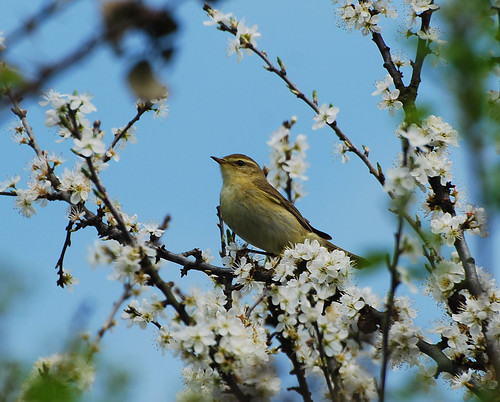
Willow warbler sitting in the top of a hawthorn tree

Chiffchaff and willow warbler are very difficult to tell apart visually, but they can easily be distinguished by their song. The chiffchaff is named after it’s call which is a single note sung with alternating pitch, the willow warblers song is more musical and easily distinguished from the chiffchaff.

Whitethroat of which there are two species – common and lesser – over-winter in sub-Saharan and northeast Africa respectively.

Common whitethroat male singing from his perch on a bramble

It’s good to see the migrants returning from Africa, I don’t know what percentage of individuals that start what must be an extremely hazardous journey make it back to the UK, but the willow warbler in particular is a very common bird so good numbers must make it.

The other migrant which I’ve seen in the last week, which is the real harbinger of summer, is the swallow. I only saw a single one first time on the 16th April, which was busy hoovering up flies over a field of oil seed rape, but yesterday I counted 7 sightings over the same field, so I think the numbers are increasing. And since then we’ve had real summer weather!

Guns Lane bird walk 2nd April 2011

I acquired a voice recorder last week. It’s tiny – not much bigger than a  cigarette lighter – and it means I can record what I see alot more accurately as I don’t need to rely on memory. Which is a good thing as my memory is not brilliant. The weather was glorious on Saturday and Sunday morning so the timing of my acquisition was pretty good because there was an awful lot to record when I was out and about.  The birds are very busy right now building nests and in the last couple of weeks blackbirds have been collecting strands of hay ejected from the rabbit hutch in my garden and I’ve seen various other species with beaks full of grass, twigs and moss.

Apart from enjoying the sunshine I saw two species of bird for the first time this year – blackcap and linnet. A pair of linnet appeared to be in residence in a bramble at the southeastern end of Rowleys Meadow, Histon. (On the map, Rowleys Meadow is the area of green scrub in the middle.)

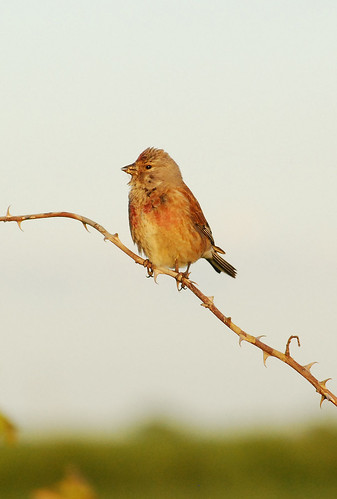
Linnet perched on top of a bramble

The blackcap were in the northwestern hedge row at the opposite end of the field to the linnet and perched, tantalisingly, directly over my head, so my photographs are all of the underside. I saw one pair together and two individuals on this walk which is almost as many as I’ve seen in Histon in total in the last three years.

Also in the same hedge along the northwest periphery were several yellowhammer and in the bright sunshine the colours were amazing:


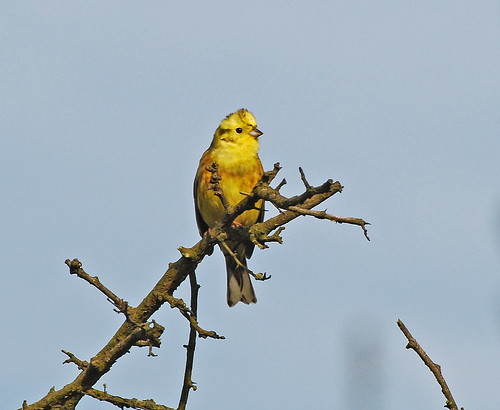
Yellowhammer male sitting atop a branch beautifully lit by the early morning sun

Yellowhammer are a species of bunting that are resident in the UK so can be seen all year round and breed here. They feed predominantly on seeds but also on insects which they harvest from the ground. I often see them perched on top of hedgerows and they fly to the ground when flushed where, despite their colour, are often next to impossible to see. The female has similar markings to the male but  is much less yellow.

Pair of yellowhammer, male  on the left and female to the right – I was very pleased to get this picture as they’re normally so difficult to see on the ground
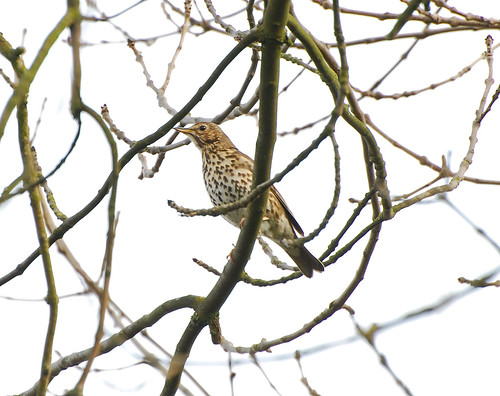
Yellowhammer are currently on the red list due to the decline in numbers over recent years, although there seem to be good numbers in my locality and I’ve even had one feeding in my garden!

Many species of birds were busy this weekend, including a buzzard, a pair of sparrowhawk wheeling around way up high, and a pair of kestrel. Closer to the ground, blacdbird, chaffinch, greenfinch, long tailed tit and songthrush were all very much in evidence.


The unmistakably speckled underside of a songthrush

Butterflies are also starting to emerge in the warm weather and a couple of red admirals and two others which I couldn’t see close enough to identify were floating along the brambles.

A good photograaph of a blackcap eluded me this weekend as I only managed to shoot it from directly underneath so the cap wasn’t visible, but I shall have another look this weekend and hopefully post a ;picture next time.

Norsey Wood

Last weekend my wanderings took me to Norsey Wood on the  eastern edge of Billericay in Essex. The weather was sunny and warm so a stroll through this chunk of ancient woodland was compulsory. The wood is a lovely place and has a history dating back 4000 years. It is now a mixed coppice bluebell wood and in a month or so the floor will be completely blue. At the moment, the bluebell leaves are sprouting but no flowers are out but there are wood anemones (Anemone nemorosa):

Wood anemone flowers pointing at the sun

And lesser celandines (Ranunculus ficaria):

Wood anemones are interesting plants. They’re toxic and contain chemicals which have been used medicinally but which can cause some pretty unpleasant effects if ingested such as vomiting, diarrhoea and gastric bleeding. Best avoided. Despite that, a wood floor covered in them is a wonderful sight to behold. Lesser celandine are rather lovely too, with similarly interesting properties. According to its Wikipedia entry it has warty nodules which resemble haemarrhoids, so ancient law dictated it must therefore possess anti-haemorrhoidal properties. Bizarre logic, but you never know, maybe there was a grain of truth in it. It doesn’t mention how the active ingredient was applied though!

I saw a group of four jays squabbling in a tree but the woods were generally fairly quiet for birds on that day. The animal which was present in enormous abundance was the woodant, Formica rufa,


Wood ant worker – these are around 1cm long

The workers are all female and if attacked they have a ferocious bite and can spray formic acid from the rear of the abdomen. A loner wouldn’t trouble a human but disturbing a nest which may contain several hundred thousand would be ill advised.


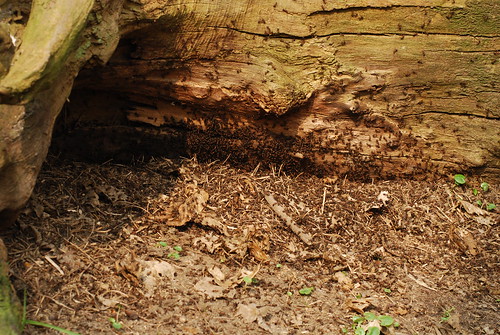
Thousands of woodants all busy around the entrance to the nest

They’re amazing creatures and build nests from plant material such as leaves and pine needles which can be a metre deep. As they act as an incubator and creche the temperature has to be very carefully controlled which is achieved by opening and closing vents to regulate airflow through the nest. So they’re fearsome warriors, highly competent parents and civil engineers too.

The organisation and division of labour amongst woodants is also remarkable. They have territories covering large areas and I’ve tracked them from a nest to a foraging site and the distance is many tens if not hundreds of meters which they negotiate in straight lines where possible and will clear away any debris which  blocks the way. Amazing creatures.

I’m hoping to make a trip to Norsey Wood in May when the bluebells are in bloom so I’ll hopefully post from there again later in the year.

Springtime song

The weather this  Saturday was glorious – no wind, blue sky and warm sunshine. Perfect for a stroll around the countryside. So I set off around 8am and apart from the warmth, the first thing I noticed was the air laden with the  fragrances of spring blossom.

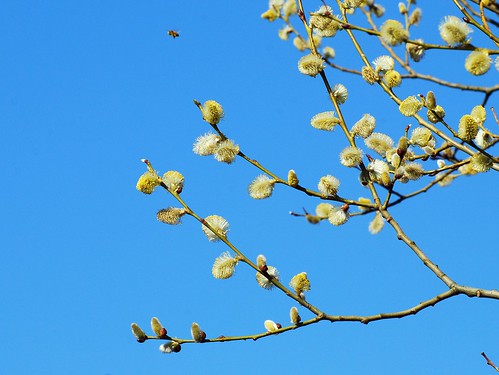
In the last week the spring weather has caused trees and flowers including the willow to blossom…


Pussy willow – the furry catkin of the willow tree against a gorgeous blue sky, and a lone honeybee

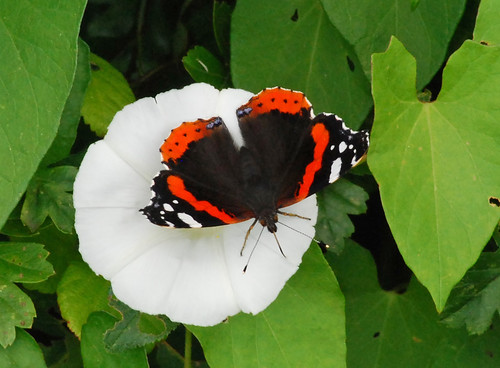
Butterflies are waking up after hibernation. A red admiral (Vanessa atalanta) flew through my garden last week and a friend told me he saw a brimstone in his garden and another wended its way gently past a window at work today.

Red admiral on a bindweed flower
Red admiral feeding on a convulvulus flower

Red admiral are resident and can be seen all year round when weather permits. Brimstone (Gonepteryx rhamni) are also resident and hibernate over the winter but they are now out and about aroused by the warm weather. Bumble bees have also become more abundant in the last few weeks and I now see them on most days.

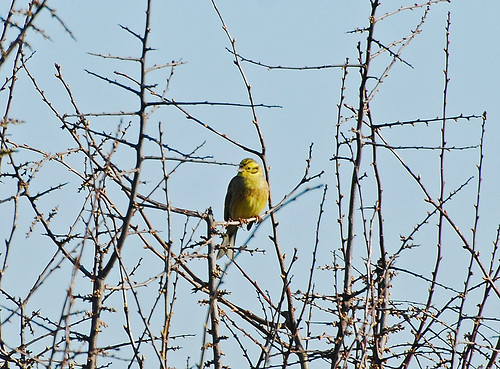
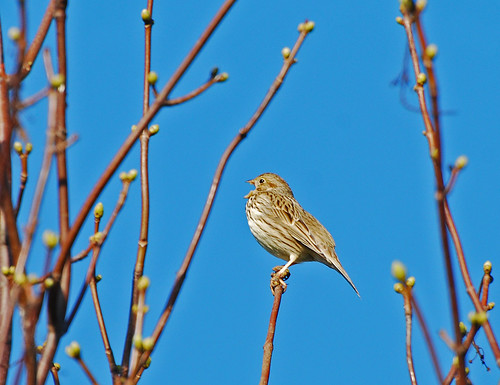
The birds are all singing and a walk through parks and fields is accompanied by the song of greenfinch, blue tit, great tit, dunnock and robin, most noticeably. And on my hike across the fields abundant yellowhammer, reed bunting and corn bunting, three Emberiza species, were all in full voice:


E.citrinella – one of many yellowhammer, this one is a male, patrolling the hedgerows

E.schoeniclus – reed bunting male

E.calandra – corn bunting making its very distinctive call

Yellowhammer, reed bunting and corn bunting perch in hedgerows and  make feeding forays to the ground in the neighbouring fields where they feast on seeds and during the breeding season and  summer will eat invertebrates. I pass one location where there has been a mixed group of 20-30 reed bunting and yellowhammer present regularly over the last month. Corn bunting have made a recent comeback to the fields around Histon, they disappear at harvest time, middle to end of August, and reappear in the Spring when they can be seen perched on top of brambles, bushes and short trees making their very characteristic song.

Skylark were also singing constantly. Farmland species such as these have seen their habitat severely depleted in recent times, consequently their numbers are reduced as a result.

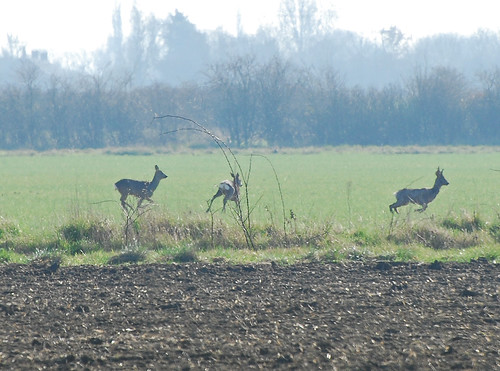
A red fox and a small group of roe deer put in appearances, the fox was heading a cross the fields to Landbeach heading away from a place I photographed cubs last year, so I hope they are breeding here again this year.


Roe deer – Capreolus capreolus – the leader on the right is sporting native antlers

A pair of crows chased off a buzzard which thermalled over the fields before disappearing into the haze towards Waterbeach and a flock of several hundred black headed gulls squawked noisily over the fields. I observed them for several minutes with binoculars and I think they were all black heads, but there could have been a few individuals of other species mixed in. A sparrowhawk flew at very high speed from the Linnet Hedge across South Bean Field before rising up and passing through a gap in the treeline, causing mayhem with the birdlife in the gardens beyond and a female kestrel was looking for rodents in the South Fallow Field. It was the first time I’d seen birds of prey here for several months so it was great to see three species on one walk.

Histon forays, weekend 5th – 6th March 2011

This weekend I’ve been out and about on my regular walks north of Histon. (Click here for a sketch map of the locality). Yesterday I was out around the fields to the north between Histon and Cottenham. It was a cold grey morning and it was noteworthy for several reasons.

The birdlife was plentiful. (Click here for my wildlife diary where I’ve listed all sightings). Just a few minutes after telling my friend, David, that I hadn’t seen a corn bunting for around 6 months but that they frequent that area in numbers during the summer and disappear very quickly after the harvest, we saw one sitting in a bramble:

It was the first one this year and the first of several we spotted yesterday. It was a good morning for buntings in general. Last time I was here, around three weeks ago a mixed flock of reed bunting and yellowhammer were  in the east end of the Owl Shed Hedge (see post from 29th Jan entitled “Buntings abound: 29th and 30th January 2011). They were there again on Saturday and reed bunting were present in most of the hedges and ditches we peered into. Skylark were present in large numbers too, singing up high and darting around low. A look  on the floor of the Old Water Pump, which has a platform for barn owls to roost and breed, revealed numerous owl pellets most of which were very old, but some of them looked fresher, possibly from within the last 6 months.

One of the ‘Pump House’ barn owls from three years ago

This is a very good thing as barn owls haven’t bred there since 2008 and I haven’t seen one in the vicinity since last year, and then only a couple of sightings all year.

Other appearances which livened up the walk were a muntjac deer, Muntiacus reevesi, introduced from China to the UK in the first half of the 20th century, which was rooting around at the back of the gardens of the houses on Cottenham Road, and a stock dove was sitting in the trees in the same area. I may have seen these before and mistaken them for wood pigeon, but David’s expert knowledge put me straight on the differences. They don’t have the white neck and wing bands of the wood pigeon and they have a dark eye which is diagnostic – that of the wood pigeon is lighter.

I set off in the other direction this morning to head out of Histon north west towards Oakington along Guns Lane and into Rowleys Meadow. I took a slow walk and was very adequately rewarded. Right at the start of the Lane where it joins Cottenham Road blue tit, great tit, greenfinch, chaffinch, starling and song thrush were present and finches were singing constantly,


Greenfinch male singing for a mate in the top of a tree on Guns Lane

…and a chaffinch male displaying his gorgeous black and white tail in a fan. I’ve posted a few photographs of chaffinch lately, even though they’re common I think they’re spectacular!

A couple of surprises today, firstly the number of bullfinch; I saw a single male in Rowleys Meadow which may have had a female with it but I couldn’t see it well enough to confirm, and another pair of males flew along Guns Lane hopping from hedge to hedge infront of me for 50-100m. And secondly, the number of dunnock. They were present in every bush and bramble in the Meadow and on the Lane singing constantly – if you haven’t heard dunnock song, have a listen here, it’s lovely.


Dunnock sitting on a bramble singing

Dunnock have a rather interesting approach to breeding. They don’t pair off as most birds do, a female will be mated by at least two males who will stimulate the females to eject a rivals sperm from the cloaca with their beak. DNA analysis has shown young in the same clutch can have more than one father. I like dunnock, they look boringly grey/brown when seen flitting around the undergrowth, but when they catch the light they are certainly not drab. And their song and their antics at breeding time are anything but boring!

Just as I was about to leave the countryside and head home I noticed a pair of starling sitting on top of a hedge checking out me and the dog. As I turned to point my camera at them they didn’t fly away but simply kept an eye on me so I could get this picture:

The glorious plumage of the starling!

Spring is well underway now and the activities of the wildlife are reflecting that. It’s a great time to be poking around in the woods and hedgerows.