Category Archives: Lepidoptera

Summer songbirds mainly, especially linnet

The summer solstice was a couple of weeks ago, the weather is warm and sunny and the evenings are light until after 10pm. For the last week I’ve been heading out across the fields in all hours of daylight and the wildlife has changed significantly. Until a few weeks ago there was alot of bird activity around the nests and I could watch whitethroat and blackcap in the same place for several weeks before that.


Common whitethroat about to head for the nest

The birds are still around but they have dispersed and a tad more legwork is required to see the same species I was seeing 2-3 weeks ago. But now, the first broods of the next generation have all fledged and while my garden has played host to families of starling, great tit, and goldfinch – the fledglings easily distinguished from the adults by their lack of a crimson face – further afield, the hedgerows are thronged with linnet, whitethroat, reed bunting, corn bunting and yellowhammer.


An adult goldfinch and two fledglings on the niger seed feeder in my garden. The speckled brown and lack of a red face makes the youngsters easy to identify.

Another finch of which there are many adults and fledglings in the countryside are linnet. Linnet are one of my favourite birds for several reasons: they are delightful to look at with their cerise breast patches, they have a lovely song as they fly overhead and as long as I don’t do anything daft they will often sit tight and let me get really close to photograph them.
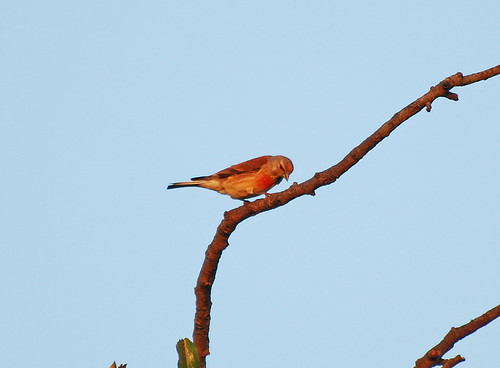

A cock linnet, underlit by the late evening sun, showing several diagnostic freatures including the cerise breast, grey head and pale grey grey cheekspot and the crimson spot on the forehead

Rather interestingly the taxonomic nomenclature is Carduelis cannabina, which approximately translates from the Latin as the ‘cannabis finch’! The linnets diet consists of small seeds so I imagine the name derives from the days when hemp was grown to make rope and they were seen in numbers feeding on the seeds.

There is a field of oil seed rape on the edge of Histon which I had always imagined to be devoid of wildlife but in the last few weeks families of linnet, reed bunting, greenfinch and whitethroat are regularly perched on top of the rape plants.


Greenfinch male in the middle of the rape field

The rape seed pods are full of small black seeds and if you squeeze one seed between your fingers there’s enough oil in it to make the ends of your thumb and forefinger really greasy, so it’s easy to see why rape is a lucrative crop and why it is a good energy source for songbirds.


Female linnet perched on top of a hawthorn tree at the edge of the rape field, she doesn’t have the cerise breast patches of the male, but lovely colours none the less

Linnet are migrant and resident breeders and passage and winter visitors. In the winter they can be seen in flocks of several hundred over farmland and often mingle with other finches. There conservation status is red due to population decline over the last forty years even though the European population numbers between 10 and 30 million pairs! Despite the overall numbers, along with a multitude of other bird species they are the victims of habitat destruction and the systemic use of herbicides which kill off their food supplies.


Cock linnet perched on top of an apple tree also on the edge of the rape field…

… and another one sitting on power lines. Look at the colour of that breast – they’re beautiful birds!

So if you can’t think of anything else to do this weekend and you feel like some gentle excercise and peace and quiet take a walk in the countryside and keep your eyes open for all the songbirds.

Many species of butterfly including large and small white, red admiral, small tortoiseshell, ringlet and small skippers were flapping lazily around the hedges on Guns Lane this morning, basking in the warm sunshine and I saw the first gatekeepers of the year today too:

A gatekeeper probing for nectar in ragwort flowers

All in all, it’s well worth a trip to the countryside armed with a pair of binoculars!

Insectivora

The hedgerows and the edges of country paths are home to an immense variety of small creatures, especially those which aren’t in the firing line for agricultural chemical spraying, and it can be easy to overlook them.

Last weekend I spent a morning chasing insects around and I followed a red admiral butterfly into a thicket of nettles where it sat tight with it’s wings closed. Over the next twenty minutes it very briefly opened its wings, but only partially, but enough to enable me to see that its colours were pristine:

And then it opened them fully, and the colours really were sumptuous:


…well worth half an hour stood in a nettle bed!

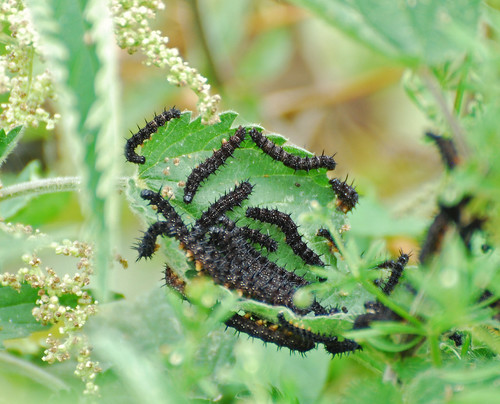
But I thought the half hour definitely wasn’t wasted when I looked down at my feet and saw this cluster of peacock caterpillars eating nettle leaves:

I moved to one side to get some pictures of the caterpillars, and fortunately after I’d spent some time doing that the red admiral was still in situ.

Peacocks are hardy butterflies which can be found over most of the UK including the Shetland Isles and can be found hibernating in garden sheds. They emerge from hibernation at any time of year if the weather is warm enough, they mate in March and lay eggs then the caterpillars can be seen from the middle of May into July.

Not only are they hardy, they are quit beautiful too. A close look at their wings reveals a fabulous array of brightly coloured detail:

Male peacocks hold fort in their territory and wait for passing females to pass by when they fly up to greet them and attempt to mate. Male and female peacocks are very difficult to tell apart and watching the males performing this courtship behaviour is one way to differentiate the genders.

And close to the same spot I was looking at the flowers and I spotted this hoverfly cleaning his eyes:

…and this beetle wandering over a convulvulus flower, I don’t know what it is but it has gorgeous colours:

The brambles in the hedgerows were also full of bees in the sunshine, many species of honey bees and bumble bees were harvesting nectar from the flowers:


White tailed bumble bee flying from flower to flower feeding on bramble nectar

And than this marvellous creature was hunting in my kitchen last week:


Violet ground beetle, isn’t he magnificent!

Violet ground beetles are carnivorous, as are their larvae. They hunt at night and hide up during the day under log piles or other cool dark places. They eat a variety of insects, including a number of species that gardeners would be glad to be rid of. They’re big beetles, around 3cm long, and they have irridescent blue or violet edges to the thorax and wing cases. So don’t use chemicals in your garden – let these guys get rid of your pests!

And now I’m looking forward to some warm sunny July days when the surrounding fields are full of butterflies. I’ll share some more insect photographs with you then.

Orange tip

I am of course referring to the butterfly, not an unsightly medical condition. I’ve spent plenty of time chasing them along hedgerows waiting for one to settle on a flower, but in vain, and you may recall that in a previous post I said that the orange tip was extremely difficult to photograph because they rarely settled.

That was until last weekend when, the weather was sunny, warm and calm so I went for a walk on Guns Lane to the north of Histon. I was rewarded fairly soon into my walk by a male orange tip settling on a plant on the edge of the pathway and allowing me to encroach within just a few inches:


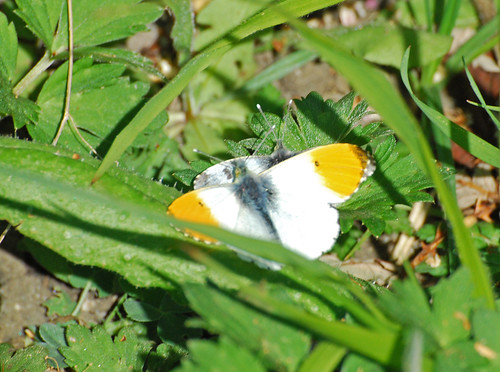
Male orange tip. I think his underwings are exquisite, and it’s perfect camouflage when he’s perched on a cow parsley flower head.

This fellow was a good omen. Several hundred metres further along the path where the dense hedgerow thinned out into more open territory lined with cow parsley there were many male and female orange tips and they were all intent on mating on this particular morning.


Another male orange tip, this time with his wings open. And the colours on top are gorgeous too.

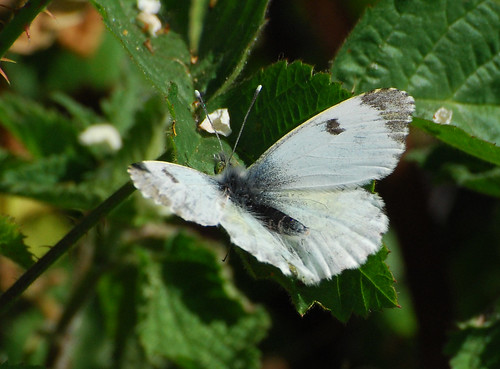
The female of the species doesn’t have the orange tips but is still distinctive from the other white butterflies:

Female orange tip. She is aware of the presence of males and is pointing her tail in the air in preparation for mating…

…and a few seconds later a male flew within a few centimetres and her reproductive organs are clearly visible opening up here in response to his presence.

The female above didn’t mate in this instance, but:

This pair were mating on the ground close by

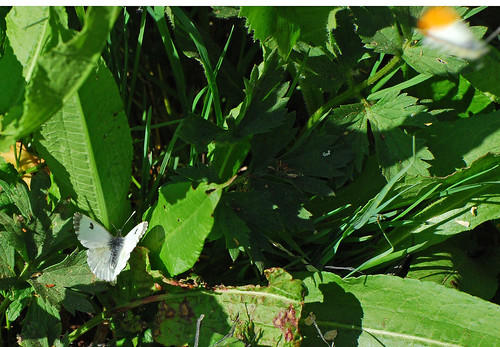
And another female sits on a leaf as the male beats a post-coital retreat top right

I promised some pictures a few weeks ago of orange tips in the post ‘Local Lepidoptera’ so I was very pleased to capture this series of the mating behaviour so soon after.