Category Archives: UK wildlife

The disappearing dove

Every year millions of migrating songbirds heading from Africa to Europe get blown out of the sky by weird people with shotguns. That combined with the policy in the UK of destroying habitat at an alarming rate is making life impossibly possibly difficult for some of our iconic bird species, one of which is the turtle dove (Streptopelia turtur, Dansk: turteldue).

But last summer I was exploring one of my regular haunts, Milton Country Park, on the northern edge of Cambridge, on a warm Saturday morning and the air was buzzing with insects including this handome hoverfly known as the ‘footballer‘ due to its rather fetching black and yellow striped thorax. This species is common in England reaching a peak in July which is when I snapped this individual.

The footballer hoverfly – Helophilus pendulus

And hoverflies aren’t the only abundant insects to be found in July. Milton Country Park is also home to mumerous species of Odonata, the dragonflies (Anisoptera) and damselflies (Zygoptera).

Common blue damselfly – Enallagma cyathigerum – perched on a seedhead

The Park has 4 big lakes:

MCP map

…and a few other streams and pools, and despite the abundant human presence it remains a haven for some properly exotic wildlife including a bittern that appeared for a week or so last year, and the occasional osprey stopping off on migration from sub-Saharan Africa to breeding sites further north in the UK.

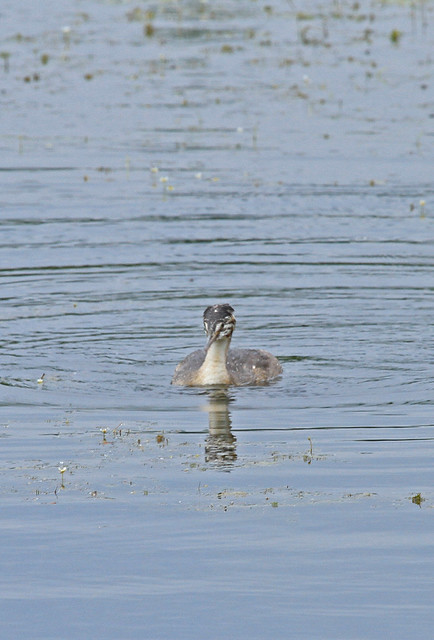
The great crested grebe (Podiceps cristatus, Dansk: toppet lappedykker) isn’t an exotic migrant but it’s a beautiful bird and can always be found here:

The grebe was almost hunted to extinction because its dense feathers were coveted as a substitute for fur. But it has recovered and can now be found on lakes over most of the UK. The one above is an adult and the one below still has the striped head markings of a juvenile.


But getting back to the point, the undoubted star of the show on this trip was the turtle dove:

The turtle dove is in very serious decline, I believe we have lost around 97% of our breeding population and it is anticipated it will become extinct in the UK by 2020 as it’s also under increasing pressure in Europe. The reason for its catastrophic decline is that it feeds on seeds from cereals and other plants and both of these are a scarce commodity in the fields of the UK at the time the doves need them.

So the birds arrive here in the UK exhausted after a heroic migration across the Sahara and the Mediterranean. And those that avoid the gun-toting imbeciles in southern Europe arrive here to find there’s not enough food. So as it takes them a long time to rest and feed and get back into breeding condition, they only have time for a maximum of one brood per season before they have to head all the way back. And this enforced curtailment of there breeding window means they just can’t sustain their numbers.

They arrive back in the UK from around mid April so I’ll try to capture some more photographs before they finally stop coming here all together.

The owl and the woodpecker

As I started to write this post there was some interesting robin behaviour going on in the garden. Robins (Erithacus rubecula, Dansk: rødhals) are fiercely territorial and will kill each other to defend their patch and I often see them chasing off not just other robins but any bird smaller than a blackbird (Turdus merula, Dansk: solsort)! But just now there was a pair being relatively nice to each other and even sharing the same feeder. So I’m wondering if these two were a pair beginning to contemplate the imminent breeding season, as early as January the 12th. The weather has been much warmer than the previous three winters so maybe they are already thinking of making up for lost time.

But I began with a digression, so now to get back on message. I’ve been dithering about writing this post for a few days but I was finally inspired to start when I saw some recent posts on the blog of a good blogging friend, Gary, from ‘Krikitarts‘ (if you haven’t seen Krikarts yet make sure you check it out, it’s very, very, good!). Gary’s posts included pictures of skies and rainbows which were digitally reproduced form the original slides. And seeing these spectacular images spurred me on to get this post written to show you some evening skies from Cambridgshire in summertime.

But before I get on to the sky, on this particular evening from July 2013, green woodpeckers, which breed successfully close by, had their most recent brood of fledglings and were out and about learning how to dig up termites:

A pair of green woodpeckers flying away from me, they’re skittish creatures (Picus viridis, Dansk: grønspætte )

Whilst many bird species have been on the decline, the green woodpecker seems to be thriving, at least in my part of the world. I see them around the village, in the trees and on the ground around work, and on the way to work too, and I’ve heard they are generally doing OK. They’re handsone, colourful, creatures and it’s good to see them coping well with all the insults humans throw at them.

A greenie keeping an eye on me and the dog

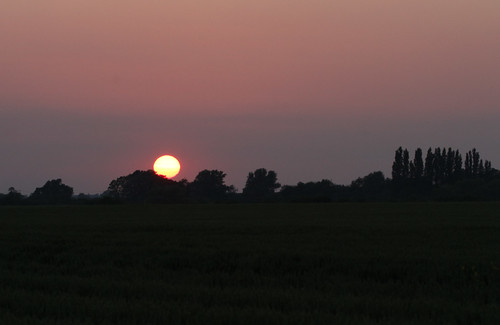
This particular evening was a very warm and sunny one and as I meandered across the fields the sun got lower and lower, and bigger and bigger, in the sky:


And as the sun got lower and plunged us into the crepuscular phase twixt day and night, a barn owl (Tyto alba, Dansk: slørugle) was quartering the fields looking for rodents. Barn owls were hit really hard by the previous three bitterly cold winters and then by the brutal wet and cold weather last spring. But we had at least two breeding pairs in Histon and this individual was half of one of those pairs. Bearing in mind the precipitous decline in barn owl numbers in the UK and beyond, I think that makes Histon an important place for them. I don’t know how many chicks were fledged but I’m hoping some survive the cold weather holds off this year and we get more breeding pairs in 2014.

Barn owls are great to watch. I know the routes they take in the fields local to here and when I see them coming I can crouch down and often, but not always, they fly slowly right over my head, around 10-15 feet up, and sometimes we eyeball each other and I wonder what they’re thnking. Of which more in another post in the near future.

And as I meandered home from watching the owl, the sun disappeared below the horizon leaving these magnificent colours hanging in the sky which slowly turned into dark blue-grey and then the black of night

Not a bad way to spend an evening!

Down on the farm in July

Summer was late arriving in  2013. The weather was cold and wintry up until June and that had a profound effect on the wildlife. Breeding seasons were knocked out of kilter by it, and the numbers of many species have suffered as a result. But it seemed that once summer did arrive the wildlife got very busy very quickly to make up for lost time.

The skyline on my regular dog walking route is dominated by a magnificent poplar tree which makes a wonderful sound when the wind blows. It’s right on the pathway where many walkers pass every day and there is a bench underneath it which folk sit on occasionally. But despite all the human activity in such close proximity a pair of kestrels (Falco tinnunculus, Dansk: tårnfalk) were brave enough to build a nest in it about 20-25 feet up.

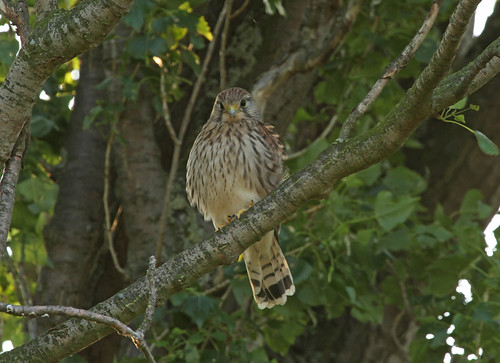
Kestrel fledgling taking it easy and apparently unfazed by me pointing a telephoto lens at it

I posted about the adults taking up residence in the poplar in August last year. Their decision to nest in this exposed location paid off in spades as the kestrel pair fledged three youngsters who could be seen in around the poplar into the later months of 2013.

And a pair of the fledglings sheltering in the poplar

I made a point of not lingering too long around the poplar to avoid disturbing the birds, but because of the constant human presence there I think they were relaxed about me taking pictures as long as I didn’t try to stay too close for too long.

All the pictures in this post were taken on one summers evening stroll in July, and as well as the kestrels there was lots of other wildlife.

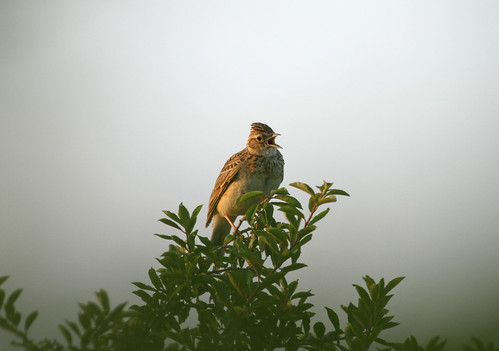
Also breeding in the field adjacent to the poplar tree were numerous skylark (Alauda arvensis, Dansk: sanglærke). I’ve been trying unsuccessfully to get photographs of skylarks for a long time but on this particular evening this one perched on top of a low bush and sang for England. I called the dog to heel and using an adjacent bramble as a shield I crawled as close as I could, which was less than 10m in the end, and poking my lens though the bramble I finally got some pictures:

A singing skylark lit by the low, late evening sun

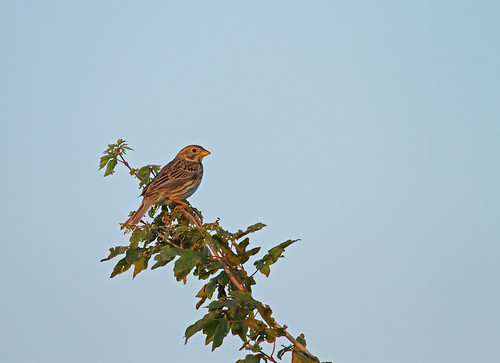
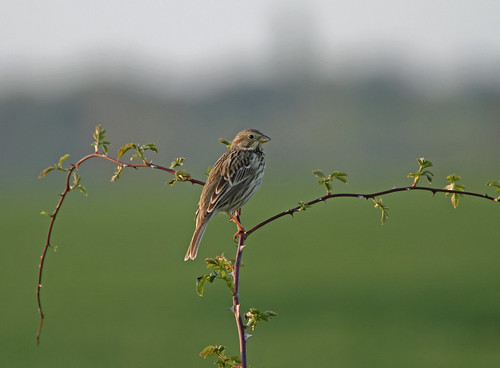
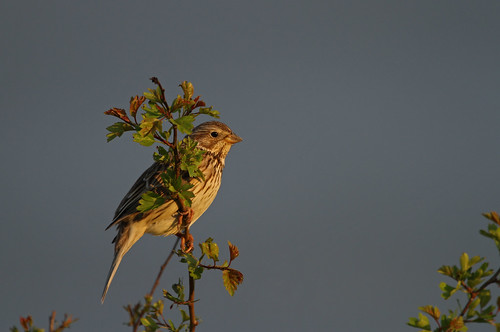
The resident corn buntings (Emberiza calandra, Dansk: bomlærke ) usually vacate the fields around Histon with the harvest at the beginning of August, but in 2013 they stayed much later. I don’t know if that was coincidence, because there was still cover in one of the fields, or if it was a result of the enforced delay in the breeding cycle due to the cold spring weather. But they were here in much greater numbers and much later in the year than normal. According to the British Trust for Ornithology the corn bunting is so sedentary that individulas only 30km apart sing in different dialects, but I’d love to know how that was discovered.

Corn bunting on a regular perch in the late evening sunshine

Corn bunting are red listed in the UK due to rapid decline in numbers as a result of habitat destruction for agriculture. Despite that, and decreasing numbers in Central Europe for the same reason, it’s not considered under threat as a species in mainland Europe… yet.

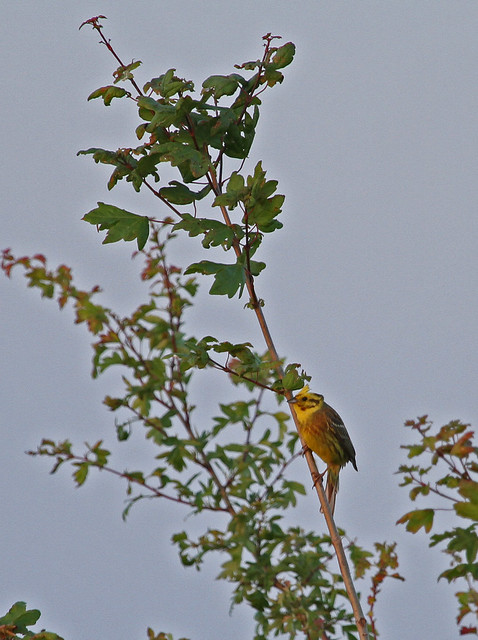
Another songbird which is also red listed in the UK, also as result of rapidly declining numbers, is the yellowhammer (emberiza citrinella, Dansk: gulspurv).

Male yellowhammer with his striking yellow head plumage

The yellowhammer has suffered catastrophic decline in numbers over the last few decades and over the last 2-3 years I’ve noticed the numbers in my locality seem to be on the wane too. I think it hasn’t been helped here by the farmer who recently took a flail to all the hedgerows and a lot of the drainage ditches and stripped most of the winter cover and food away. I just don’t see the sense it that – it wasn’t impinging on the crops or impeding access to farm machinery. Seems completely pointless to me.

Yellowhammer and corn bunting are both species of bunting and prefer arable farmland, but due to the intensive nature of arable agriculture and the resulting lack of seed, either natural or crop, both species are under dire threat in the UK. I’ve seen evidence to show that rates of decline can be slowed by changes in farmland management such as set aside or organic cropping, but I think attempts to conserve need to be applied in more holistic fashion to ensure survival of the wildlife.

One species which appeared to be abundant last summer was the hare. They’ve been ever present on any summers evening stroll across the fields in 2013. And I’m still seeing them through the winter too.

And as I headed home there was a spectacular sunset:

…one of many through the summer of last year.

When the sun stood still

The plane through the centre of the earth and the sun is called the ‘ecliptic‘ and it describes the apparent path of the sun around the earth. And the plane through the centre of the earth – on the earth’s equator – is called the ‘celestial equator‘. There is an angle between these two planes of 23.4o and this angle is known as the ‘obliquity of the ecliptic‘.

It is the obliquity of the ecliptic which gives rise to our seasons, because as the earth moves around the sun a point on the surface will be closer to the sun in summer and further away in winter. The mid winter and mid summer solstices are the midpoints of those two seasons and at the  midsummer solstice the perceived height of the sun in the sky is at its maximum ‘declination‘ – the angle between the ecliptic and the orbital plane. So whereas the solstices occur when the angle is at its maximum  23.4o, the vernal and autumnal equinoxes occur when the angle between the two planes is at its minimum, i.e. 0o, or when the celestial equator intersects with the ecliptic.

The summer solstice occurs in the northern hemisphere on June 21st and on this years solstice I found myself walking in the countryside late into the evening. It was a proper midusmmer day; sunny, warm and sultry, and the fields were full of wild flowers.

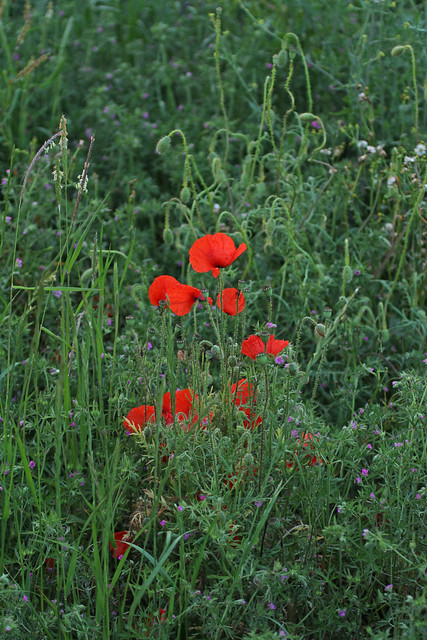
Field poppy – papaver rhoeas -my all time favourite wild flower. There’s nothing quite so spectacular as a field full of red poppies!

The field poppy is also known as the ‘Flanders poppy’ from the battle fields of WW1 – which seems wholely appropriate as I’m writing this on Remembrance Sunday. I find it difficult to photograph poppies and get the colours just right, but I really like these flowers against the green background. They were snapped in the field below, which was a riot of floral colour throughout the summer:

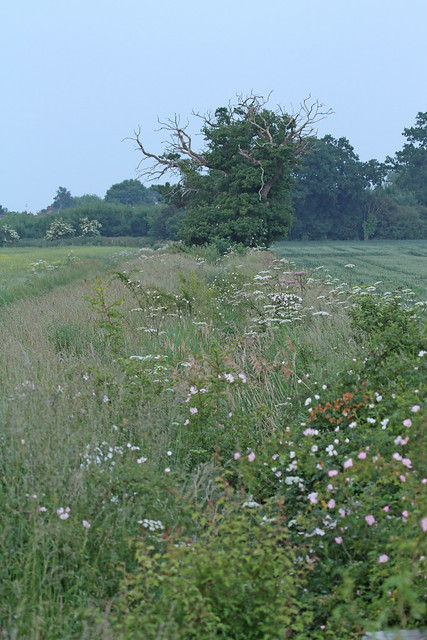
Looking along the drainage ditch which divides two arable fields

The old oak tree in this picture was home to a barn owl nest this year and I spent several evenings sitting in the undergrowth watching the toing and froing of the adults bringing prey to the nest. I didn’t get to see the fledglings but I’m hoping they were successful and return next year. And it was along this stretch of ditch where I photographed the yellowhammer, linnet and whitethroat I posted recently.

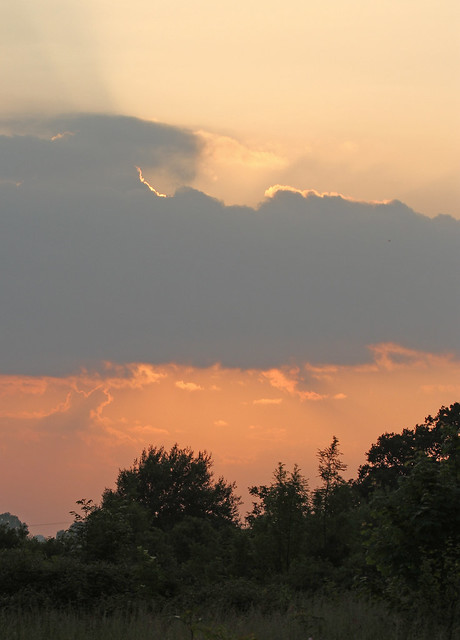
Not quite sunset, but the colours were breathtaking

And of course at that time of year, late in the day when the sun is getting low in the sky, the skyscapes can be magnificent .

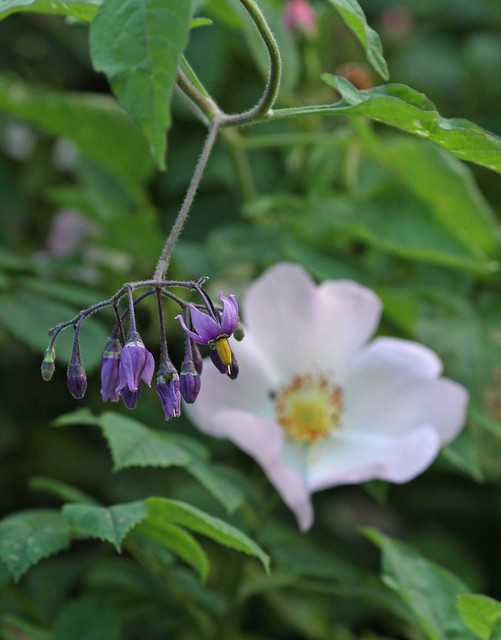
Another flower which was sprouting in the hedgerows was woody nightshade, Solanum dulcamara, which is closely related to deadly nightshade, and the potato which is rather less toxic than it’s relatives – unless the potatos are green when they contain the same toxin. So don’t eat the green ones (or nightshade berries)!

Woody nightshade flowers with a dog rose in the background

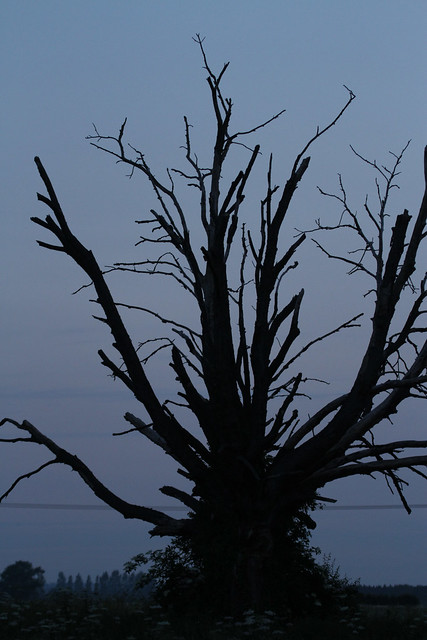
Toward the end of my stroll it was getting darker and in the midst of a line of imposing horse chestnut trees is this dead one silhouetted against the crepuscular blueness of the western sky after sunset.


On another dead tree stump adjacent to this one was a kestrel eating its prey and it let me stand close by and watch it for several minutes which was remarkable in itself, but to give you an idea of how close I was I could actually hear it tearing the flesh off the bone! He must have been very hungry.

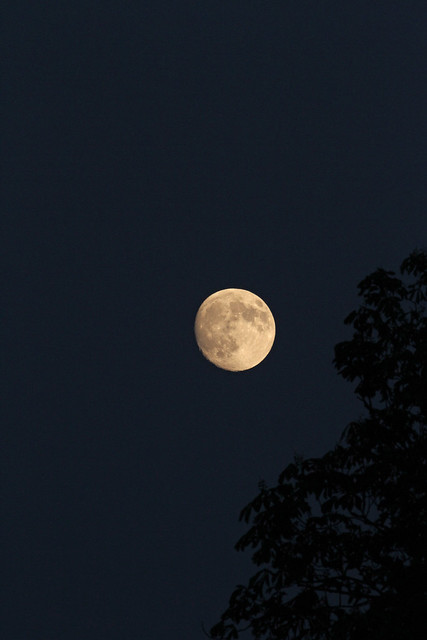
The moon emerging from behind a horse chestnut tree

And right at the end of the walk it was night time proper, and on midsummers day this year there was also a full moon.

The word ‘solstice‘ is derived from the Latin for ‘the sun stands still’ because the sun has stopped rising in the sky and begins it’s journey back across the ecliptic to bring summer to the southern hemisphere, leaving winter for us in the north. But I wasn’t thinking about that as I soaked up the summer warmth on midsummers day.

The fastest falcon

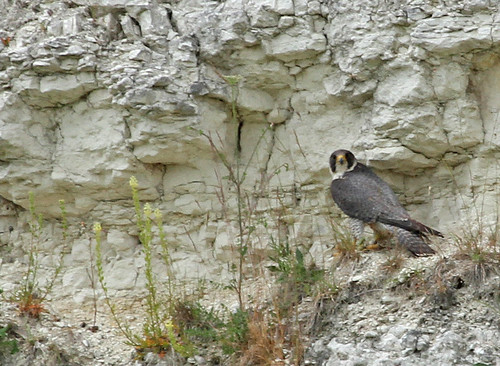
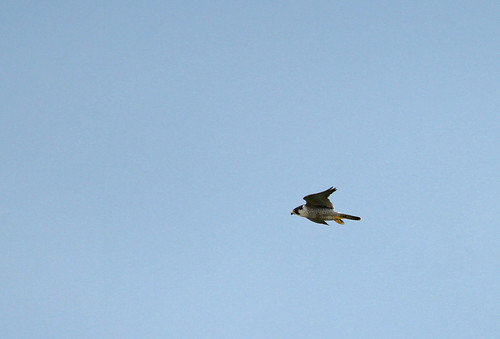
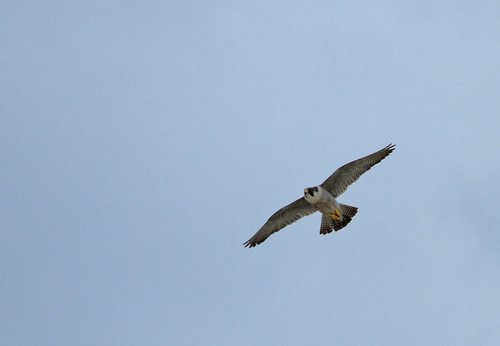
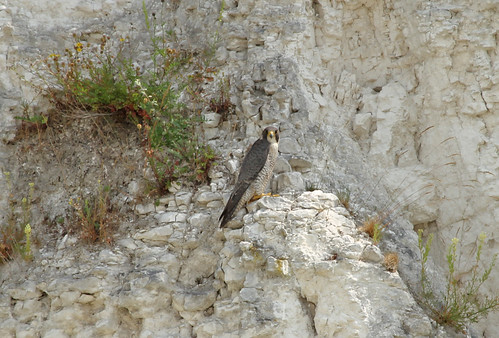
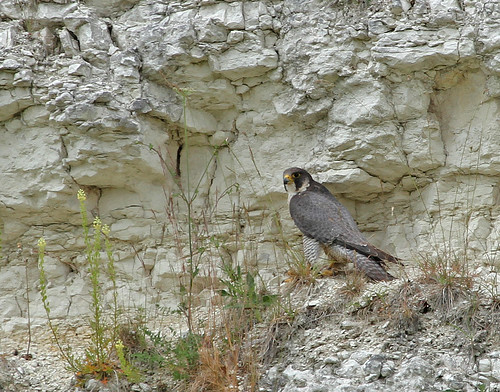
In fact, not just the fastest falcon, the fastest creature on the planet. Under its own steam, with a little assistance from gravity, the peregrine falcon (Falco peregrinus, Dansk: vandrefalk) can reach up to 150mph (240km/hr) in a stoop. And that is a staggering number!

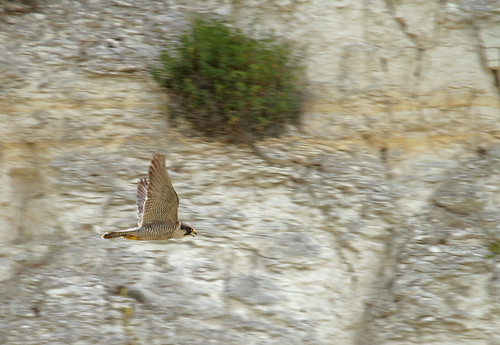
Cherry Hinton lies on the southern edge of Cambridge, and on the southern edge of Cherry Hinton is an ancient chalk pit known as the ‘Lime Kiln’. The Lime Kiln is a very interesting place, it’s a very large hole in the ground where the chalk has been quarried for millenia and converted to lime for building and agriculture. It’s lined with white chalk cliffs and it’s now a nature reserve managed by the local Wildlife Trust, and there’s nothing quite like it within a radius of many miles of Cambridge.


In June I had heard a rumour that a pair of peregrine falcons were nesting in the Lime Kiln. This was big news because until very recently I only saw them on the more wild and woolly parts of the UK coast where they hunt pigeons and seabirds. But in the last few years I’ve seen them fairly regularly, if infrequently, over the fields and fens of Cambridgeshire. I think the Lime Kiln must be the only rock face resembling the peregrine’s natural habitat within a 50 mile radius, which makes it even more remarkable that they found it and nested there.


To have a pair actually nesting on the edge of Cambridge was very exciting, so I paid a visit to the Lime Kiln to see if I could see them for myself. I’d been advised by a friend of the approximate location so it was fairly easy to find them sitting on the chalk face in full view, making occasional sorties into the air.

The peregrine is the fastest creature when it stoops on its prey, but it is not the fastest bird in level flight. That accolade goes to the wonderfully named ‘white throated needletail’ (Hirundapus caudacutus), which is a species of swift and can reach speeds of up to around 70mph (112km/hr) on the flat.


The peregrine’s wingspan is around 1m and the female weighs up to 1.1kg. So a bird colliding with a 1.1kg attacker travelling at 150mph is invariably going to come off second best. These awesome predators have other adaptations to protect themselves during high speed descents onto prey including a membrane which covers the eyes and baffles in the nostrils to prevent very high speed air flow from damaging their lungs.


The pair at the Lime Kiln have apparently nested there for the last three years and I believe that in their first year they raised one chick, the second year they got three away and this year they only managed one due to the dreadful weather through the springtime. But five chicks in three years is a fine tally.


I saw them over the Lime Kiln on several visits and watched them scaring the bejeezus out of the local pigeons, not during a a serious hunt, just a high speed chase on the flat, but the pigeons took it seriously and showed a surprising turn of speed too. I also saw a falcon in a stoop and another with prey in its talons which it passed to its beak whilst on the wing, which is behaviour more normally associated with the hobby.


These birds are magnificent and I’m hoping they return again to breed next year, and if they do I won’t be able to stop myself sharing some more pictures with you!

Meadow warblers

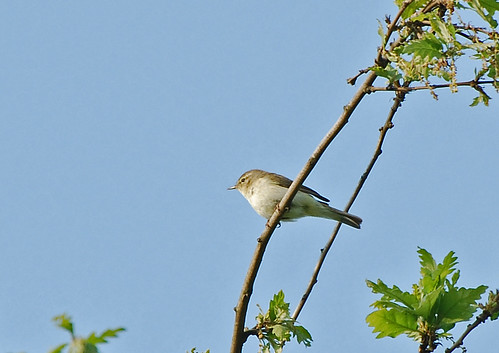
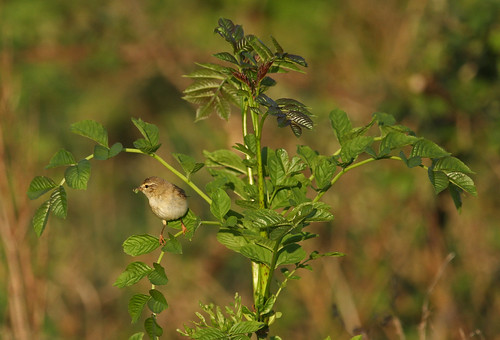
Our migrant warblers were all back from Africa and nesting by the beginning of June. There are four species which normally frequent my local countryside, the blackcap (Sylvia atricapilla, Dansk: munk), chiffchaff (Phylloscopus collybita, Dansk: gransanger), willow warbler (Phylloscopus trochilus, Dansk: løvsanger) and the whitethroat (Sylvia communis, Dansk: tornsanger).

The blackcap have been conspicuous by their absence this summer. The central European winter population, of which a pair took up residence in the garden last winter, disappeared in the spring and that was the last time I saw one. Chiffchaff were, as always, the first winter visitor I noticed returning because of their characteristic song calling out from the trees. There are several other birds singing in the background here but the call of the chiffchaff is clear above the others, and it’s easy to see where it gets its name from.

Chiffchaff male declaring his availability in early spring

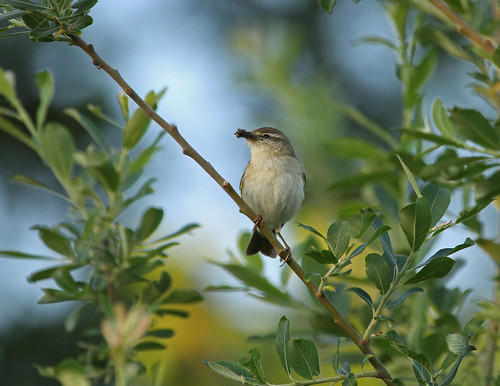
It’s now at the start of September and I haven’t seen a chiffchaff for a while, but through the summer I regularly saw willow warblers which were nesting in a bramble thicket that I passed when I was out walking the dog. Willow warblers are very easy to mistake for chiffchaff by sight but willow warbler song is quite different.

Willow warbler parent with a beak full of insects heading for the nest

The song isn’t the only diagnostic differentiator between these two species, there are a couple of others but they are more subtle. The most noticeable is the colour of the legs, chiffchaff have dark, almost black, legs and the willow warblers are red brown. Differences in plumage of the willow warbler are the brighter stripe over the eye (the ‘supercilium‘), a more promounced dark eyestripe and the patch under the eye (the ‘ear covert’) is olive grey with a pale patch immediately below the eye, compared to the more uniform dark grey colour of the chiffchaff. So if you get a good look through binoculars it’s not too difficult to tell them apart, but the song is the easiest way.

Another foray to collect flies for the chicks

Pausing to check up on me before heading into the nest

For a couple of weeks there was a spot in the field where I could stand close to the nest and watch the comings and goings of the adult willow warblers bringing food for the youngsters, and they seemed cautious but otherwise content for me to be there if I stood still.

Whitethroat male – my best ever bird portrait!

My favourite warbler is the whitethroat. They are easy to tell at a distance, even without optical assistance, and this is my favourite picture of one. The male whitethroat has a jingly jangly song and when he’s advertising for ladies he perches on top of a bush and flies repeatedly in a jerky motion straight up and then flutters back down to the same spot.

And while I was busy photographing the warblers I was being serenaded night after night by this chap:

A male songthrush (Turdus philomelos, Dansk: sangdrossel) filling the meadow with song

A tad incongruous in a post about warblers, I grant you, but he was there all the time and his songwas magnificent! As with the chiffchaff there are several other birds calling too, but the thrush is easily distinguishable from the noise. This is the first time I’ve posted a link to my own (amateurish!) sound recording, but I think it’s OK. Let me know what you think.

Garden guests

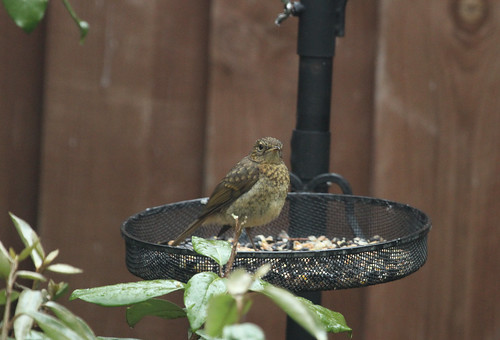
It was in June that fledgling birds finally started to appear in the garden. With so many natural phenomena being late this year due to the delayed onset of spring and the warm weather, the birds were no exception. The first one that I noticed was this robin chick who appeared on its own every morning for quite a few days feeding on seeds and nuts from the tray feeder. I placed an old kettle in a bush near the feeders a couple of years ago hoping that robins would find it a suitable nest site, but they haven’t been tempted so far so I think it may be too close to all the other avian activity. I’m going to find a less disturbed location for it for next years breeding season when I’ll hopefully see a few more of these:

Robin fledgling gathering its strength before striking out on its own

The robin (Erithacus rubecula, Dansk: rødhals) is a feisty little bird which I’ve often found hopping round my feet looking for the insects that get turned over as I dig the garden, or sitting on a feeder within inches of me, completely unfazed as I’m working,  as long as I don’t do anything overtly threatening. Often I don’t know it’s there until I glance up and see it sitting on the fence peering at me, and if I ignore it and carry on working it will go about its business unconcerned by my presence. They are iconic garden birds and according to the British Trust for Ornithology our unofficial national bird.

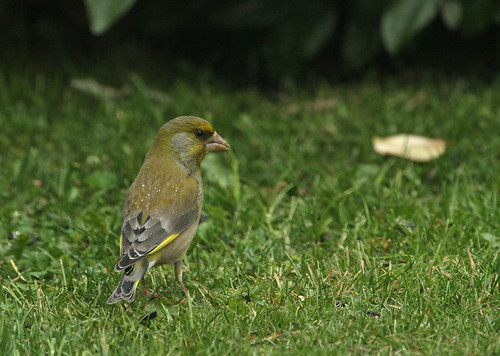
A less frequent visitor to my garden is the greenfinch. I hear the males calling almost every day through the summer from the top of a tall fir tree in a nearby garden. They don’t often venture into my garden outside the breeding season, but this year both the male and female and then the fledglings would feed here, and this is the male:

The male greenfinch clearing up seed fallen from a hanging feeder

The shape of the pointed, chunky, beak of the greenfinch (Chloris chloris, Dansk: grønirisk) clearly marks it out as a seed eating member of the finch family although they also hunt invertebrates to feed the chicks to give them a rapid calorie boost.

The geenfinch showing off his seed cracking beak and sumptuous plumage

From a distance the greenfinch can look fairly dull, but in full breeding condition and good light the males have magnificent plumage. This one is also decorated by tiny drops of rain on its back.

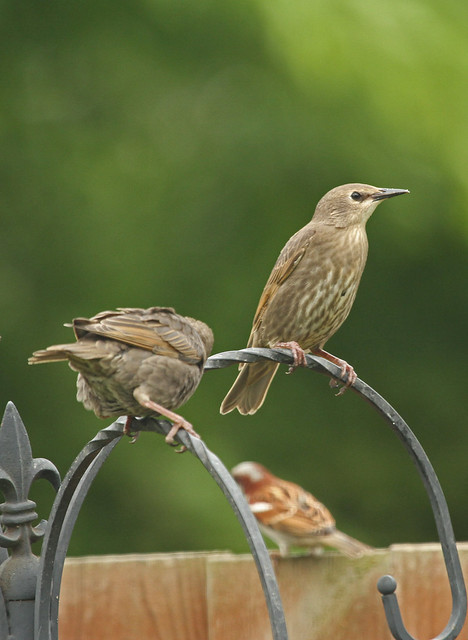
This year the starlings were numerous and entertaining, another feisty visitor, especially when they bowl in mob-handed complete with sizable broods of unruly youngsters. For several weeks, families of starlings (Sturnus vulgaris, Dansk: stær) with many fledglings invaded the garden and fed mainly on the fat balls. There were often 20+ individuals making a right old cacophany and emptying both the fat ball feeders every day. It was good fun to watch, and as the starling is red listed in the UK due to huge population decline it was good to see so many fledglings.

Starling fledgling on the right begging for food from the parent

Two more fledglings waiting to be fed, they haven’t yet grown the dark irridescent feathers of the adults

Taking matters into its own hands and being seen off by the adult. Note the fat ball feeder is nearly empty

The biggest and most colourful guest this year was the jay:

The jay, Garrulus glandarius, Dansk: skovskade

Jays are extremely infrequent visitors to my garden but this one appeared every morning and throughout the day over a week at the end of May beginning of June. It was taking seed from the tray feeder and I’m guessing it had a nest close by. (The ‘decorated’ wood of my fence really isn’t the most attractive backdrop for a nature picture so I’ve since moved the bird feeders to a new location infront of some foliage!). The jay is by far the most colourful of the crow family, most of which have almost entirely black plumage, except the magpie which is black and white. As you can see it’s the size of a small crow but the colours are magnificent. This one was brave too. I was sitting on a bench just 6-7m away and it was quite happy for me to sit that close and photograph it.

Jays feed mainly on seed and in the autumn they cache acorns by burying them in the ground for retrieval when things get tough through the winter. I’ve heard that a single jay can bury up to 5000 acorns… and remember where they all are! But I’ve also heard that jays are very good at propagating oak woodland, so maybe they do forget where some of their treasure is buried.

Minsmere raptors

Whilst I was at RSPB Minsmere, which I described in my last post, I was expecting to see birds of prey because I know that marsh harriers (Circus aeruginosus, Dansk: rørhøg) nest in the reedbeds there and it wouldn’t be totally unexpected to see a hobby (Falco subbuteo, Dansk: lærkefalk) or a peregrine falcon (Falco peregrinus, Dansk: vandrefalk).

Avocet were nesting on the mudflats along with plenty of other birds including the black headed gulls (Chroicocephalus ridibundus, Dansk: hættemåge):

Black headed gull in full summer plumage guarding its nest

I was engrossed peering into the distance with my new spotting scope, and I found a spoonbill (Platalea leucorodia, Dansk: skestork). The Danish name translates as ‘spoon stork‘ which just about sums it up really. I didn’t get a photograph because it was too far away, but it looks exactly like a white stork with a long beak shaped like a spoon. The conservation status of the spoonbill is amber and it is extremely rare in the UK and not terribly common on mainland Europe either. According to the British Trust for Ornithology there are 75 individuals in the UK and between 1998 and 2002 there were only 4 breeding pairs.

But I digress. As I was gazing into the disatnce the air raid warning was sounded: “There’s a peregrine… there are two!”

A peregrine falcon swooping down onto the nesting gulls

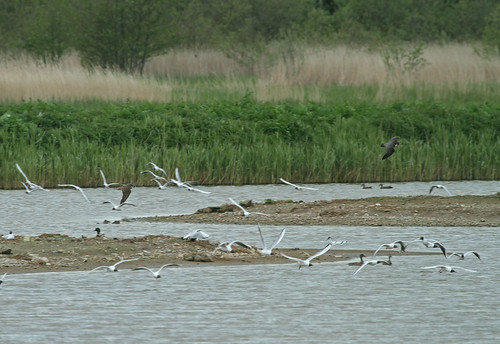
The falcons, I found out subsequently, were nesting on Sizewell B, the nuclear power station adjacent to the reserve. They arrived from that direction and when attacking they appeared to be working in tandem. The speed of their forays was absolutely breathtaking and caused total chaos on the ground:

The nesting gulls trying to distract the pair of peregrines

I tried to capture the falcons in the middle of their attack which was not easy, but I managed to catch one just above the left hand point of the mudflat behind. It wasn’t until I looked at the image at home that I realised the second falcon was in shot on the right too. So even though this photograph won’t win any awards I really like the drama going on here!

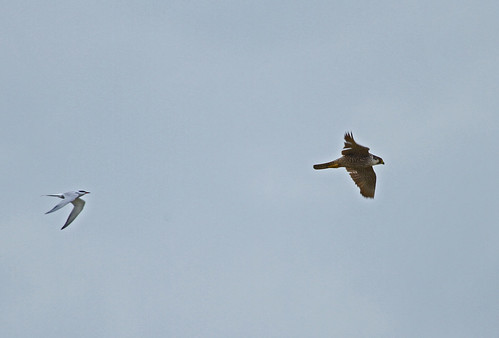
A common tern giving chase to deter the peregrine

The falcons raid lasted for several minutes and I didn’t see them catch any prey, thanks in no small part to the bravery of the common tern (Sterna hirundo, Dansk: fjordterne).

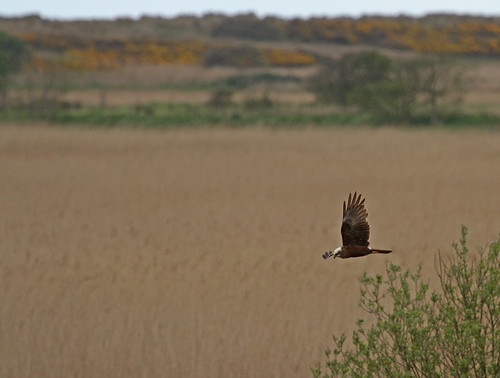
After the excitement of the falcons I ended up in a hide on the edge of the woods overlooking the reedbeds and sure enough the marsh harriers were much in evidence:

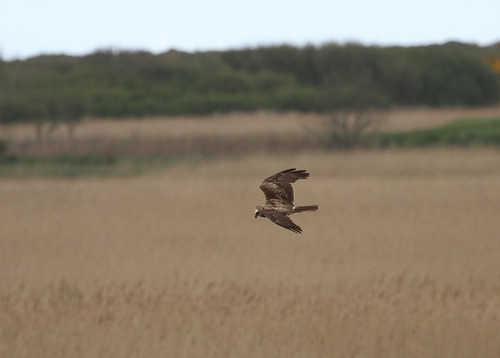
The female marsh harrier with her brown plumage and golden yellow crown

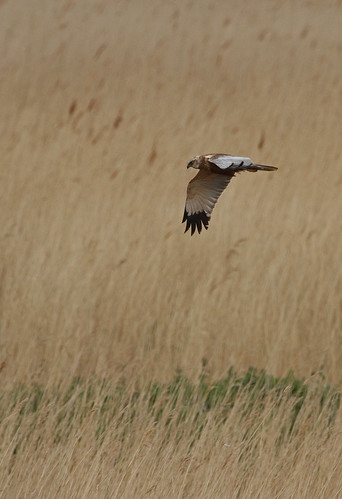
… and the male:

Whilst photographing the male marsh harrier a brown shape lifted out of the reeds and someone in the hide identified it as a bittern (Botaurus stellaris, Dansk: rørdrum). It was too fast for me to identify it by myself as I was focussed on the harrier, but that means I heard one booming at Lakenheath in the morning and saw one at Minsmere in the afternoon. Not a bad day out.

Juvenile marsh harrier with ragged brown plumage and no yellow crown

I didn’t see a hobby but it would be churlish to dwell on that after the excitement of the peregrines, the family of marsh harriers, and the bittern and spoonbill neither of which I’d previously encountered.

A day out at Minsmere

RSPB Minsmere is nestled on the North Sea coast in Suffolk sandwiched between the heather and gorse of Dunwich Heath and the nuclear power station at Sizewell. I spent a day there at the end of June and the plan had been to make a 5 a.m. start and get there for the sunrise. But the weather on that morning was foul so I started later and stopped off on the way there at RSPB Lakenheath Fen, on the west side of Suffolk, to wait for the rain to abate. Lakenheath Fen was previously owned by the Bryant and May match makers so the woodland there is primarily poplar which is apparently the wood of choice to make match sticks. Consequently the air is filled with that wonderful noise that poplars make when the wind blows.

Despite the pouring rain, which precluded photoghraphy on the Fen, the omens were good. There were reports of a red footed falcon which I didn’t see, but I did see a wild otter, the first time I’ve ever seen one. And I heard a bittern booming, and it was the first time I’d heard that too. So that was two new encounters even before I’d reached the coast.

The bittern (Botaurus stellaris, Dansk: rørdrum) is a small brown heron which lives in reed beds and hunts fish so stealthily that it’s next to impossible to see until it moves. The booming is an amazing sound and the recording can’t really do it justice, it can be heard for more than a kilometer and the only thing I can liken it to is a distant foghorn. Coming through the reedbeds early on a quiet rain sodden morning gave it a ghostly quality which is difficult to describe. Bittern are rare and to give you an idea of how unusual it is to see, or hear, one, there were only 600 individuals in the whole of the UK in 2010/2011 and only the males boom. East Anglia is a good place to look though because they migrate here across the North Sea from Holland, and the first breeding record was in Norfolk in 1911, having been extinct in the UK in 1868.

From the Fen I headed off in my rainsoaked state to Minsmere. But the gods were with me as the sun came out on the way and stayed out for the rest of the day. It turned into a scorcher.

Common whitethroat male guarding his bushes

On the way into the reserve from the carpark the habitat is woodland which opens out onto grassland before arriving at the fresh water and salt water lagoons. There were reports of stone curlew on the heath and an old twitcher with a telescope claimed to have spotted them, but I couldn’t find them and remained sceptical. But in an adjacent bush was a male whitethroat patrolling the apex, even though it was the end of June he was one of the first I’d seen this year. Pausing momentarily to snap the whitethroat I then wended my way to a hide overlooking the salt water lagoons.

Sandwich tern (Sterna sandvicensis, Dansk: splitterne) snapped from the comfort of the hide

The main hide overlooking the lagoon is, in my opinion, pretty much perfect. It’s a modern and substantial affair and it made me chuckle listening to the twitchers grumbling about how they preferred sitting in a draughty cold shed with limited views and no comfort whatsoever. I’ve got no problem doing it the old fashioned way when it’s the only option, but when the facilities are to hand I much prefer to sit in warmth and comfort with panoramic views through huge glazed windows which can be opened if so desired. And on this occasion the facilities were available, so that’s what I did, and I hope you like the results…

A pair of common terns – “Where’ve you been? I’ve been worried sick. You treat this place like a hotel!”

The common tern (Sterna hirundo, Dansk: fjordterne) on the left had been sitting there for many minutes, then the one on the right arrived to be scolded mercilessly by it’s companion, and this happened each time the second one came back after a brief fishing trip. The common tern could easily be mistaken for the arctic tern (Sterna paradisaea, Dansk: havterne) but is easily distinguished at a glance by the black tip to its beak which is absent in the arctic tern. Both species are consummate aeronauts and fishermen, and they both breed in Europe before migrating south to Africa and beyond.

There were big numbers of all kinds of seabirds on the lagoon including the terns. Gulls, black tailed godwits, a spoonbill (another first ever sighting for me), and numerous ducks including shoveller and shelduck, none of which I got really good photographs of. But this pair of gadwall (Anas strepera, Dansk knarand) were feeding close by and did allow me to photograph them:

Male gadwall behind nesting black headed gulls…and the female of the species

Gadwall can often be seen on lakes inland in the winter when they appear drab and uninteresting compared to say a shoveller or a goldeneye, but in bright light in their finest breeding plumage I think they’re quite splendid.

The star of the show at Minsmere is often the avocet. I’ve seen them and photographed them here before but this time they were nesting on a mudflat close by:

The iconic avocet (Recurvirostra avoseta , Dansk: klyde)

Avocet parent-to-be looking after the nest

The other avocet parent was sitting on the nest and occasionally stood up to turn the eggs. It did this every few minutes giving nice views of the eggs which would be extremely well camouflaged when exposed to potential predators such as the great black backed gull.

At one point a pair of peregrine falcons appeared and proceeded to launch multiple waves of tandem attacks on the ground nesting birds. It reminded me of the scene at the start of the film ‘Battle of Britain’ when the Luftwaffe fighters swoop down and shoot up a British airfield. Suffice to say all hell broke loose, it was highly entertaining to watch, and I’ll write more about that in my next post.

It’s not just the birdlife which marks Minsmere out as a special place for wildlife. I knew there were red deer (Cervus elaphus) in this part of Suffolk but I’d only ever seen occasional individuals and one or two small groups in the past. But on the way off the reserve in the early evening there was a big field in which there were several hundred of them.

Grazing red deer

On first spotting these I thought they were livestock on a farm, but then I realised there were no fences that they wouldn’t be able to simply step over so they must be wild. I’d never seen so many of these in one place before.

On an unrelated note (the trip to Minsmere was in June and I’m writing this in August), so far this year in Cambridgeshire there has been a dearth of butterflies especially small tortoiseshell. But the day before yesterday there was one flitting around the entrance to work when I came home and when I got here there were five more on my buddleia bush. And yesterday there were more in the garden. So I hope they’re making a late recovery, along with other hard hit species, from the Lepidopteran devastation inflicted on them by the cold weather in previous three years.

A pair of local red list birds

In a recent post I talked about the plans by the local council to develop our greenbelt land and our campaign to prevent it. I provided species lists of my sightings on the land to counter their claims that the proposed development would pose no danger to any of our red listed wildlife.

Here are a pair of those red list birds that I photographed this year to prove to the powers that be that they are actually there! Despite the council’s environmetal survey concluding that there are no red list species to be found, these two species nest here every summer.

The first is the corn bunting (Emberiza calandra, Dansk: bomlærke):

This year has been a good one for corn bunting around Histon, several times I’ve counted flocks of 20+ individuals and they have been present every time I walk around the fields since they arrived in the spring. The corn bunting is red listed due to historical and more recent population declines, most likely as a result of modern farming methods. Numbers dropped by 89% between 1970 and 2003.

They live on arable farmland and feed primarily on seed and invertebrates during the summer. They also nest on the ground so overall their lifestyle is really not compatible with modern mechanised, chemical intense, farming methods. Which, as a result of the numbers I see here, makes my neighbourhood an important place for them. In the year 2000 there were 8500-12000 ‘territories’ (individuals or breeding pairs) in the UK so the several tens of my local birds are a small but important fraction of the total.

And the other red list species which I see regularly throughout the summer is the linnet (Carduelis cannabina, Dansk: tornirisk). The linnet is a finch which also feeds on seed and insects and is also red listed due to big decreases in its population, 57% between 1970 and 2008. But the good news for linnets is that although their numbers are decreasing in England and Wales they are increasing in Scotland and Northen Ireland.

A cock linnet is a handsome bird with a crimson spot on his forehead and cerise chest plates, neither of which are, alas, particularly prominent on this one:
Cock linnet

The linnet has a grey head and the pale grey spot on its cheek, which is prominent on this one, is diagnostic of the species. The linnet can be seen here in the winter in large flocks unlike the corn bunting which disappears from the Histon fields to wherever they go to in the winter after the harvest. The harvest was started here, and finished I think, last week, so I probably won’t see another corn bunting until next spring.

The linnet was immortalised in a 1920’s music hall song called ‘My old man (said foller the van)’. This song is about a family having to do a moonlight flit because they can’t pay the rent, and after they’ve filled the removal van there’s no room for the wife so she has to follow behind on foot:

My old man said “Foller the van,
And don’t dilly dallyon the way”.
Off went the van wiv me ‘ome packed in it,
I followed on wiv me old cock linnet.
But I dillied and dallied, dallied and I dillied
Lost me way and don’t know where to roam.
Well you can’t trust a special like the old time coppers
When you can’t find your way ‘ome.

Back in those days cock linnets were commonly kept as caged domestic pets because of their pleasant song, hence the mention in this ditty. Fortunately for the linnet though they are no longer held captive.

(In case you’re wondering, the ‘dillying and dallying‘ involved the poor girl stopping off in the pub, getting drunk, and then, not knowing where she was going, she got impossibly lost.)