Category Archives: UK wildlife

Titchwell ducks

I like ducks. A couple of hours spent by the side of a lake gazing at and identifying numerous duck species is time well spent in my opinion. (N.b. as I write this I’m sipping a glass of a very tasty Chilean Cabernet and listening to The Lyre of Orpheus by Nick Cave. How much better can life get?)

Anyway, back to the ducks. Inbetween chasing swifts with my camera and snapping marsh harriers and avocets there were several species of duck availing themselves of the bounty supplied by the fresh and salt water mudflats at Titchwell.
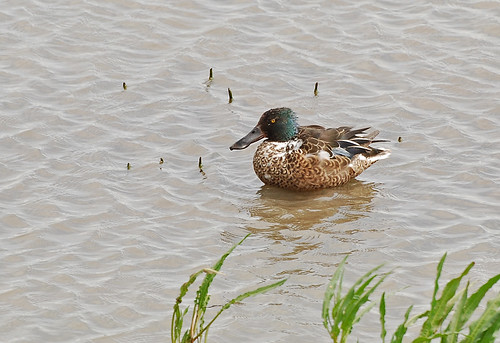

Shoveler male

Shoveler (Anas clypeata, Dansk – skeand) can be seen on the lakes close to Cambridge but it’s rare to see them close up. At Titchwell there are so many birds there that if I wait long enough it’s very likely I’ll get close up, and so it proved with several species of duck. The shoveler is immediately recognisable by his enormous beak which he uses to filter crustaceans, molluscs and other small creatures from the water. The pale blue patch just visible on the upper forewing is just visible on this one and is diagnostic for the shoveler. The blue-winged teal also has a blue patch here but the teal is smaller and doesn’t have the distinctive beak of the shoveler.
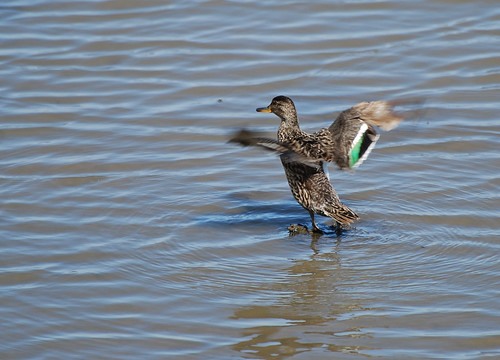

Teal female (Anas crecca, Dansk: krikand)

The teal is the smallest duck and the male plumage is handsome. Like the mallard, the female is predominantly brown but she has the lovely green patch on the lower forewing, visible on the lady above as she stretches her wings. Teal can form big flocks on coastal wetlands out of the breeding season. They are named after their call.
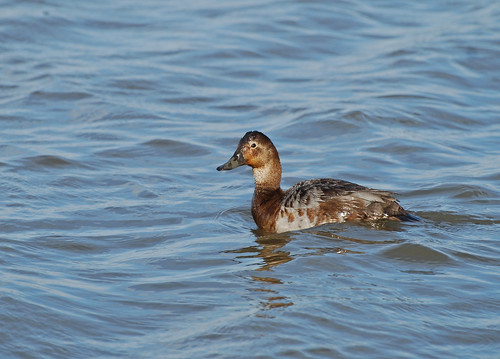

Pochard female (Aythya ferina, Dansk: taffeland)

Another species which kept flitting into view was the pochard. Pochard are not regular breeders in the UK, but in the winter there can be around 40,000 here which have migrated in from Eastern Europe and Russia and they can be seen on lakes, gravel pits and estuaries.
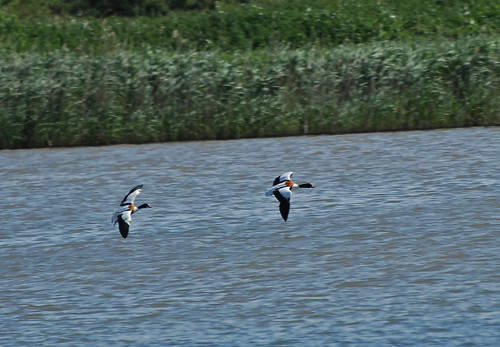

A pair of shelduck (Tadorna tadorna, Dansk: gravand) on final approach

I think one of the  most majestic ducks is the shelduck. The red beak, black head, and brown, white and black body make it very distinctive. Shelduck are big too, almost, but not quite, the size of a small goose. They were persecuted in some sandy areas of the UK in the 19th century apparently because they competed with rabbits for burrows. Which sounds to me like any excuse, because why would anyone worry about a few homeless rabbits! Despite that there are now around 60,000 individuals overwintering in the UK and around 11,000 breeding pairs. The conservation status is amber in the UK but it is a species of least concern in Europe as a whole.
Fenland safari

Wicken Fen is the largest remaining area of true fen in England and has survived because it has been conserved by encasing it in what is effectively a gigantic plastic bag. The earth on the Fen is waterlogged and if the bag weren’t there the water would simply drain away leaving very rich agricultural soils but none of the wildlife associated with fenland habitats. Another result of the water retention is that the Fen is 6-8 feet above the surrounding farmland and the earth literally shakes if you jump hard on the ground as it’s like a saturated sponge.

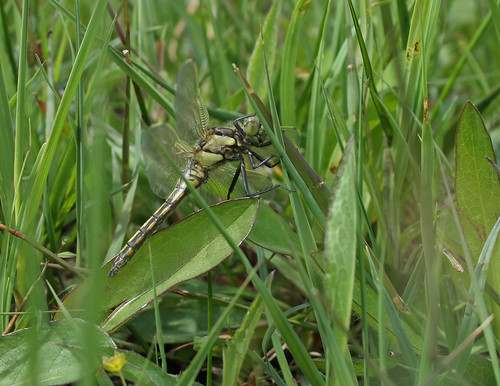
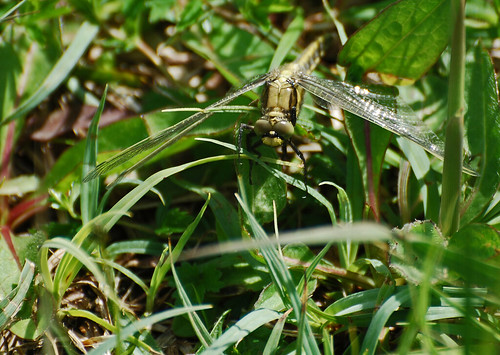
Because of the water the predominant habitats are reedbeds and waterways which is reflected in the wildlife. The Fen is so rich in wildlife that a hike around there is like a mini safari! I was there on a hot and sunny Sunday morning in June and wildlife of all sorts abounded. In particular the insects were very busy. This dragonfly had recently emerged from the larval stage as an adult and was sitting in the grass drying out before taking to the air.


Black tailed skimmer youngster preparing for it’s first flights

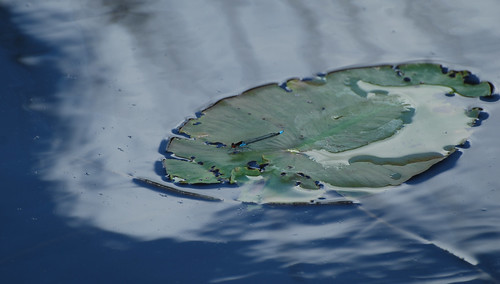
The young skimmer was on the edge of a path which ran alongside one of the lodes (man made water courses) and on the water opposite the skimmer were lily pads and sitting on one of them was a damselfly, warming itself up in the morning sunshine.


Red eyed damselfly (Erythromma najas) in beautiful repose on a lily pad, surrounded by reflections of the clouds

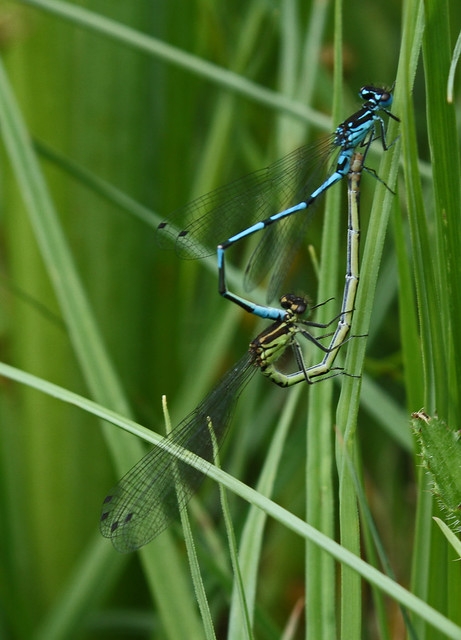
And of course, that time of year is the season for lurv for many creatures, including this pair of variable damseflies (Coenagrion pulchellum) which are in the process of mating. The male is the blue one and he is clasping the female by gripping the back of her head – the pronotum – whilst she has pressed her genitalia against his abdomen to receive the sperm.

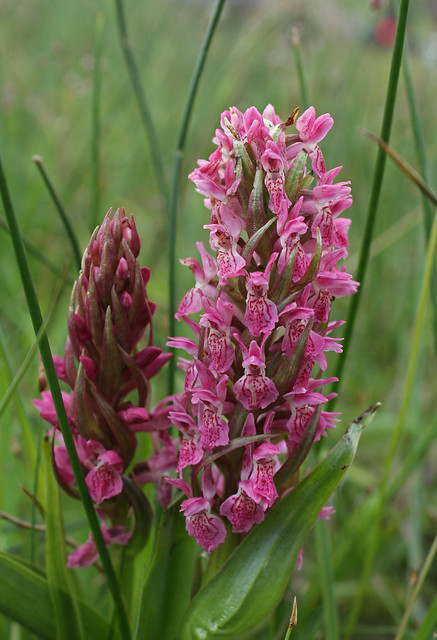
As well the inscect diversity the unique habitat of the Fen is home to lots of beautiful plants and flowers, including this common spotted orchid. This orchid is indeed common and can be found in fens, marshes and other wetlands all over England, but is rare in Scotland. Common, or not, I think all orchids are spectacular flowers and it was really good to see them in such numbers on the Fen.

Common spotted orchid – Dactylorhiza fuchsi

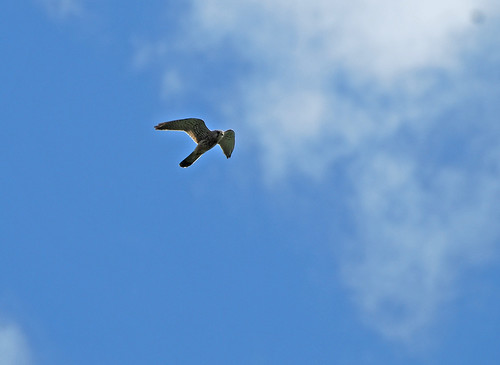
Whilst I was busying myself trying to get photogrpahs of the dragons and orchids a kestrel (Falco tinnunculus, Dansk: tårnfalk) was busy overhead. But even better than that a hobby (Falco subbuteo, Dansk: lærkefalk) was on the hunt for dragonflies and small birds.

The hobby is a small falcon which can be seen in these parts in the summer and hunts low over farmland and reedbeds at phenomenal speed. It’s one of very few predators that can hunt swallows and swifts in flight. This one was doing exactly that and in the distance, a few hundred metres away were at least another two. So I guess it was a family and the chicks had recently fledged and the adults were showing them the ropes. So I whiled away a good half an hour watching their breathtaking aerobatic exploits!


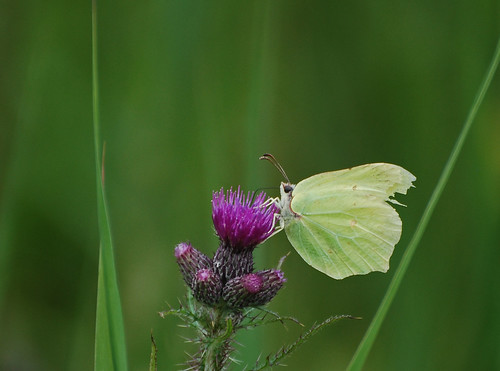
Brimstone butterfly sipping nectar from a thistle flower

I did volutary work at Wicken for 3 years or so back around the turn of the Millenium. It was incredibly rewarding and a good opportunity for a lab-based sedentary person such as myself to get outside and do some donkey work under the sky. One of the projects I worked on back then was scrub clearance to create an area suitable for butterflies to breed. I went and had a look at it on this walk for the first time since I helped to create it and it was very different. The scrub we cleared had been replaced by less scrubby, more proper woodland, trees, and there was small open glades with grasses and wild flowers. Whilst I was in there I flushed a leveret, which is about the closest I’ve ever been to a wild hare, it had been sitting tight but made a run for it when I got just a tad too close – about 5m!

So I didn’t manage a picture of the hare but I did manage a shot of the brimstone butterfly above (Gonepteryx rhamni), which I thought was absolutely lovely, sitting on the purple flower and framed by the two grass stems. It was terribly obliging and let me move all round it to get the best angle for a portrait. So this is about the best shot and one I’m very pleased with. I hope you like it too!

The magnificent marsh harrier

During a day spent at RSPB Titchwell on the north Norfolk coast in June the bird sightings were many and varied but one of the undoubted highlights for me was a marsh harrier which made regular appearances throughout the day.


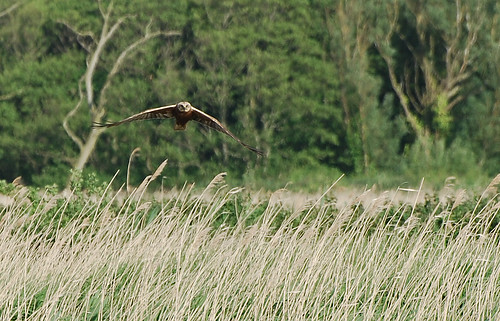
Here’s looking at you…
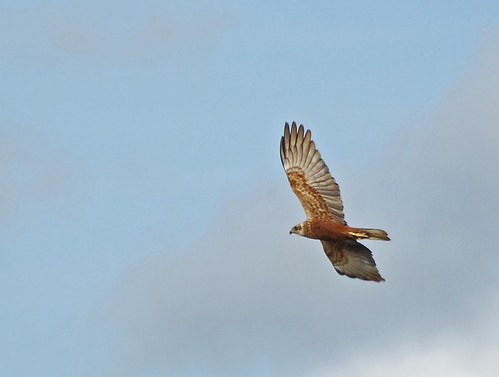
A marsh harrier (Circus aeruginosus, Dansk – rørhøg) doing as the name suggest – harrying the marshes

The marsh harrier is one of our least numerous birds with around 400 females in the UK. According to the British trust for Ornithology it almost became extinct in the UK but has made a small recovery. It lives and breeds in reedbeds but during it’s recovery it has learnt to frequent farmland too. With the destruction of its normal habitat that adaptation may prove to be its saviour.

Marsh harriers hunt small mammals and birds and can be seen gliding over marshland and reedbeds with their wings in a characteristic shallow ‘V’ shape. It is restricted to East Anglia in the UK and its conservation status is Amber due to the declines seen in the past.

Despite its amber staus in the UK it is a species of least concern in the rest of Europe, which is good news. Hopefully a few more will find their way here to swell the UK population. They can mostly be seen here in nature reserves and the small number of locations where reedbeds and wetlands have not been drained.

One of the best reserves for harriers is Wicken Fen lying between Cambridge and Ely, and this is the only place where I’ve seen marsh harriers and hen harriers in the air at the same time. Wicken is owned by the National Trust and has a hundred year expansion plan which involves buying up the surrounding farmland as the soils becomes progressively downgraded and ultimately exhausted. So in around 100 years time it should be an enormous area of fen and home to large numbers of rare birds such as the harriers. So they may not be so rare then. Fingers crossed!

At long last

After a summer of fixing and painting and holidaying I can now sit down and devote the time to pick up where I left off with blog posting. I’ve collected lots of photographs and I’m about 20 posts behind, so here goes…

Since I acquired my new camera earlier on in the summer I’ve been crawling around in the undergrowth taking pictures of wild flowers and here are a few of them.

Wimpole Hall Farm is a stately home to the west of Cambridge which is owned by the National Trust and is set in extensive park and farmland. A stroll round the park there earlier in the summer was as rewarding as ever with a buzzard and a couple of great spotted woodpeckers putting in appearances, but I didn’t have my zoom lens with me so I was restricted to photographing things which were close by and didn’t move too quickly.

Growing in the shade of a line of trees were bugle flowers…


Bugle – Ajuga reptans

Bugle is related to self heal (Prunella vulgaris), they are both members of the family Lamiaceae and both have medicinal properties.

According to Nicholas Culpeper, the 17th century English botanist and renowned herbalist:

Self-Heal whereby when you are hurt, you may heal yourself, it is an especial herb for inward or outward wounds. Take it inwardly in syrups for inward wounds, outwardly in unguents and plasters for outward. As Self-Heal is like Bugle in form, so also in the qualities and virtues, serving for all purposes, whereunto Bugle is applied with good success either inwardly or outwardly, for inward wounds or ulcers in the body, for bruises or falls and hurts. If it be combined with Bugle, Sanicle and other like wound herbs, it will be more effectual to wash and inject into ulcers in the parts outwardly…. It is an especial remedy for all green wounds to close the lips of them and to keep the place from further inconveniences. The juice used with oil of roses to annoint the temples and forehead is very effectual to remove the headache, and the same mixed with honey of roses cleaneth and healeth ulcers in the mouth and throat.’

I’m not sure what Culpeper means by ‘green wounds‘ but it makes me glad I live in the penicillin age. Indeed he died of tuberculosis at the tender age of 37. No herbs could cure that.


Purple self-heal

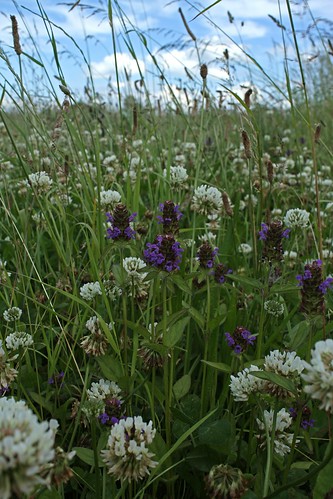
This picture is an attempt to give a feel for what an English meadow looks like in summer, two of my favourite flowers – self-heal and white clover (Trifolium repens) set in the long grass against a blue ‘Simpsons sky‘.

Another name for bugle is ‘carpenters herb’ due to its ability to stem bleeding, although it appears it does this not by catalysing the clotting process but by lowering blood pressure and heart rate in a similar way to digitalis, the active pharmaceutical compound which gives foxgloves their toxicity:

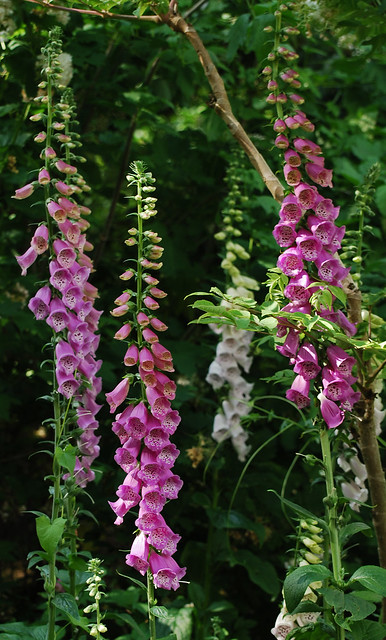
Foxgloves, Digitalis purpurea, growing next to the path to the cafe at Wimpole

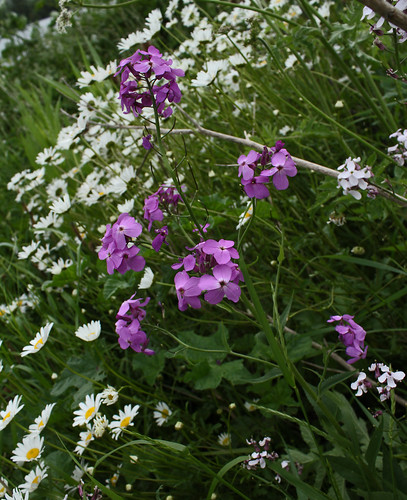
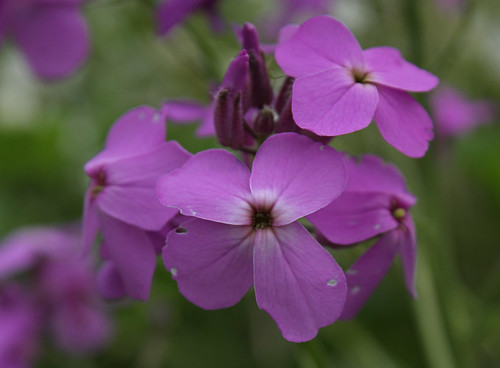
On another foray into the countryside in June, this time to RSPB Fen Drayton, I was specifically looking for oxeye daisy and in amongst the daisies were these lovely dames violets (Hesperis matronalis). Dames violet originates in the Mediterranean but has colonised the UK after escaping from gardens. It has been used as an ‘antiscorbutic’, i.e. to treat scurvy.

Oxeye daisy (Leucanthemum vulgare) and dames violet growing slongside the Cambridge Guided Busway at RSPB Fen Drayton
Dames violet flowers

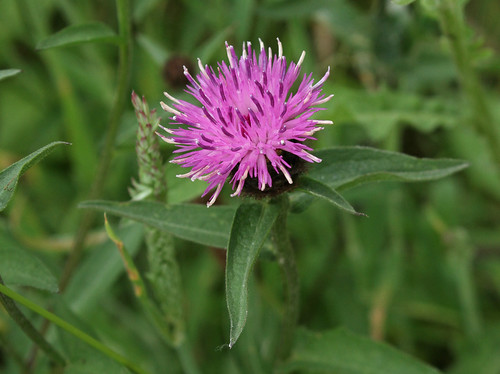
Also growing alongside the busway were lesser knapweed (Centaurea nigra), which I think is rather lovely and not ‘lesser‘ or a ‘weed‘! I’d be happy for it to grow in my garden…

Lesser knapweed – I couldn’t find any reference to medicinal or herbal uses of lesser knapweed

…and ragged robin (Lychnis flos-cuculi):

I couldn’t find any reference to medicinal uses of ragged robin either but it’s also rather beautiful and small clusters of it punctuated tracts of grass mixed with other flowers.

There’ll be more flowers to come, and butterflies… birds… mammals etc. etc.

The iconic avocet

‘Iconic’ is a word that is overused, but in the case of the avocet it is entirely appropriate. Those of you from the UK – and possibly some of you from further afield – may know that in the UK the avocet is the emblem of the Royal Society for the Protection of Birds – the RSPB.

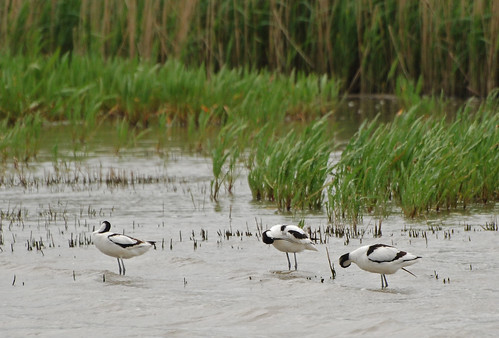
A trio of avocet feeding on the water at RSPB Titchwell as a pair of swift hunt winged insects just overhead

The avocet (Recurvirostra avosetta, Dansk: klyde) had all but died out – in fact it may have totally died out – in the UK in the 19th century, but in the 1940’s a breeding population from the European mainland re-established itself when the coastal mudflats along the east coast of England were flooded as a defensive measure against a possible German invasion. So there you go, just occasionally something good can result from a war!

Avocet can be seen breeding on the east coast of England in the summer, and they are resident in the southwest during the winter, they are also winter and passage visitors. It is therefore an early symbol of conservation success and it was originally adopted by the RSPB in 1955 as the their symbol to adorn the new RSPB tie. Its continued success led it to be adopted as the RSPB logo in 1970. They are beautiful birds and they can be pretty feisty when it comes to guarding their territory.

The long upturned beak of the avocet, from which it gets it’s generic name, ‘Recurvirostra’, along with its black and white plumage makes it completely unmistakable. I have seen avocet before but not in such numbers and not so close and it was only on this trip that I realised they have very distinctive pale blue legs. So all in all it’s a very striking bird.

The upturned bill has a functional aspect too. It is the upper mandible which is curved and the avocet use it to stir up the sediment by sweeping it across the surface from side to side dislodging crustaceans, insects and worms which they detect by touch. The one below had captured a meal and the dark shadow just in front of its beak is a cloud of sediment churned up by the scything beak.

As with just about every species on the planet, including humans, the main threat to the avocet comes from inconsiderate human activity including reclamation of wetlands, depletion of water levels in rivers, infrastructure development and pollution by polychlorinated biphenyls (PCB’s), insecticides and heavy metals. Despite that, the global population is estimated to be between 210-460,000 individuals. It’s unclear if those numbers are stable, but as some populations decline others are increasing. So hopefully they’re OK for the time being.

I’ve been up to my eyeballs in non-blogging stuff in the last month so I’ve been struggling to keep up to date with all your blogs. The pace is unlikely to let up before September but I’ll try to visit as many as I can in the meantime. I will be back!

Apodidae – the swift

Last month I spent a day at the RSPB reserve at Titchwell near Hunstanton on the north Norfolk coast. It’s a particularly dramatic bit of coastline and is home to a very impressive array of birdlife which is concentrated here on the reserve. As well as all the waders and other water birds squadrons of swifts were wheeling and zooming low over the water plucking insects out of the air.


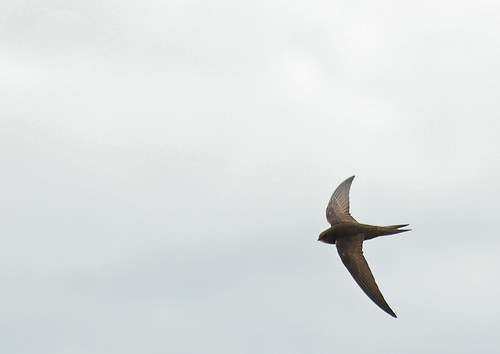
Swift – Apus apus. Dansk – mursejler

Swifts have been declining in numbers and their conservation status is amber, but it was difficult to believe they’re struggling! There seem to be good numbers of them in the skies around Cambridge too. I love it in the summer when I open a window and the sound of shrieking swifts filters down from on high.

Insects beware, bandits at 6 o’clock!

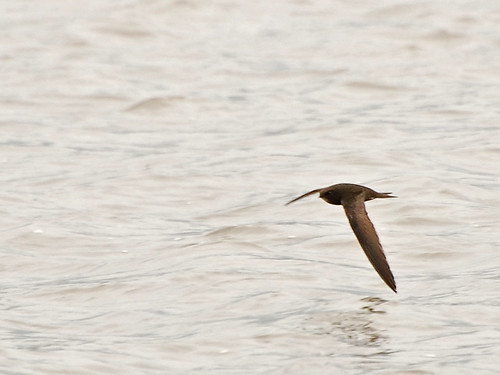
Photographing swifts in flight is challenging to say the least and something I’ve never before had much success with, but there were so many of them at Titchwell and they were flying close to the ground so I gave it a go. They seemed to have preferred routes which I guess were dictated by where the insects were flying and that made getting pictures a little less tricky as their flight paths were more predictable. And here are the results.

Swifts are members of the Apodidae family and on ther face of it appear fairly similar to swallows and martins. But my oft ill-remembered scchoolboy Latin leads me to believe that ‘apodidae‘ means ‘lacking feet‘ whereas swallows and martins are passerines which means they have feet adapted for perching. Swifts do have feet but they are tiny and adapted for clasping and not perching, all four of their toes pointing forward. One thing that the three species do have in common is that they are all awesome aeronauts. A juvenile swift can spend up to three years aloft after fledging and it will spend most of its life on the wing: eating, sleeping, gathering nesting material and even copulating in the sky.

According to the British Trust for Ornithology swifts shut down their brains one side at a time in order to maintain stable flight. But I’d like to know how they found that out – I can’t think of an experimental design that would enable this conclusion!

The swift is a summer migrant to UK shores and they spend their winters in South Africa, and I suspect the journey doesn’t take too long, covering a thousand miles in a couple of days!

My day at Titchwell was gorgeous, it was during the foul wet weather we’ve been having but shortly after we arrived the sun emerged and stayed with us for the whole day. I took nearly a thousand photographs and I’m going to post the best of them in batches in the next few weeks, interspersed with some other local wildlife. I hope you like them!

More wild flowers

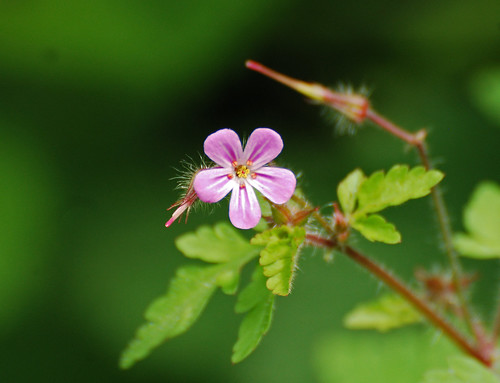
I keep seeing herb robert lining my route to work and in the hedgerows along my regular footpaths. It’s a member of the Geranium genus and is found in hedgerows, woods and on disturbed ground


Herb robert – Geranium robertianum

I’m a tad confused by this plant because it has all the normal attributes of herb robert; the pink flowers, leaf shape, hairy buds and stems, but this one has the same bud shape as a cranesbill and a quick web search hasn’t yielded another image of herb robert with seed pods shaped like this. (So if I’ve made a taxonomic error please let me know!). Herb robert smells quite unpleasant and has been used as an insect repellant.


Dandelion – Taraxacum officinale

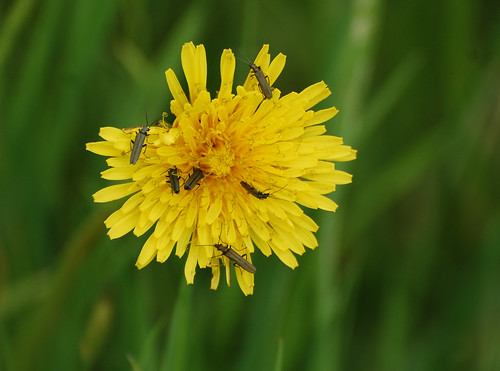
These pictures were taken a few weeks ago and at that time they were loaded with insect life, this danselion has six flower beetles (Oedemera nobilis) foraging on it, and it wasn’t at all unusual to see flowers in the meadow with this many bugs and more feeding on them.


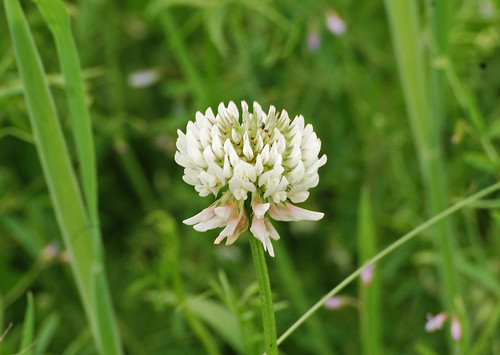
White clover – Trifolium repens

Clover grows abundantly in grassland. It is pollinated primarily by bumble bees but as bumble bee numbers decline it has become a major source of nectar for honey bees, therefore beekeepers became important people for cattle farmers who grow clover as a fodder crop for their livestock.

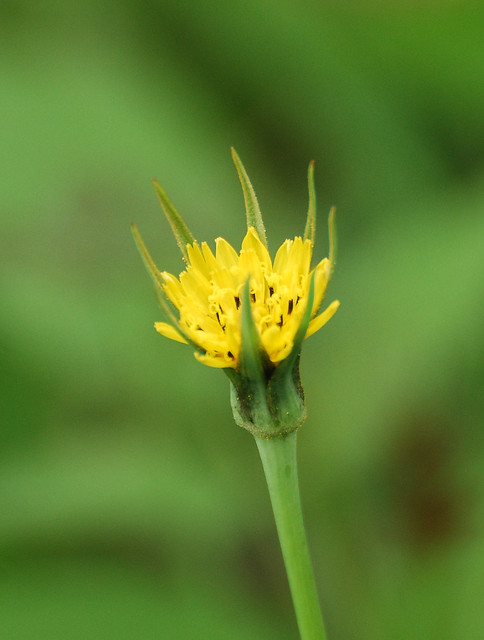
Jack go to bed at noon – Tragopogon pratensis

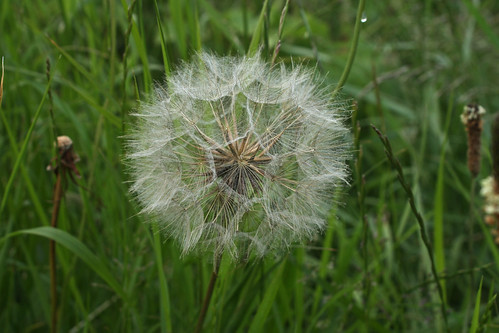
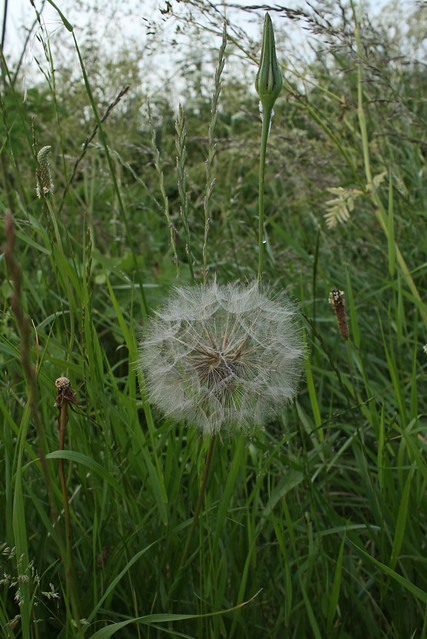
The lovely yellow star of ‘jack go to bed at noon’ is so named because the flowers open early in the morning and close up again at noon. It is also known as ‘goats beard’ and is a native annual in the UK. It has a milky latex sap which, according to Wiki, children from the countryside in Armenia make bubble gum from. It has a wonderful seedhead which is much bigger than than the dandelion and has fewer larger seeds.


Jack go to bed at noon seedhead

As with alot of other wild flowers, they are rampant just now because of the warm wet weather and are numerous in fallow fields and hedgerows.

A jack go to bed at noon seedhead with a closed flower behind it at the edge of a field

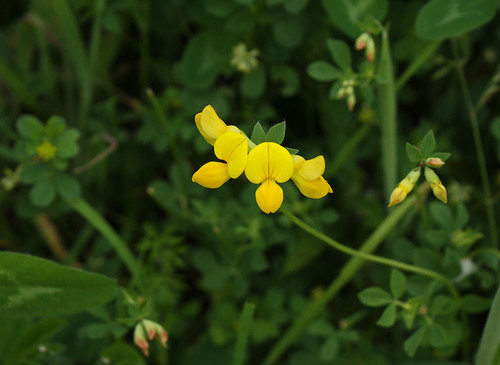
Also common around Cambridge right now is the birdsfoot trefoil. The flowers here are a gorgeous golden yellow but can also have red or orange which gives them their other common name: bacon and eggs.


Birdsfoot trefoil – Lotus corniculatus

Birdfoot trefoil is a legume which means it can actively fix nitrogen from the atmosphere. It can do this with the help of symbiotic bacteria which colonise root nodules and convert inert atmospheric nitrogen into ammonia, a form of nitrogen which plants can use. This ability makes the legumes a natural fertiliser because nitrogen is required by all plants, but unless they can fix it in this way they are reliant on alternative sources in the soil. Poor soil can be boosted by the application of other fertilisers such as good old fashioned manure, or more recently ‘NPK’ (Nitrogen/Phosphorus/Potassium, ‘K‘ being the chemical symbol for potassium). Or, when cycles of crop rotation are used, one of the crops used may be another legume, such as peas, which can help to replenish nitrogen levels in the soil naturally.

Damsels of Fen Drayton

One of the reasons for my trip to Fen Drayton a few weeks ago was to have a look to see which of our dragonflies were out and about. I went in early June and that time of year is a little early for the true dragons to have emerged, although it’s not impossible. But despite the shortage of the true dragons, the hedgerows and lake sides were abuzz with damselflies.


Male red-eyed damselfly – Erythromma najas

Dragonflies and damselfies are the two members of the taxonomic order ‘Odanata‘ or Odanates. There are two sub-orders within the Odanata: the Anisoptera – the true dragonflies, and Zygoptera – damselflies.

Azure damselfly – Coenagrion puella – the blue form of the immature female

Damselflies in the UK are approximately 4-5cm (1.5-2 inches) long and have thin abdomens and are all smaller and more delicate than the chunkier dragonflies. Having said that, the biggest living Odanate is currently a damselfly who resides in the rainforests of Central America, it has a wingspan of 19cm (7.5 inches) and the abdomen is 10cm (4 inches) long. A real whopper!

Blue tailed damselfly – Ischnura elegans – immature femaleBlue tailed damselfly – immature male – Ischnura elegans

Male and female Odanates, and immature and mature individuals, can often be distinguished by colour. The common blue female below is conspicuously brown so the species gets its name from the electric blue colour of the male. The common blue can easily be confused with the variable damselfly which is the same blue colour, but they are distinguished by the black markings on segment 2 of the abdomen which is shaped like a goblet on the variable and a club on the common blue. Also, the antehumoral stripes (on the side of the thorax) are complete on the common blue and broken on the variable. Although, as the name suggests, the variable is indeed variable and it can make distinguishing the two species a little tricky.


Common blue damselfly female – Enallagma cyathigerum – the only common blue we saw on this trip, perched on my friends finger

The black goblet on segment 2 is visible under the front of the wings on the variable damselfly below. But confusingly, it’s living up to its name because the antehumoral stripes are unbroken.

Male damselflies have two sets of paired claspers at the end of the abdomen which it uses to clasp the female on her pronotum, which is the protrusion in the middle of the back of the head. The claspers have tiny hooks on them which match grooves in the female pronotum and in order to avoid procreational mismatches the hooks and grooves are species specific.

Variable damselfly – Coenagrion pulchellum

In the picture above a variable male has clasped his lady by the pronotum. Male damselflies have primary genitalia at the end of the abdomen on the 8th segment, but in order for fertilisation to take place he needs to transfer a ‘spermatophore’ from the primary genitalia to the secondary genitalia on the second segment at the thoracic end of the abdomen. The female then curls round in to the ‘wheel’ position to transfer the sperm to her genitalia which are underneath her 8th abdominal segment.

A pair of variable damsels in the wheel position

All the Odanates are carnivores, and the larvae which hatch from eggs layed under water are ferocious carnivores, the larger ones will even take small fish! On one occasion last year while I was photographing large red damselflies (Pyrrhosoma  nymphula), a large hawker dragonfly (I think it was a migrant hawker, Aeshna mixta) which had been buzzing around higher up for several minutes suddenly dived down and caught one of my large red damsels. In a few seconds the migrant butchered it and ate it on the wing and the inedible bits of wing and leg were discarded and rained down around me.

Scarce chaser – an immature male

A lone Anisopteran, or ‘true’ dragon was spotted on this trip and it was an immature scarce chaser, Libellula fulva. He was a lovely mustard colour and he can be differentiated from the female by the colour of the thorax which is dark grey in the female, and from the male adult who is electric blue. He undergoes quite a transformation in transitioning from immature to adult.

The Magnificent Mute

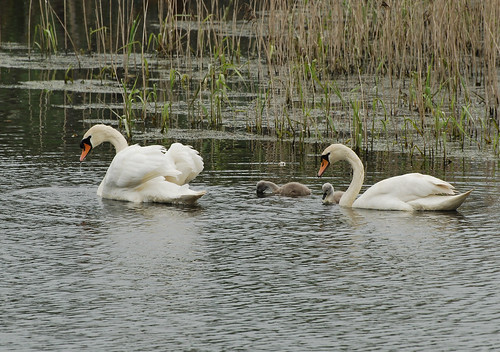
Mute swans are beautiful birds. There are few sights as impressive as a male mute, wings cocked, protecting his youngsters. The family below were on a very small lake at RSPB Fen Drayton and just before I took the pictures below, the male had launched a pre-emptive strike against a perceived threat at the other side of the lake, around 40m away. I couldn’t see who the interloper was but the sight and the sound of the big male as he raced across the lake, wings outstretched and beating on the water, must have been extremely intimidating. It was unnerving from where I was standing!


The male on the left is back with his brood after nullifying the threat. But he’s still got his wings cocked.

The mute (Cygnus olor, Dansk: knopsvane) is one of the biggest flying birds with a wingspan greater than two metres and an average weight for the male of approximately 11kg, it is a very impressive bird indeed and a group in the air flying close by is a real jaw dropper.

In the UK mute swans belong to the monarch and no one else is allowed to take them. They are marked every year, a practice that was originally identifying them  for the monarchs table, but I think Her Maj’s palate has evolved since then and eating swans is, fortunately, no longer fashionable.

It is native to the UK and a resident breeder but when things get too cold on mainland Europe winter migrants can show up here too. They tend to remain in their home territory all year round but can also form groups in the winter and move to a winter feeding ground, presumably this behaviour is driven by the temperature, availability of food and safety in numbers.

The ‘mute‘ in ‘mute swan’ is apparently derived from the fact that the mute swan is not as noisy as other swans. I’ve strayed too close to a nest before though, and at that moment mute was probably the last adjective to spring to mind as they voiced their discontent by making a violent hissing sound to warn me off. I took the hint and retreated as swiftly as possible.

Poison Parsley

Poison parsley is another name for hemlock. Hemlock originally attained notoriety around 2500 years ago when it was used to poison the Ancient Greek philosopher, Socrates. He was executed because his teachings were highly critical of the Athenian state and he was a thorn in the side of various high ranking Athenians. And in those days that tended to limit ones life expectancy.

Hemlock – Conium maculatum

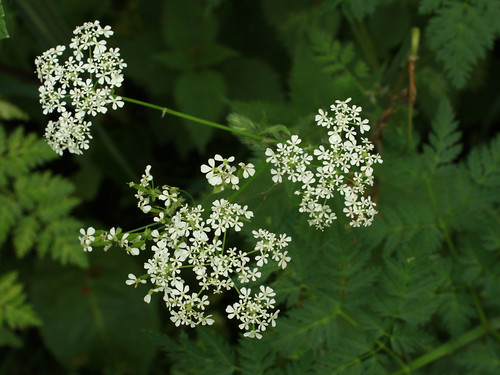
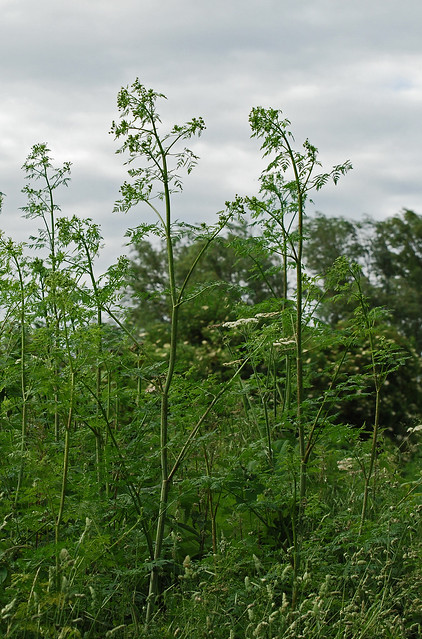
I hadn’t knowingly encountered hemlock until a couple of weekends ago when I was strolling around the RSPB reserve at Fen Drayton, where it was lining the hedgrows in some profusion. It is an imposing plant that was growing taller than me, up to around 2m, it has dark green feathery leaves and white flowers that resemble the hogweeds.


This plant was growing amongst hogweed and cow parsley, and it can appear fairly similar to both, to the uneducated eye.

A variable damselfy (Coenagrium pulchellum) warming itself in the early morning sunshine perched on a hemlock frond

The hogweeds used to provide fodder for pigs, hence the name, but giant hogweed is toxic to humans due to its sap which contains a type of chemical called a ‘furanocoumarin‘ that causes the skin to become sensitive to ultraviolet light. That can result in extremely unpleasant blistering of the skin and blindness if it gets in the eyes. Derivatives of furanocoumarins have been developed as drugs for the treatment of psoriasis.

But the hemlock toxin works in a different way. It is called ‘coniine‘ and the chemical name is 2-propylpiperidine:

I think this compound is remarkable because it is very small for a molecule which has such a specific and catastrophic effect. It exerts its effect by blocking a receptor for a neurotransmitter, acetylcholine, which resides on the membrane on the far side of nerve synapses. This results in a condition called ‘flaccid paralysis‘. Basically, the nerves which facilitate muscle contraction get blocked and stop firing. It starts in the feet and travels upwards, the muscles go floppy and that’s ultimately fatal when the effect reaches the heart and lungs. Socrates’ death was described by Plato and his last words were to his friend, Crito:

“Crito, we owe a rooster to Asclepius. Please, don’t forget to pay the debt.”

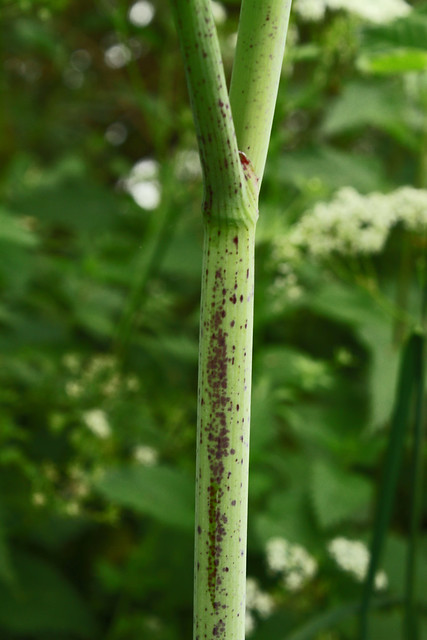
The smooth stem of the hemlock plant

The purple spots on the stem of the hemlock are diagnostic, other similar plants don’t have this, so if you see it, admire it, but don’t touch it! All parts of the plant are toxic and it doesn’t take much to have an effect.

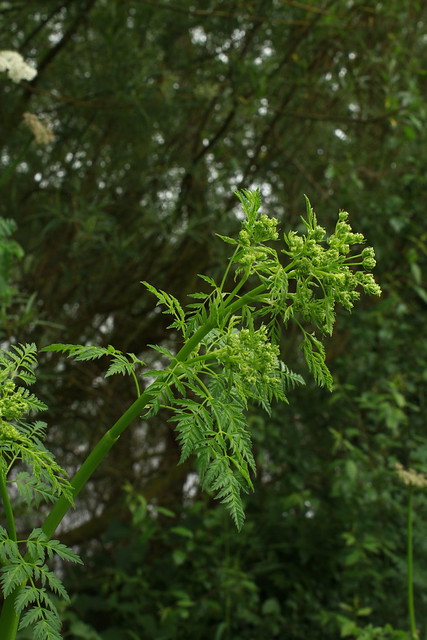
The flower head just before the white flowers emerge

Hemlock has a number of names according the the Royal Horticultural Society: California fern, cashes, herb bennet, Nebraska fern, poison hemlock, St Benedict’s herb, snakeweed, spotted hemlock, spotted parsley and winter fern. Also according to the RHS, its range is Europe only, but it has been introduced to the United States, hence the two names which include U.S. states.

Hemlock grows in damp poorly drained soils and is fed on by various insects including caterpillars and occurs in field borders and roadside verges aswell as along the lakes and ditches where I found it at Fen Drayton.