Category Archives: Walks around Cambridge and Histon

Wildlife sightings in Cambridge

April birdwatch

The activities of the birds in my garden have changed significantly in the last 2-3 weeks. Until then I was seeing multiple blackbird, robin, starling, goldfinch, chaffinch, dunnock, blue tit, great tit, collared dove and house sparrow with less frequent visits by long tailed tit. Since then a pair of wood pigeon have virtually taken up residence in my back garden and hoover up all the bird food before the smaller species get a look in. There is still the occasional dunnock and blackbird on the ground and much less frequent visits by blue tit, robin, starling and chaffinch but the goldfinch have all but vacated. This is interesting because when I’m outside I regularly see and hear groups of goldfinch in the trees around the garden but something seems to be keeping them away from my feeder.

My friend Chris told me he had a songthrush rearing chicks in a nest in a tree in his garden and she fledged four youngsters last week, which is very early in the year, so hopefully she’ll fit in another brood this year. But his garden has been subject to the attentions of a sparrowhawk in recent months so he was worried it would catch the fledglings, but clever use of carefully placed hanging bamboo canes has successfully deterred the hawk and all four fledglings seem to have successfully flown the coop. Songthrush 4, sparrowhawk nil.

Continuing with garden birds, last week it occurred to me that the fat balls hanging in my front garden were requiring replenishment rather more frequently than usual so I guessed the nesting birds were feeding more often. The reason turned out to be rather more amusing:
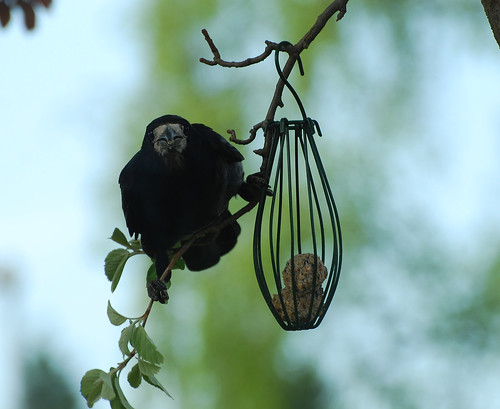

One of the local rooks has worked out that these are edible…
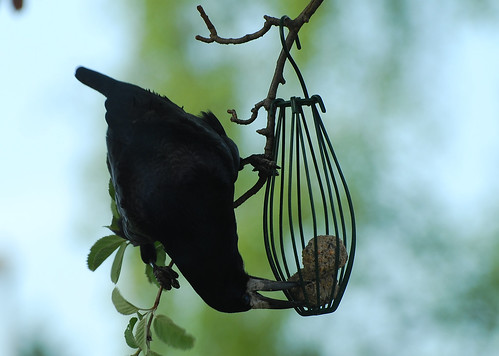
…and that it can reach them. And it takes alot of fat ball to fill a hungry rook!

Slightly further afield in the hedgrows and scrub bordering the farmland around Histon it’s a very good time to survey the local wildlife. As I mentioned in a previous post many species of wild flower now including forget-me-not, yellow archangel…
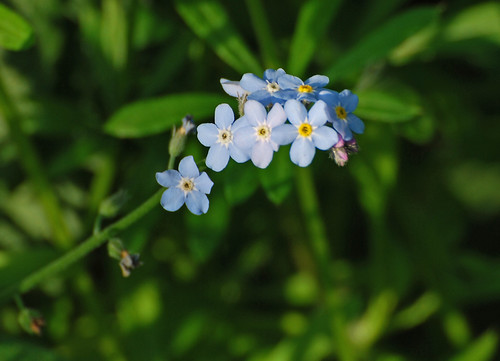

Forget-me-not
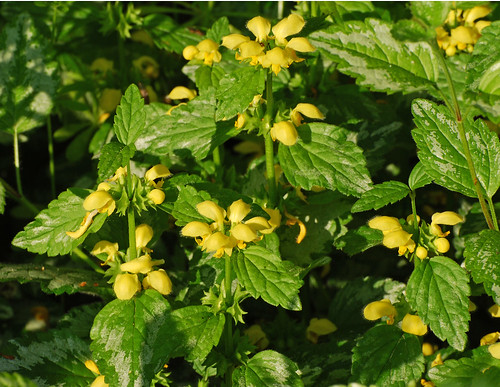
Yellow archangel – Lamiastrum galeobdolon, this variegated version is an invading subspecies ‘argentatum’

…herb robert, cow parsley and periwinkle are all in bloom and lining the paths through the countryside filling them with a palette of colour.

And in the fields, trees and bushes there is an abundance of birdlife:
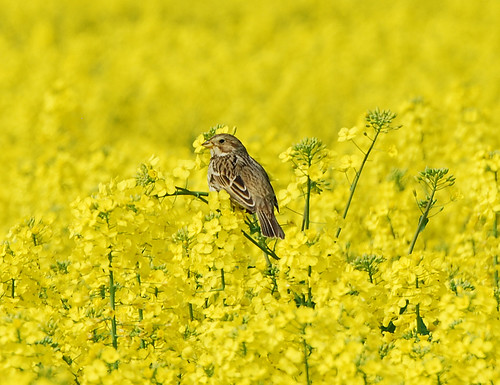

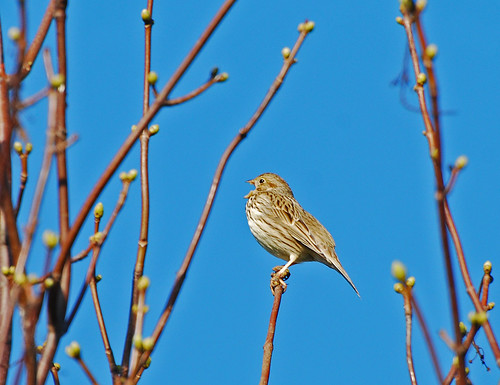
Corn bunting perched in the midst of a field of oil seed rape

The countryside is ablaze with the yellow of rape flowers right now and just occasionally a photographic opportunity such as this one arises. I’m not particularly keen on the vast swathes of rape but it created a lovely backdrop for this corn bunting which are becoming increasingly uncommon.

It’s not unusual to see and hear bullfinch in one patch of scrub near the church in Histon, which is a regular destination for my birdwatching outings. That makes me very happy because I used to see them all the time when I was a kid in the 1970’s but since the 80’s they seem to have been persecuted to near extinction in alot of the UK because of their fondness for the green shoots of commercial fruit trees. They are still fairly elusive but I managed to get this photograph of a male (just!):


Male bullfinch – the female has similar markings but they are not pink she is more pale grey/brown

And in the same field as the bullfinch linnet are in residence, as are willow warbler, chiffchaff and blackcap which have now returned from over wintering in Africa:


Blackcap male
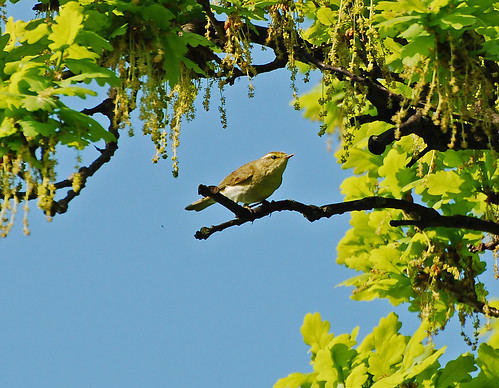
Chiffchaff

…as are whitethroat:
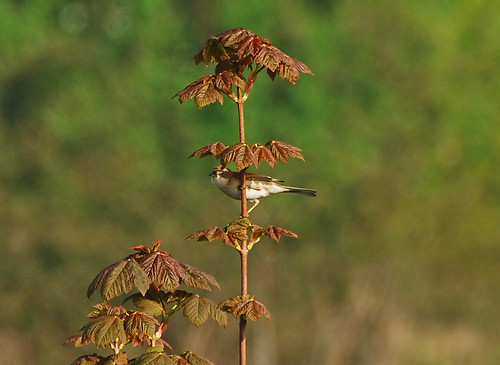

A female whitehroat, one of a pair patrolling a patch of brambles in the middle of the field

This field is an amazing place, I reckon it’s approximately 10-12 acres and it comprises several habitats including open-ish grass, it’s sorrounded by some old established trees: oak, ash and horse chestnut with hedgerow joining up the old trees consisting mainly of hawthorn and in the field itself there are alot of ash and other saplings and some large patches of bramble. Consequently it provides good supplies of food and cover for nesting for a number of different species. Green woodpeckers can be constantly heard yaffling to each other:

…and birds of prey including kestrel, sparrowhawk and buzzard are regularly in the skies above. The green woodpecker are there all year round and are usually hidden in the grass so I’ll flush one off the ground only for it to disappear into a tree too distant to allow a photograph. So this is about the best image I have of one. Most of the common or garden birds are regulars here too, house sparrow, dunnock, blue tit, great tit, long tailed tit:
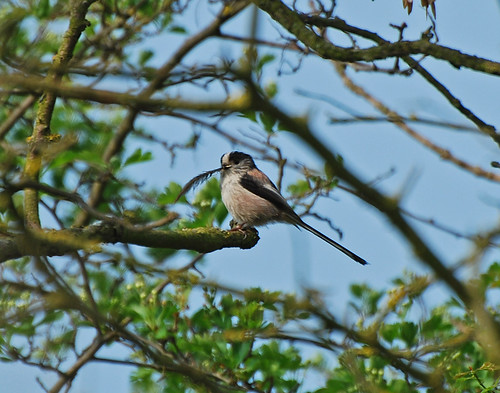
…and chaffinch

…blackbird, songthrush, rook, crow and magpie are all present every day. So a small area of mixed scrub an the edge of the village supports a wonderful number of our birds.

There’s lots to see by simply look up in the village too. On the way back from the playground in Impington with my kids today we cycled along a road under a tree as a jay emerged from a silver birch on the other side of the road and landed in the tree a few metres over our heads. We all stopped to look at it and marvel at it’s amazing colours, and it looked at us for a minute or two before flapping off higher up the tree.
Wandering warblers

In the last two to three weeks I’ve seen several of our migrant bird species which have been returning from Africa and Eastern Europe for the breeding season in the UK. And in the sunny weather we’re experiencing this month lots of bird species, migrant and resident, can be seen during an early morning walk.

Last Sunday the weather was glorious, there was very little wind so there was no traffic noise so the only sound in the air was the buzzing of insects and the singing of birds. And there were plenty.

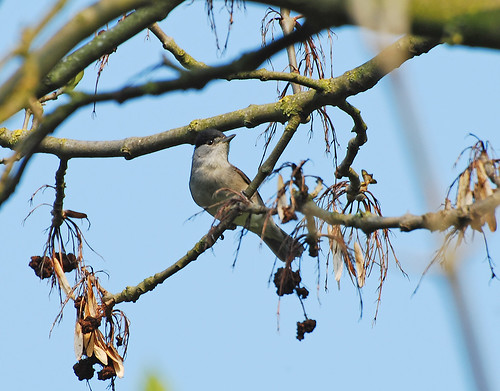
I set off with my friend from work, Dave, who is very knowledgeable about wildlife and a very good photographer too (check out his website here for some stunning images). Dave had come over so I could show him the local Histon wildlife and it didn’t disappoint. Within a couple of hundred metres of leaving my house we were watching a group of five blackcap chasing each other through the trees.


Male blackcap perched in an ash tree

Male blackcap are very aptly named, they have a very prominent black cap which stops just above the eye, the female and juveniles less so, theirs are a lovely rufous brown colour and also very distinctive. The blackcap is a short distance migrant in western and southern Europe and I’ve heard that there is now a population in eastern Europe which migrates to Western Europe and the UK instead of heading south. Maybe that’s down to global warming causing increased spring temperatures here.

Other migrants which we saw in good numbers, and which I’ve seen around north Cambridge for the last three weeks or so, are chiffchaff, willow warbler and whitethroat. The chiffchaff heads south to the Mediterranean for winter and some individuals carry on to sub-Saharan Africa.

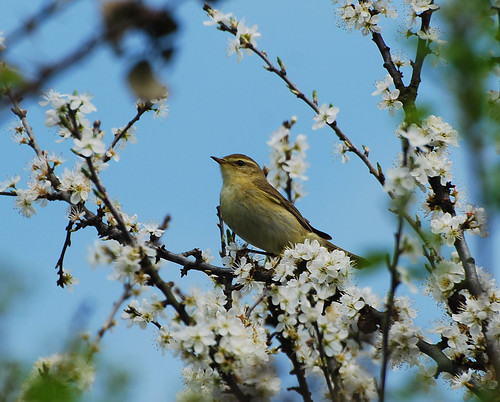
The willow warbler heads further south to tropical sub-Saharan Africa for the winter:


Willow warbler sitting in the top of a hawthorn tree

Chiffchaff and willow warbler are very difficult to tell apart visually, but they can easily be distinguished by their song. The chiffchaff is named after it’s call which is a single note sung with alternating pitch, the willow warblers song is more musical and easily distinguished from the chiffchaff.

Whitethroat of which there are two species – common and lesser – over-winter in sub-Saharan and northeast Africa respectively.

Common whitethroat male singing from his perch on a bramble

It’s good to see the migrants returning from Africa, I don’t know what percentage of individuals that start what must be an extremely hazardous journey make it back to the UK, but the willow warbler in particular is a very common bird so good numbers must make it.

The other migrant which I’ve seen in the last week, which is the real harbinger of summer, is the swallow. I only saw a single one first time on the 16th April, which was busy hoovering up flies over a field of oil seed rape, but yesterday I counted 7 sightings over the same field, so I think the numbers are increasing. And since then we’ve had real summer weather!

Guns Lane bird walk 2nd April 2011

I acquired a voice recorder last week. It’s tiny – not much bigger than a  cigarette lighter – and it means I can record what I see alot more accurately as I don’t need to rely on memory. Which is a good thing as my memory is not brilliant. The weather was glorious on Saturday and Sunday morning so the timing of my acquisition was pretty good because there was an awful lot to record when I was out and about.  The birds are very busy right now building nests and in the last couple of weeks blackbirds have been collecting strands of hay ejected from the rabbit hutch in my garden and I’ve seen various other species with beaks full of grass, twigs and moss.

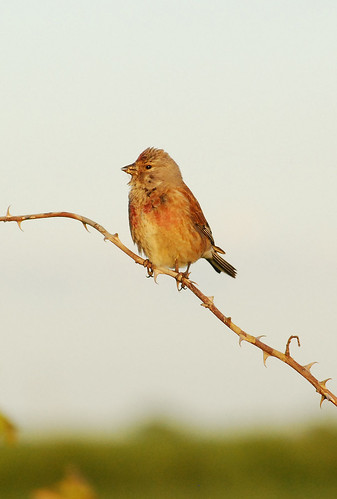
Apart from enjoying the sunshine I saw two species of bird for the first time this year – blackcap and linnet. A pair of linnet appeared to be in residence in a bramble at the southeastern end of Rowleys Meadow, Histon. (On the map, Rowleys Meadow is the area of green scrub in the middle.)

Linnet perched on top of a bramble

The blackcap were in the northwestern hedge row at the opposite end of the field to the linnet and perched, tantalisingly, directly over my head, so my photographs are all of the underside. I saw one pair together and two individuals on this walk which is almost as many as I’ve seen in Histon in total in the last three years.

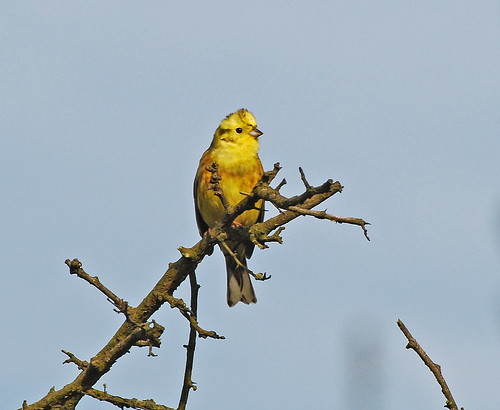
Also in the same hedge along the northwest periphery were several yellowhammer and in the bright sunshine the colours were amazing:


Yellowhammer male sitting atop a branch beautifully lit by the early morning sun

Yellowhammer are a species of bunting that are resident in the UK so can be seen all year round and breed here. They feed predominantly on seeds but also on insects which they harvest from the ground. I often see them perched on top of hedgerows and they fly to the ground when flushed where, despite their colour, are often next to impossible to see. The female has similar markings to the male but  is much less yellow.

Pair of yellowhammer, male  on the left and female to the right – I was very pleased to get this picture as they’re normally so difficult to see on the ground
Yellowhammer are currently on the red list due to the decline in numbers over recent years, although there seem to be good numbers in my locality and I’ve even had one feeding in my garden!

Many species of birds were busy this weekend, including a buzzard, a pair of sparrowhawk wheeling around way up high, and a pair of kestrel. Closer to the ground, blacdbird, chaffinch, greenfinch, long tailed tit and songthrush were all very much in evidence.


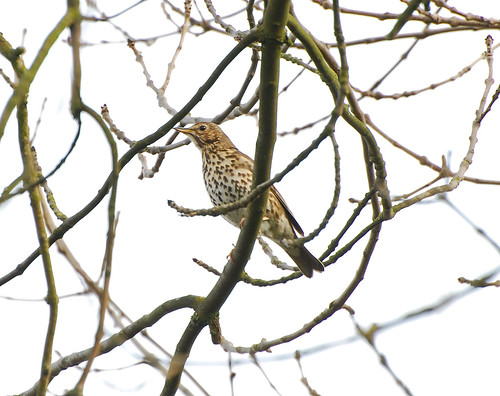
The unmistakably speckled underside of a songthrush

Butterflies are also starting to emerge in the warm weather and a couple of red admirals and two others which I couldn’t see close enough to identify were floating along the brambles.

A good photograaph of a blackcap eluded me this weekend as I only managed to shoot it from directly underneath so the cap wasn’t visible, but I shall have another look this weekend and hopefully post a ;picture next time.

Springtime song

The weather this  Saturday was glorious – no wind, blue sky and warm sunshine. Perfect for a stroll around the countryside. So I set off around 8am and apart from the warmth, the first thing I noticed was the air laden with the  fragrances of spring blossom.

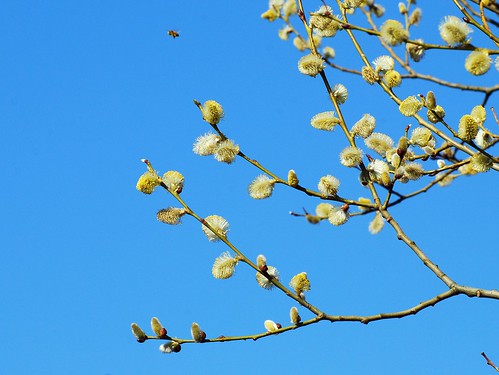
In the last week the spring weather has caused trees and flowers including the willow to blossom…


Pussy willow – the furry catkin of the willow tree against a gorgeous blue sky, and a lone honeybee

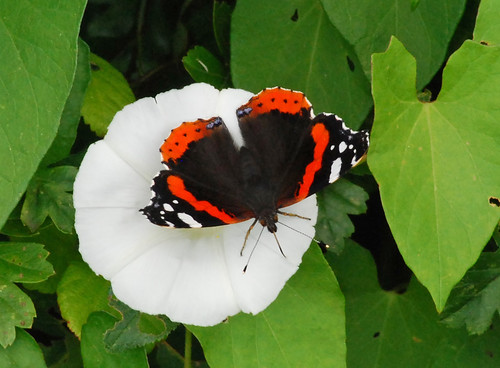
Butterflies are waking up after hibernation. A red admiral (Vanessa atalanta) flew through my garden last week and a friend told me he saw a brimstone in his garden and another wended its way gently past a window at work today.

Red admiral on a bindweed flower
Red admiral feeding on a convulvulus flower

Red admiral are resident and can be seen all year round when weather permits. Brimstone (Gonepteryx rhamni) are also resident and hibernate over the winter but they are now out and about aroused by the warm weather. Bumble bees have also become more abundant in the last few weeks and I now see them on most days.

The birds are all singing and a walk through parks and fields is accompanied by the song of greenfinch, blue tit, great tit, dunnock and robin, most noticeably. And on my hike across the fields abundant yellowhammer, reed bunting and corn bunting, three Emberiza species, were all in full voice:


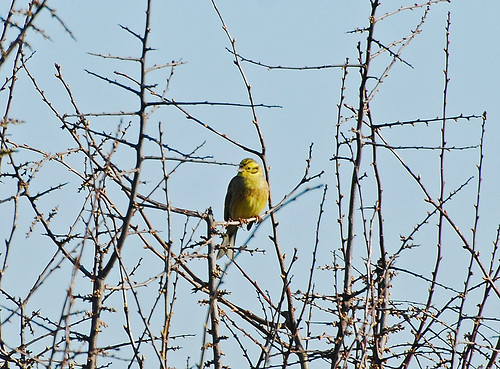
E.citrinella – one of many yellowhammer, this one is a male, patrolling the hedgerows

E.schoeniclus – reed bunting male

E.calandra – corn bunting making its very distinctive call

Yellowhammer, reed bunting and corn bunting perch in hedgerows and  make feeding forays to the ground in the neighbouring fields where they feast on seeds and during the breeding season and  summer will eat invertebrates. I pass one location where there has been a mixed group of 20-30 reed bunting and yellowhammer present regularly over the last month. Corn bunting have made a recent comeback to the fields around Histon, they disappear at harvest time, middle to end of August, and reappear in the Spring when they can be seen perched on top of brambles, bushes and short trees making their very characteristic song.

Skylark were also singing constantly. Farmland species such as these have seen their habitat severely depleted in recent times, consequently their numbers are reduced as a result.

A red fox and a small group of roe deer put in appearances, the fox was heading a cross the fields to Landbeach heading away from a place I photographed cubs last year, so I hope they are breeding here again this year.


Roe deer – Capreolus capreolus – the leader on the right is sporting native antlers

A pair of crows chased off a buzzard which thermalled over the fields before disappearing into the haze towards Waterbeach and a flock of several hundred black headed gulls squawked noisily over the fields. I observed them for several minutes with binoculars and I think they were all black heads, but there could have been a few individuals of other species mixed in. A sparrowhawk flew at very high speed from the Linnet Hedge across South Bean Field before rising up and passing through a gap in the treeline, causing mayhem with the birdlife in the gardens beyond and a female kestrel was looking for rodents in the South Fallow Field. It was the first time I’d seen birds of prey here for several months so it was great to see three species on one walk.

Bad birdwatching

The title of this post is unashamedly borrowed from the book “How to be a bad birdwatcher” by Simon Barnes (The Times sports writer and RSPB columnist), which I started reading today while I was waiting for my son to finish his swimming lesson. Having discovered what was meant by ‘bad birdwatching’ I can’t think of a better way to describe my fascination with birds and wildlife:

“…the first aim of being a bad birdwatcher: the calm delight of the utterly normal, and the rare and sudden delight of the utterly unexpected”. Genius.

I’ll write a review of the book when I’ve finished it, but please don’t hold your breath, reading a book is a fragmented and necessarily slow process these days.

Please forgive my rambling but there is a point to this. This morning I was planning to head to the lake beside the A14 between Histon and the northern edge of Cambridge to look for grebes, geese, ducks and cormorants. However, in the course of the last week I’ve seen green woodpecker on several occasions in and around the carpark at work on Cambridge Science Park. As I still don’t have a good photograph of a green woodpecker I reasoned an early morning stroll around work may enable me to put that straight. So that is where I headed.

Initially there were no woodpeckers to be seen but on a dull grey morning the trees and bushes were alive with birdsong:


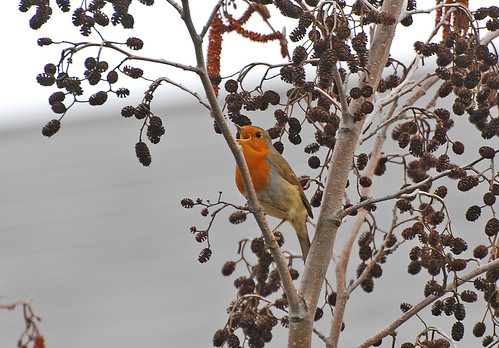
Robin singing his heart out in an alder tree. He wasn’t alone, plentiful dunnock and wrens were doing the same

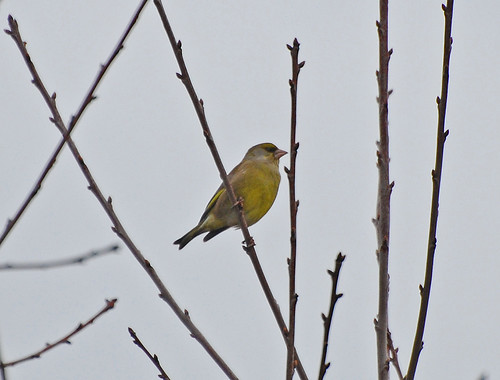
…as were numerous greenfinch, but this one clammed up as soon as I tried to photograph him. (Whilst taking this picture I was approached by a security man who said my camera looked like a shotgun. With the lens hood on at full zoom maybe a blunderbuss… but not a shotgun, surely!)

Cambridge Science Park is located on the northern edge of Cambridge bordered by the A14 to the north and the A10 to the east, it is around 1km in diameter and in keeping with the rest of this part of Cambridgeshire is as flat as a pancake. It was created in 1970 and some of the old trees and scrub remain between the buildings and the landscaping. These, along with small lakes and streams in drainage ditches form a good variety of habitat which is generally undisturbed.

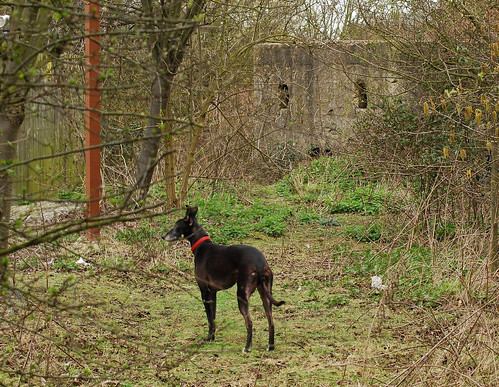
I’ve worked on Cambridge Science Park for 15 years but I had no idea this  WWII pillbox was tucked away in the undergrowth until yesterday. (The pole in front of the dog has bat boxes at the top so I was very pleased to see the proactive approach to conservation).

Consequently there is alot of birdlife, from kestrels and sparrowhawks to water birds – ducks, coot, moorhen – and songbirds – greenfinch, goldfinch, great tit and I’ve seen goldcrest and lapwing on rare occasions. There are plentiful rabbit too and as a result it’s not uncommon to see foxes out the window hunting for a meal.

The Science Park was vibrant with birdsong during my walk and as time progressed the sun came out and it got warmer. I didn’t see any unusual species but the sheer numbers and volume of sound made for a very enjoyable walk.


One of numerous dunnock livening up the Science Park with their Springtime singing…

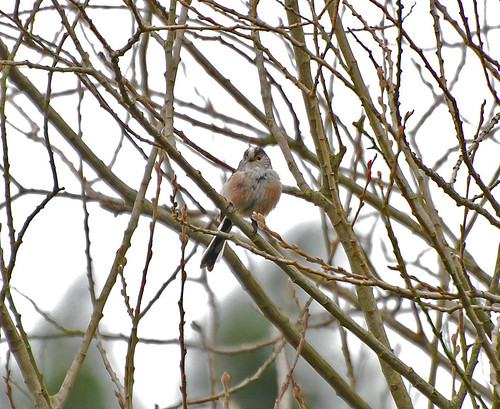
…and one of a flock of long tailed tit

A male great tit feeding on one of several bird feeding stations

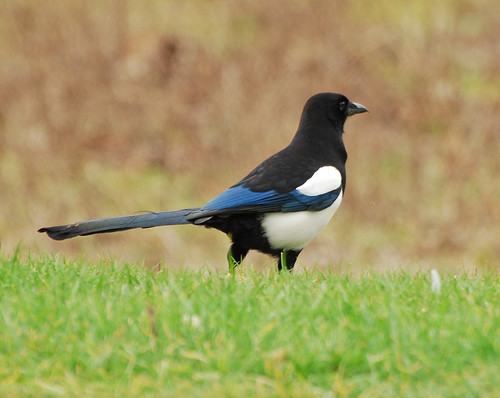
… a magpie

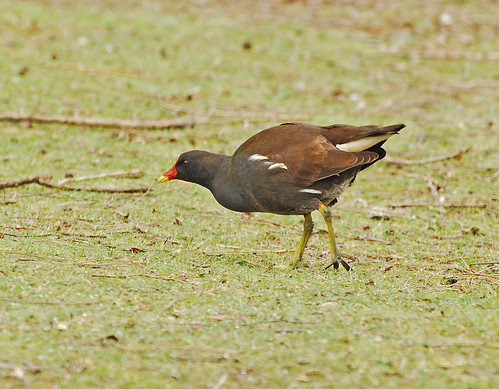
…and a moorhen

Lots of birdlife to be seen, and all within a 500m radius of where I work. But I still hadn’t seen a green woodpecker. So I decided to head over to the lake within 500m of the Science Park where I know there are waterfowl including greylag geese… and green woodpeckers.

The lake didn’t disappoint. There were moorhen, mallard, greylag geese, great crested grebes – and even a single green woodpecker which was flushed up from the ground and disapperad into some distant and inaccessible trees.


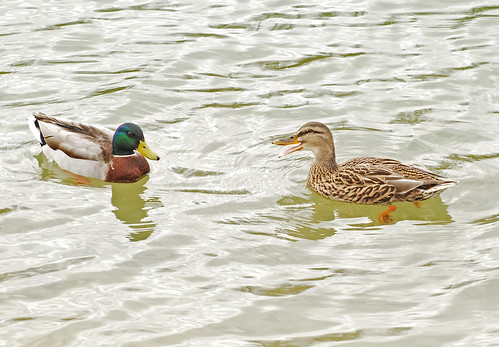
Male, left, and female mallard

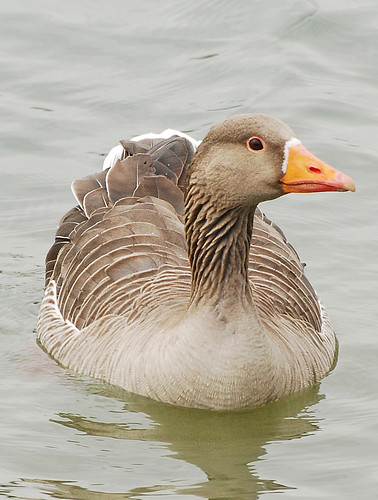
Greylag goose

The greylag goose is the bulkiest of the Anser goose genus and is the species (Anser anser) from which domesticated geese originate. Studies of greylag geese led the zoologist Konrad Lorenz to rediscover the theory of imprinting – the phenomenon you are probably familiar with, of baby nidifugous birds (those which leave the nest at a very early age) imprinting on their parents, which can be a human being if that is the first creature they encounter after hatching.

Konrad Lorenz was an interesting man and a glance at his Wikipedia entry reveals he was an Austrian biological scientist, born in 1903. He graduated from Vienna University as a medic in 1928 and received his zoological doctorate in 1933. He joined the Nazi Party and indicated his support for their ‘racial hygeine‘ theories (one of the worst obscenities of the 20th century in my opinion), accepted a chair at the University of Konigsberg in 1940, joined the Wehrmacht as a medic and was shortly after captured by the Russians and eventually repatriated to Germany in 1948. He went on to study aspects of animal behaviour, later extrapolating these to apply to humans, and in 1973 he received the Nobel Prize for medicine for studies on social behaviour patterns.

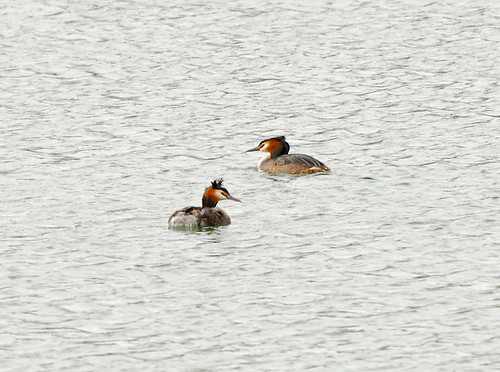
Returning to natural history, there was a pair of great crested grebe on the lake which I were hoping were going to display:

But this time I was unlucky. When displaying, they swim away from each other then turn simultaneously and swim rapidly toward each other and when they meet they rear up in a necking dance before repeating the whole process. I haven’t yet been able to get photographs of this beautiful courtship ritual, but I’ll keep looking.

I said at the top of this post that there was a point to the ‘bad birdwatching’ reference. I set out yesterday specifically to try to photograph green woodpeckers which I think are spectacular. I only caught a fleeting glimpse of a woodpecker, and no pictures, but I had a lovely time looking and seeing all the other wildlife.

So I guess by Simon Barnes definition I’m a fairly shabby example of the birdwatching fraternity! But I’ll live with that.


Histon forays, weekend 5th – 6th March 2011

This weekend I’ve been out and about on my regular walks north of Histon. (Click here for a sketch map of the locality). Yesterday I was out around the fields to the north between Histon and Cottenham. It was a cold grey morning and it was noteworthy for several reasons.

The birdlife was plentiful. (Click here for my wildlife diary where I’ve listed all sightings). Just a few minutes after telling my friend, David, that I hadn’t seen a corn bunting for around 6 months but that they frequent that area in numbers during the summer and disappear very quickly after the harvest, we saw one sitting in a bramble:

It was the first one this year and the first of several we spotted yesterday. It was a good morning for buntings in general. Last time I was here, around three weeks ago a mixed flock of reed bunting and yellowhammer were  in the east end of the Owl Shed Hedge (see post from 29th Jan entitled “Buntings abound: 29th and 30th January 2011). They were there again on Saturday and reed bunting were present in most of the hedges and ditches we peered into. Skylark were present in large numbers too, singing up high and darting around low. A look  on the floor of the Old Water Pump, which has a platform for barn owls to roost and breed, revealed numerous owl pellets most of which were very old, but some of them looked fresher, possibly from within the last 6 months.

One of the ‘Pump House’ barn owls from three years ago

This is a very good thing as barn owls haven’t bred there since 2008 and I haven’t seen one in the vicinity since last year, and then only a couple of sightings all year.

Other appearances which livened up the walk were a muntjac deer, Muntiacus reevesi, introduced from China to the UK in the first half of the 20th century, which was rooting around at the back of the gardens of the houses on Cottenham Road, and a stock dove was sitting in the trees in the same area. I may have seen these before and mistaken them for wood pigeon, but David’s expert knowledge put me straight on the differences. They don’t have the white neck and wing bands of the wood pigeon and they have a dark eye which is diagnostic – that of the wood pigeon is lighter.

I set off in the other direction this morning to head out of Histon north west towards Oakington along Guns Lane and into Rowleys Meadow. I took a slow walk and was very adequately rewarded. Right at the start of the Lane where it joins Cottenham Road blue tit, great tit, greenfinch, chaffinch, starling and song thrush were present and finches were singing constantly,


Greenfinch male singing for a mate in the top of a tree on Guns Lane

…and a chaffinch male displaying his gorgeous black and white tail in a fan. I’ve posted a few photographs of chaffinch lately, even though they’re common I think they’re spectacular!

A couple of surprises today, firstly the number of bullfinch; I saw a single male in Rowleys Meadow which may have had a female with it but I couldn’t see it well enough to confirm, and another pair of males flew along Guns Lane hopping from hedge to hedge infront of me for 50-100m. And secondly, the number of dunnock. They were present in every bush and bramble in the Meadow and on the Lane singing constantly – if you haven’t heard dunnock song, have a listen here, it’s lovely.


Dunnock sitting on a bramble singing

Dunnock have a rather interesting approach to breeding. They don’t pair off as most birds do, a female will be mated by at least two males who will stimulate the females to eject a rivals sperm from the cloaca with their beak. DNA analysis has shown young in the same clutch can have more than one father. I like dunnock, they look boringly grey/brown when seen flitting around the undergrowth, but when they catch the light they are certainly not drab. And their song and their antics at breeding time are anything but boring!

Just as I was about to leave the countryside and head home I noticed a pair of starling sitting on top of a hedge checking out me and the dog. As I turned to point my camera at them they didn’t fly away but simply kept an eye on me so I could get this picture:

The glorious plumage of the starling!

Spring is well underway now and the activities of the wildlife are reflecting that. It’s a great time to be poking around in the woods and hedgerows.

Fen Drayton nature reserve

Before I tell you about my outing to Fen Drayton here’s a short update on the forest sell off. After denying they are backtracking, the Government has said they may reduce the amount of forest they are getting rid of. Plans to lose 15% of the 258,000 hectares of publicly owned forest are on hold whilst the government ‘re-examine the criteria‘ for the sale. I’m hoping this is government style smoke-and-mirror speak for ‘we’re deciding whether we should proceed at all‘. Time will tell. I think any reexamination is good news and maybe a sufficiently loud public outcry will force the powers that be to sit up and take notice of the vox populi on this issue, and maybe a few others too.

I didn’t manage a wildlife post last week, other events overtook me including the weather, which was blowing a gale at the weekend so I was struggling to see anything through binoculars and photography was completely out the question! So apologies for the omission. There were a few highlights from last weekend though: in a tree in the middle of a field behind Abbey Farm north of Histon I saw a pair of kestrels copulating – which is a fairly unusual sight but it’s good to know the local kestrel population should be increasing this year. Further round towards the Girton road was a big mixed flock of around 50 starling, a similar number of redwing and around 200 fieldfare feeding on the ground and as I was counting these a little egret passed over. I’d been told by a dog walker a couple of weeks ago there was one in that area but this was the first time I’d seen it for myself. Egrets are a comparatively recent addition to the fauna in the UK and they are slowly finding their way northwards in England. The first time I saw them was in the fish market in the middle of Victoria, the capital of the Seychelles, so they have very exotic associations for me and it’s great to see them so close to home.

I set off fairly early in the morning yesterday with my friend to head for Fen Drayton nature reserve which lies between Cambridge and St Ives. It’s a former gravel pit consisting of twelve lakes and ponds which is currently managed by the RSPB. There is a big area of water here interspersed with grassland, scrub woodland, some older more established trees and plenty of reedbeds. So it has a diverse range of habitats that are managed for wildlife and is therefore a good place to see birds.


Far Fen lake showing the varies habitat at Fen Drayton

Despite raining on the way up the A14, by the time we got to the reserve the rain had stopped, leaving complete cloud cover, so the light was very grey as you can see from the landscape shot above. Otherwise the conditions were good: mild, gentle breeze and the occasional, albeit brief, moment of sunshine.

The omens were good too when on the way to Fen Drayton we saw a hare running across a field, and on the approach to the reserve three bullfinch including at least two males were flitting along the hedge just in front of the car. When we were getting out of the car in the car park we could here a cetti’s warbler singing and three green woodpeckers rose up off the ground in quick succession just in front of us.

As we stopped to look at a group of tufted duck on the small pond north of Holywell Lake a jay which we had watched fly across the field appeared in some dead trees on an island in the pond and started stripping big chunks of bark from the tree, possibly looking for food it had stashed there previously. Jays are amazingly good at stashing and are aware that their fellow jays do the same and so will keep a look out to see if they are being watched. If they see another jay paying attention to their activities they will pretend to stashe and then fly off and hide the swag somewhere else.


Four tufted duck – one female and three males on the pond north of Holywell Lake. Note the piercing yellow eyes and the crest

Tufted duck are resident on lakes and we also get migrants visiting in the winter when they stop over on rivers and estuaries too. They’re omnivores and feed by diving to the bottom to sift food from the mud. I think they’re handsome birds especially when they turn their yellow eye to look at you.

Constant companions throughout our walk were chaffinch and great tit. They were present in numbers in almost every tree or bush I looked in.


Chaffinch male in a tree singing for a mate

There were a plethora of other small birds including blue tit, wren, dunnock, robin, goldfinch and long tailed tit. On a bright day it’s now a good time of year to look for and photograph birds because they are actively seeking mates and there are no leaves on the trees to conceal them.


One of a flock of around 7 long tailed tits whizzing through the trees – they’re fiendishly difficult to photograph like that so this is as good as it got!

There was almost a full house of the five common crows – jay, carrion crow, rook – but no jackdaw. There were quite a few magpies though:


This chap was bouncing around the car park

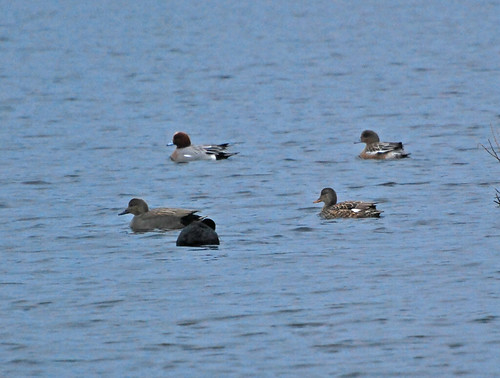
Coot abounded on all the lakes but the stars of the day were the ducks of which there were many species including our common or garden mallard, shoveller, tufted duck, gadwall and wigeon…


A single male wigeon on Oxholme Lake

… but the real star of the show was the goldeneye. There were displaying male goldeneye on Far Fen Lake but alas they were much too far away to get a photograph. They are also resident breeders with migrants arriving in the winter months too.

Mute swan were present on several of the lakes and a couple came over in flight too:


The A380 of the avian world…

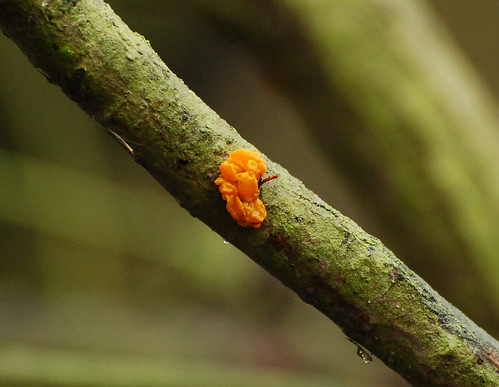
And as with all good nature reserves the wildlife wasn’t solely ornithological. This beautiful little fungus was on a stem next to the path.


Dacrymyces chrysospermum – unfortunately I couldn’t find a common name for this resupinate fungus but its sumptuous colour against the green lichen on the tree stem is striking.

All in all Fen Drayton was a great venue for a Saturday morning wildlife adventure and I’ll be posting from here again before too long.

Buntings abound: 29th and 30th January 2011

This weekend my meanderings took me to the open fields Histon and Cottenham, an area I haven’t properly explored for quite a long time. As I set off early on Saturday morning the weather was murky and very cold and consequently I was feeling pessimistic about encountering the local wild creatures.

Fortunately I was mistaken. The wild creatures were there aplenty. Flocks of mixed gulls, rooks, Corvus frugilegus, (N.b. I’m planning to make a taxonomic index of Latin names for the species on an adjacent page so I can avoid writing them here), and in particular, wood pigeon, Columba palumbus. Wood pigeon can often be seen in flocks but on this occasion there were many flocks, the  largest containing thousands of individuals. They are a farmers curse as they can devastate fields of new shoots, hence the sound of shotgun fire punctuating my progress. My father told me stories of my grandmother being given wood pigeon during World War II – a valuable source of free meat – and when opened up the crops liteally exploded as they were stuffed completely full of fresh green shoots. Multiply that up by several thousand birds and the damage they can do to crops is obvious. Still, they’re impressive to watch in those kind of numbers.

My aforementioned pessimism was tempered by the sight of hazel trees, Corylus avellana, covered in catkins, the first suggestion of approaching Spring time.
Hazel saplings festooned with the first catkins of 2011 – Spring is imminent!

And indeed, a friend told me on Monday morning she had seen daffodils shooting in the village. So I reckon that makes it official. In the same hedgerow as the catkins – the Merlin Hedge – (click here for a sketch map of my walk route), were a flock of greenfinch, Carduelis chloris, and a small group of fieldfare, Turdus pilaris, feeding on the ground. The greenfinch were manic, chasing each other as a flock around the fields either side of the hedgerow.

Turning right at the end of the hedge heading past the Yellowhammer Hedge – which didn’t contain any yellowhammers, or indeed any other birdlife – a big fox, Vulpes vulpes, was standing in the middle of the field beyond watching me and the dog:


A fox taking a keen interest in what me and the dog were doing

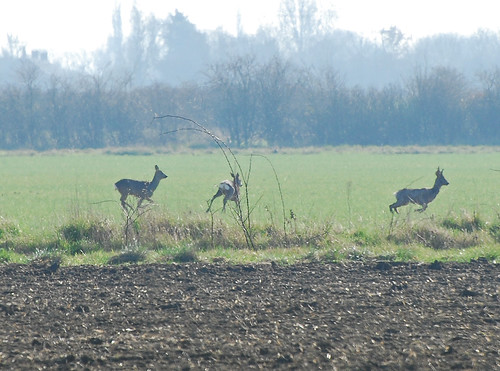
The fox was around 300m away and the quality of the image gives a good idea of the murky grey weather condiitions. Doesn’t convey how cold it was though! This one has a distinctly grey coat and I’ve seen foxes in this area before with similar coloration, so it could be the same one or one of his offspring. He’s close to where foxes reared a litter of cubs last year so he could be one of that family.  After the excitement of seeing the fox, I was scanning the adjacent field for any other signs of life and spotted a second fox – it could have been the same one but he’d have had to move very fast to get to the second location. And as it disappeared through a hedge a group of three roe deer, Capreolus capreolus, entered the same field.


Roe deer bounding across a field – and a bird taking to the air somewhere between me and them

The dog spotted the deer as soon as I did and immediately pricked his ears up, he was around 25m away from me and in order to avoid any dog/deer interaction I called him and the deer instantly turned to look even though they were around 300m away. They have incredibly acute hearing.

Between us and the deer were a flock of skylark, Alauda arvensis, on the ground (it could be one of them taking off in the photograph). It was impossible to count them accurately as they were whizzing around at very high speed close to the ground where their camouflage rendered them almost invisible, but I estimate there were between 10 and 20.

I’d been hoping to see yellowhammer, Emberiza citrinella, and I’d spent some time peering at the Yellowhammer Hedge and the surrounding fields but without seeing many birds at all. Then as I approached the end of the hedgerow leading to the Owl Shed I could see a flock of small birds flitting between the hedge and the Fallow Field and they turned out to be a mixture of reed bunting, Emberiza schoeniclus, and yellowhammer:


Mixed group of reed bunting and yellowhammer


Female yellowhammer
…and a male of the species. What a glorious colour!

Both species were numerous and could be seen flying around the hedge all the way along to the Owl Shed and dropping down onto the ground to look for food and to hide from me.


Reed bunting male

Young male reed bunting

The remainder of my Saturday morning sojourn was not quite so lively but numerous fieldfare, redwing (Turdus iliaca), chaffinch (Fringilla coelebs) and a kestrel (Falco tinunculus) were busy around the pig farm.

On Sunday 30th January the weather was brighter and more mild so I set off again towards the Owl Shed to try to get some more photographs. Despite the improved weather there was nowhere near the amount of wildlife around I’d seen the day before, although a hare (Lepus europaeus) appeared in the field where I first saw the fox. And fortunately the reed bunting and yellowhammer were still in the end of the hedgerow where I’d left them on Saturday, although not in the same numbers. So I got my pictures and then had to rush home to get off to my nephews 18th birthday party.

A very enjoyable weekend all round, and in particular the Emberiza species congregated in the Owl Shed Hedge.

Early morning duck walk 22/01/2011

Before I sally forth on my intended theme for this post, and continuing the astronomical precedent from my earlier post where I included a picture of the recent partial solar eclipse, I want to share a picture of the moon I took last week. At this time of year opportunities for wildlife photography in the evenings are severely limited. But on Tuesday and Wednesday (18th and  19th January) the moon looked spectacular early in the evening when it was low in the eastern sky,  and also very early in the morning, around dawn, when it was low in the western sky. So on Tuesday I rushed home from work, grabbed my camera and headed out the door with the dog in tow to try some lunar photography. I think the moon is an amazing thing and I can’t resist the opportunity to photograph it, and this is what I got:

Full moon low in the eastern sky 180111
Full moon low in the eastern sky around 6pm on 18th January, 2011 (f5.6, 1/800, ISO 800, 300mm)

After my lunar digression, and as alluded to in my post ‘Avian East Anglia’ I have been out taking a look at the bird life at Milton Country Park. I set off with my friend just after 8am on a very cold grey Saturday morning, which became progressively colder, greyer and rainy as time went by. Consequently I was less than hopeful of seeing much in the way of wildlife.

My fears of a fruitless walk at the Country Park were unfounded. As we entered the park a great spotted woodpecker (Dendrocopos major) was making plenty of noise high in a tree and during the walk we saw two and heard at least two others. I don’t usually use a spotting scope but my friend, David, has one and it really does enable some terrific close up views of  distant creatures. We viewed a great spotted woodpecker at the top of a tall tree a good 100m away and the scope brought it right up close. I may add one to my next Christmas list.

A distant great spotted woodpecker – if only I could digiscope! This one wasn’t taken on Saturday… but it was at Milton Country Park

A cock bullfinch (Pyrrhula pyrrhula) was busy feeding in some bushes at the edge of a lake and plenty of blue tits (Cyanistes caerulius) and great tits (Parus major) were to be seen. A brood of six last years mute swan cygnets (Cygnus olor) were communing  in a quiet corner of a lake:

One of six mute swan cygnets

And a pair of adult mute swans were on the slipway into an adjacent lake. A flock of mixed gulls consisting predominantly of black headed gulls (Larus ridibundus) with a single common gull (Larus canus) in their midst shared a flooded field on the edge of the Park with a flock of 57 lapwing. The lapwing would take to the air periodically and fly circuits round the Park before settling down again and each time they rose there seemed to be more of them, but a final count on the ground came to 57. I was pleased to see this number as I rarely see flocks of lapwing greater than 20  individuals.

Coot (Fulica atra), cormorant (Phalacrocorax carbo), a moorhen (Gallinula chloropus) and a lone kingfisher (Alcedo atthis) made appearances but the stars of the day were the various duck species. I like ducks and it’s always good to see more than just mallard:


Male tufted duck resplendent against the oleaginous steely grey-blue of the water in the early morning

Note the prominent tuft and the yellow eye of the tufted duck (Aythya fuligula) above. It was tricky to get good quality images due to the low light of the murky early morning. I opened up my lens (Nikon 70-300mm VR2 zoom) to f5.6 and was using a shutter speed of 1/80s at 300mm zoom. The ISO was set to 800 to cope with the light hence the slightly grainy look.

A flock of approximately 20-30 shoveler (Anas clypeata) were feeding on the same lake as the tufted duck:


Small group of shoveler – see the splendid beak of the male in the background (top) and in the foreground (lower)

Shoveler diet consists of small insects, molluscs, crustaceans, seeds etc. which they filter from the water with huge spatulate beaks by sweeping the beak from side to side with their whole head underwater whilst swimming round in tight circles. They come up for air only very briefly which meant I had to take quite a few pictures before getting one with the beak visible. Beatiful birds, I like these.

Several small groups of wigeon (Anas penelope) and gadwall (Anas strepera) mingled with the other water birds such as the numerous coot, gulls and cormorant.


A coot in the foregound with a pair of gadwall close by and a pair of wigeon in the background

By the end of our walk I was frozen but it was well worth braving the cold to see such a diverse range of birdlife. I shall return there on a sunny morning to try and get some less grainy photographs!


9th January birdwalk

The weather on the 9th was dominated by two features: bright warm sunshine and a biting northerly wind. They were combining to make some brisk but very pleasant walking weather so I spent the morning exploring Guns Lane and fields north of Histon. Rowleys Meadow was very quiet, apart from the occasional blue tit (Cyanistes caerulius) or wood pigeon (Columba palumbus) and numerous unidentified gulls gliding over. Unusually, the only interesting sightings were a song thrush (Turdus philomelus), a pair of magpie (Pica pica) and a flock of hundreds of fieldfare (Turdus pilaris) which drifted over the field east of the Meadow – none of which were close enough to photograph.

Not long after emerging from the Meadow and turning  north up Guns Lane the situation changed dramatically and the hedges were full of birdlife.  Blue tit and great tit (Parus major) were busy looking for food and a pair of bullfinch (Pyrrhula pyrrhula) emerged from the hedge heading northward just as a small flock of approximately 15 fieldfare descended into a tree  in front of me, remaining in situ until I was directly underneath, in pole position for some photographs:

A pair of fieldfare, and…

…a single one

Shortly after taking these pictures and moving on, a second pair of bullfinch rose  out of the hedge. They may have been the same ones as earlier, but I’ve seen bullfinch here on numerous occasions lately so I’m hoping there are more than one pair in residence.

Having turned off the Lane and walked along the south side of a mature hedge containing some big old oak (Quercus robur) and ash (Fraxinus excelsior)  trees, I was admiring the perfect symmetry of a woodpecker hole around 5m up an oak tree when I noticed an insect emerge from it. It turned out to be a honeybee (Apis mellifera):


A lone honeybee entering a woodpecker hole casting its shadow on the threshold

And several more toing and froing in the sunshine. I love the texture and colours of this gnarled old oak tree

I was surprised to see so much honeybee activity on a freezing cold January morning. The south facing hedgerow was sheltered from the wind and  I think the bright sunshine had warmed up the tree sufficiently to waken the bees from their winter slumber. I was hoping they had sufficient stocks of honey to fuel them through their brief awakening before the cold forced them back into hibernation.

I carried on around the field looping back to Cottenham Road in Histon. The terrain on this route included alot of grassy scrub with patches of brambles and other low arboreal scrub consisting predominantly of hawthorn. A green woodpecker (Picus viridis) rose out the grass and dipped over the field to take cover in a tree and a group of five yellowhammer (Emberiza citrinella), which had been feeding on the ground, rose up and headed into another old oak tree which I’d passed by a couple of hundred metres back.  As I about-turned to try to get a photo they upped sticks and returned to their original location on the ground where, where their amazing camouflage rendered them completely invisible even from a distance of about 5m, As I approached so close they again flew into the same old tree and as their place on the ground and the tree were a fair distance apart I  decided not to disturb them again.

The landscape here looked as though it will be rich with birdlife in the Spring and Autumn so I’ll hopefully report more sightings as the year progresses