Category Archives: Buxhall Farm Histon

Animal Rescue

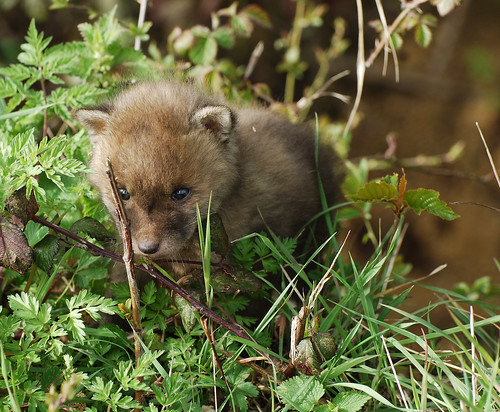
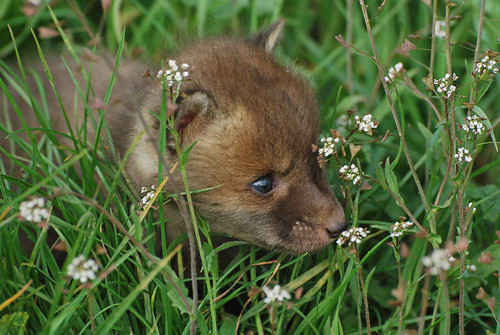
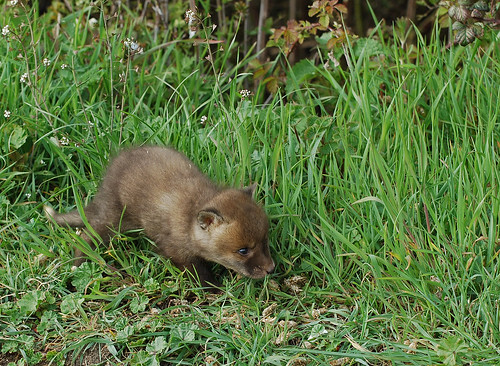
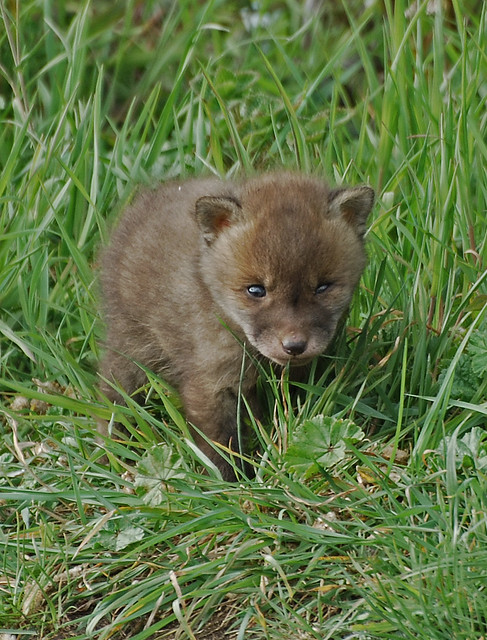
It was Easter last weekend and my parents were visiting. On Saturday I had walked the dog in the fields north of Histon and shortly after entering the field another dog walker told me there was a fox cub (Vulpes vulpes, Dansk: rød ræv) in the undergrowth I had just walked past. So I retraced my steps and sure enough there was this adorable little creature exploring the parapet of the ditch:

It’s body was only 6-7 inches long and I guessed it was the boldest of a litter which had taken the opportunity to wander whilst the mother was out hunting. So I took a few photographs and left it to it’s own devices, and when I completed my loop it was no longer there so I assumed it had returned to the den.

The following day my mother accompanied us for a walk in the hope it was still there, and indeed there it was in exactly the same place, but this time it seemed considerably emboldened and I was extremely concerned that a pet dog may kill it as this was right on a very popular dog walking route. My mother decided that my father should see it and she was going to return and fetch him, so I carried on to walk the dog.

When I got back my mother had been told by someone who lives close by that the vixen had been killed and the cub was orphaned so she rescued it and when I got back it was in a box on top of the piano. Which left me with a dilemma: what does one do with an orphaned fox cub at 4pm on Easter Sunday? It proved to be tricky to find somewhere that took wild animals, so in the end I rang up Wood Green Animal Shelter at Godmanchester, which is only about 12  miles from here, in the hope they would know somewhere that would take the little orphan. And luck was with us, they made some enquiries and gave me the phone number of a lady who lived fairly close by who had reared orphaned fox cubs in the past and was prepared to take ours. So self, mother, the children and the boxed up fox cub were bundled into the car and off we went, and an hour later our little cub was in the hands of someone who was skilled in the art of looking after wild foxes. Result!

It turned out to be a 3-4 week old vixen, who apart from being dehydrated seemed to be in reasonably good shape. She was expected not only to survive but was to be passed on to a wildlife sanctuary for eventual release into the wild. My fingers are crossed that this happens and she has at least one litter of her own cubs. I’m going to try to find out how she does and if I can get an update I’ll let you know.

Birds and bee(flie)s

The day after the cold weather put paid to my snake hunting exploits I decided to take the dog for a quick run in the afternoon. He had just had a small tumour removed from his back leg and so he had a lampshade on his head to stop him chewing his stitches and consequently this walk was only meant to be a short one, and I wasn’t even going to take my camera. But on the way out the door I decided because it was very sunny and very warm I would take my camera. And I’m glad I did because there was wildlife in abundance.

Peacock butterfly, Inachis io, sunning itself on the path

The air was abuzz with insects including butterflies. I really like photographing butterflies and peacocks are good because they present a medium sized challenge. If you approach with stealth and don’t cast a shadow on them they let you get to within a few feet. The peacock is a species that can be seen at any time through the winter as it can wake in response to warmer weather, but they emerge in spring around the end of March/beginning of April, so the timing for this one was spot on.  As I was photographing the peacock a sparrowhawk (Accipiter nisus, Dansk: spurvehøg) flew past at high speed, much too fast to enable a usable photograph, it’s always good to see a bird of prey because I think it suggests the prey species are in good order too.


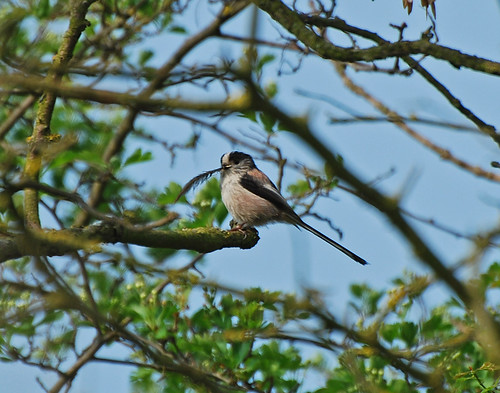
Long tailed tit, Aegithalos caudatus, Dansk: halemejse

The field where I found the peacock butterfly has a corner which faces south west and it was sheltered from the wind and bathed in spring sunshine. It was really warm when I arrived there, so I stood still and watched and listened while the dog went off to explore, and the trees around were full of birds including the long tailed tit, above, and a song thrush, below.

Songthrush, Turdus philomelos, Dansk: sangdrossel

While the birds were capturing my attention in the trees, butterflies weren’t the only insects there. In my corner there were also beeflies buzzing around. I was keen to try to photograph them in flight which is a tad more challenging as they would hover for a few seconds before darting off at very high speed in zig zag lines. But they were making the most of the shelter from any breeze that prevailed in this sheltered spot and I spent a good hour trying to photograph them.


Beefly, Bombylius major

The beefly, as the name suggests is a bee mimic. It has a very prominent proboscis which is used to extract nectar, and the fur is part of the bee disguise. It is a very good pollinator but is detrimental to other pollinators.

It is detrimental because it parasitises other bees and beetles. And the way it achieves that is another of those bizarre evolutionary adaptations that even the most imaginative science fiction writer wouldn’t dream of. It mimics bees in order to get close to their burrows where using its legs the female will flick her eggs into the hole where it hatches and attaches itself to the host. Then the gruesome bit: it lies dormant until the host commences pupation and then becomes an ‘ectoparasite‘ which means it remains on the outside of its host but extracts the body fluids to fuel its own growth. After draining its host dry it reaches the pupal stage which can vary hugely in length and they have been known to overwinter before emerging as an adult the following year.

Beeflies have appeared in several blogs in the last week or so and there are some more very fine images here:

http://www.leavesnbloom.com/2012/04/bombylius-major-bee-fly-aerodynamics.html

Rosie from ‘leavesnbloom’ has a wonderful collection of images of Bombylius major and Harlan from ‘The Roused Bear’ has also captured one in Iowa in the U.S.:

http://therousedbear.wordpress.com/2012/04/07/a-fuzzy-bee-fly/

They can be found across the whole planet except Australasia.

More birds which appeared in the trees around while I was chasing beefly were the common or garden greenfinch and chaffinch:


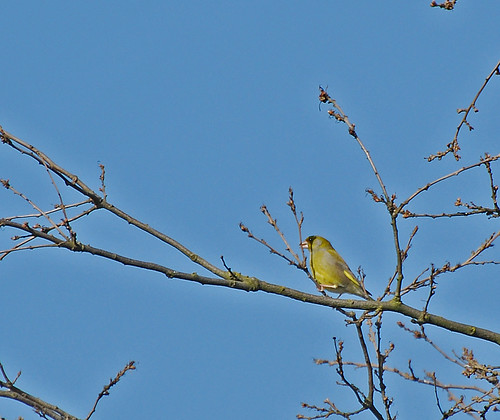
Greenfinch male pecking at a twig
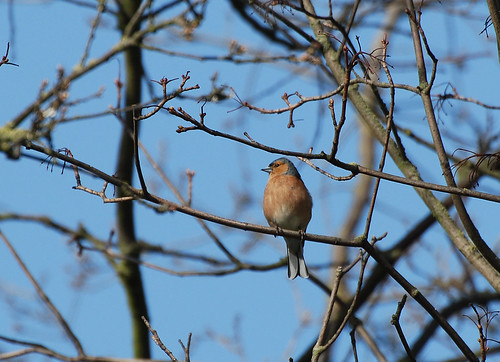
Chaffinch male just taking it easy

Both greenfinch (Carduelis chloris, Dansk: grønirisk) and chaffinch (Fringilla coelebs, Dansk: bogfinke) are common or garden, but are both beautiful birds, and they can be seen here in the U.K. all year round. But a species that isn’t here all year round and returns after its winter migration to north Africa is the chiffchaff (Phylloscopus collybita, Dansk: gransanger):

The chiffchaff, named after its characteristic song, is a warbler and despite being a small bird they are tough. Their migration takes them south across mainland Europe, across the Mediterranean Sea and into north Africa, to retrace their flight four or five months later in the spring. And despite the hardships associated with such a gruelling endeavour, according to the British Trust for Ornithology (BTO), there are around three quarters of a million territories in the UK. They are one of the first migrants to arrive back in the U.K. and can be heard singing as early as late February. But this my first one in Cambridge on the first weekend in April.

Buds and blooms

Many fellow bloggers out there have been posting some lovely images of spring events and as this time of year is an exciting one from a nature perspective I felt inspired to get out and get some pictures of vernal regeneration in my part of the world.

I didn’t have to wander too far, the apple and hazel trees and the beech hedge in my garden are showing signs of waking up from the winter slumber:


Nascent apple blossom about to burst into life

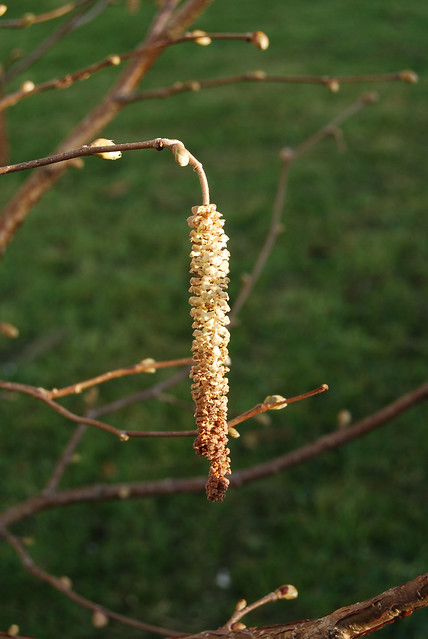
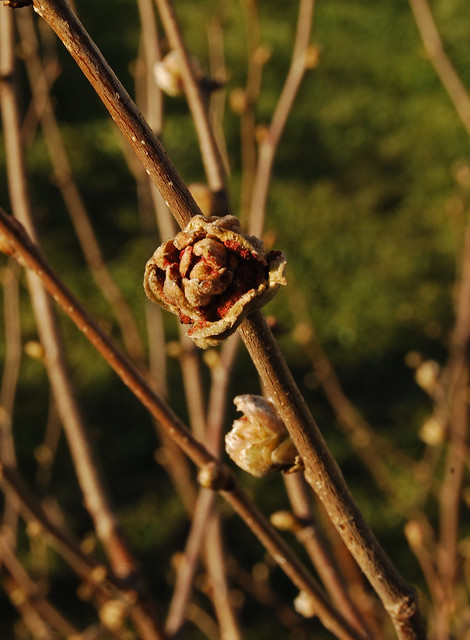
A catkin – the flower of the hazel tree, above. And below, the diminutive inflorescence that will eventually become a hazelnut.

Hazel trees (Corylus avellana) produce catkins early in the year which are monoecious, which means they are either male or female, the one above is a male one, the females being tiny and hidden in the buds and the pollen is wind dispersed.  They provide not only nuts but if left to their own devices hazel ‘poles’ sprout from the ground which grow tall and straight and are coppiced to make fencing, and in the days when wattle and daub was used for building  walls the poles were used to make the wattle on which mud was plastered to provide the daub.

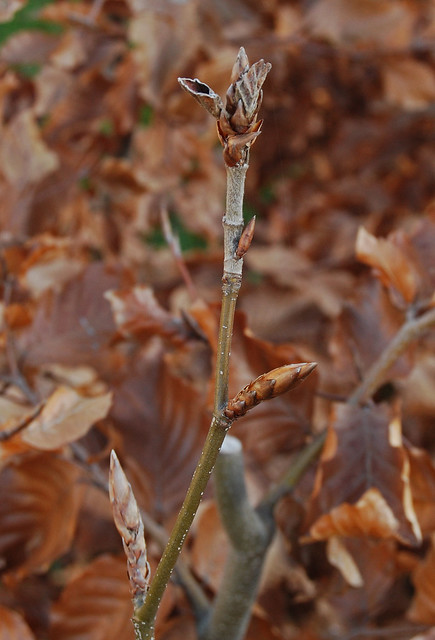
Beech leaves sprouting from the apical buds at the top of a hedge


A couple of hundred metres along the road on the grass verge was this cluster of lesser celandines (Ranunculus ficaria)

According to the font af all wisdom that is Wiki, lesser celandine used to be known as ‘pilewort’ because it was thought of as a remedy for haemorrhoids. I like this cluster because all the flowers are in different stages of opening, from a tightly closed green bud to a fully open flower.

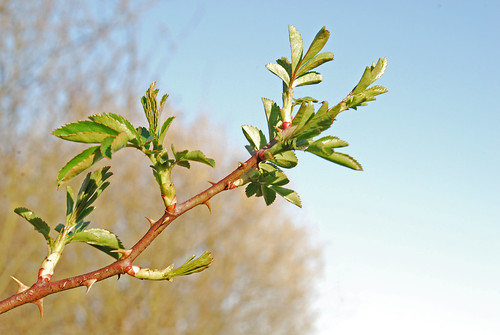
Once into the fields the hedgerows were lined with the thorny stems and freshly shooting leaves of the bramble:

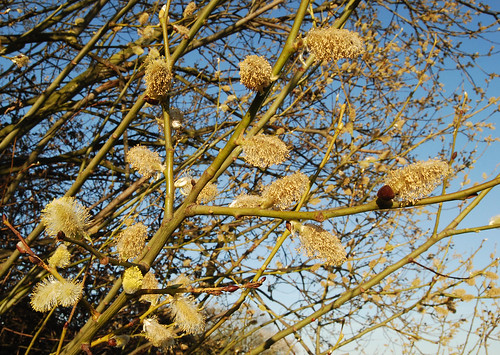
Lining the drainage ditches which delineate the field margins in this part of the world are willow trees (Salix cinerea) which need the water that drains from the fields and in the spring are covered in the furry catkins which give the tree its common name of ‘pussy willow’:

Willow catkin – unlike the hazel the catkins of the willow are dioecious, containing both male and female reproductive machinery in the same catkin

The wood of another species of willow tree (white willow, Salix alba) is very light and very strong and is used to make cricket bats and the bark of the willow contains a compound called salicylic acid which is the chemical precursor of aspirin. The analgesic properties of willow bark have been known of for centuries and have been maximised by acetylating salicylic acid to make aspirin. As well as analgesia, aspirin is now used as an anticoagulant to reduce the risk of heart attack and stroke and recent studies suggest it may have anti-carcinogenic activity too.

The plants in this post are a random selection from the garden, roadside verge and the countryside within 200 of my house and all of them provide us with something useful. The beech is structural and is ideal for hedging. Apple, bramble and hazel all have edible fruits. Lesser celandine may shrink your chalfonts* and the willow provides drugs to treat pain, heart disease and cancer (not forgetting cricket bats).

* Chalfonts = ‘Chalfont St Giles’ (I’m sure you can work it out)

The North Fields

If you’ve been reading my recent posts you’ll know they’ve mainly been from the part of my village (Histon, Cambridgeshire) called Rowleys Meadow. I have two routes out of the village, the Meadow and what I call the North Fields, and the terrain is very different. The Meadow isn’t farmed and has many hedges, thickets and trees and is therefore better for birds in the Winter because it has a much higher density of numbers and species. But now it’s officially Spring, after the Equinox on March 20th/21st, I decided to visit the North Fields which are all under the plough. I’ve been over there on a few evenings at dusk and after dark in the last few weeks and heard golden plover (Pluvialis apricaria, Dansk: hjejle) and skylark on the ground but I haven’t been over there in daytime for a while.

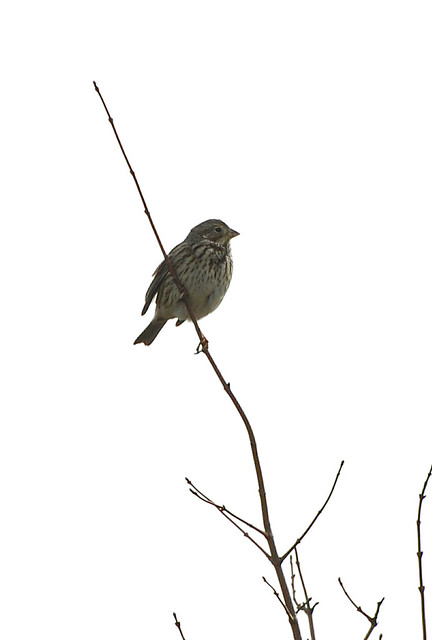
The main reason I headed over there was because I wanted to find out if the large numbers of linnet and corn bunting which disappear from the fields every year at harvest time had returned. My first impression on entering the fields was that I should have gone to the Meadow, there was virtually no movement of any kind, but I stuck to my guns and that turned out to be a good decision. I didn’t expect to see corn bunting, which are becoming increasingly scarce on our farms, yet, but I had only gone half a mile or so before I heard the unmistakeable sound of a male calling. I heard him long before I saw him but I knew where he would be perched from where his song was coming from, it is a favourite perch all the time they are in residence:

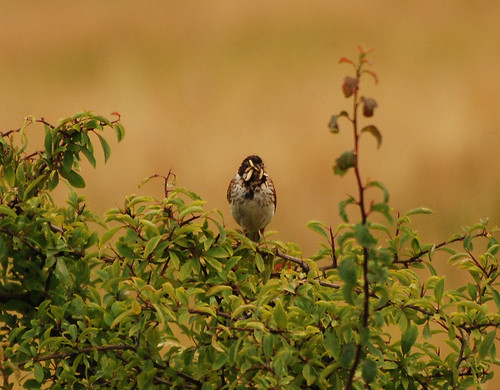
Corn bunting (Emberiza calandra, Dansk: bomlærke) sitting in a favourite place and singing loud

It’s not the best picture of a corn bunting because the sun was still low in the sky directly behind with a thin layer of high white cloud inbetween. Consequently it was impossible to get anything other than a silhouettte without overexposing the shot, so that’s what I did so his colors can be seen. He wasn’t the only one I saw, there were three altogether, so I hope there’ll be a good few more in the next few weeks.

Another bunting which put in an appearance was a male reed bunting. There were several of these too, and just along the ditch from here was a flock of between 10-20 yellowhammers alternating between a hedgerow and the ground where they were feeding.


Reed bunting male (Emberiza schoeniclus, Dansk: rørspurv)

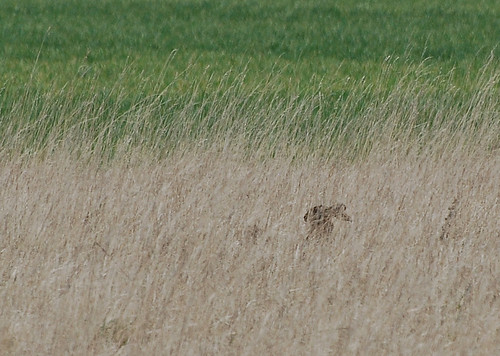
I didn’t go close enough to photograph the yellowhammers because I didn’t want to disturb them. Well, partly that, but also because I’d been distracted by a pair of hares (Lepus europaeus) chasing each other around in the long grass:

I couldn’t get close enough to get a picture of the whole hare, they were too wary of me and the dog, who’s a lurcher, so their timidity was well justified! But I like the way their ears poked up above the grass with the characteristic black tips.


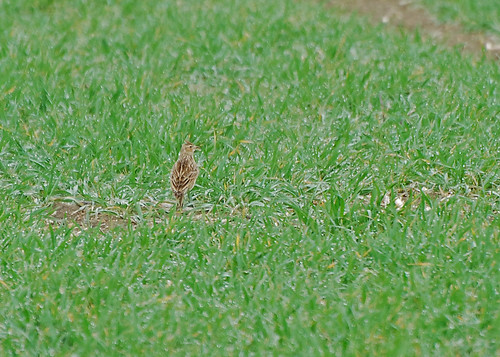
Skylark waiting on the ground between high speed aerial duels with other larks

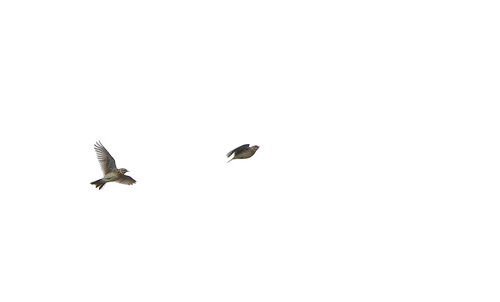
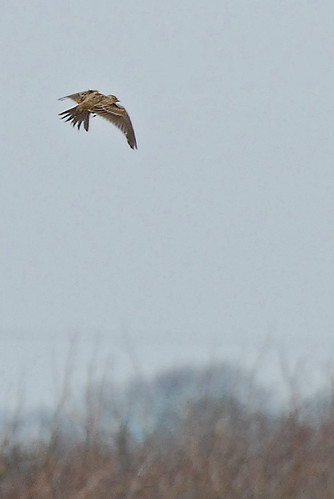
The other bird which was present in large numbers was the skylark (Alauda arvensis, Dansk: sanglærke). I stopped counting when I got to 30, and I wasn’t yet half way around my walk. They were on the ground, up high singing the amazing song that is is so much part of a British summer, and chasing each other around just above the ground at high speed in groups of up to around half a dozen.

I saw a TV show some years ago in which skylark song had been hugely slowed down and deconstructed, and they claimed the music of some classical composers (including I think, Beethoven) was based on the same structure. I was left sceptical, not least because Ludwig V was deaf and may therefore have struggled to analyse skylark song. But even so, it was fascinating!


Low level dogfight


High level chase

And singing his heart out

One of my other fascinations is etymology. I think that may originate from speaking two languages, and the first one I spoke, Danish, is one of the precursors of the current one, English, so a large number of English words have their derivation in Danish thanks to our Viking invaders all those centuries ago. The expression ‘larking about’ (and ‘lark’ may well be from the Danish ‘lærke’) originates from falconry. In days of yore, the men would go hunting with their peregrine falcons and the ladies would only be allowed to use the much smaller merlin which couldn’t catch birds bigger than larks. Hence ‘larking about’ became a term of derision based on the size of your falcon.

But I digress. The corn bunting are back, the sky was full of larks and the hares were getting frisky. I’ll keep you posted when the linnet and other summer visitors arrive.

Barn owls bounce back

Every now and again there is a piece of good news regarding the survival of a particular species. Yesterday on the BBC news website was just such a story. It concerned the resurgence of barn owls (Tyto alba, Dansk: slørugle) in the Trossachs around Loch Lomond in Scotland.

Watching barn owls silently quartering fields on a warm summers evening is a rare treat and getting rarer, so it was good to hear that in this area the numbers of field voles (Microtus agrestis) have rocketed by up to ten fold, which has led to a concommitant increase in the breeding success of the local barn owls.

A barn owl quartering a wheat field

Paradoxically, the reason the vole population exploded was the long freezing winters we had last year and the year before, in which large numbers of barn owls perished, but the voles were able to avoid the worst of the cold and move around by tunnelling under the snow and thereby avoid detection by airborn predators.

It was also interesting to read that the owls were maximising the benefit of the vole surplus by storing slaughtered prey in owl boxes, with up to 15 dead rodents in a single box.

Hopefully vole numbers will continue to remain high and barn owl numbers can recover even further. If anyone has heard similar reports about barn owl numbers in other parts of the country please let me know.

Unseasonal Lepidoptera

I was walking in the countryside last Saturday morning around 8am and the weather was bright and sunny. It was also freezing and the grass was glistening  with the first frost of the Autumn. Despite the temperature it was a beautiful morning, enhanced by a deep blue, cloudless, sky and a three quarter moon, and as I wandered along a hedgerow a red admiral butterfly fluttered past.


Red admiral – not the one that fluttered by on Saturday, this one is from earlier in the year.

The colours of the red admiral are gorgeous. It was only when I studied a photograph of one that I really noticed the electric blue spots at the back of the wings and lining the tip of the forewings, and I wonder if the red circle is meant to resemble a fearsome Cyclopean eye to deter potential predators. Whatever the biological rationale they look stunning against the green foliage.

The appearance of the red admiral surprised me for two reasons, firstly because it was so cold, and secondly because in my part of the world all butterfly numbers seem to have been massively reduced compared to last year.

Last year was a really good year for butterflies and in early August, on a hot summer day, myself and my daughter went to a close-by fallow field and did the Big Butterfly Count organised by Butterfly Conservation (http://butterfly-conservation.org). We counted 9 species in our 15 minute survey window, including painted ladies which migrate to the UK for the summer from as far afield as Africa.

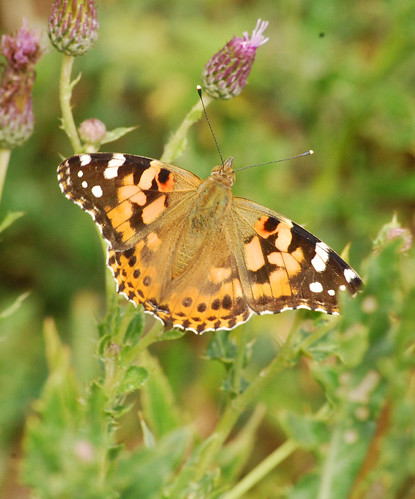
Painted lady

I think intercontinental migration is an astonishing feat of endurance for any creature, but for one as delicate and ephemeral as a butterfly it’s totally awe-inspiring. The odds stacked against any individual surviving such a journey must be mightily slim!

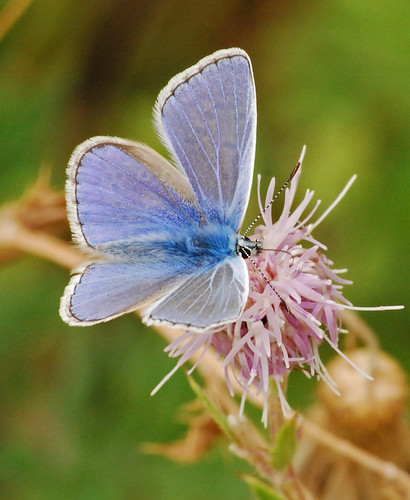
Conversely, it was very noticeable that the weather in 2011 was alot colder (it was the coldest summer since 1993 apparently) and butterfly numbers were significantly down compared to last year, in particular the common blue:

The aptly and, this year, inaptly named common blue. This one, with his wings wide open, is a male…

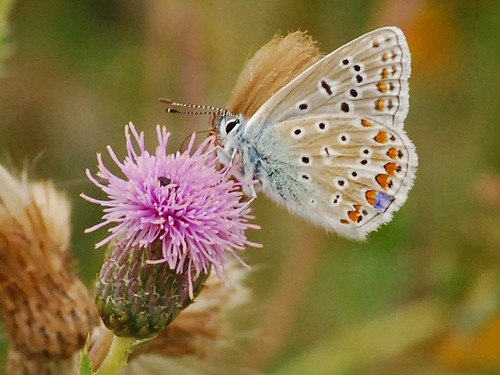
…and with his wings closed


Bizarrely, the female common blue is actually brown

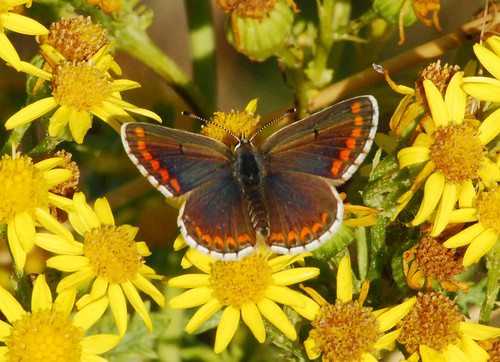
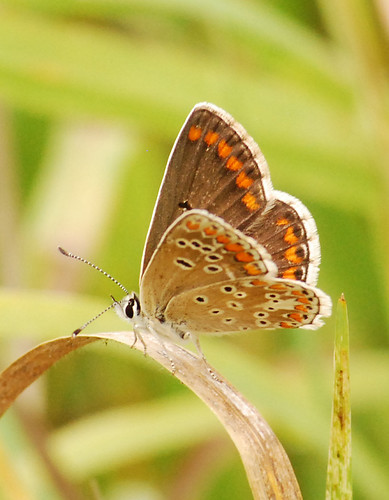
She is looking ragged after a hard summer of mating and egg laying necessary to secure next years population. Common blues and brown argus butterflies can commonly be seen together, they are closely related and the brown argus and female common blue can be tricky to tell apart. She is distinguishable from the brown argus by her overall shape which is very similar to the male above, the white around the orange spots on the hindwing, the blue along the wingroots and the lack of a black cell spot on the forewing, all of which are not observed on the brown argus:


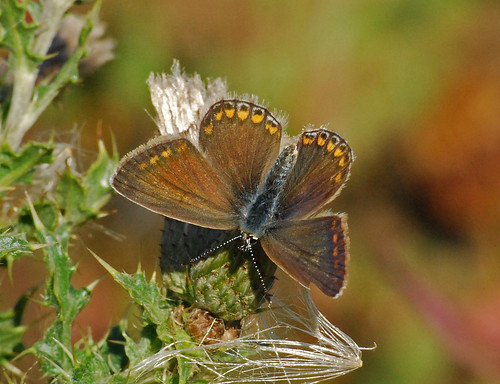
Brown argus sipping nectar from ragwort flowers above. And below revealing the slight differences in the spot pattern compared to the common blue female:


The brown argus can have a blue irridescent sheen when it catches sunlight at the right angle and the wing veins extend through the white wing border, which they don’t in the female common blue.

During a walk through our field at the start of August last year I would see tens of common blue, both male and female, but on the same walk at the same time this year I was lucky to see more than 2 or 3. The results from this years Big Butterfly Count corroborated my unscientific observations and it reports that common blue numbers were down by 61% in this years survey. I’m hoping we get a milder winter this year and a warmer summer next year so the numbers of these beautiful creatures can recover.

I took lots of cool butterfly pictures last year, but as it was before I started writing the Naturephile I was hoping to post them this year. But it didn’t quite come to pass so I’ll try to sneak some of them out under spurious pretexts to brighten up this winter!

LBJ’s

I recently finished reading Simon Barnes book (he being the sports writer in The Times and nature writer) ‘How to be a bad birdwatcher’. In his book, which, if you love nature and wildlife and birds in particular, is well worth a read, he talks about the difficulties of getting to grips with all the species of small songbirds which flit through daily life largely unnoticed. He describes them as those ‘little brown jobs’ or ‘LBJ’s‘. I think that’s a good description, because until I made the effort to have a good look with binoculars they are simply little brown things which are largely unidentifiable.

However, a little time and effort spent getting to grips with them can be extremely rewarding. I mentioned in a previous post that there are alot of fledglings to be seen just now and a walk along my local hedgerows has provided lots of avian family entertainment:


A family of house sparrows. The male is on the left with the black bib and the female and three youngsters above and to the right.

House sparrows are getting more scarce although in total there are still large numbers of them, apparently there are 13.4 million at the last count according to the BTO. They have suffered from changes in farming practices but I’ve encountered reasonable numbers of them at various places around Histon this year. They’re highly gregarious and garrulous and I often hear them before I see them.

The family in the photograph are in a bramble thicket close to a substantial old hedge which every year plays host to various species of small birds, most notably linnet, blackcap, whitethroat, great tit, goldfinch and long tailed tit. A field close to here (approximately 150m away) has a good size fallow area which has various wild flowers including oats and this has provided alot of food and cover for families of whitethroat, yellowhammer and linnet this year and just this morning a small flock of 10-20 house sparrow were in that area. A fellow dog walker also told me there was a grey partridge nest there this year which had been abandoned and the eggs eaten, probably by crows. I’ve seen grey partridge in that area in previous years and they also have Red conservation status. It goes to show that even a small area of mixed vegetation can be highly beneficial for insects and birds.

And on the subject of linnet, they are also in plentiful supply this summer. They are less visible now the harvest is underway and the rape seed they were feeding on until a couple of weeks ago has now disappeared, so they have dispersed to find other food supplies.

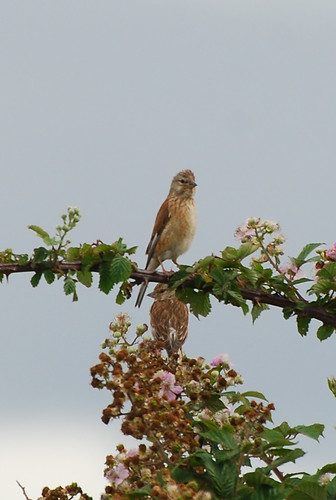
A pair of linnet younsgters perched atop a bramble bush


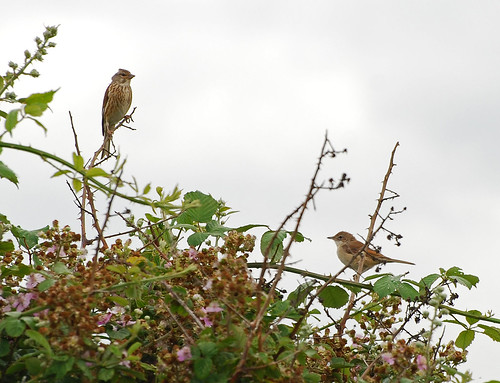
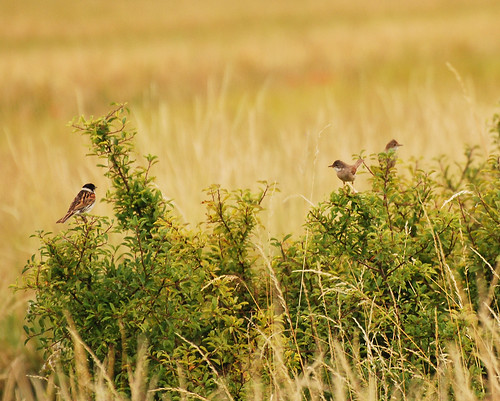
Another linnet youngster with a common whitethroat. This is a frequent sight at the moment, common whitethroat are abundant and often appear alongside other species in the hedgerows such as corn bunting, reed bunting and linnet


… and another one sorting it’s plumage out


Whitehroat family with a male reed bunting…


…and the reed bunting fledgling who was just around the corner of the bush from the male above.

These pictures were taken in the evening when the sun was low in the western sky, which is why the colours are quite red, and a corn bunting was singing away just out of shot. More LBJ’s than I could shake a stick at!


Male yellowhammer feeding chicks on the nest

It’s also the time of year when alot of species are rearing second broods and I watched this yellowhammer with a beak full of bugs waiting for me to move on before he dropped down into the nest.

Summer songbirds mainly, especially linnet

The summer solstice was a couple of weeks ago, the weather is warm and sunny and the evenings are light until after 10pm. For the last week I’ve been heading out across the fields in all hours of daylight and the wildlife has changed significantly. Until a few weeks ago there was alot of bird activity around the nests and I could watch whitethroat and blackcap in the same place for several weeks before that.


Common whitethroat about to head for the nest

The birds are still around but they have dispersed and a tad more legwork is required to see the same species I was seeing 2-3 weeks ago. But now, the first broods of the next generation have all fledged and while my garden has played host to families of starling, great tit, and goldfinch – the fledglings easily distinguished from the adults by their lack of a crimson face – further afield, the hedgerows are thronged with linnet, whitethroat, reed bunting, corn bunting and yellowhammer.


An adult goldfinch and two fledglings on the niger seed feeder in my garden. The speckled brown and lack of a red face makes the youngsters easy to identify.

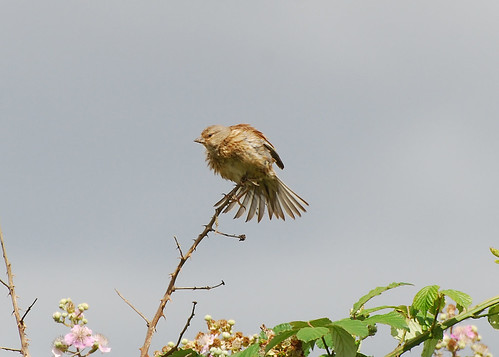
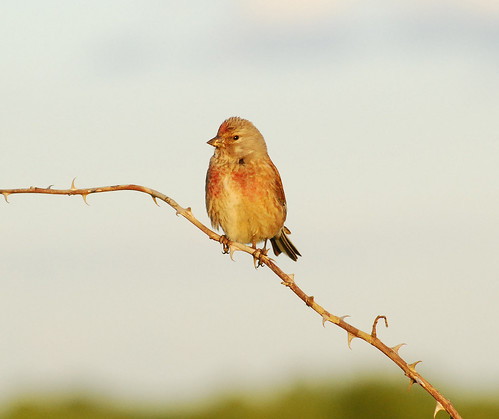
Another finch of which there are many adults and fledglings in the countryside are linnet. Linnet are one of my favourite birds for several reasons: they are delightful to look at with their cerise breast patches, they have a lovely song as they fly overhead and as long as I don’t do anything daft they will often sit tight and let me get really close to photograph them.


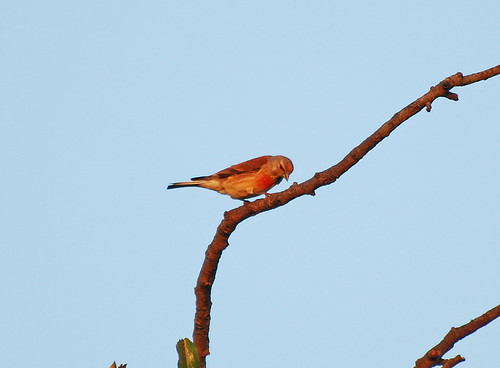
A cock linnet, underlit by the late evening sun, showing several diagnostic freatures including the cerise breast, grey head and pale grey grey cheekspot and the crimson spot on the forehead

Rather interestingly the taxonomic nomenclature is Carduelis cannabina, which approximately translates from the Latin as the ‘cannabis finch’! The linnets diet consists of small seeds so I imagine the name derives from the days when hemp was grown to make rope and they were seen in numbers feeding on the seeds.

There is a field of oil seed rape on the edge of Histon which I had always imagined to be devoid of wildlife but in the last few weeks families of linnet, reed bunting, greenfinch and whitethroat are regularly perched on top of the rape plants.


Greenfinch male in the middle of the rape field

The rape seed pods are full of small black seeds and if you squeeze one seed between your fingers there’s enough oil in it to make the ends of your thumb and forefinger really greasy, so it’s easy to see why rape is a lucrative crop and why it is a good energy source for songbirds.


Female linnet perched on top of a hawthorn tree at the edge of the rape field, she doesn’t have the cerise breast patches of the male, but lovely colours none the less

Linnet are migrant and resident breeders and passage and winter visitors. In the winter they can be seen in flocks of several hundred over farmland and often mingle with other finches. There conservation status is red due to population decline over the last forty years even though the European population numbers between 10 and 30 million pairs! Despite the overall numbers, along with a multitude of other bird species they are the victims of habitat destruction and the systemic use of herbicides which kill off their food supplies.


Cock linnet perched on top of an apple tree also on the edge of the rape field…

… and another one sitting on power lines. Look at the colour of that breast – they’re beautiful birds!

So if you can’t think of anything else to do this weekend and you feel like some gentle excercise and peace and quiet take a walk in the countryside and keep your eyes open for all the songbirds.

Many species of butterfly including large and small white, red admiral, small tortoiseshell, ringlet and small skippers were flapping lazily around the hedges on Guns Lane this morning, basking in the warm sunshine and I saw the first gatekeepers of the year today too:

A gatekeeper probing for nectar in ragwort flowers

All in all, it’s well worth a trip to the countryside armed with a pair of binoculars!

The birds and the bees (and the flowers)

As our warmest and driest Spring on record turns into what is shaping up to be a warm and dry Summer, nature’s great events are occurring apace to exploit the prevailing climatic conditions.

The first swifts were seen over Histon 3 weeks ago (by me at least) after their heroic journey back to their breeding sites from overwintering in Africa. To celebrate this event I’ve spent several hours sitting in the garden of the Castle pub on Castle Hill in Cambridge enjoying a few convivial sharpeners and watching the swifts shrieking through the sky like an avian aerobatic team. I can heartily recommend both activities!

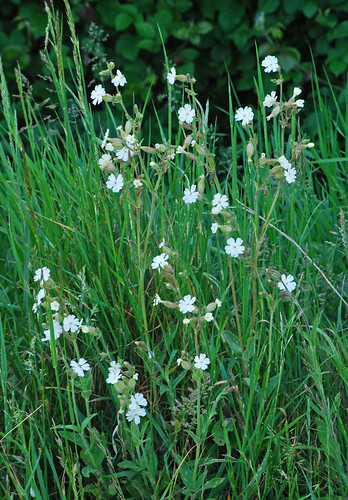
Wild flowers, including one of my favourites, white campion, are now in bloom:

White campion, Silene latifolia, decorating ditches and hedgerows

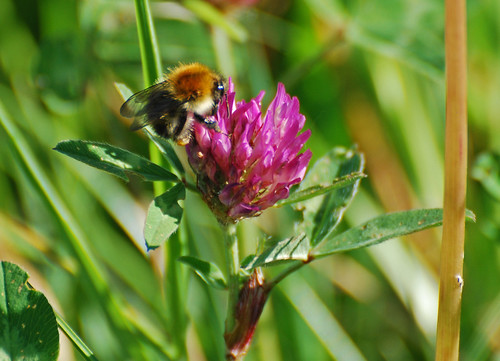
White campion is a dioecious plant which means the male and female reproductive machinery are on separate flowers. It grows in well drained earth and flowers from Spring to Autumn and is now delineating my walks across the open countryside. Another one of my favourite wild flowers is red clover (Trifolium pratense) which is a gorgeous colour and provides nourishment for bumble bees:


Red clover flower being harvested for pollen and nectar by a common carder bee (Bombus pascuorum). This is the national flower of Denmark.

And of course the local birdlife has been very busy breeding and raising chicks. Alot of species started this process earlier this year due to the unusually warm weather in Spring. I have a pair of blue tits raising a brood in the nestbox in my crab apple tree and my friend told me of a family of song thrushes which fledged from his garden a month ago. Which is very early.

A pair of great tit have been feeding their chicks on crushed peanuts which I put out on my bird feeder over the last month and last week they fledged and the whole family were feeding in my garden for just a day or two before they ventured further afield. (If you put nuts out for the birds during the breeding season please make sure you use crushed nuts as inexperienced parents can try to feed whole nuts to chicks and this can have fatal consequences). Great tits have over 70 different vocalisations which I think is remarkable, almost simple language! And on my explorations along the fields and hedgerows around Histon last weekend (21st May, 2011) I saw more great tit, blackcap and whitethroat all feeding gangs of fledglings:


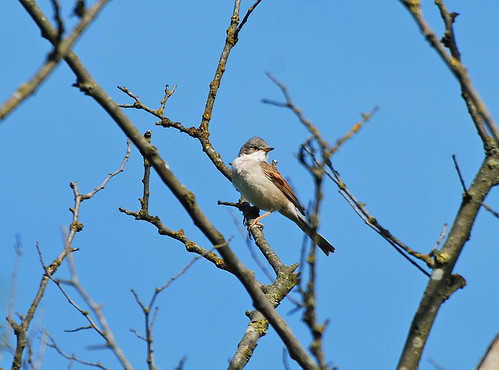
Common whitethroat male, Sylvia communis

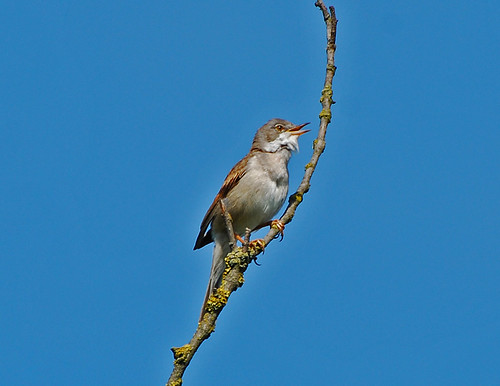
There are two species of whitethroat to be found locally, the common and the lesser (Sylvia curruca). They are distinguished by their song, which I won’t try to describe because I’ve never yet read a book which gives the remotest idea of what birdsong actually sounds like by a written description! But if you want to compare them try here for the common whitethroat, and here for the lesser whitethroat.


And another male whitethroat, this chap was singing long and loud, punctuated with characteristic jerky flights straight up in the air and back to the same spot

There are a good number of common whitethroat in the hedgerows north of Cambridge, lesser whitethroat are also here but are not so numerous. There are other distinguishing features between the two species, the lesser, as the name suggests is smaller (~11cm long compared to ~13 for the common), and is generally more grey with a pale grey head and noticeably darker grey ‘ear’ patches. It also has dark grey legs. Both species overwinter in sub-Saharan Africa, the common in central Africa and the lesser in eastern Africa.

Linnet can be regularly seen flying around the bramble thickets on the edges of the village and perching and singing on top of them. On Saturday early in the morning a fracas was going on in an elderbery tree in Rowleys Meadow in Histon which ended when a jay was chased out of the tree by a family of linnet and a family of whitethroat. The jay alighted on an adjacent shed to suss out the lie of the land and contemplate another raid whilst the indignant songbirds dispersed into some scrub to hide. Eventually the jay decided to keep his powder dry and disappeared into a nearby wood. Jays, like other members of the crow family, will raid nests of smaller birds for eggs and chicks, so it’s a perilous business being a small bird with a family to rear.


A linnet male perching on a bramble. When they’re not protecting a nest I’ve managed to sneak within 15 feet of linnet perched like this.

Linnet, Carduelis cannabina, are abundant resident and migrant breeders, although their numbers, as with many of our songbirds, are declining, and they are also passage and winter visitors. Due to their declining numbers over the past 40 years or so their conservation status is red, indicating they are globally threatened. They are finches which live in open country and farmland and feed on seeds.

Many species of moths, butterflies, bees, flowers and a plethora of other creatures are all appearing as trhe seasons are progressing and there’s something new to see every week!

April birdwatch

The activities of the birds in my garden have changed significantly in the last 2-3 weeks. Until then I was seeing multiple blackbird, robin, starling, goldfinch, chaffinch, dunnock, blue tit, great tit, collared dove and house sparrow with less frequent visits by long tailed tit. Since then a pair of wood pigeon have virtually taken up residence in my back garden and hoover up all the bird food before the smaller species get a look in. There is still the occasional dunnock and blackbird on the ground and much less frequent visits by blue tit, robin, starling and chaffinch but the goldfinch have all but vacated. This is interesting because when I’m outside I regularly see and hear groups of goldfinch in the trees around the garden but something seems to be keeping them away from my feeder.

My friend Chris told me he had a songthrush rearing chicks in a nest in a tree in his garden and she fledged four youngsters last week, which is very early in the year, so hopefully she’ll fit in another brood this year. But his garden has been subject to the attentions of a sparrowhawk in recent months so he was worried it would catch the fledglings, but clever use of carefully placed hanging bamboo canes has successfully deterred the hawk and all four fledglings seem to have successfully flown the coop. Songthrush 4, sparrowhawk nil.

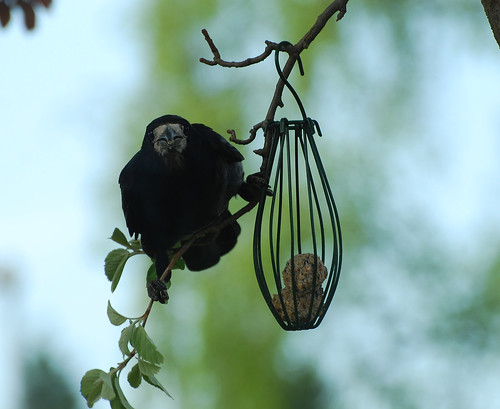
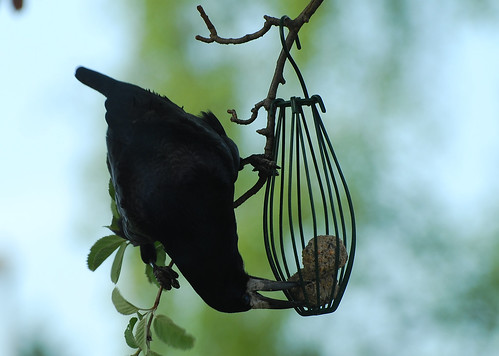
Continuing with garden birds, last week it occurred to me that the fat balls hanging in my front garden were requiring replenishment rather more frequently than usual so I guessed the nesting birds were feeding more often. The reason turned out to be rather more amusing:


One of the local rooks has worked out that these are edible…
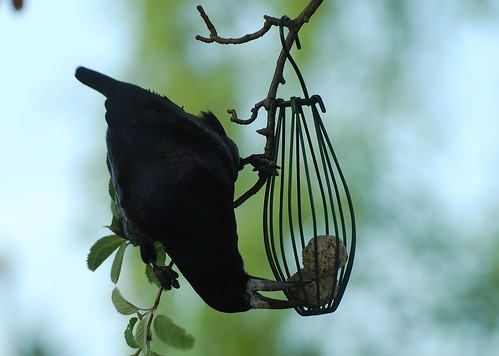
…and that it can reach them. And it takes alot of fat ball to fill a hungry rook!

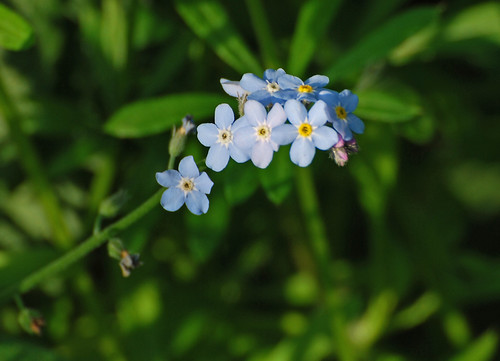
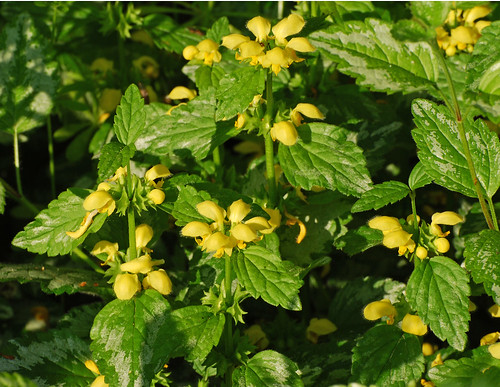
Slightly further afield in the hedgrows and scrub bordering the farmland around Histon it’s a very good time to survey the local wildlife. As I mentioned in a previous post many species of wild flower now including forget-me-not, yellow archangel…


Forget-me-not

Yellow archangel – Lamiastrum galeobdolon, this variegated version is an invading subspecies ‘argentatum’

…herb robert, cow parsley and periwinkle are all in bloom and lining the paths through the countryside filling them with a palette of colour.

And in the fields, trees and bushes there is an abundance of birdlife:


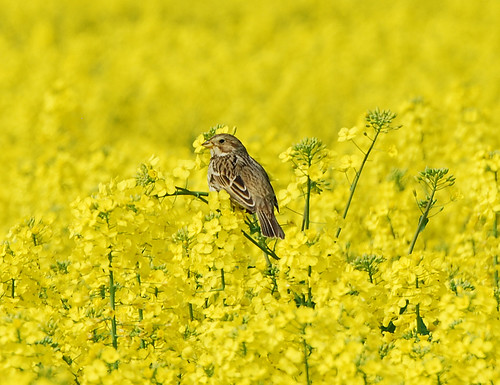
Corn bunting perched in the midst of a field of oil seed rape

The countryside is ablaze with the yellow of rape flowers right now and just occasionally a photographic opportunity such as this one arises. I’m not particularly keen on the vast swathes of rape but it created a lovely backdrop for this corn bunting which are becoming increasingly uncommon.

It’s not unusual to see and hear bullfinch in one patch of scrub near the church in Histon, which is a regular destination for my birdwatching outings. That makes me very happy because I used to see them all the time when I was a kid in the 1970’s but since the 80’s they seem to have been persecuted to near extinction in alot of the UK because of their fondness for the green shoots of commercial fruit trees. They are still fairly elusive but I managed to get this photograph of a male (just!):


Male bullfinch – the female has similar markings but they are not pink she is more pale grey/brown

And in the same field as the bullfinch linnet are in residence, as are willow warbler, chiffchaff and blackcap which have now returned from over wintering in Africa:


Blackcap male

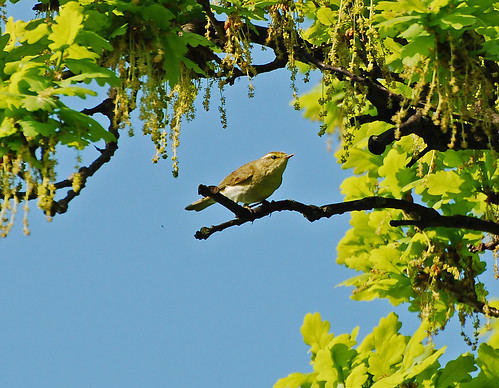
Chiffchaff

…as are whitethroat:


A female whitehroat, one of a pair patrolling a patch of brambles in the middle of the field

This field is an amazing place, I reckon it’s approximately 10-12 acres and it comprises several habitats including open-ish grass, it’s sorrounded by some old established trees: oak, ash and horse chestnut with hedgerow joining up the old trees consisting mainly of hawthorn and in the field itself there are alot of ash and other saplings and some large patches of bramble. Consequently it provides good supplies of food and cover for nesting for a number of different species. Green woodpeckers can be constantly heard yaffling to each other:

…and birds of prey including kestrel, sparrowhawk and buzzard are regularly in the skies above. The green woodpecker are there all year round and are usually hidden in the grass so I’ll flush one off the ground only for it to disappear into a tree too distant to allow a photograph. So this is about the best image I have of one. Most of the common or garden birds are regulars here too, house sparrow, dunnock, blue tit, great tit, long tailed tit:

…and chaffinch

…blackbird, songthrush, rook, crow and magpie are all present every day. So a small area of mixed scrub an the edge of the village supports a wonderful number of our birds.

There’s lots to see by simply look up in the village too. On the way back from the playground in Impington with my kids today we cycled along a road under a tree as a jay emerged from a silver birch on the other side of the road and landed in the tree a few metres over our heads. We all stopped to look at it and marvel at it’s amazing colours, and it looked at us for a minute or two before flapping off higher up the tree.