Category Archives: Wildlife locations

Pyrrhula pyrrhula

Without wishing to appear melodramatic, I’ve been waiting for decades to get a photo of a bullfinch, Pyrrhula pyrrhula (in Danish, ‘dompap‘). My parents have been feeding the garden birds since I was a kid and I can remember seeing bullfinch in the garden back in the 1970’s. But then over a few short years they seemed to all but disappear. They were legally persecuted by farmers because of their ability to strip fruit trees of all their fresh shoots in record time, and were therefore blamed for financial misfortune in the market garden sector and condemned to slaughter.

I think extermination is far too high a price to pay, but destruction of these magnificent birds is, alas, what ensued. So in the intervening years, twixt the 70’s and very recently, my sightings of bullfinch were restricted to an occasional glimpse, and that seemed to occur on average once every 5-10 years.

Maybe I just didn’t go looking in the right place, but since I’ve been exploring around Histon over the last 3 years or so the number of sightings has increased significantly. There is a good supply of scrub round here which is providing cover and sustenance so they are now a fairly frequent occurrence. Despite that, I still feel a deep flush of excitement and satisfaction when I see the flash of black and pinky/orange pass overhead, especially if it’s set against a deep blue sky. It’s a beautiful sight.

Even though I see them reasonably often now, I hadn’t managed to get a photograph of one until last weekend when I was at Fen Drayton nature reserve near St Ives in Cambridgeshire. I’d seen a pair together and heard several more calling in the hedgerows and then whilst leaning on a gate this chap appeared on the ground and hopped along for just long enough to get a picture:


A male bullfinch on the ground. Alas he always seemed to be behind a tuft of grass

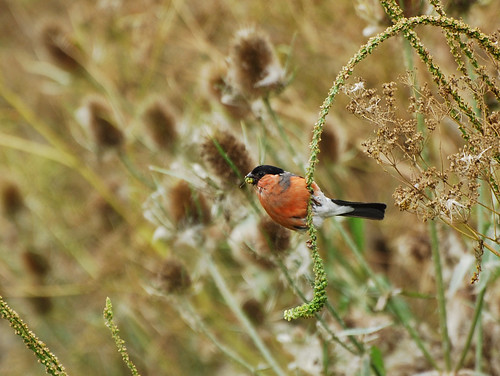
I saw and heard at least a dozen during my walk but this was the best shot I got so I resolved not to leave until I had got a better one. As I approached the car park I saw another male fly into a hole in a bush so I waited for a few minutes but he didn’t reappear. So I went through the hedge to have a look on the other side, disturbing an elderly couple enjoying a glass of wine (now there’s an angle to nature watching I feel I should explore in more detail!). And then after a few seconds he appeared on a frond and began stripping seeds from it:


…and he stayed for long enough for me to fire off two shots of which this is one

And that, my friends, of the tens of thousands of nature photographs I’ve ever taken, is my favourite!

Water birds at Milton Country Park

As I mentioned in my previous post, when I was at Milton country Park on a dragonfly hunt there were lots of birds about too, So between photographing the darters and hawkers I managed to capture some water birds:

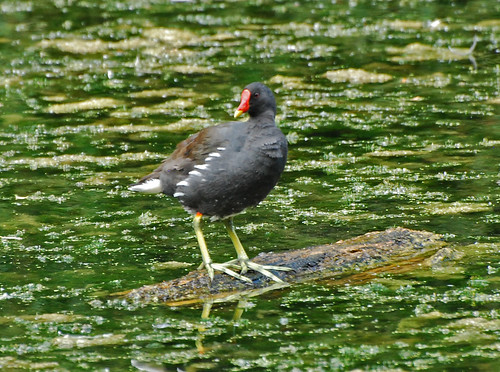
Moorhen, Gallinula chloropus, preening on a log in a lake
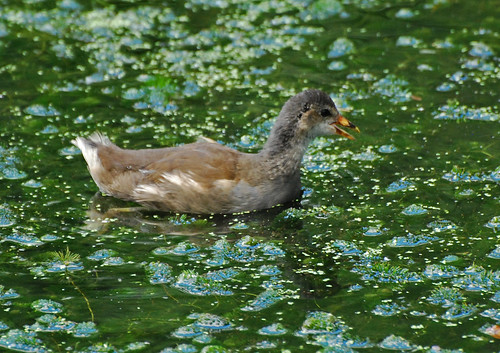
Moorhen chick

Moorhens are common water birds seen on rivers and lakes, they can be secretive but are often seen out of the water on grassland. They are resident breeders and winter visitors in the UK with approximately a quarter of a million individuals. They are omnivores and are one of the few British birds which practice cooperative breeding where youngsters will assist in rearing subsequent broods. Their red beak and very long yellow legs and toes are distinctive and peculiar to the moorhen. The taxonomic name ‘Gallinula chloropus‘ translates as ‘little green footed hen’. For my international readership, the Danish name is ‘Grønbenet rørhøne‘ – according to the BTO. (If you actually call it something different or have a local name please let me know).


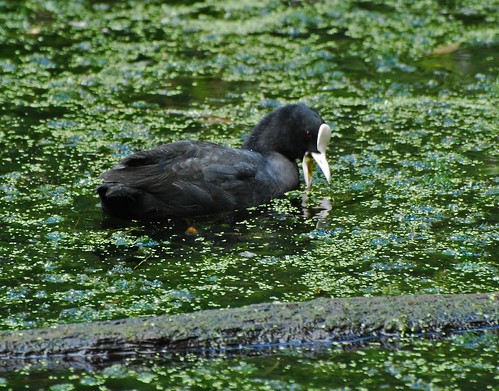
This coot (Fulica atra) was one of a group of moorhens and coots, including the moorhen above

I find coots amusing to watch as they have splendidly bad attitude and defend their patch against all comers, even members of their own species, and will aggressively charge other birds. They inhabit the same territories as moorhens and are also resident breeders and winter visitors. (In Danish – blishøne).

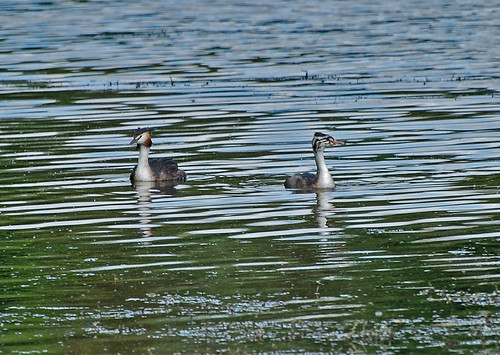
Great crested grebe with youngster

My favourite water bird (apart from the kingfisher, of course) is the great crested grebe (Podiceps cristatus). They can regularly be seen on open lakes and have been persecuted in the past because of their dense plumage which was used in place of fur. They have distinctive crested head plumage and an amazing courtship display. During the foot and mouth crisis in 2001 I watched a pair for a long time performing on a lake in Leicestershire – one of the few pieces of countryside where access wasn’t forbidden at the time. They would swim away from each other in a straight line for 20m or so and then turn and with beaks low on the water swim towards each other at high speed, raising up when they reached each other forming their necks into a heart shape. All terribly romantic! It’s a beautiful display and one of these days I’ll hopefully see it when I’ve got my camera handy. (By the way, in Danish these are ‘toppet lappedykker‘). Great crested grebe are also resident breeders and winter visitors but the numbers are much less than moorhen or coot, with 8000 adults here in the summer. Despite the lesser abundance their conservation status is green.

Hawkers and darters

A lunchtime visit to Milton Country Park on the northern periphery of Cambridge this week to look for dragonflies turned out to be an hour well spent. For the first 10 minutes they were conspicuous by their absence but then a brown hawker appeared over a small pond, very distinctive with it’s rufous wings shimmering in the sunlight. I tried to photograph it in flight but it proved beyond my talents. Even though there were three or four whizzing around the pond at any one time  I moved to a place under a tree which was overhanging the water and knelt down and waited. Within a couple of minutes a female brown hawker alighted on a log floating in the water and started ovipositing:

She seemed to be completely unfazed by my presence and busily worked her way along the log probing below and above the waterline for a suitable crevice to secrete her eggs.

She was there for around 10-15 minutes in total and every so often she took off but seemed to always to return either to her log or to a spot on the pond bank 5-6 feet from me. Even when my friend, Joe, came to see she still went about her business taking little notice of us.


She eventually departed along with all the other hawkers so we strolled along to a different location which was a wooden jetty protruding into another of the lakes. It’s surrounded all the way by dense rushes and has previously been a good place to see dragons. And that didn’t let us down either. We saw only two species, a pair of blue tailed damselfy and numerous common darters. All males. The males of this species are easily distinguished from the female as they are a glorious red and gold compared to the less vibrant green of the female.

The male of the species…

…and the lady:

There were several male common darters perched along the wooden jetty (the female above was snapped in Histon a couple of weeks ago), they were also happy to let us get up close and would occasionally dart away suddenly to chase a prey insect before returning to the same spot.


The compound eyes of the common darter – I like the depth of field in this picture rendering just the dragon in focus

When I was out for a stroll with my friend, David, who’s a bit of a dragonfly expert, last weekend, we found a dead migrant hawker dragonfly. We were marvelling at the complexity of the compound eye and he told me that a chap in the States had counted the facets in the eye of an American species, and apparently he got up to around 28000! He must have had a string of long winter evenings to fill. But dragonflies are amazing creatures and I can see how they inspired him to want to do it.

I also took a couple of nice bird photo’s on this trip but I’ll save those until next time.

A bit of a tern

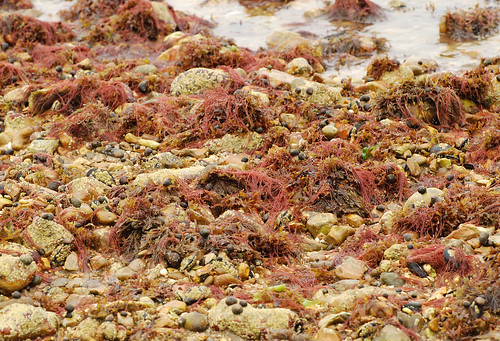
In my last post I talked about the highlights of my trip south to  Hampshire, but I didn’t mention our excursion to the beach at Lee on Solent. On a warm but very cloudy day but we took a punt on the weather so the children could go for a swim in the sea. The tide was out and revealed an extremely colourful shoreline festooned with different seaweeds, snails, limpets and sundry other shore dwellers.


The diverse array of life forms revealed by the receding tide

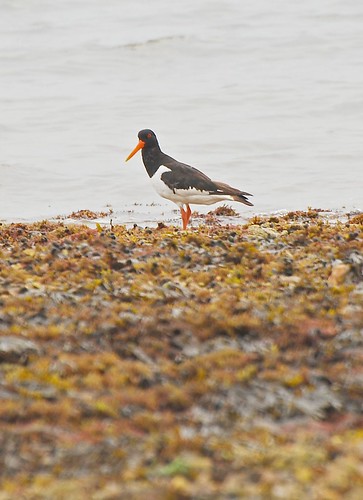
Pecking around the rocks was a lone oystercatcher who seemed to be largely unconcerned by the whooping and hollering of the kids splashing around in the shallows:

The statuesque oystercatcher.
People rave about the avocet , but I think oytercatchers are just as impressive!

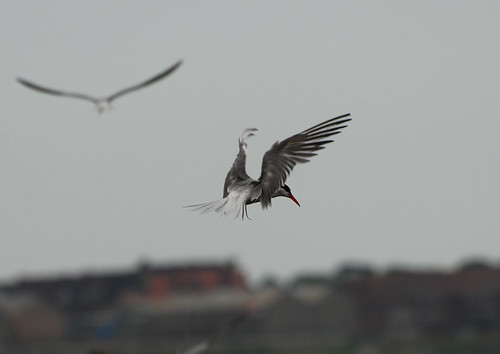
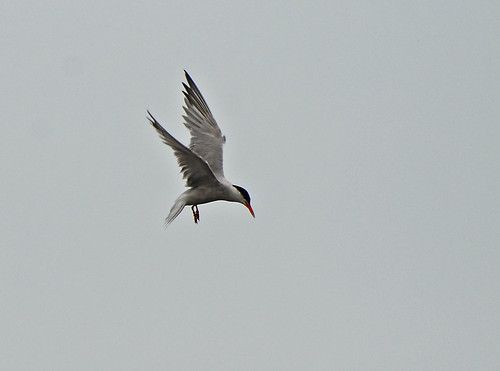
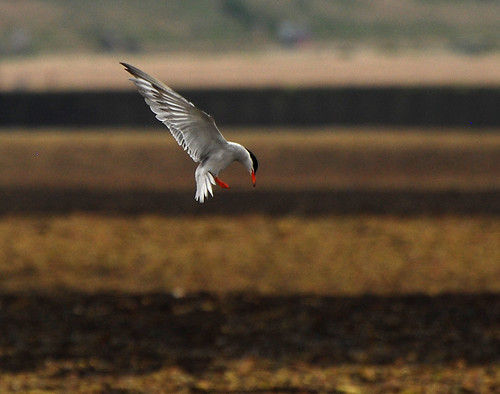
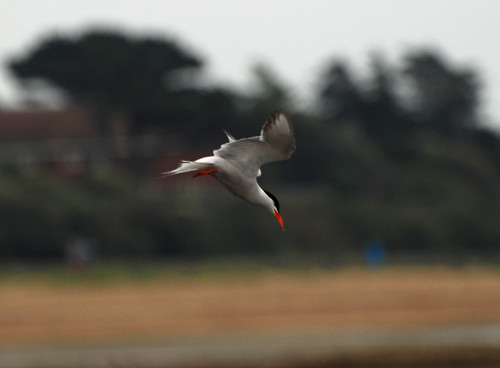
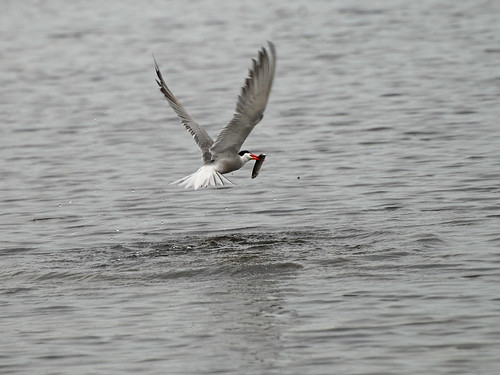
But the real stars of the show were  the arctic terns which were fishing in a small lagoon left in a dip in the beach when the tide went out. The precision aerial acrobatics of these amazing birds makes the Red Arrows look like amateurs! They are also expert at long haul, spending their summers in Europe and overwintering in southern Africa or even further afield. According to the BTO one individual was ringed in the Farne Islands in June 1982 and was next recorded in Melbourne, Australia, in October of the same year. Arctic terns return to their place of birth to breed so by the time this one saw the UK again it would have covered approximately 27500 miles over the sea!


Looking for a fish,

Manouevering into position for the dive,


Making fine adjustments…


And into the dive,


Mission accomplished.


Bandits at 6 o’clock

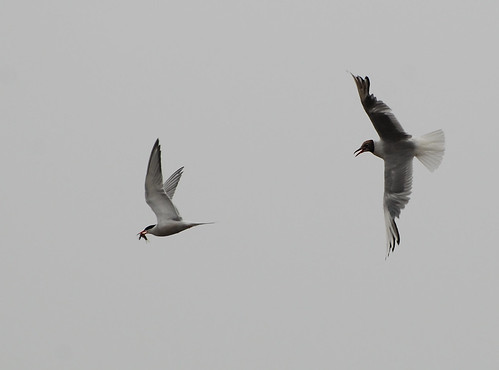
The terns were diving down through numerous other seabirds including black headed gulls, great black backed gulls and herring gulls, so they didn’t have it all their own way. Every time a tern made off with a fish a black headed gull would be in hot pursuit, both birds squawking and shrieking. The terns seemed to invariably escape with their spoils, but the gulls never seemed to tire of harrassing them.

All that, and the children got to go for a swim, so we all went home satisfied with our afternoons achievements.

A trip to the coast

Last weekend I found myself poking into the nooks and crannies of Fareham in Hampshire. My only previous visits to Fareham had been when I was playing rugby against them some years ago. So it was fun to go back and explore it in a more leisurely fashion and find out what flora and fauna are there. And I was very pleasantly surprised. (A bit of a digression, but as I’m sitting writing this, back in Histon, I can hear a muntjac deer barking somewhere along our road).

Our friends who we were staying with live a short 10 minute walk from the town centre, a route which took me across a piece of ‘managed wasteland’ called the Gillies. This is a mixture of scrubby woodland and is thick with flowers and an abundance of insects and birds.


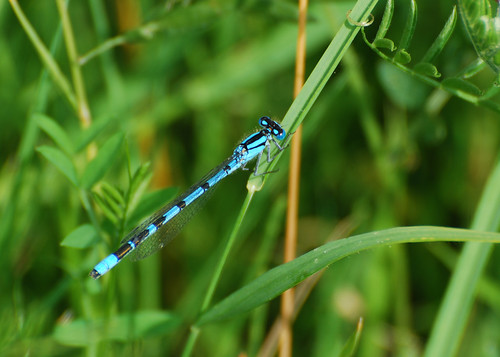
A common blue damselfly – Enallagma cyathigerum perched on a grass stem

I was hoping to see some species which I don’t see in Cambridgeshire, but alas this was not the case. But I guess that’s a tad churlish as I saw lots of great wildlife. The approach to the Gillies took me under a bridge which I think carries a railway line and glancing up as I passed under it early on the Saturday morning a pair of fallow deer sauntered across. I can’t think of any other town in the UK where I’ve seen that! Alas. I’d left my camera behind.


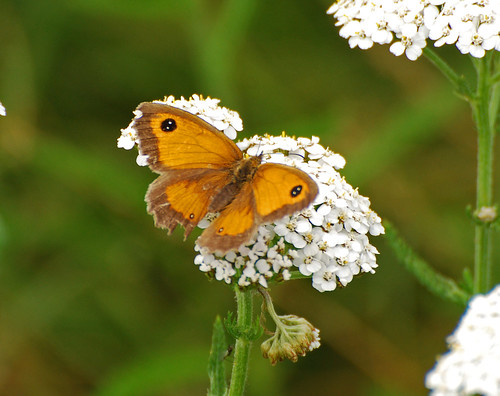
A somewhat tatterdemalion gatekeeper sipping nectar from yarrow flowers

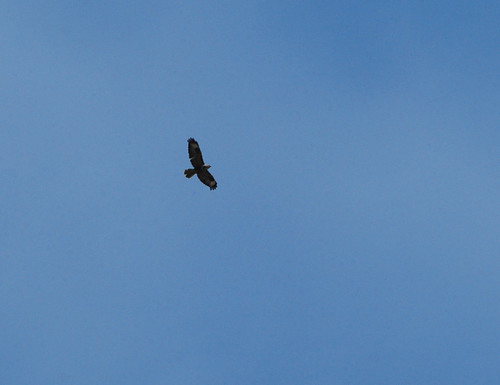
A glance skyward in the midst of a butterfly hunt with the children, with several blackcaps singing in the bushes, revealed this buzzard circling lazily in the scorching sunshine over Fareham town centre:

…and then a few minutes later:

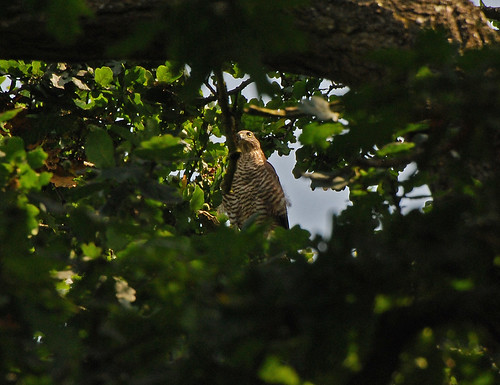
Shortly after the buzzard had disappeared we had ventured into some adjacent woodland where the quiet was shattered when a pair of fairly big birds chased each other into the top of a big old oak tree screeching as they went. They continued their slanging match for a couple of minutes and it turned out to be two sparrowhawks, and this one appeared in this gap for just long enough to snap a photograph. It’s not the best shot ever of a sparrowhawk but I really like it as it was in the midst of a fight and it sat still for just long enough for a single shot.

One creature I didn’t see but which my host told me she saw during a run through here earlier in the afternoon was a slow worm which slithered across the path infront of her. I haven’t seen one for many years but there are rare reptiles frequenting this place too. It’s a truly remarkable location.

So if you ever find yourself in Fareham feeling a tad disappointed by the 1950’s town planners’ attempts to rectify the damage done by the Luftwaffe, ask a local for directions to the Gillies and go and marvel at all the local wildlife.

LBJ’s

I recently finished reading Simon Barnes book (he being the sports writer in The Times and nature writer) ‘How to be a bad birdwatcher’. In his book, which, if you love nature and wildlife and birds in particular, is well worth a read, he talks about the difficulties of getting to grips with all the species of small songbirds which flit through daily life largely unnoticed. He describes them as those ‘little brown jobs’ or ‘LBJ’s‘. I think that’s a good description, because until I made the effort to have a good look with binoculars they are simply little brown things which are largely unidentifiable.

However, a little time and effort spent getting to grips with them can be extremely rewarding. I mentioned in a previous post that there are alot of fledglings to be seen just now and a walk along my local hedgerows has provided lots of avian family entertainment:


A family of house sparrows. The male is on the left with the black bib and the female and three youngsters above and to the right.

House sparrows are getting more scarce although in total there are still large numbers of them, apparently there are 13.4 million at the last count according to the BTO. They have suffered from changes in farming practices but I’ve encountered reasonable numbers of them at various places around Histon this year. They’re highly gregarious and garrulous and I often hear them before I see them.

The family in the photograph are in a bramble thicket close to a substantial old hedge which every year plays host to various species of small birds, most notably linnet, blackcap, whitethroat, great tit, goldfinch and long tailed tit. A field close to here (approximately 150m away) has a good size fallow area which has various wild flowers including oats and this has provided alot of food and cover for families of whitethroat, yellowhammer and linnet this year and just this morning a small flock of 10-20 house sparrow were in that area. A fellow dog walker also told me there was a grey partridge nest there this year which had been abandoned and the eggs eaten, probably by crows. I’ve seen grey partridge in that area in previous years and they also have Red conservation status. It goes to show that even a small area of mixed vegetation can be highly beneficial for insects and birds.

And on the subject of linnet, they are also in plentiful supply this summer. They are less visible now the harvest is underway and the rape seed they were feeding on until a couple of weeks ago has now disappeared, so they have dispersed to find other food supplies.

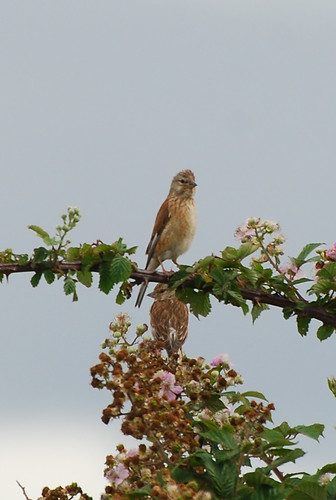
A pair of linnet younsgters perched atop a bramble bush


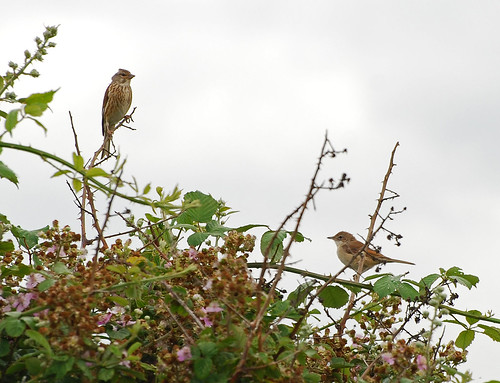
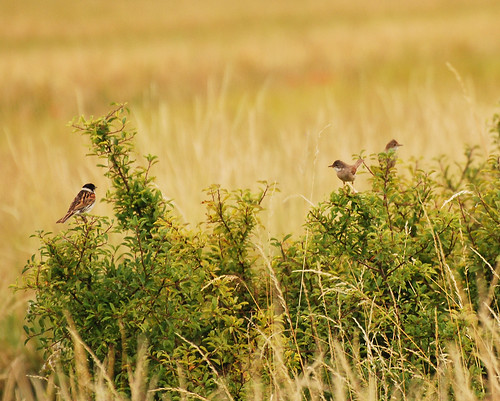
Another linnet youngster with a common whitethroat. This is a frequent sight at the moment, common whitethroat are abundant and often appear alongside other species in the hedgerows such as corn bunting, reed bunting and linnet


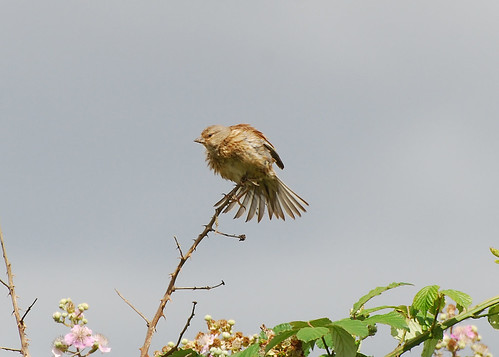
… and another one sorting it’s plumage out


Whitehroat family with a male reed bunting…


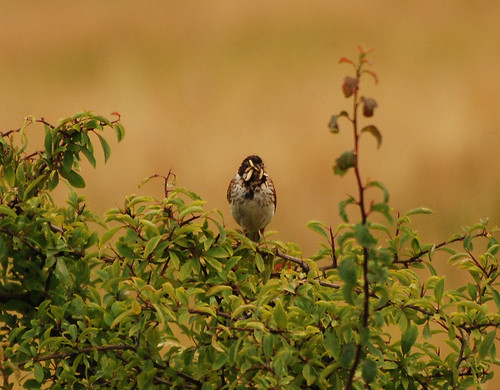
…and the reed bunting fledgling who was just around the corner of the bush from the male above.

These pictures were taken in the evening when the sun was low in the western sky, which is why the colours are quite red, and a corn bunting was singing away just out of shot. More LBJ’s than I could shake a stick at!


Male yellowhammer feeding chicks on the nest

It’s also the time of year when alot of species are rearing second broods and I watched this yellowhammer with a beak full of bugs waiting for me to move on before he dropped down into the nest.

Summer songbirds mainly, especially linnet

The summer solstice was a couple of weeks ago, the weather is warm and sunny and the evenings are light until after 10pm. For the last week I’ve been heading out across the fields in all hours of daylight and the wildlife has changed significantly. Until a few weeks ago there was alot of bird activity around the nests and I could watch whitethroat and blackcap in the same place for several weeks before that.


Common whitethroat about to head for the nest

The birds are still around but they have dispersed and a tad more legwork is required to see the same species I was seeing 2-3 weeks ago. But now, the first broods of the next generation have all fledged and while my garden has played host to families of starling, great tit, and goldfinch – the fledglings easily distinguished from the adults by their lack of a crimson face – further afield, the hedgerows are thronged with linnet, whitethroat, reed bunting, corn bunting and yellowhammer.


An adult goldfinch and two fledglings on the niger seed feeder in my garden. The speckled brown and lack of a red face makes the youngsters easy to identify.

Another finch of which there are many adults and fledglings in the countryside are linnet. Linnet are one of my favourite birds for several reasons: they are delightful to look at with their cerise breast patches, they have a lovely song as they fly overhead and as long as I don’t do anything daft they will often sit tight and let me get really close to photograph them.


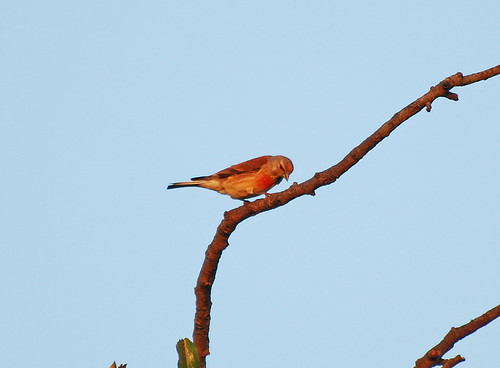
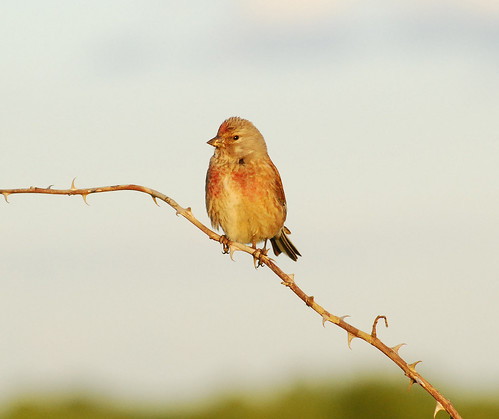
A cock linnet, underlit by the late evening sun, showing several diagnostic freatures including the cerise breast, grey head and pale grey grey cheekspot and the crimson spot on the forehead

Rather interestingly the taxonomic nomenclature is Carduelis cannabina, which approximately translates from the Latin as the ‘cannabis finch’! The linnets diet consists of small seeds so I imagine the name derives from the days when hemp was grown to make rope and they were seen in numbers feeding on the seeds.

There is a field of oil seed rape on the edge of Histon which I had always imagined to be devoid of wildlife but in the last few weeks families of linnet, reed bunting, greenfinch and whitethroat are regularly perched on top of the rape plants.


Greenfinch male in the middle of the rape field

The rape seed pods are full of small black seeds and if you squeeze one seed between your fingers there’s enough oil in it to make the ends of your thumb and forefinger really greasy, so it’s easy to see why rape is a lucrative crop and why it is a good energy source for songbirds.


Female linnet perched on top of a hawthorn tree at the edge of the rape field, she doesn’t have the cerise breast patches of the male, but lovely colours none the less

Linnet are migrant and resident breeders and passage and winter visitors. In the winter they can be seen in flocks of several hundred over farmland and often mingle with other finches. There conservation status is red due to population decline over the last forty years even though the European population numbers between 10 and 30 million pairs! Despite the overall numbers, along with a multitude of other bird species they are the victims of habitat destruction and the systemic use of herbicides which kill off their food supplies.


Cock linnet perched on top of an apple tree also on the edge of the rape field…

… and another one sitting on power lines. Look at the colour of that breast – they’re beautiful birds!

So if you can’t think of anything else to do this weekend and you feel like some gentle excercise and peace and quiet take a walk in the countryside and keep your eyes open for all the songbirds.

Many species of butterfly including large and small white, red admiral, small tortoiseshell, ringlet and small skippers were flapping lazily around the hedges on Guns Lane this morning, basking in the warm sunshine and I saw the first gatekeepers of the year today too:

A gatekeeper probing for nectar in ragwort flowers

All in all, it’s well worth a trip to the countryside armed with a pair of binoculars!

Dragon hunt

Not the fire-breathing type but Anisoptera. I spotted the first dragon this year over Easter during a picnic at Grantchester Meadows, south of Cambridge. It wasn’t, technically speaking a dragonfly, but a damselfly, specifically, a large red damselfly (Pyrrhosoma nymphula), which is one of the first to emerge after the Winter. Due to the weather this year many things have happened earlier than usual and the large red was out and about in late April. And they are magnificently red:


Large red damselfly male. There are three colour forms of the female all of which have more dark banding on the abdomen than the male

Milton Country Park on the northern edge of Cambridge is a great place to see numerous species of dragonfly and damselfly, and on a foray there on Saturday with my friend, David, we counted 10 species. Dragonflies – I’m using this generic term interchangeably to cover dragonflies (Anisoptera) and damselflies (Zygoptera) – are remarkable creatures, there are few more accomplished aeronauts in the animal kingdom, and the various life cycles are amazing.

The life cycles involve an aqautic larval stage, the larvae hatching from eggs laid either underwater or inside plant material close to the waters surface. The duration of the larval stage is affected by various factors including temperature, and for species such as the blue tailed damselfly (Ischnura elegans), this results in the difference in duration of the larval stadium (developmental stage) of 1 year in warmer parts and 2 years where it’s colder.


Blue tailed damselfly, immature male

After the larval stage, metamorphosis, switched on by warmer temperatures and extended day length, occurs over a few weeks and concludes with the emergence of the adult from the larval cuticle when it will dry out and take to the air. The drying out process is hazardous as it renders the new adults susceptible to predation by birds, consequently they time their emergence to occur at night or in the early morning. New adult dragonflies then disperse from water for approximately a few days to a few weeks, until they are sexually mature, when they return to the water for the serious business of finding a mate and starting the whole process over again.

This is a very incomplete and generic description of the dragonfly lifecycle, but if you want to discover more I recommend a book called ‘Field guide to the dragonflies and damselflies of Great Britain and Ireland’ written by Steve Brooks and illustrated by Richard Lewington (ISBN 978 0 9531399 0 3). It’s a very well written book with lots of easy to read information and high quality illustrations. And because there are only around 40 or so species of dragon and damselfy in GB and Ireland it won’t take you all year to read!

On our walk we saw hairy and emperor dragonflies (Brachytron pratense and Anax imperator respectively), both species of hawker, which I couldn’t get good photographs of as they were whizzing around over the water at high speed and never seemed to settle within range. Similarly with the four-spotted chaser (Libellula quadrimaculata), but then as we positioned ourselves in a very good viewing location on one of the smaller lakes a scarce chaser (Libellula fulva) appeared on a nearby seedhead and with occasional forays stayed there all the time we were there, giving some great photo opportunities:


Scarce chaser male, the female has a yellow abdomen with a thin black spine and doesn’t have the three black end segments

There were lots of damselflies too, apart from the large red and blue tailed already mentioned. Variable damselfly (Coenagrion pulchellum):

Azure damselfly (Coenagrion puella):

And common blue damselfly (Enallagma cyathigerum)

This pair of common blues are in ‘tandem’ with the green eyed female underneath. This position is adopted by non-territorial damselflies where the male grips the female behind the head and in this way ensures that no other male can mate with her before his eggs have been laid – a process called ‘ovipositing’. The eggs hatch out after 2-5 weeks and the larvae begin their development underwater where they are ambush predators, feeding on a variety of prey from other insect larvae to tadpoles and even small fish!

They are amazing creatures, and more species will be emerging over the next weeks and month so hopefully I can gather some more images of other species for subsequent posts before the Summer ends.

The birds and the bees (and the flowers)

As our warmest and driest Spring on record turns into what is shaping up to be a warm and dry Summer, nature’s great events are occurring apace to exploit the prevailing climatic conditions.

The first swifts were seen over Histon 3 weeks ago (by me at least) after their heroic journey back to their breeding sites from overwintering in Africa. To celebrate this event I’ve spent several hours sitting in the garden of the Castle pub on Castle Hill in Cambridge enjoying a few convivial sharpeners and watching the swifts shrieking through the sky like an avian aerobatic team. I can heartily recommend both activities!

Wild flowers, including one of my favourites, white campion, are now in bloom:

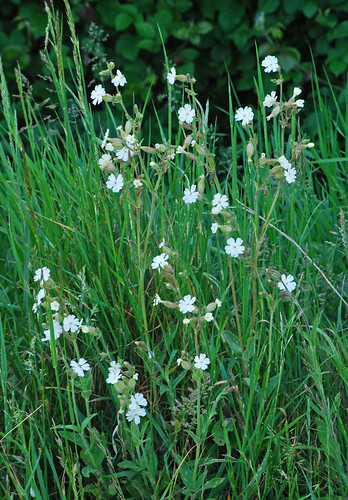
White campion, Silene latifolia, decorating ditches and hedgerows

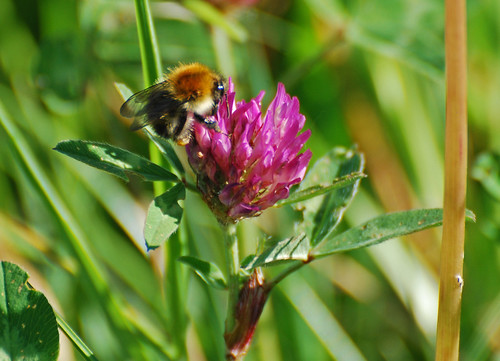
White campion is a dioecious plant which means the male and female reproductive machinery are on separate flowers. It grows in well drained earth and flowers from Spring to Autumn and is now delineating my walks across the open countryside. Another one of my favourite wild flowers is red clover (Trifolium pratense) which is a gorgeous colour and provides nourishment for bumble bees:


Red clover flower being harvested for pollen and nectar by a common carder bee (Bombus pascuorum). This is the national flower of Denmark.

And of course the local birdlife has been very busy breeding and raising chicks. Alot of species started this process earlier this year due to the unusually warm weather in Spring. I have a pair of blue tits raising a brood in the nestbox in my crab apple tree and my friend told me of a family of song thrushes which fledged from his garden a month ago. Which is very early.

A pair of great tit have been feeding their chicks on crushed peanuts which I put out on my bird feeder over the last month and last week they fledged and the whole family were feeding in my garden for just a day or two before they ventured further afield. (If you put nuts out for the birds during the breeding season please make sure you use crushed nuts as inexperienced parents can try to feed whole nuts to chicks and this can have fatal consequences). Great tits have over 70 different vocalisations which I think is remarkable, almost simple language! And on my explorations along the fields and hedgerows around Histon last weekend (21st May, 2011) I saw more great tit, blackcap and whitethroat all feeding gangs of fledglings:


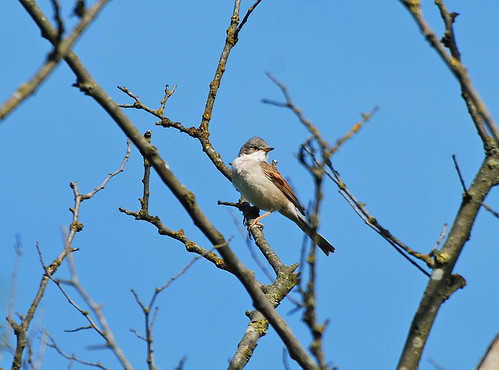
Common whitethroat male, Sylvia communis

There are two species of whitethroat to be found locally, the common and the lesser (Sylvia curruca). They are distinguished by their song, which I won’t try to describe because I’ve never yet read a book which gives the remotest idea of what birdsong actually sounds like by a written description! But if you want to compare them try here for the common whitethroat, and here for the lesser whitethroat.


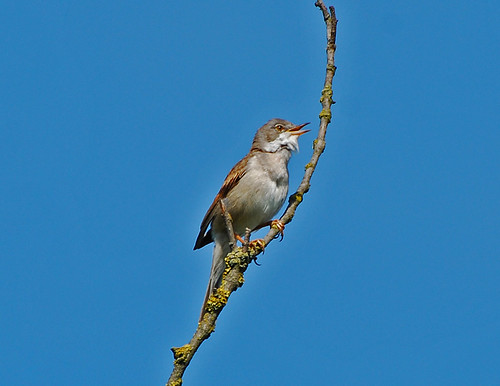
And another male whitethroat, this chap was singing long and loud, punctuated with characteristic jerky flights straight up in the air and back to the same spot

There are a good number of common whitethroat in the hedgerows north of Cambridge, lesser whitethroat are also here but are not so numerous. There are other distinguishing features between the two species, the lesser, as the name suggests is smaller (~11cm long compared to ~13 for the common), and is generally more grey with a pale grey head and noticeably darker grey ‘ear’ patches. It also has dark grey legs. Both species overwinter in sub-Saharan Africa, the common in central Africa and the lesser in eastern Africa.

Linnet can be regularly seen flying around the bramble thickets on the edges of the village and perching and singing on top of them. On Saturday early in the morning a fracas was going on in an elderbery tree in Rowleys Meadow in Histon which ended when a jay was chased out of the tree by a family of linnet and a family of whitethroat. The jay alighted on an adjacent shed to suss out the lie of the land and contemplate another raid whilst the indignant songbirds dispersed into some scrub to hide. Eventually the jay decided to keep his powder dry and disappeared into a nearby wood. Jays, like other members of the crow family, will raid nests of smaller birds for eggs and chicks, so it’s a perilous business being a small bird with a family to rear.


A linnet male perching on a bramble. When they’re not protecting a nest I’ve managed to sneak within 15 feet of linnet perched like this.

Linnet, Carduelis cannabina, are abundant resident and migrant breeders, although their numbers, as with many of our songbirds, are declining, and they are also passage and winter visitors. Due to their declining numbers over the past 40 years or so their conservation status is red, indicating they are globally threatened. They are finches which live in open country and farmland and feed on seeds.

Many species of moths, butterflies, bees, flowers and a plethora of other creatures are all appearing as trhe seasons are progressing and there’s something new to see every week!

April birdwatch

The activities of the birds in my garden have changed significantly in the last 2-3 weeks. Until then I was seeing multiple blackbird, robin, starling, goldfinch, chaffinch, dunnock, blue tit, great tit, collared dove and house sparrow with less frequent visits by long tailed tit. Since then a pair of wood pigeon have virtually taken up residence in my back garden and hoover up all the bird food before the smaller species get a look in. There is still the occasional dunnock and blackbird on the ground and much less frequent visits by blue tit, robin, starling and chaffinch but the goldfinch have all but vacated. This is interesting because when I’m outside I regularly see and hear groups of goldfinch in the trees around the garden but something seems to be keeping them away from my feeder.

My friend Chris told me he had a songthrush rearing chicks in a nest in a tree in his garden and she fledged four youngsters last week, which is very early in the year, so hopefully she’ll fit in another brood this year. But his garden has been subject to the attentions of a sparrowhawk in recent months so he was worried it would catch the fledglings, but clever use of carefully placed hanging bamboo canes has successfully deterred the hawk and all four fledglings seem to have successfully flown the coop. Songthrush 4, sparrowhawk nil.

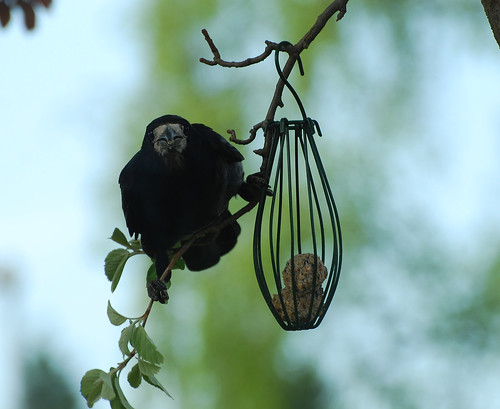
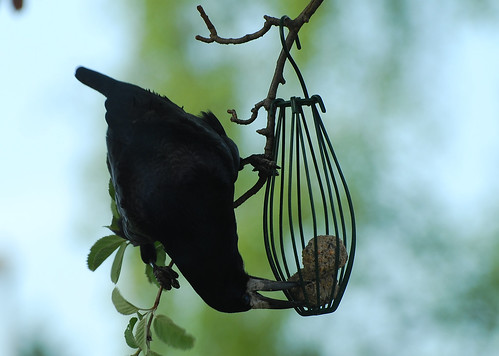
Continuing with garden birds, last week it occurred to me that the fat balls hanging in my front garden were requiring replenishment rather more frequently than usual so I guessed the nesting birds were feeding more often. The reason turned out to be rather more amusing:


One of the local rooks has worked out that these are edible…
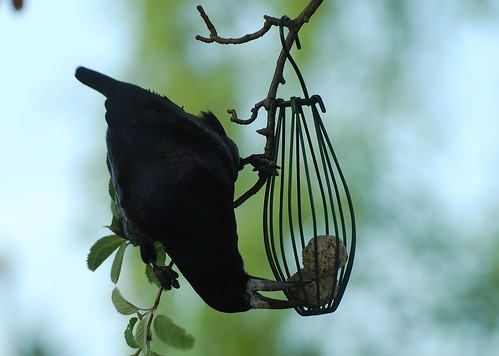
…and that it can reach them. And it takes alot of fat ball to fill a hungry rook!

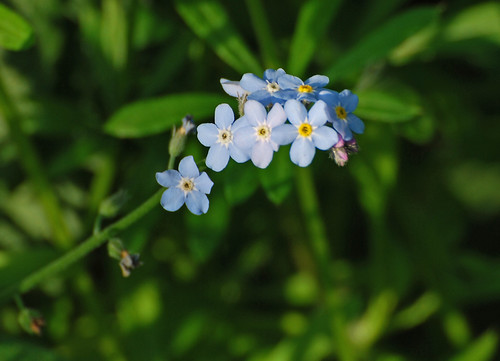
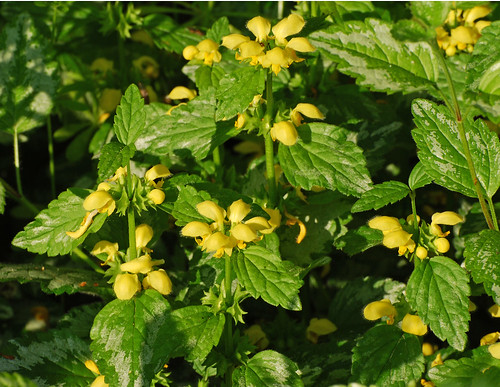
Slightly further afield in the hedgrows and scrub bordering the farmland around Histon it’s a very good time to survey the local wildlife. As I mentioned in a previous post many species of wild flower now including forget-me-not, yellow archangel…


Forget-me-not

Yellow archangel – Lamiastrum galeobdolon, this variegated version is an invading subspecies ‘argentatum’

…herb robert, cow parsley and periwinkle are all in bloom and lining the paths through the countryside filling them with a palette of colour.

And in the fields, trees and bushes there is an abundance of birdlife:


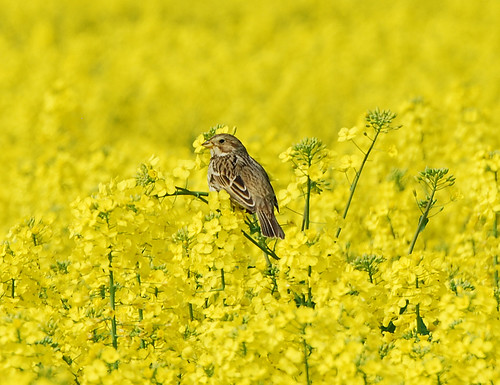
Corn bunting perched in the midst of a field of oil seed rape

The countryside is ablaze with the yellow of rape flowers right now and just occasionally a photographic opportunity such as this one arises. I’m not particularly keen on the vast swathes of rape but it created a lovely backdrop for this corn bunting which are becoming increasingly uncommon.

It’s not unusual to see and hear bullfinch in one patch of scrub near the church in Histon, which is a regular destination for my birdwatching outings. That makes me very happy because I used to see them all the time when I was a kid in the 1970’s but since the 80’s they seem to have been persecuted to near extinction in alot of the UK because of their fondness for the green shoots of commercial fruit trees. They are still fairly elusive but I managed to get this photograph of a male (just!):


Male bullfinch – the female has similar markings but they are not pink she is more pale grey/brown

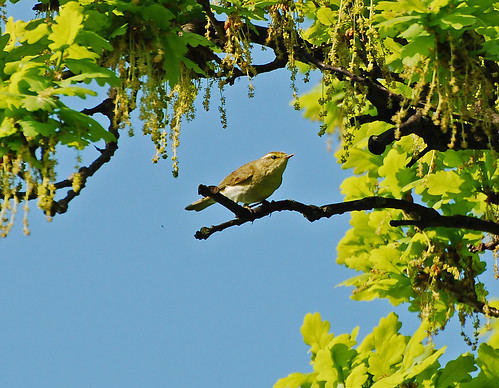
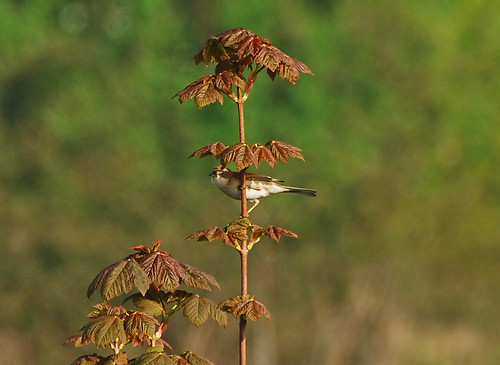
And in the same field as the bullfinch linnet are in residence, as are willow warbler, chiffchaff and blackcap which have now returned from over wintering in Africa:


Blackcap male

Chiffchaff

…as are whitethroat:


A female whitehroat, one of a pair patrolling a patch of brambles in the middle of the field

This field is an amazing place, I reckon it’s approximately 10-12 acres and it comprises several habitats including open-ish grass, it’s sorrounded by some old established trees: oak, ash and horse chestnut with hedgerow joining up the old trees consisting mainly of hawthorn and in the field itself there are alot of ash and other saplings and some large patches of bramble. Consequently it provides good supplies of food and cover for nesting for a number of different species. Green woodpeckers can be constantly heard yaffling to each other:

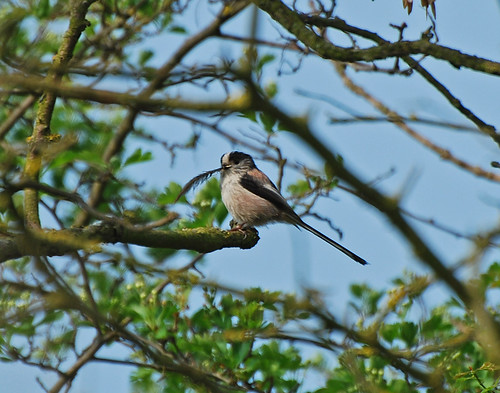
…and birds of prey including kestrel, sparrowhawk and buzzard are regularly in the skies above. The green woodpecker are there all year round and are usually hidden in the grass so I’ll flush one off the ground only for it to disappear into a tree too distant to allow a photograph. So this is about the best image I have of one. Most of the common or garden birds are regulars here too, house sparrow, dunnock, blue tit, great tit, long tailed tit:

…and chaffinch

…blackbird, songthrush, rook, crow and magpie are all present every day. So a small area of mixed scrub an the edge of the village supports a wonderful number of our birds.

There’s lots to see by simply look up in the village too. On the way back from the playground in Impington with my kids today we cycled along a road under a tree as a jay emerged from a silver birch on the other side of the road and landed in the tree a few metres over our heads. We all stopped to look at it and marvel at it’s amazing colours, and it looked at us for a minute or two before flapping off higher up the tree.