Returning songbirds

There’s a particular spot in my local meadow where there are some large clumps of brambles which are home to numerous species of bird including songthrush, blackbird, linnet and house sparrow. And in the summer chiffchaff, willow warbler, blackcap and common whitethroat are all there too. Chiffchaff have been here for a couple of months now, and willow warbler almost as long but I hadn’t yet seen a whitethroat, so I set off last Monday in the hope of seeing the first one of the year.

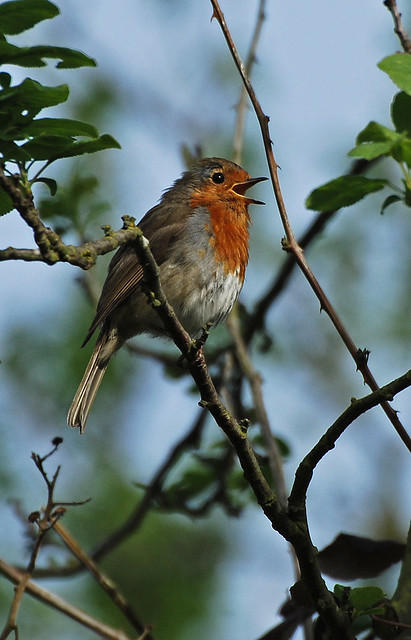
A cock robin singing to the ladies

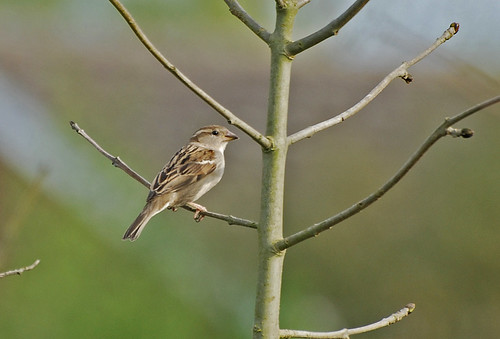
There were many species of songbird in the meadow including the robin (Erithacus rubecula: Dansk: rødhals) and the house sparrow (Passer domesticus, Dansk: gråspurv) and the air was alive with the song of all these species.


House sparrow female

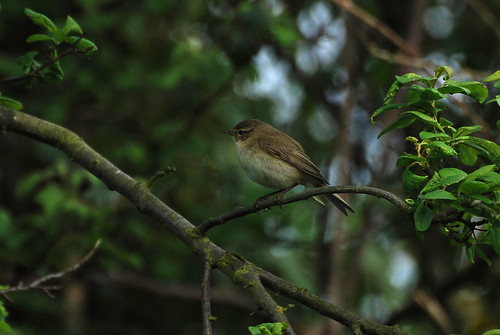
Robin and house sparrow are resident species in the meadow and I see them all year round there, but not the chiffchaff:

The chiffchaff (Phylloscopus collybita Dansk: gransanger), which is a warbler, and willow warbler (Phylloscopus trochilus, Dansk: løvsanger) can be very difficult to tell apart if only seen at a glance, but they can be distinguished by their song, of which more in the next post. This chiffchaff was one of a pair which were calling to each other and flitting around the bushes passing within a few feet of me on several occasions and seemingly unfazed by my presence.

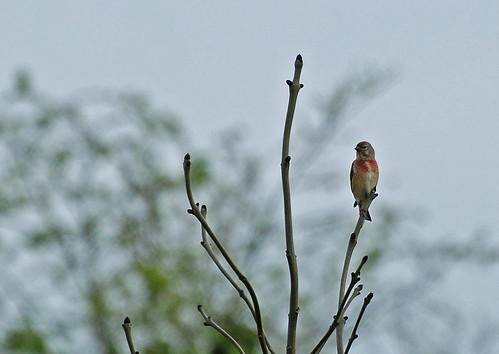
Cock linnet

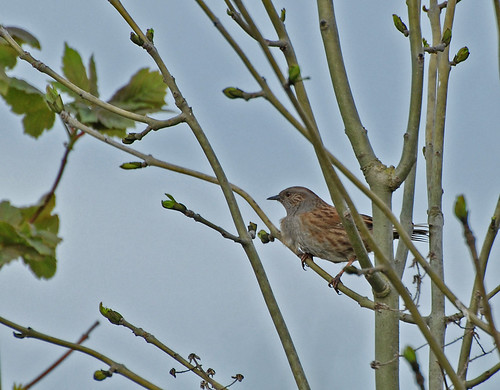
Resident in the UK is the linnet (Carduelis cannabina, Dansk: tornirisk), they disappear from the fields around Histon in the Autumn, presumably to congregate at a winter feeding ground, and they reappear in the Spring. And they have recently turned up in the meadow. Also resident, and present all year round, is the dunnock…


Dunnock, Prunella modularis, Dansk: jernspurv

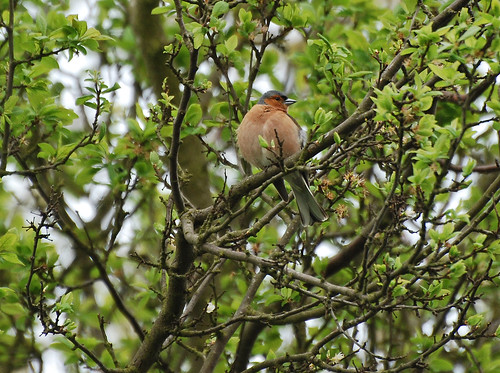
… and the chaffinch:

Cock chaffinch, Fringilla coelebs, Dansk: bogfinke

There were no whitethroat back in the meadow last Monday but as you can see there were plenty of other birds. In the last week I’ve also seen kestrel, sparrowhawk and buzzard, blackcap, green woodpecker, jay and magpie.

I recce’d the meadow again this weekend and the whitethroat are now back from wintering in Africa. They are very distinctive and both sexes are easily identified by their strikingly white throat, and the males display by singing from the top of a bramble thicket or a sapling and flit 4-5m vertically into the air and then descend to land in the same spot. They’re lovely little birds, with a very distinctive song, and I’ll hopefully have some pictures to show you in the near future.

Wild Geese

At the same time I was experimenting with ISO and coots at Milton Country Park there were geese in the vicinity too. A small flock of greylag geese (Anser anser, Dansk: grågås) were grazing in a field  immediately adjacent to the park.

There is another flock of greylags I encounter every day on my way to and from work. There are around 20-30 that have taken up residence in a field that is on my cycle route. The field is adjacent to a lake and the cycle path passes between them and every morning I pass by there are numerous heads poking up above the crop. I’m surprised the farmer puts up with this because the field now has a number of large threadbare patches as a result of the goose activity. But the geese have been there for a couple of months now and so far he hasn’t shot them so I imagine he probably doesn’t plan to. Which I’m rather pleased about.


Five of a small group of greylags ensconced in a field immediately adjacent to Milton Country Park

The RSPB website tells us that the greylag is the ancestor of domestic geese and is one of the largest and bulkiest geese native to the UK. It also describes it as ‘uninspiring‘. However, a few weeks ago on my way to work the flock of greylags were spooked and flushed up into the air. They headed for the safety of the lake which was only around 75m away so they didn’t need to gain height and one of them veered around and was heading straight for me at headheight. We simultaneously computed that if we continued on our current trajectories the end result would be an ugly collision twixt self and goose! So I braked and the goose wheeled, and it duly arrived at the lake unscathed, passing a few metres in front of me. My adrenaline levels were significantly elevated for the remainder of my journey to work and I can attest to the fact that this particular greylag was indeed very large and very bulky. And anything but uninspiring.

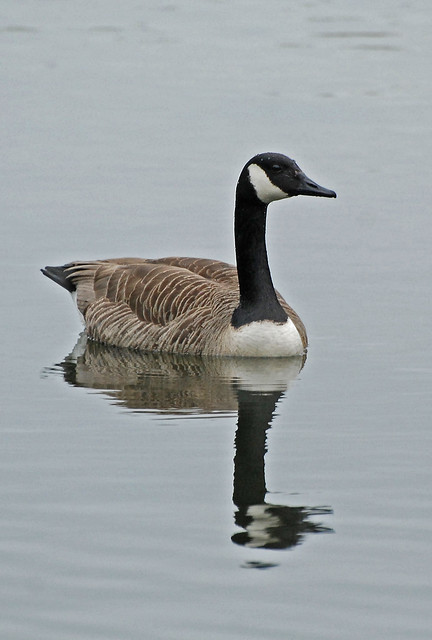
A lone canada goose – I like the symmetry of the reflection

The canada goose (Branta canadensis, Dansk: canadagås) was introduced to the UK and is now a resident breeder here and can be seen all over the UK apart from northern Scotland, and like the greylag it feeds on vegetation. I think it’s a handsome bird.

The indomitable coot – addendum: yesterday I posted about how aggresive coots can and this fantastic picture from Ian Butler demonstrates the point quite splendidly… I imagine the heron got a bit of a shellacking when it touched down!

Ian Butler Photography's avatarIan Butler Photography

I flushed this heron whilst walking around the reserve and unfortunately for the heron it flew straight towards a coot nest.  The adult coots then proceeded to launch a full scale attack on the heron for being too close to the nest.  The heron then had to change direction quickly, which ultimately lead to the heron slowing down and landing about a foot away from the coots nest, which lead the coots to become even more aggresive because of this.  In the end the heron flew past me instead of the coots which in my opinion was the safest option in the first place! Whether the heron thought that the coots would be more concerned about me and tried to take one of the coot chicks or whether it was just an honest mistake I dont know.  It happened extremely quickly and this is the one of the images of the pair of…

View original post 28 more words

The indomitable coot

The coot (Fulica atra, Dansk: blishøne) is a common water bird found on lakes and rivers in all of the UK apart from north west Scotland. They are related to the rails and crakes, they are extremely aggressive and will see off bigger birds who are sufficiently unwise to encroach on their territory.

Whilst wandering around the lakes at Milton Country Park on Saturday it was early in the morning and the light was really murky, so I experimented with the ISO settings to try and extract some half decent images from the gloom, and in these two images the ISO was 1600 or higher. The high ISO has given the pictures a slightly grainy feel, but that’s to be expected, and I like the colours:

The coot was diving repeatedly and resurfacing with beaks full of weed

I like the colours and the reflection of the beak

Apparently the baldness as in ‘bald as a coot’ comes from the white saddle above the beak, which I think is a tad strange because the chicks really are bald.

Coots are omnivores and their innate aggression extends to their chicks which when food is short they discourage from begging by biting them, sometimes so hard it kills them. It’s a tough existence being a coot chick, they are also regular prey items for other creatures such as herons. On a busy lake with other species of birds the coots are good fun to watch as they chase off allcomers.

Carduelis (or Chloris) chloris

A sound I hear frequently at the moment when I open a door or a window which stands out from all other birdcalls is the call of the male greenfinch. It’s quite variable in tone from fairly high pitched, as in the recording here, to lower pitched where it almost sounds like a whirring mechanical toy.

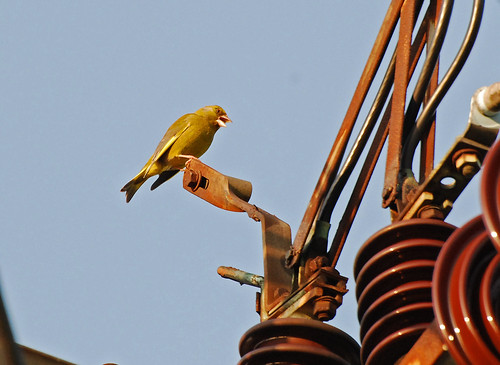
The bird in these pictures has a reddish hue to it because it was being lit by the evening sun as it was getting lower in the sky, and also from the reflected light of the rusty ironwork and insulators of the electricity supply cables:


Greenfinch male calling from the top of a telegraph pole

The female greenfinch is similar to the male but her colours are much more drab, she is darker grey/brown without the vibrant green of the male.

The greenfinch is a resident breeder in the UK and can be found in gardens and parks at all times of the year feeding on bigger seeds and sometimes insects when rearing youngsters. It has a chunky beak which is typical of finches and is custom built for cracking open seeds.

The taxonomic name for the greenfinch is listed in some references as ‘Carduelis chloris‘, as in my RSPB ‘Complete Birds of Britain and Europe’ by Rob Hume published in 2002, (RSPB – Royal Society for the protection of Birds) ISBN 0751373540, and also in the RSPB Bird Identifier website. But in the BTO BirdFacts website (BTO – British Trust for Ornithology) and in my Collins Bird Guide 2nd edition from 2010, ISBN 978 0 00 726726 2, it is listed as ‘Chloris chloris‘ (Dansk: grønirisk). Somewhat confusingly the BTO entry goes on to explain that the name derives from ‘carduelis‘ meaning ‘goldfinch’ and the Greek ‘khloros‘ meaning ‘green’. So it appears that the two names may be interchangeable. Incidentally, the chemical element chlorine also derives its name from khloros as it exists as a green gas.

He’s turned round to keep on eye on me – his seed-cracking beak clearly visible

The poor old greenfinch has taken a bit of a battering in the last few years since 2005 from the trichomonad parasite which causes a disease called trichomonosis. This microscopic parasite lives in the upper digestive tracts of several birds species including other finches, house sparrows (Passer domesticus, Dansk:  gråspurv) and pigeons and doves. I’ve heard that feeders may become contaminated by pigeons from where it infects the smaller birds. It’s particularly unpleasant (as are most parasitic infestations!) because it causes the throat to swell to the point where the birds can’t swallow so they eventually die of starvation.

Fortunately I’ve never seen any evidence of infected birds but if you think you may have a problem you can click here for the RSPB advice sheet which has details on how to identify the problem and how best to deal with it.

Animal Rescue – Newsflash 28/04/2012

A couple of weeks ago I posted about a fox cub my mother rescued after we found out the vixen had been killed. I promised you an update on her progress and I spoke to the lady who took her in last week so here’s the latest.

At first she weighed between 300-400g and was a little dehydrated but put on 100g in 3 days after becoming fully hydrated and taking immediately to a diet of fresh meat.

Hard to believe this little sweetie will turn into our apex predator!

She had a couple of tics and was infested with worms and fleas, which she generously passed on to her carers (just the fleas!), but was otherwise in good health. After a course of parasite treatment she came on in leaps and bounds and began to show signs of hunting behaviour by fighting with an old sock.

After a week and a half with her original benefactors she was passed on to a rescue centre near Kings Lynn in Norfolk where she was introduced to another orphaned cub. They had a good old scrap during which the pecking order was established and after that they knew their respective places and got along well. So everything is now being put in place for a release date in August, which is when a wild fox cub would be venturing out on its own.

So everything is looking good for a return to the wild for this little lady and I’ll hopefully get another progress report in about a months time.  I’ll try to find out if it will be possible to photograph her eventual release and I’ll share updates and photographs as and when.

Misplaced mallard

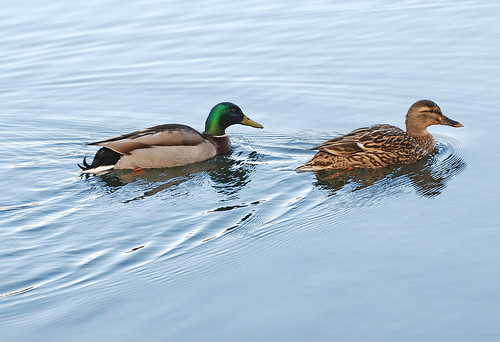
This pair of mallard weren’t misplaced at all, they were on a lake at Milton Country Park doing exactly what you’d expect mallard to do,

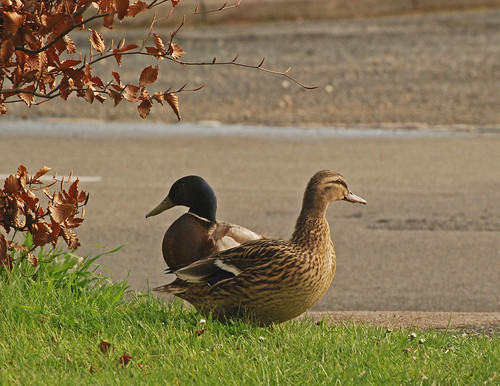
But this pair were very misplaced:

Romeo and Juliet

They appeared in my garden, relaxing under the crab apple tree, a couple of days ago, they disappear early in the morning and return in the afternoon. They’ve repeated this for the last three days now and they were here at dusk today sitting on the grass under the tree.

They seem completely unfazed by most interruptions including cats, humans and me flying past on my bike when I didn’t realise they were in situ. There is no water within half a mile so I don’t know why they are here, but it’s the first time we’ve had ducks in the garden and the children are very excited by their presence, so they’re welcome to stay as long as they want.

Returning migrants and lots more besides

Occasionally, but fairly infrequently, it’s a struggle to find enough interesting nature to put together a post, and then every now and again so much happens that it’s difficult to fit it all in. Last weekend was one of the latter.

It started to get interesting as I was cycling to work on Friday morning, a bird caught my eye in a hedge outside work and first off I thought it was a bullfinch, which I’ve never seen on Cambridge Science Park before. But then I got a better look at it and it was immediately apparent it wasn’t a bullfinch, it had similar colours but in a different pattern, so I did a quick U-turn to get a better look. It turned out to be a black redstart male in full breeding regalia (Phoenicurus ochruros, Dansk: husrødstjert). He was magnificent but alas, because I was heading to work I was camera-less, so if you’ve never seen one, dig out a bird reference book and check him out, it’s worth the effort.

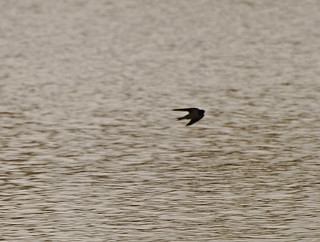
I went back to work on Saturday morning with my camera to see if he was still there but there was no sign of him so I carried on to Milton Country Park, on the northern edge of Cambridge. It was a bright sunny morning and I arrived there just after 8.30 and it was already warm. And it augured well because it turned into a real bird fest. I was hoping to see some returning migrants and as I got out the car I could hear chiffchaff (Phylloscopus collybita, Dansk: gransanger) calling in the trees around the carpark. The first migrant I actually saw was completely unexpected and turned out to be a pair of sand martins (Riparia riparia, Dansk: digesvale) which I haven’t seen for years. There were also swallows (Hirundo rustica, Dansk:  land svale) flying low over a lake and this is roughly the same time I saw the first swallow last year. Like swallows, sand martins also over winter in South Africa, but unlike swallows they nest in burrows which they excavate in sandy banks. There are some man made burrows for the sand martins at the country park but so far they’ve been ignored by the martins, but the occassional kingfisher pair have availed themselves of the opportunity.

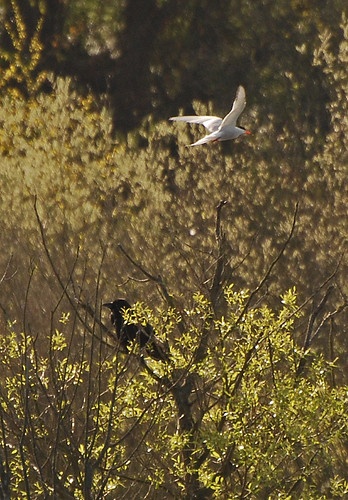
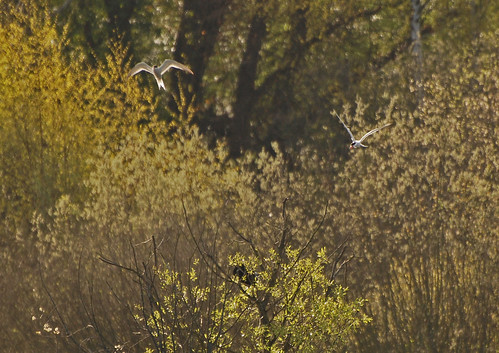
Close to where the swallow was hunting is a small island with a tree on it where cormorants (Phalacrocorax carbo, Dansk: skarv) can often be seen perched. This time there was a carrion crow (Corvus corone, Dansk: sortkrage) sat on top and a pair of common terns (Sterna hirundo, Dansk: fjordterne) were taking exception to its presence and were working as a team to dive bomb it:

A singleton…


… and in tandem

I almost felt a little sorry for the crow, but I’ve watched them terrorise so many birds, especially buzzards and other birds of prey, in a similar fashion that the sympathy was a tad less enthusiastic than it may otherwise have been.

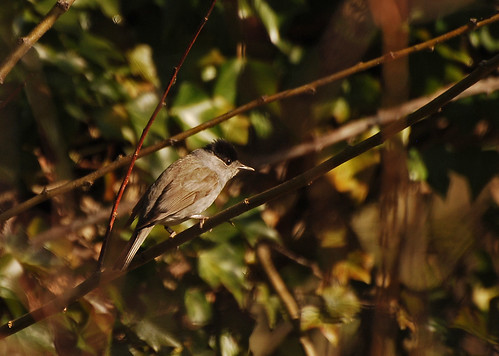
A migrant which was present all over the country park was the blackcap (Sylvia atricapilla, Dansk: munk), in one bush there were a minimum of four and possibly six or even more. They were squabbling away in the  bush presumably in the midst of a territorial dispute. I saw the first blackcap of 2012 a few weeks ago at Danbury Common in Essex during my unsuccessful mission to look for adders.
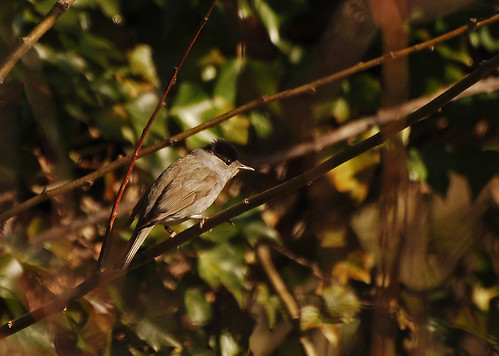

Blackcap male, the female is similar but easily distinguished because her cap is a rusty brown colour.

As well as the migrants the trees and bushes were full of the song of more familiar resident species such as the robin, blue tit, great tit, blackbird and wren. All were energetically vociferous, filling the air with a wonderful cacophany. And amongst these I caught a tantalising glimpse of a much less common species, the treecreeper (Certhia familiaris, Dansk:  træløber). Treecreepers are very aptly named and are fun to watch as they hunt insects in the crevices of tree trunks, spiralling upwards in a corkscrew pattern. A pair of sparrowhawk and a pair of buzzard were also busy performing their aerial courtship routines.

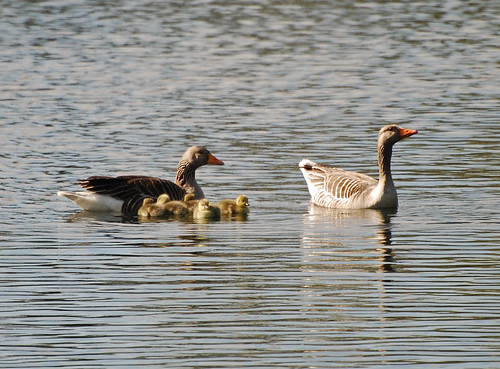
There were none of the winter ducks such as tufted duck (Aythya fuligula, Dansk: troldand), pochard (Aythya ferina, Dansk: taffeland), gadwall (Anas strepera, Dansk: knarand), teal (Anas crecca, Dansk: krikand) or widgeon (Anas penelope, Dansk: pibeand) on the water, they had all headed off north to their breeding grounds. But several birds including coot (Fulica atra, Dansk: blishøne) and greylag geese (Anser anser, Dansk: grågås) had chicks on the water:


Greylag geese with six chicks

I paused to try to get a shot of a great crested grebe (Podiceps cristatus, Dansk: toppet lappedykker), all now in full brown breeding plumage:

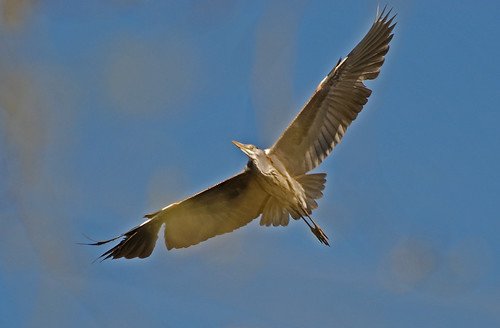
And as I stretched over the water, trying hard to get a clean shot of the grebe, and even harder not to pitch headlong into the lake, a grey heron (Ardea cinerea, Dansk: fiskehejre) flew low overhead:

It was so low I thought it must have pitched up very close to where I was but on an adjacent lake, and a quick scan revealed it sat in the top of a tree being pestered by the common tern that had earlier been harrassing the carrion crow:

The terns were deeply unhappy with any potential predator, although they were less keen to buzz a pair of sparrowhawks which were in the air above the same stretch of water!

Animal Rescue

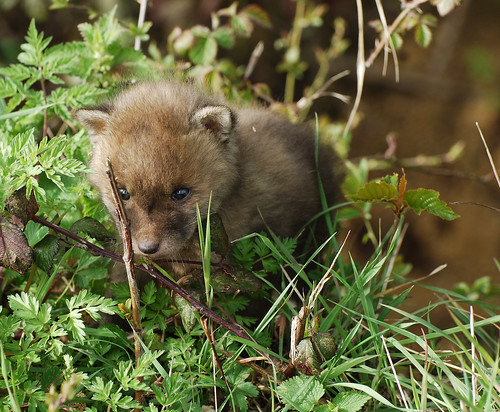
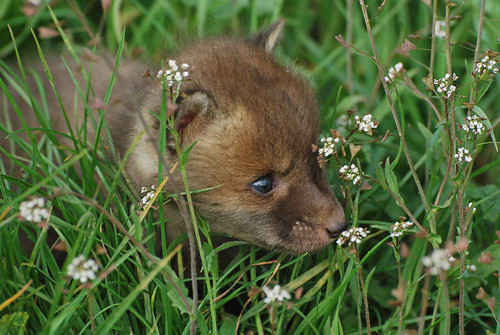
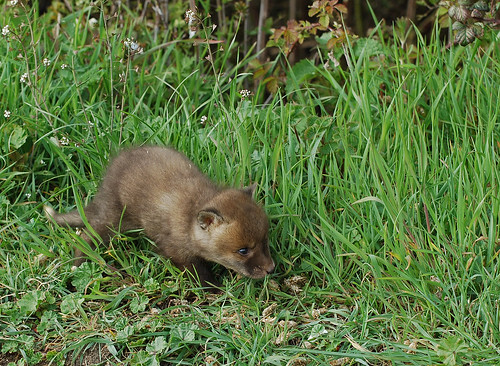
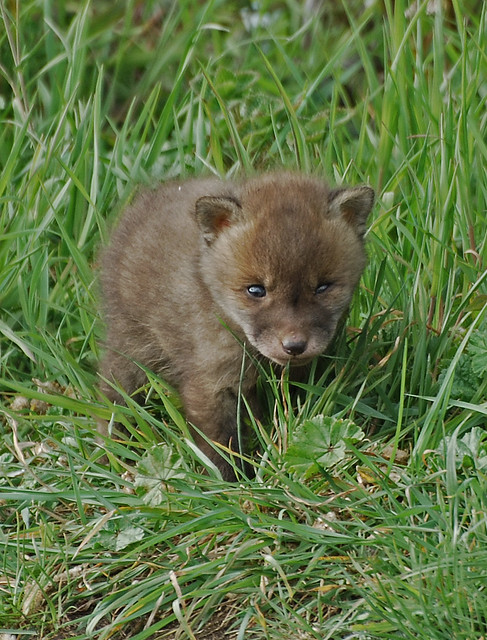
It was Easter last weekend and my parents were visiting. On Saturday I had walked the dog in the fields north of Histon and shortly after entering the field another dog walker told me there was a fox cub (Vulpes vulpes, Dansk: rød ræv) in the undergrowth I had just walked past. So I retraced my steps and sure enough there was this adorable little creature exploring the parapet of the ditch:

It’s body was only 6-7 inches long and I guessed it was the boldest of a litter which had taken the opportunity to wander whilst the mother was out hunting. So I took a few photographs and left it to it’s own devices, and when I completed my loop it was no longer there so I assumed it had returned to the den.

The following day my mother accompanied us for a walk in the hope it was still there, and indeed there it was in exactly the same place, but this time it seemed considerably emboldened and I was extremely concerned that a pet dog may kill it as this was right on a very popular dog walking route. My mother decided that my father should see it and she was going to return and fetch him, so I carried on to walk the dog.

When I got back my mother had been told by someone who lives close by that the vixen had been killed and the cub was orphaned so she rescued it and when I got back it was in a box on top of the piano. Which left me with a dilemma: what does one do with an orphaned fox cub at 4pm on Easter Sunday? It proved to be tricky to find somewhere that took wild animals, so in the end I rang up Wood Green Animal Shelter at Godmanchester, which is only about 12  miles from here, in the hope they would know somewhere that would take the little orphan. And luck was with us, they made some enquiries and gave me the phone number of a lady who lived fairly close by who had reared orphaned fox cubs in the past and was prepared to take ours. So self, mother, the children and the boxed up fox cub were bundled into the car and off we went, and an hour later our little cub was in the hands of someone who was skilled in the art of looking after wild foxes. Result!

It turned out to be a 3-4 week old vixen, who apart from being dehydrated seemed to be in reasonably good shape. She was expected not only to survive but was to be passed on to a wildlife sanctuary for eventual release into the wild. My fingers are crossed that this happens and she has at least one litter of her own cubs. I’m going to try to find out how she does and if I can get an update I’ll let you know.

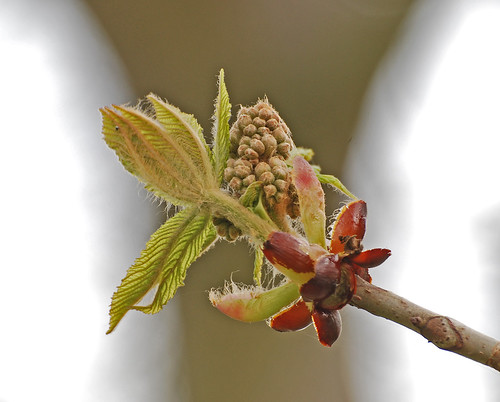
Aesculus hippocastanum…

…is the Latin name for the horse chestnut tree. I always think of the horse chestnut as being a quintessential feature of the English countryside which I’ve loved since I was a kid when I’d climb them and hurl sticks up into them in September to harvest the conkers. Continuing on the spring theme I found this exploded cluster of leaf and flower shoots over a path in the middle of Histon and it seemed to sum up the excitement of heading into the summer sunshine months.