Natural (pre)history

I’m stretching a point here, but if you can cut me some slack I hope you’ll think it’s worth it.

A couple of years ago my brother in law was turning over the topsoil in his garden in Daventry whilst talking to my Dad, when the old man spotted an interestingly shaped stone in a spade full of soil. They retrieved the stone and this is what they had found:


Acheulian hand axe

We originally thought it was an axe head, but the size and shape and the way it fits so neatly into the palm of my hand made me think it may be a hand axe. My Dad took it to the local council finds department to find out its true identity and the lady there told him she thought it was an axe head dating back around 10,000 years, which is right at the end of the Stone Age, but she would send it to the relevant experts and get it properly identified.

Some weeks later a report arrived from the experts and it turned out to be even more amazing than we first thought. It transpires it is what is known as an ‘Acheulian’ hand axe, so called because the first known example was discovered in the town of Saint-Acheul near Amiens in  northern France. It was knapped from a piece of flint using a deer antler during the middle palaeolithic period, between 250-400,000 years ago. The marks created by working the stone are clearly visible in the photographs above and have been beautifully depicted by a scientific illustrator in the report.

It has been crafted so one side is fairly flat compared to the other and all the weight is at the fat end which fits into the palm of the hand making an exquisitely fit-for-purpose handle with cutting edges running along both sides to the tip. It shows signs of having been reworked so I imagine it must have been a good one, and the edges are still sharp – after many millenia.


The cutting edges of both sides are still sharp

The use of these axes dates back 1.5-2 million years, to the overlap of Homo erectus species with archaic Homo sapiens, so it is possible this tool was made by a member of a pre-human species, and they have been used to trace the spread of hominids away from the birthplace of humanity in Africa. The design of this one dates it to the later part of the palaeolithic period at a time when Homo heidelbergensis was evolving divergently into H.neanderthalensis and H.sapiens – us.

H.sapiens dates back  approximately 100-200,000 years and H.heidelbergensis approximately 400-600,000 years. So the dating of our hand axe suggests it was probably made by H.heidelbergensis.


How many woolly mammoth were skinned and butchered by this?

The axe is made of flint, a sedimentary rock found in limestone formations and is a cryptocrystalline form of quartz, formed by compression at relatively low temperatures and pressures. Flint is normally a dark glassy colour but the colour of our axe is yellowy brown because it was discarded into water in Northamptonshire, where the underlying rock strata are formed predominantly of ironstone. The acid conditions in a bog rich in iron has thus caused the stone to absorb iron onto the surface giving it its unusual colour. Interestingly, the flat end where the tip has been broken off is not yellow, suggesting the tip was broken off more recently when it was no longer exposed to iron.

The next person to handle this amazing tool since a member of the Homo heidelbergensis species was my Dad. Which I think is an incredible notion!

So even though this is not contemporary natural history I think there is a place for it in a blog about nature. I hope you agree!


Murmuration

Did anyone see the article about ‘murmuration on the BBC news website yesterday?

This is the technical term for the aerial swarms of starlings that occur immediately prior to settling into their roost site in the evening.

It’s phenomenon I’ve seen before but not for many years. I was an undergraduate in Liverpool in the mid 1980’s and I recall on winter evenings there were frequently murmuratons of starlings going on over St Johns Garden behind St Georges Hall in the centre of the city.

This is a great name for one of natures truly spectacular, and mesmerising, events. I don’t know how many birds were involved in the murmurations I saw but I believe it can be up to tens of thousands. The overhead spectacle is awesome, and in a rather different respect so is the effect it has on the pavements beneath… and the resultant stench!

The BBC article refers to some new research from two Italian biologists who studied the flocks of starlings over Rome, and using clever camera work they divined how the birds maintain the shape of the flock. There was also speculation about why they murmurate. I think it must be down to evasion of predators such as peregrine falcons.

I can’t resist the temptation to gratuitously insert one of my starling photographs here, because on an individual level aswell as in enormous swarms they are beautiful creatures. They have sumptuously iridescent plumage particularly when they catch sunlight at the right angle:


Sturnus vulgaris

Alas, I don’t have any of my own photographs of murmurations but I intend to rectify that situation in the future, at which time I will post again about these endearing creatures.

Winter garden visitors

Redwing and fieldfare have now made the journey south from Scandinavia to overwinter in the fields and hedgerows of the UK and the first frosts have happened over alot of the country. The weather has turned generally pretty cold so it’s time to spare a thought for the struggling wild creatures. I’ve now cleaned and replenished my feeders to help the birds survive the winter months. For example, a blue tit weighs between 10-12 grams so a night spent asleep in sub-zero conditions is an extremely challenging time and they need regular food supplies to keep warm. You’ll notice the photographs in this post weren’t all shot in the cold winter months but all the species shown are regular winter visitors to my garden.


Greenfinch waiting for a vacant space on the seed feeder

I hang bird feeders from the trees in my front garden with peanuts, mixed seed and fat balls in along with a ground station with peanuts, seed and sultanas. There are some good online suppliers out there including the RSPB, Soar Mill Seeds and the one I’ve now been using for a few years is Vine House Farm. This combination of feeds attracts a wide range of birds including starling, blackbird, blue tit, great tit, long tailed tit, robin, greenfinch, chaffinch, rook, jackdaw, carrion crow, collared dove and wood pigeon.


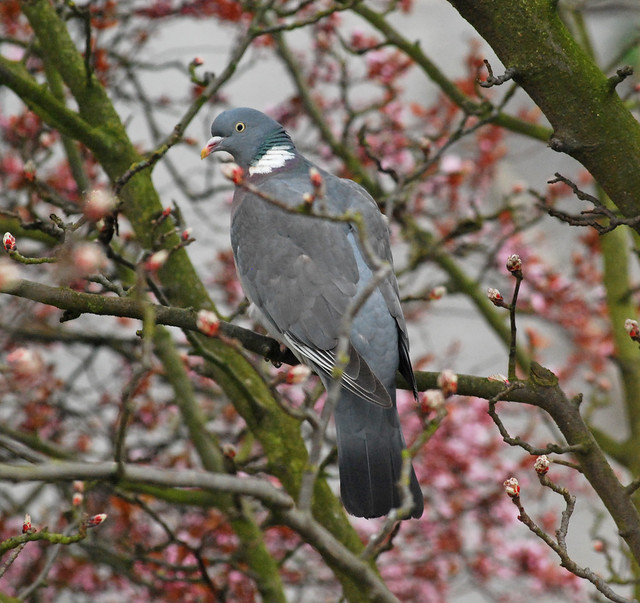
Wood pigeon perched in the cherry tree in my front garden


One of the Churchyard rooks sitting on a neighbours’ TV aerial contemplating a raid on the ground feeder


One of the blue tit pair in my crab apple tree checking for danger before disappearing into the nest box

 There are also infrequent visits from great spotted woodpecker, song thrush, wren, sparrowhawk and even a yellowhammer put in an appearance on one occasion.

In my back garden I also hang peanut and mixed seed feeders and a niger seed feeder for goldfinch. I have two suspended seed feeders above ground out of the way of marauding cats and squirrels which work well for ground feeders such as chaffinch and dunnock. A similar range of small birds appear in the back garden but the crows, woodpecker and sparrowhawk  don’t seem to venture in there, but dunnock and goldfinch are regular visitors all through the year.

Goldfinch – one of this years offspring. It still doesn’t have the black head markings and the face is pale orange rather than the deep red of the adults.

Adult goldfinch


Dunnock

Living on the edge of countryside surrounded by gardens with big old trees and an orchard is obviously a good place to be to see birds (and bats in the summer), but being in the middle of the village or even in the middle of a city like Cambridge, well away from countryside, doesn’t preclude seeing interesting birdlife. A friend in Histon has seen siskin and redpoll in his garden, neither of which are common garden birds, and another friend in the centre of Cambridge has regular visits from sparrowhawk and jay. So simply hanging up a couple of birdfeeders with nuts and mixed seed can turn an urban garden into a mini nature reserve, and you can sit in the warm with a cup of coffee and watch it all out the window. I’ve been amazed to see what has turned up in my garden in the last few years!

North Histon field walk

Most of my meanderings are across fields adjoining Histon on the northen edge of Cambridge, UK. Farmland here stretches almost unbroken, with the exception of the Cottenham to Landbeach road, and a few minor lanes, for 6-7 miles to the Wilburton to Streatham Road and is interspersed with scrub and plenty of mature trees offering shelter and food for the local wildlife. I’ve been keeping a wildlife diary since the middle of 2009. The 2010 edition is here and I’ve drawn a map of the Histon north fields area which is a little bit ‘Lord of the Rings’ style but it shows where all the locations mentioned in the diary are in relation to each other. Of course, all the location names are figments of my imagination from two years ago, so none of them would be found on an official map!

The photographs below will hopefully help you visualise the places and habitats I’m describing.  I have lots of pictures of the landscape features taken at various times of year, but all the pictures below were taken late in the afternoon, 3-4.30pm, last Sunday  (7th November, 2010) and I’m using these because the sun was low in the southwestern sky making the colours wonderfully vivid. There are no animals or birds in these shots, unless you’ve zoomed in and have spotted some that I haven’t. So if you wanted to see animals I apologise, and if you find any please let me know! The pictures start and finish with my favourite poplar tree and get progressively darker, and the light more blue, as the sun dipped below the western horizon:

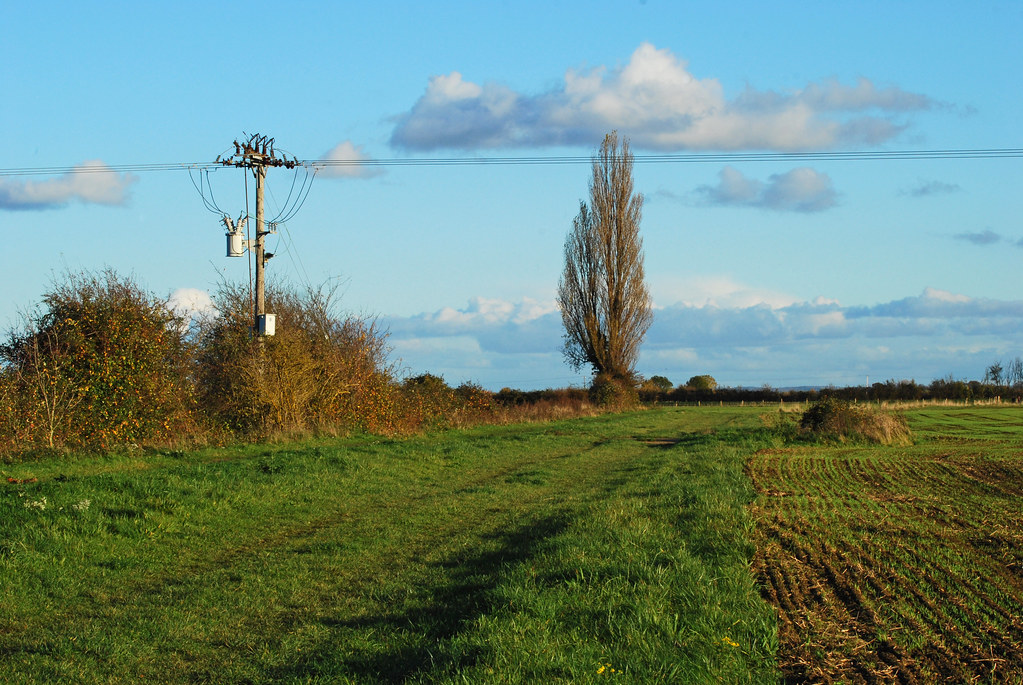
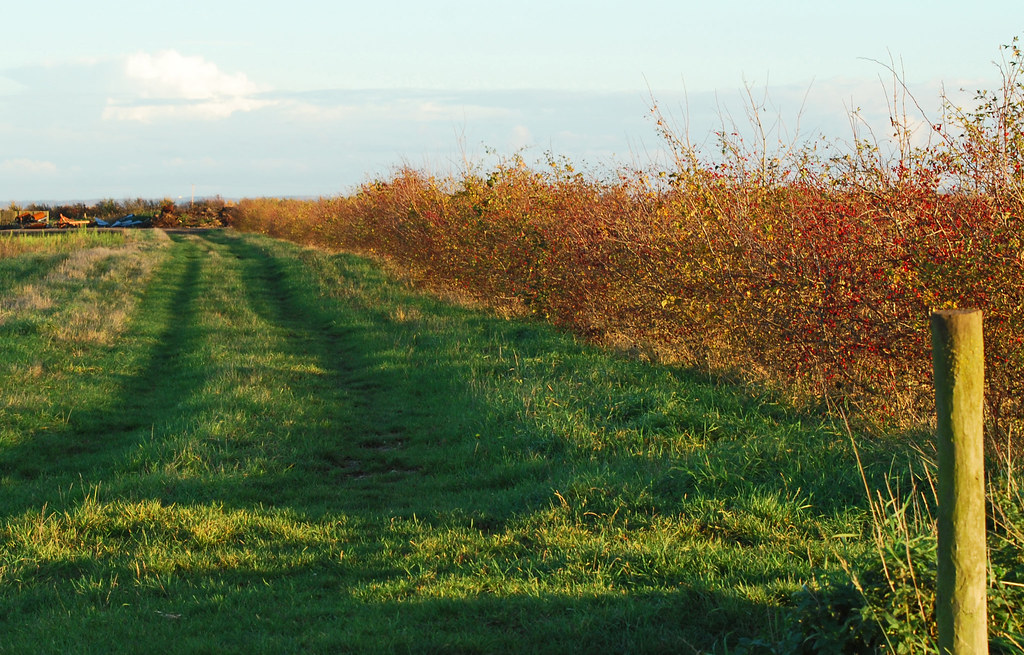
Linnet Hedge heading towards the Poplar with South Bean Field on the left

Entering the fields from the B1049 I walk along the Linnet Hedge where in the summer numerous linnet appear most days perching on the power lines and feeding in the fields immediately adjacent to it. Not just linnet though, there are dunnock, house sparrow, blue tit, great tit, chaffinch, greenfinch, goldfinch, blackbird, wren, whitethroat, yellowhammer, blackcap and kestrel regularly sighted in or around it.

Heading east-south-east towards the Poplar Tree I turn left and head towards the sycamore tree at Hedge End along West Ditch  to the Merlin Hedge.


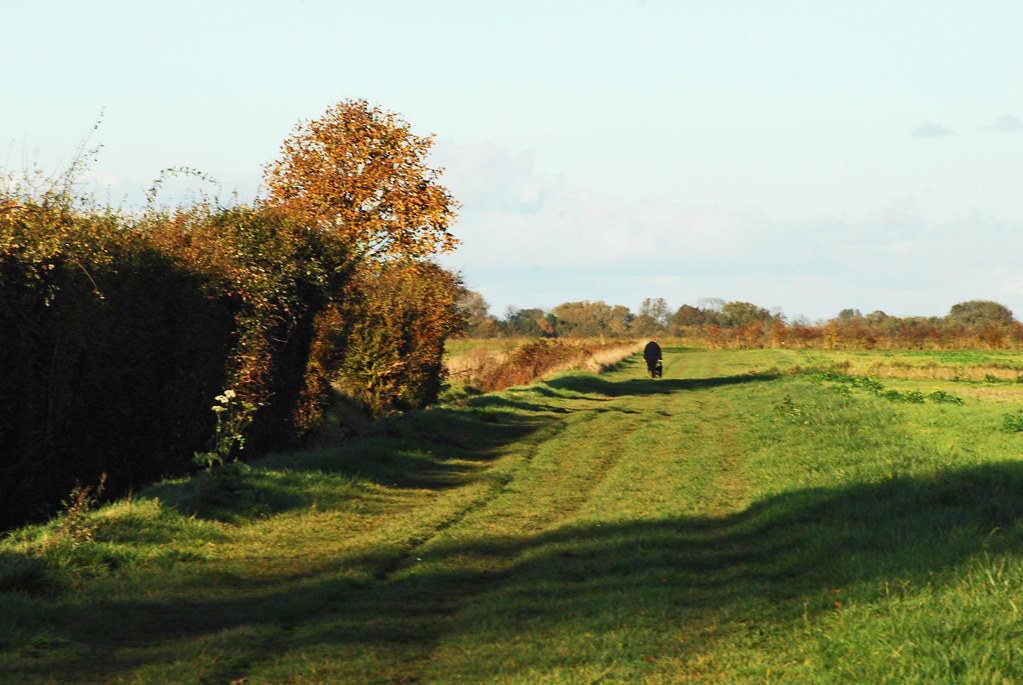
Poplar Hedge on the left leading to the small sycamore at Hedge End where it becomes the West Ditch, Middle and North Bean Fields on the right, Merlin Hedge at the end of the track. Lone dog walker in the distance.

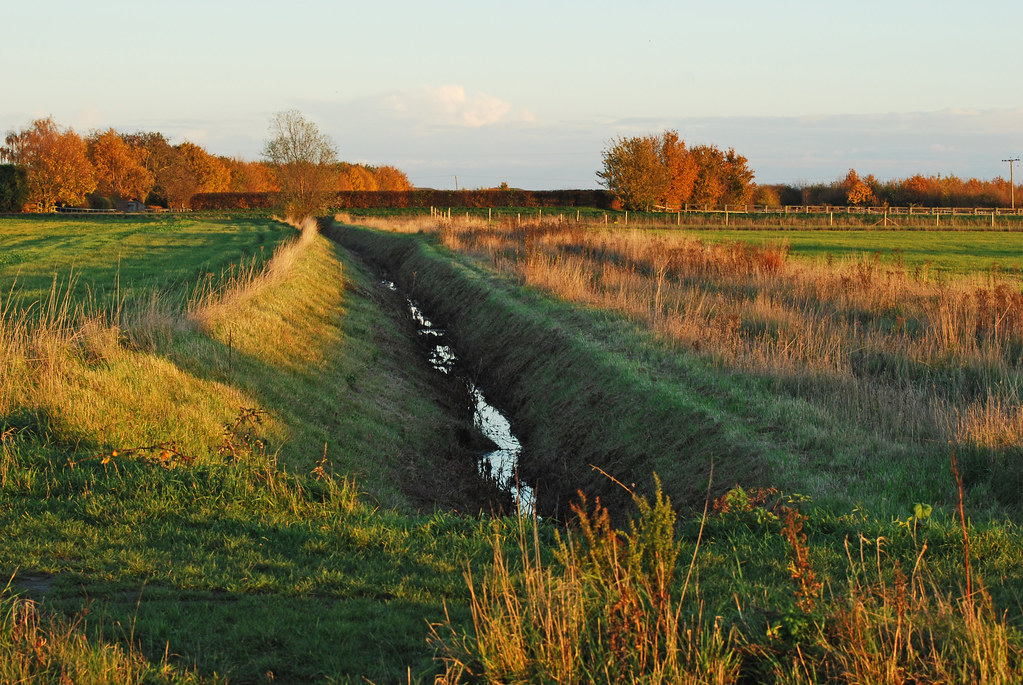
West Ditch is a great place to see all kinds of wildlife. Apart from being full of many wild flowers from Spring through to Winter, it is full of birds too, such as wren, linnet, goldfinch, reed bunting and corn bunting.  One evening this summer at the far end of the West Ditch I was distracted by the buzzing of an insect which turned out to be a privet hawk moth. Alas, it was too dark for a photo, but they are black and pink and up to 12cm wingspan, so an impressive sight. Common darter dragonflies also patrol up and down here.


Ditch running northwest to southeast between the sycamore tree at Hedge End and the farm

The Merlin Hedge is so called because not long after I started walking there I was half way along it when a merlin approached at quite incredible speed flying 2m off the ground and as it crossed the hedge, 10m in front of where I stood, it dived to catch a swallow which proved too elusive so it veered back on course and went on its way. All that lasted just 15-20 seconds or so but it was immensely exciting to watch.


Merlin Hedge running southeast towards the Bonfire and a machine store

At the end of the  Merlin Hedge I usually double back round the wooden post down the other side of the West Ditch towards the sycamore tree, turning right down the southern edge of the Beet Field:


Southern edge of Beet Field looking west to the back of the gardens of the B1049

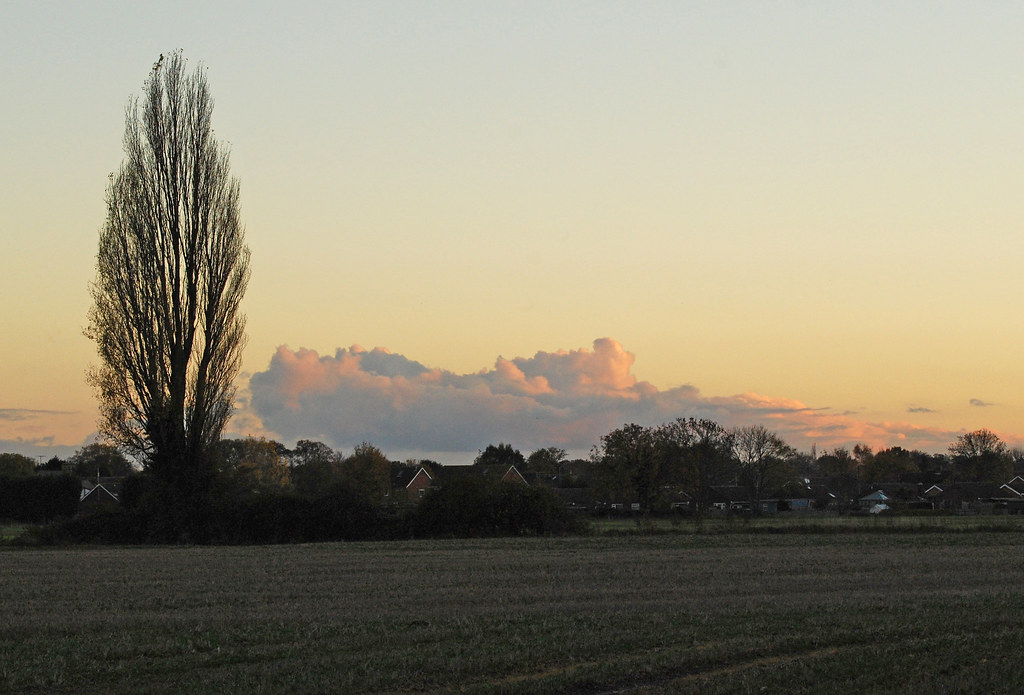
At the end of this track a left turn takes me along the back of the gardens, allotments and horse paddocks to the South Fallow Field at the far end of which  I cross the B1049 and head for home. But I can’t finish without including this picture of the Poplar Tree across the PX Field:


Poplar tree in the late afternoon sun. I love the colours in the sky!

Larus ridibundus – 23rd October 2010

There were several ornithological highlights to be enjoyed in the Histon fields this weekend. It looks as though autumn is here properly as the weather has turned more chilly, so for the last week or two I’ve been hoping to see some of our winter visitors arriving from the north and the east. It was an exciting day today because the first flock of the year of several hundred fieldfare (Turdus pilaris) duly appeared, flying low and fast from east to west. Alas, they didn’t stop, but it was great to see them arriving safely in numbers. I’m anxious to get some photographs of fieldfare so now I have my new 300mm zoom lens I’m hoping this winter will provide some opportunities to capture them on pixels. If I manage to get some good shots I’ll post them here as and when.

For the record, I’m an amateur wildlife photographer and I use all my own pictures to illustrate my posts. I use a Nikon D40x and a combination of lenses: Nikkor 18-55mm kit lens that came with my camera which I use for flowers, insects and landscapes, Nikkor 55-200mm zoom which I used as my default general purpose lens until a month ago when I acquired a Nikkor 70-300mm zoom lens which gives me that extra bit of reach. I don’t often sit in hides or wait for wildlife to come to me, I walk around and photograph anything I encounter which I think is interesting and photogenic. Which covers just about everything!

Back to ornithology, other good sightings this weekend have included corn bunting (Emberiza calandra) which is a real favourite of mine as they have a wonderfully distinctive call and they often sit proud  on top of hedges and let me take photographs from a distance of less than around 20 feet, and they’ll sit tight as long as I don’t make any sharp movements – even the dog running past doesn’t faze them.


Corn bunting

Other regulars this week have included yellowhammer (Emberiza citrinella), reed bunting (Emberiza schoeniclus), long tailed tit (Aegithalos caudatus), goldfinch (Carduelis carduelis), and skylark (Alauda arvensis). The latter are great to watch at the moment, on a sunny day they whizz around low and high chasing each other at incredibly high speed in groups of up to 5 or 6. Lone larks sing the characteristic skylark song up high, and plenty more can be seen on the ground feeding in ploughed fields, and disappearing into the scrub of unploughed fields where they don’t seem to stay for long before joining in another game of aerial tag.


Skylark

However, I’m digressing from my main theme of this weekend which is ‘Larus ridibundus’, or the black headed gull. Both yesterday and today (23rd and 24th October 2010) there have been a flock of 35-50 black headed gulls on the ground in two different, but adjacent, ploughed fields. I think it’s easy to dismiss gulls as not being very interesting but a closer inspection of a flock of gulls is a real treat. They are consummate aeronauts with beautiful plumage and are highly gregarious in winter. Consequently I’ve spent a sizeable chunk of this weekend enjoying watching them and trying to photograph them:


Adult black headed gull with brown face (this one was taken last summer at Seahouses in Northumberland – not Histon)

Adult black head in winter plumage – note the dark spot behind the eye and the red beak and legs (this and the rest of the gull pictures in this post were taken in Histon)


Note the white tail and forewing and the black tips of the first five primaries

Black headed gulls are fairly small as gulls go, around 35cm long and 100-110cm wingspan. They build nests on the ground on coastal and inland reedbeds and marshes, lay one clutch of 2-3 eggs per year and live on average for around 10-15 years. It is not an endangered species with approximately 1.5million pairs in Europe. (For a full set of facts and figures check out the BTO BirdFacts website (http://www.bto.org/birdfacts/), this site is excellent for comprehensive metrics datasets on all common UK birds). Black headed gulls are rather inaccurately named as they don’t have a black head at all. It is dark brown and only covers the front part of the face and is only present in summer when it serves as a form of aggression between rival males. They stand face to face to maximise the visible area of the dark mask to each other, but within a breeding pair aggression is minimised by displays involving turning the head to show the white nape to the partner. The dark hood recedes in winter to a small dark spot just behind the eye. Adults have a deep red bill and legs and pale grey back with a white tail and white outer edge of upper and lower wings formed by 4-5 primaries with black tips.


Juvenile diving in on an insect or worm. It has the dark tip to the tail, pale brown mottled upper wings and pale buff legs characteristic of an immature individual

Juveniles have mottled brown plumage with a dark tail tip and orangey-buff legs. They feed on worms, insects, seeds, waste and carrion, and can be seen on inland water, grassland and farmland aswell as on the coast during the winter.

I think they’re amazing to watch so next time you see a flock of gulls have a good look and appreciate the beauty of these creatures – you wont be disappointed!

Dragonfly discoveries

Dragonflies are amazing insects which it seems can be seen just about anywhere. In 2010 I’ve even spotted them over my garden in Histon. It occurred to me I should put some effort into photographing and learning about them as I sat with my family eating a picnic on a bench overlooking the fountain in the Cambridge University Botanical Gardens. Numerous small, magnificently bright red, individuals were whizzing around the pond, and a few big blue ones a short distance away from the pond (the small red ones were a species of darter, and the big blue ones were hawkers – probably migrant hawkers). I attempted to photograph these for subsequent identification but alas my photographic skills were’t up to the job on that occasion. Despite that I looked up some information and lots of great pictures at http://www.dragonflysoc.org.uk/home.html. This is a great website and started me off on a journey of discovery which is now pretty much finished this year but which I plan to resume as soon as possible next year.

Subsequent walks around Milton Country Park and the fields north of Histon provided lots of opportunities to see many species of dragonflies and damselflies:


Female brown hawker sunbathing on a birdbox at Milton Country Park

Migrant hawker male. The yellow ‘golf tee’ on segment S2 is diagnostic 

Dragonflies originate from species which fossil records date to the Carboniferous period, around 300 million years ago, and could have a wingspan up to 70cm! They comprise the taxonomic sub-order known as ‘Anisoptera‘ and are part of the order ‘Odonata‘ which also includes damselflies (Zygoptera) and another group which is virtually extinct called ‘Anisozygoptera‘. There are now around 5300 species of dragonflies of which approximately 40 reside in the UK.

Dragonflies lay eggs underwater either loose, protected by a hygroscopic gel, or inside plants. The eggs of some species can lie dormant over winter and resume development when temperatures rise in springtime. Time to hatching is temperature dependent but is usually around 2-5 weeks and the larvae develop in water, all British species overwinter once as larvae but time to adulthood can be up to 5 years. Metamorphosis from larva to adult is triggered by increasing day length and temperature in spring, and includes the transition to breathing air and growth of their incredible compound eyes. Each eye is made up of around 29000 individual elements called ‘ommatidia‘. They also possess three addtional ‘simple eyes’ call ‘ocelli‘ which are sensitive to light intensity and assist in controlling flight via direct nerve connections to the flight muscles. Dragonflies have excellent colour vision and can also see ultra violet light. It makes me wonder what the neural activity behind all that optical prowess is capable of: are dragonflies merely responding directly to visual stimuli via reflex arcs, or is there more sophisticated image processing going on?


Common darter, immature male

Common darter, female. Note the compound eye.

Dragonfly larvae are ambush predators feeding on moving prey including other insect larvae, snails, small fish and tadpoles. Adults catch other insects in flight, holding their legs out in front like a bread basket to scoop prey from the air such as flies, flying ants, mosquitoes and even other, smaller, dragon flies.

Newly emergent dragonflies are powerful fliers and disperse widely. They are often seen a long way from water and can even cross seas. They reach maturity after a few days to a few weeks, a process also controlled by temperature, when the males will congregate at vantage points near water where females come to oviposit. The male will grasp the female around the head with his anal appendages and attempt to mate with the female by swinging her round to form the ‘copulatory wheel’ enabling him to pass a packet of sperm from the secondary male sexual organs located on his second abdominal segment to the female sex organs located on her eighth abdominal segment. After mating, sometimes under the guard of the male, to ensure his sperm is not displaced by another male, the female will oviposit underwater. And so the cycle begins again.


Broad bodied chaser – female

Weekend field walks 9th and 10th October 2010

This Saturday (9th October,2010) I was lucky enough to be accompanied by my friend David on a long walk around the Histon countryside. David is a zoologist and knows considerably more about the wildlife than myself, consequently it was a terrific walk and something of an education.

We set off around 8.15am and the weather was mild but very grey with 100% low cloud cover. Very soon after entering the fields we heard a jay making alot of noise in some trees bordering gardens at the back of the main road.  As we passed a small sycamore tree a possible meadow pipit passed overhead and we heard a second flying past later on in our walk. Shortly after that a large flock of golden plover flew over at high speed and several groups varying in size from approximately 5-10 up to 70-80 were spotted in the air and on the ground in several other fields. Many evenings whilst walking at night last winter I heard birds on the ground making a short whistle consisting of a single  note and had no idea which species was responsible. Our golden plovers in the air were making exactly the same noise so the mystery of the night time whistlers was solved too. A kestrel and a sparrowhawk made solitary appearances and a peer into an old tumbledown barn revealed a little owl – a good day for birds of prey.

The mild damp conditions of late have been ideal for fungi. Gorgeous bright yellow heads of the yellow fieldcap mushroom (Bolbitius vitellinus) lined the walk, all at various stages of growth from recently sprouted, just a couple of centimeteres tall with very rounded unopened caps, to old and nibbled specimens around 10cm tall and the caps more dull in colour and 4-5cm in diameter:


Recently emerged yellow fieldcap mushrooms


Older yellow fieldcap


A cluster of four mature yellow fieldcaps

We also found a ‘substance’ which preliminary inspection suggested the most likely identity was dog vomit! It occurred every few paces for several hundered metres wrapped around grass stems – suggesting a very poorly dog. When it was gently disturbed at the edge it had a powdery consistency and blew away in the breeze like dry Ready Brek. It varied in colour from grey/white to pale buttery yellow, so we concluded it must have been some kind of mould:


Mucilago crustacea – a slime mould. This stuff can move slowly to new food. Only at a snails pace, but don’t stand still for too long!

Toward the end of our outing as we headed back to the village a small flock of gulls consisting of a lone herring gull, a black headed gull and around 30 lesser black backed gull were beautifully contrasted against the dark ground in a ploughed field. Despite the grey weather it was a great day for wildlife.

After the nature fest on Saturday followed by just one or two small drinks with some good friends in the evening, I contemplated a shorter stroll this morning to blow away the cobwebs. But the weather was absolutely glorious and the profusion of birdlife resulted in another whole morning spent in the countryside. I heard six green woodpecker, one of which was exiting an old oak tree at high speed having been flushed out by a buzzard. A second buzzard appeared over the farmhouse with a sparrowhawk shadowing it right overhead but at much greater height. The buzzard quartered the fields and then headed off south west over Histon:


The unmistakeable shape of a buzzard. I love watching
big birds of prey so seeing two buzzards in one walk
was very special

Despite the weather no swallows were around today, I saw small numbers (less than 10) on Saturday and Sunday last weekend but we’re now heading towards mid-October so the last stragglers must be heading for Africa.

Many songbirds put in an appearance today which has been an unusual event since the harvest got underway at the beginning of August. Two yellowhammer, two corn bunting, numerous reed bunting, dunnock, blue tit, robin and a pied wagtail were all spotted today.


A corn bunting on the right and a male reed bunting sitting together and as I watched a female reed bunting arrived. Marvellous!

Yellowhammer

I was particularly pleased to see the wagtail, it’s the first one I’ve seen in the fields this year, whereas last year they were on display almost every day. I hope that’s not a nationwide phenomenon.

A lone kestrel and two sparrowhawks were up and about today so another good day for birds of prey. Also as yesterday, many skylark were extremely active playing tag and because of the lovely weather they were singing up high. I managed to go one better with the pipits of yesterday as I watched one fly up out of a small bush when disturbed by me landing in another one about 30m away in full view. The local churchyard rooks were omnipresent, digging out invertebrates in most of the fields accompanied by countless wood pigeon and carrion crows.

It was difficult to choose a highlight from this weekend, but as I sat on a tractor trailer in the sunshine making some notes a common darter dragonfly buzzed past and settled on an old plough to sun itself. It’s late in the year for dragonflies so that was good to see.


Mature male common darter warming up in the morning sunshine sat on an old plough

I shall post again soon about our local birds and hopefully next time I shall have seen the first winter immigrants such as fieldfare and redwing. Fingers crossed.

Araneus diadematus

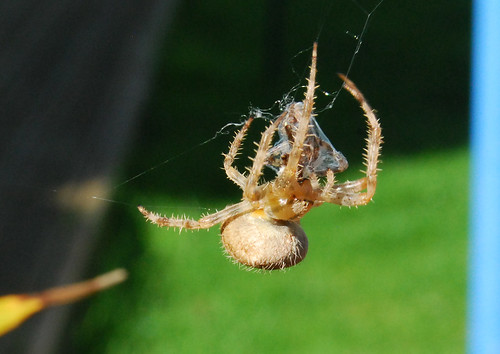
Araneus diadematus” is the Latin name for the garden spider, which is ubiquitous in my garden just now. Every piece of garden furniture is being used as a support for webs, and some of them are huge, up to 12 inches in diameter with anchor lines up to 3m long holding them in place. I’ve never seen such long anchors which the spiders construct by spinning a fine sticky line from spinneret glands at the end of the abdomen which blows on the wind until it sticks to a suitable support. These are the ones which get stuck to your face when you walk in the garden at night! The spider reinforces the first line with thicker, stronger thread until it can support the weight of the whole web. Further support and radial lines are added until sufficient structure is in place to enable strengthening of the middle with a non-sticky spiral, followed by construction of a widely spaced non sticky spiral out to the edge of the web. The spider can walk on this and use it as a guide to build a sticky spiral inwards from the outside edge and this is used to catch prey.    


Garden spider adding the sticky spiral which will trap prey

Spiders have up to 8 spinnerets of different types to produce the various grades of silk required to construct a whole web. It’s a truly incredible biochemical process resulting in a material with strength per gram greater than steel, and so far, despite a huge amount of research, one that humans have been unable to replicate synthetically.    


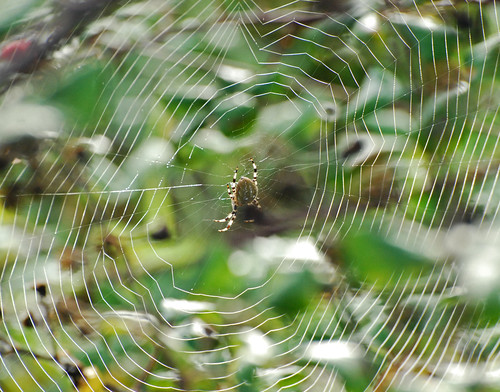
Perfect web illuminated by the morning sun

Once the web is constructed, the garden spider waits under cover at the end of one of the radials monitoring vibration in the web with one or more of its foremost legs. When struggling prey causes the right frequency of vibration (they don’t react to vibration caused by the wind) the spider ambushes its prey and kills it with a venomous bite before wrapping it in silk and storing it until it’s eaten.    

In the last week or so, as well as finding some beautiful webs laden with early morning moisture and lit up by the sun, I’ve been lucky enough to see some fascinating behaviour by garden spiders. My son pointed one out to me that had built a web between my garden table and the french window and was behaving in an unusual way, alternately raising front and rear legs as though it was dancing. Closer inspection revealed that it was using all eight legs to gather broken web which it then rolled into a ball and ate before recycling it into more web to patch up the original. I found another one at the other end of my garden table – which is no place for an arachnophobe to sit and enjoy an evening beer – which was lurking under a clematis leaf with both of its front legs feeling for vibrations on an anchor line of its web:   


Lurking undercover waiting for breakfast

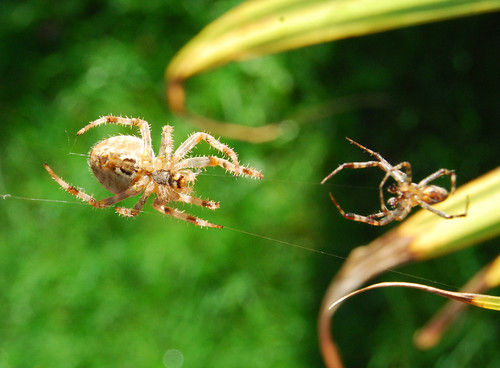
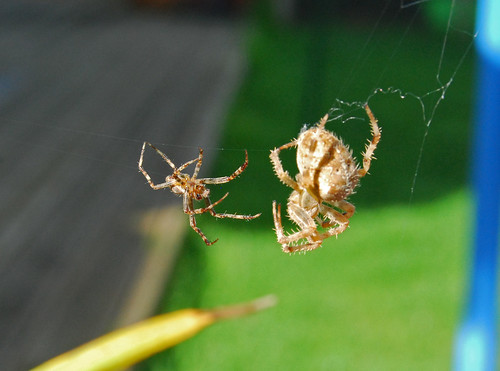
This morning I was looking for larger spiders to try to get some good photographs and there was a beauty putting the finishing touches to its web on the childrens climbing frame. While I was looking at this adult female, a second much smaller version, possibly an amorous suitor, was building a web from a plant pot joining onto the web of the adult. It occurred to me this was no way to ensure longer term survival for the small spider. As I watched, it approached the female, who was now in the middle of her web, waving its two front legs in the face of the much bigger female. The female reciprocated and for several minutes this game went on with no apparent aggression.   


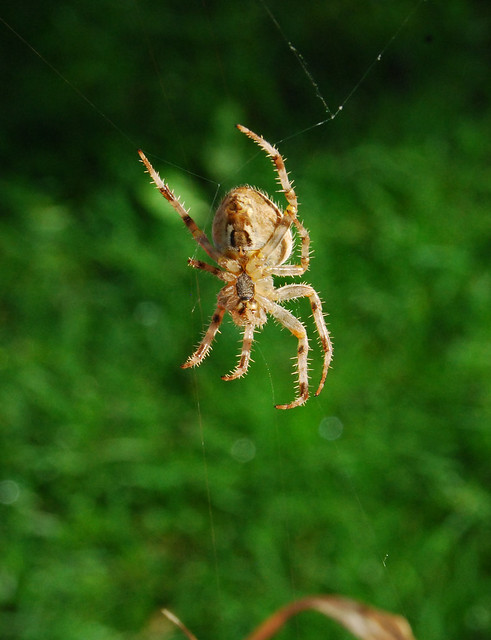
Female garden spider  


Close Encounter 


Closer encounter 


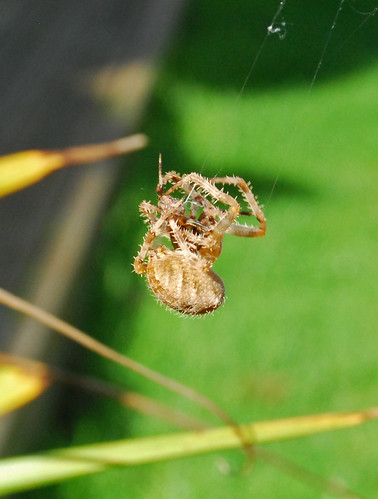
Dangerous encounter 

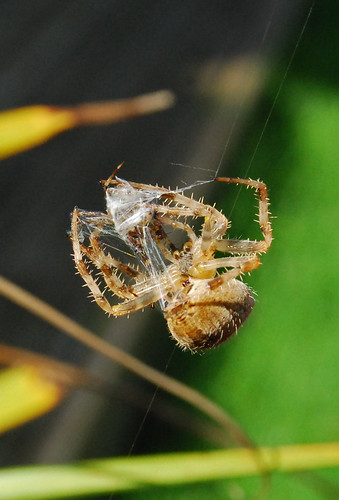
I haven’t seen this before so I’m not sure what the small spider was doing, but after several minutes the inevitable consequence was the lady pounced on the smaller spider and killed it rapidly before wrapping it in a silken coffin and transporting it higher up into its own web.     


Lethal encounter 


Shrink wrapping her ready meal 


Carrying off the spoils 

All this within a few centimeters of my eyes. Exciting stuff… and right outside my back door!

Two wild walks at the end of September

This weekend of 25th-26th September was one of two halves – Saturday was mostly sunny, warm and bright if a little breezy, and Sunday was foul. Cold northerly wind, 100% low cloud cover and plenty of rain were the order of the day, so my two outings to the countryside were rather different. 

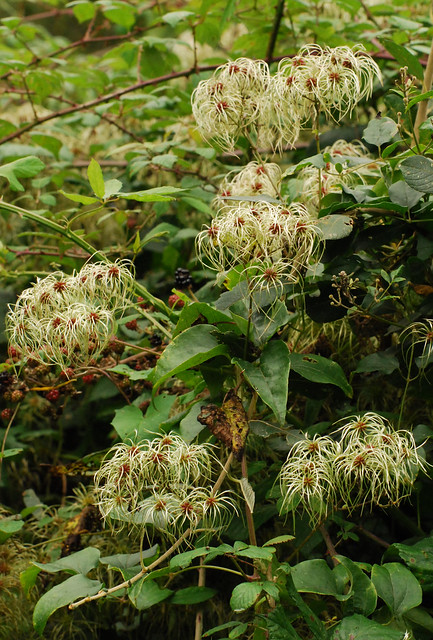
On Saturday I spent a couple of hours wandering around Milton Country Park which is a great place to see wildlife of all types. There were lots of mushroom species on open grassy areas and others in the leaf litter and some splendid brackets sprouting out of fallen trees. Many trees and bushes were providing support for enormous growths of old mans beard and brambles with tons of blackberries, so my fingers were purple when I got back to the car. 

 
Trees at Milton Country Park covered in old mans beard

My main aim this weekend was to photograph birds such as mute swans, coots, moorhen, mallard, canada geese and great crested grebe. All these were present in numbers this weekend so I got a chance to take lots of photo’s.  

Male mute swans are fiercely protective where cygnets are involved and this magnificent chap was reacting with alot of aggression toward another swan which got too close to his offspring. He chased it off at high speed, paddling so hard I could hear him moving through the water.

There were lots of people in the park so woodland birds were staying in the tops of the trees. Consequently I caught plenty of fleeting glimpses of small brown things flitting around up high but they were impossible to identify. At least by me!

 In direct contrast there were darter dragonflies everywhere, hunting low to the ground round the bottom of bushes. They were all keen not to land so I gave up trying to photograph them. 

Due to the foul weather on Sunday it wasn’t a particularly good day to see birds, but in the fields north of Histon the flock of around 200 rooks rooks which I call the Churchyard Posse were on the ground feeding and indulging in the kind of devilment that members of the crow family are famous for:  


Rooks – the Churchyard Posse – around 10% of it

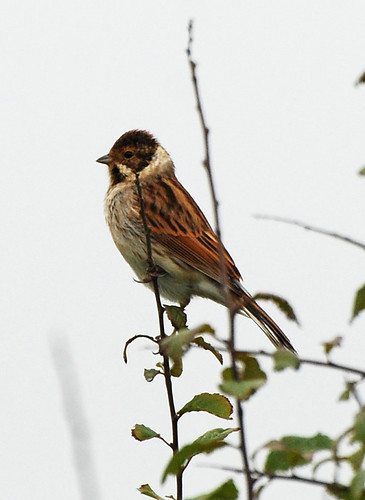
 A small flock of around 25 lesser black backed gulls were mingling with the rooks along with hundreds of wood pigeon which seem to have had a good breeding season this year. Most of the fields have now been ploughed but in those with cover skylarks have returned after the harvest. In one small corner I counted ten rising out the scrub, chasing and wheeling at low level. Others were constantly rising up in small groups of two, three and four, apparently playing tag before disappearing rapidly into the grass again. The hedgerows were mostly silent and the only songbirds to be seen were reed bunting. Because of the poor light they were extremely difficult to photograph, so this picture is one I shot a couple of days before, she sat proud on top of the hedge and allowed me to approach to within 30 feet and capture a reasonable shot:    


Reed bunting in Histon

It’s now getting dark before I can get out walking in the countryside so until about March 2011 my meanderings will be mainly in the morning, but I’m looking forward to seeing our winter visitors such as redwing and fieldfare arriving in the next month or so.

Fungal foray

Now the weather has turned cooler and damper all types of fungi are appearing in fields and woods. As well as providing something fascinating to look at, and wondering if they’re safe to eat, they can be fairly challenging to photograph. They are often to be found lurking in long grass or in the undergrowth in a wood and getting down to ground level is usually a requirement for getting half decent pictures. Here are a couple I’ve taken in the last few weeks:

                   Amanita citrina

Fungi are extremely interesting from a biochemical viewpoint too. They sequester by-products of metabolism (secondary metabolites) leading to some properties which you need to be aware of before eating them. Whilst very few can kill you there can be unpleasant side effects lying in wait for the unwary e.g. members of the Coprinus genus, such as the shaggy ink cap, or lawyers wig (Coprinus comatus) which is very good to eat, contain a toxin called coprine which only makes its presence felt if eaten whilst drinking alcohol. It induces vomiting, and unfortunately it can do this for up to a week after eating the mushrooms. Drinkers beware!

Small quantities of Amanita phalloides, the aptly named death cap agaric, can be fatal, and it resembles some other edible species. It contains a toxin called phalloidin which destroys the liver… and there’s no antidote – to be avoided at all costs.

Other species are hallucinogenic, such as those containing psilocybin, magic mushrooms (those outfield cricketers staring at the ground might not simply be bored), and another Amanita species called the fly agaric (A. muscaria) which legend has it was eaten by the Vikings before going into battle, with well documented and fearsome results.

Panaeolina foenisecii is a small brown field mushroom growing gregariously in grassland which may also be hallucinogenic if eaten in large quantities.

                     Panaeolina foenisecii

Many species of small mushrooms can be found by simply walking through any grassy field at this time of year. But I think the really interesting ones are to be found in woodland growing as parasitic brackets, saprophytically feeding on dead material or symbiotically swapping nutrients with tree roots.

If you’re going to collect them to eat be cautious, most of them aren’t dangerous and alot make extremely good eating, but the bad ones can be deadly. I’m fascinated by fungi so I’ll probably post again in the near future about interesting species I come across.