Category Archives: Seabirds

A day out at Minsmere

RSPB Minsmere is nestled on the North Sea coast in Suffolk sandwiched between the heather and gorse of Dunwich Heath and the nuclear power station at Sizewell. I spent a day there at the end of June and the plan had been to make a 5 a.m. start and get there for the sunrise. But the weather on that morning was foul so I started later and stopped off on the way there at RSPB Lakenheath Fen, on the west side of Suffolk, to wait for the rain to abate. Lakenheath Fen was previously owned by the Bryant and May match makers so the woodland there is primarily poplar which is apparently the wood of choice to make match sticks. Consequently the air is filled with that wonderful noise that poplars make when the wind blows.

Despite the pouring rain, which precluded photoghraphy on the Fen, the omens were good. There were reports of a red footed falcon which I didn’t see, but I did see a wild otter, the first time I’ve ever seen one. And I heard a bittern booming, and it was the first time I’d heard that too. So that was two new encounters even before I’d reached the coast.

The bittern (Botaurus stellaris, Dansk: rørdrum) is a small brown heron which lives in reed beds and hunts fish so stealthily that it’s next to impossible to see until it moves. The booming is an amazing sound and the recording can’t really do it justice, it can be heard for more than a kilometer and the only thing I can liken it to is a distant foghorn. Coming through the reedbeds early on a quiet rain sodden morning gave it a ghostly quality which is difficult to describe. Bittern are rare and to give you an idea of how unusual it is to see, or hear, one, there were only 600 individuals in the whole of the UK in 2010/2011 and only the males boom. East Anglia is a good place to look though because they migrate here across the North Sea from Holland, and the first breeding record was in Norfolk in 1911, having been extinct in the UK in 1868.

From the Fen I headed off in my rainsoaked state to Minsmere. But the gods were with me as the sun came out on the way and stayed out for the rest of the day. It turned into a scorcher.

Common whitethroat male guarding his bushes

On the way into the reserve from the carpark the habitat is woodland which opens out onto grassland before arriving at the fresh water and salt water lagoons. There were reports of stone curlew on the heath and an old twitcher with a telescope claimed to have spotted them, but I couldn’t find them and remained sceptical. But in an adjacent bush was a male whitethroat patrolling the apex, even though it was the end of June he was one of the first I’d seen this year. Pausing momentarily to snap the whitethroat I then wended my way to a hide overlooking the salt water lagoons.

Sandwich tern (Sterna sandvicensis, Dansk: splitterne) snapped from the comfort of the hide

The main hide overlooking the lagoon is, in my opinion, pretty much perfect. It’s a modern and substantial affair and it made me chuckle listening to the twitchers grumbling about how they preferred sitting in a draughty cold shed with limited views and no comfort whatsoever. I’ve got no problem doing it the old fashioned way when it’s the only option, but when the facilities are to hand I much prefer to sit in warmth and comfort with panoramic views through huge glazed windows which can be opened if so desired. And on this occasion the facilities were available, so that’s what I did, and I hope you like the results…

A pair of common terns – “Where’ve you been? I’ve been worried sick. You treat this place like a hotel!”

The common tern (Sterna hirundo, Dansk: fjordterne) on the left had been sitting there for many minutes, then the one on the right arrived to be scolded mercilessly by it’s companion, and this happened each time the second one came back after a brief fishing trip. The common tern could easily be mistaken for the arctic tern (Sterna paradisaea, Dansk: havterne) but is easily distinguished at a glance by the black tip to its beak which is absent in the arctic tern. Both species are consummate aeronauts and fishermen, and they both breed in Europe before migrating south to Africa and beyond.

There were big numbers of all kinds of seabirds on the lagoon including the terns. Gulls, black tailed godwits, a spoonbill (another first ever sighting for me), and numerous ducks including shoveller and shelduck, none of which I got really good photographs of. But this pair of gadwall (Anas strepera, Dansk knarand) were feeding close by and did allow me to photograph them:

Male gadwall behind nesting black headed gulls…and the female of the species

Gadwall can often be seen on lakes inland in the winter when they appear drab and uninteresting compared to say a shoveller or a goldeneye, but in bright light in their finest breeding plumage I think they’re quite splendid.

The star of the show at Minsmere is often the avocet. I’ve seen them and photographed them here before but this time they were nesting on a mudflat close by:

The iconic avocet (Recurvirostra avoseta , Dansk: klyde)

Avocet parent-to-be looking after the nest

The other avocet parent was sitting on the nest and occasionally stood up to turn the eggs. It did this every few minutes giving nice views of the eggs which would be extremely well camouflaged when exposed to potential predators such as the great black backed gull.

At one point a pair of peregrine falcons appeared and proceeded to launch multiple waves of tandem attacks on the ground nesting birds. It reminded me of the scene at the start of the film ‘Battle of Britain’ when the Luftwaffe fighters swoop down and shoot up a British airfield. Suffice to say all hell broke loose, it was highly entertaining to watch, and I’ll write more about that in my next post.

It’s not just the birdlife which marks Minsmere out as a special place for wildlife. I knew there were red deer (Cervus elaphus) in this part of Suffolk but I’d only ever seen occasional individuals and one or two small groups in the past. But on the way off the reserve in the early evening there was a big field in which there were several hundred of them.

Grazing red deer

On first spotting these I thought they were livestock on a farm, but then I realised there were no fences that they wouldn’t be able to simply step over so they must be wild. I’d never seen so many of these in one place before.

On an unrelated note (the trip to Minsmere was in June and I’m writing this in August), so far this year in Cambridgeshire there has been a dearth of butterflies especially small tortoiseshell. But the day before yesterday there was one flitting around the entrance to work when I came home and when I got here there were five more on my buddleia bush. And yesterday there were more in the garden. So I hope they’re making a late recovery, along with other hard hit species, from the Lepidopteran devastation inflicted on them by the cold weather in previous three years.

Bridlington beach

After spending the morning up at Flamborough Head I spent the afternoon on the beach in Bridlington harbour.

Flamborough Lighthouse from the beach at Bridlington

Groups of knot were scouring the tideline

I like knot, they are very busy birds hunting invertebrates on the tidal mud and their taxonomic name is ‘Calidris canutus‘ (Dansk: islandsk ryle) named after the Viking king famed for being able to hold back the tides. I think that’s probably where the English name comes from too, because the Danish spelling of ‘Canute‘ is ‘Knud‘ – which isn’t a million miles from ‘Knot‘. They can sometimes be seen in enormous flocks of to 100,000 birds, which is a sight I’d love to see.

A knot and a redshank with an oddly distended neck

The knot has the most gorgeous rufous breeding plumage where the breast turns to a coppery red colour and the light parts of the feathers on the back turn brown, but as I only ever see them in winter I’ve never seen the full breeding regalia.

Another redshank (Tringa totanus, Dansk: rødben) cooling its feet in the ‘surf’

I wrote about the turnstone (Arenaria interpres, Dansk: stenvender) in my last post about Bridlington, but this one was a real character. It scuttled along the parapet of the sea wall as people were walking to and fro just a few feet away and was quite happy for me to point a camera at it. And I got some nice portraits of it standing on the stone sea wall with the blue sea in the background:

And the whole time we were in Bridlington a lone barnacle goose (Branta leucopsis, Dansk: bramgås) was in residence. Barnacle geese nest way up in the Arctic, in Greenland and Spitsbergen. Because they are never seen on a nest in the UK it was thought that they didn’t originate from eggs but that they started life as goose barnacles which live in deep water but can sometimes be found washed up on debris dislodged from the sea bed.

Barnacle goose fattening up in England before a long flight north to the Arctic

The Gannets and The Climmers

In my last gannet post the bird I showed was quite far off so here’s another one which alighted on the cliff just 10m or so from where I stood.

Sizing me up to decide whether I posed any threat

And it quickly reached the conclusion that this shivering piece of humanity obviously would pose no threat whatsoever and landed close by on the cliff:

I think this is a particularly elegant touch down for such a big bird, avoiding injury whilst landing on a tiny piece of cliff in very strong winds.

It wasn’t at all bothered by my presence or the whirring of the shutter, and in the absence of any other predators up on the cliffs, now that the ‘climmers‘ are no more, this chap didn’t see me as a potential danger.

Climmers were men who’s job was to harvest seabird eggs from the cliffs by abseiling over the edge. I found this remarkable piece of film at the Yorkshire Film Archive of climmers doing their work. It’s absolutely not for the feint hearted!

As well as the climmers the Victorian passion for shooting anything and everything wild was shockingly indulged on the 18 miles of cliffs between Bempton and Scarborough. Boat loads of day trippers would set sail and shoot hundreds of birds every day, and in a book of 1838 entitled ‘Essays on Natural History’ by one Charles Waterton he estimated that between April and August 108,000 birds were shot. I don’t know if the shot birds were eaten, but the slaughter was primarily for ‘sport’ (!), and the feathers were also used in huge numbers in the millinery trade.

As a result the ‘Association for the Protection of Sea-Birds’ (APSB) was founded in 1868 in Bridlington by local naturalists including the vicar of Bridlington in an attempt to prevent the annual carnage taking place just a few miles away on their local cliffs.

Then in June 1869 protection of the birds was enshrined in law with the passing of the ‘Sea Birds Preservation Act’. This provided protection for 35 species by introducing a closed season between April 1st and August 1st, and apparently the first successful prosecution under the Act took place in Bridlington on 10 July 1869 after a Mr Tasker, of Sheffield, had shot 28 birds. He was fined a total of £3 19s!

And the result of the dedication of those Victorian naturalists, pioneers at a time when animal welfare was very low on the political agenda, is the multitudes of birdlife to be seen on the cliffs today. Hats off to those splendid folk!

Fulmarus glacialis

A couple of weeks ago I posted about my trip to Bempton Cliffs and I showed you the gannets. There were four species of seabird in residence including the gannet, the other three being fulmar (Fulmarus glacialis, Dansk: mallemuk), guillemot (Uria aalge, Dansk: lomvie) and razorbill (Alca torda, Dansk: alk). By the time I got there the only other one on the cliffs was the fulmar, the other two had disappeared out to sea to hunt fish.

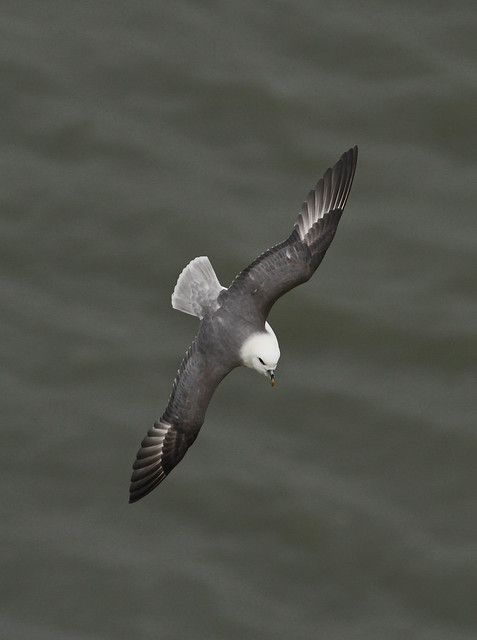
The fulmar in flight at Bempton Cliffs

Fulmars are the closest we get in this part of the world to an albatross. They both belong to the ‘tubenoses’, the taxonomic order ‘Procellariiformes‘ and the albatrosses are the family Diomedeidae and the fulmars are the Procellariidae, along with the shearwaters and petrels. The tubenoses have nostrils which also function to excrete salt which is ingested from sea water.

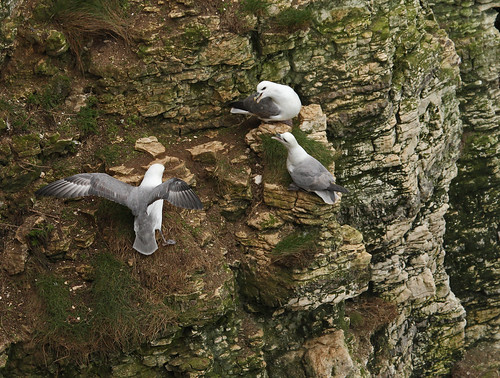
I think these two had the best spot on the cliffs, in their own little cave – as sheltered as it gets up there!

The cliffs are a huge place and there were probably hundreds of fulmars spread out over them and they were constantly taking to the air, looping round and returning, like this one who kept getting a somewhat frosty reception every time it tried to land in this spot:

Fulmars are apparently less than competent on the ground, unlike their cousins the albatrosses (apart from the landings of course), but similarly to the albatrosses they are consummate aeronauts. The winds were ferocious when I was up at Bempton but the birds glided along with little or no effort and never seemed to make a bad landing on the cliffs.

They are particularly long lived birds, the older ones reaching 40 years and beyond. They attain sexual maturity at 9 and they pair for life, breeding in nests on sea cliffs and rocky islands.

This is the northern fulmar and it frequents the extreme latitudes of the northern hemisphere. It’s one of two species, the other being the southern fulmar, Fulmarus glacialoides, which is found in the corresponding extremities of the southern hemisphere and fortunately neither of these species is endangered.

Whilst reading about the taxonomy of the fulmar I got distracted by the albatross which is a bird that has always fascinated me. The facts and figures around albatrosses are mind boggling and the one that made my jaw drop was the wingspan of the wandering albatross (Diomedea exulans) which can reach up to 3.5m, which is a shade longer than 11 feet! They must be an unforgettable sight.

The gannet – the ultimate fisherman

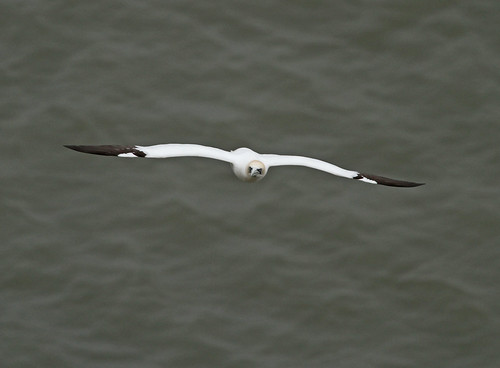
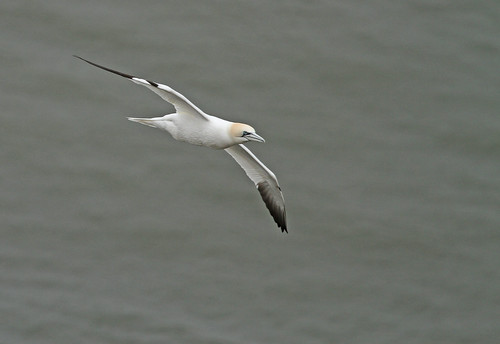
One of natures most splendid sights is the gannet in flight. It is a diving seabird and I believe it’s one of the worlds biggest divers. They are 94cm long with a wingspan of 174cm and they dive for fish from an average height of around 25m at speeds of up to 100km/hr (60miles/hr)! They fold their wings back just before they enter the water and watching it from above the surface is  absolutely breathtaking.

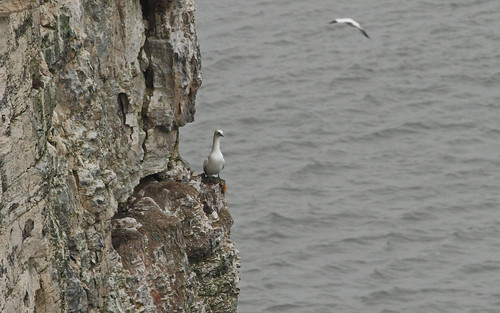
This particular gannet (Morus bassanus, Dansk: sule) landed on a ledge a couple of hundred feet up the cliff face at Bempton in East Yorkshire. The top of the cliffs is an RSPB reserve and it’s one of my favourite places to be. On the particular day I was there – February 13th – it was ferociously cold. I was well wrapped up, the air temperature was about 1 degree C, but the killer was a fierce offshore wind howling across and causing a lot of windchill. The birds didn’t seem to mind it though.

This gannet seemed to be just relaxing on its ledge until another flew past close by and then it took off:

I really like this sequence of events and the rocky ledge so high off the water was the perfect place to capture it!

There’ll be more from Bempton and that part of the world in the near future.

Alas, no bullfinch, but…

The weekend before last I went for a walk around the lakes of RSPB Fen Drayton. It was a customarily grey and cold morning and there was a lot of water standing where there wouldn’t normally be. But the lakes were full of ducks, waders and other water birds and the trees and hedgerows were thronged with other birds, but alas no bullfinch. To explain, the approach road to the car park is lined with hawthorn and other trees and they are home to many bird species including bullfinch, so I was hoping to see one or two and get photographs. But on this occasion alas, they were conspicuous by their absence.

No bullfinch, but hey ho, woodpeckers there were:

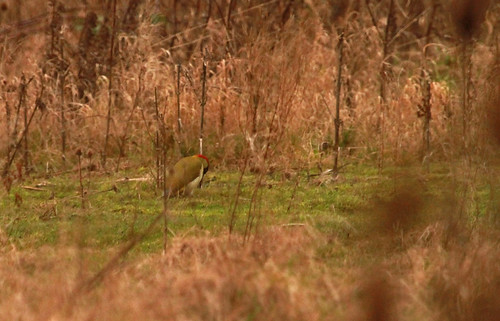
Green woodpecker (Picus viridis, Dansk: grønspætte) mining ants next to the car park at Fen Drayton lakes and fastidiously refusing to look up

And the green woodpecker wasn’t the only woodpecker hanging around the lakes:

Great spotted woodpecker (Dendrocops major, Dansk: stor flagspætte) patrolling the treetops

There was also great crested grebe (Podiceps cristatus, Dansk: toppet lappedykker), a large flock of mixed waders including bar tailed godwit (Limosa lapponica, Dansk: lille kobbersneppe) and several flocks of greylag geese (Anser anser, Dansk: grågås). And lots and lots of lapwing:

A small fraction of a much bigger flock of lapwing, I make it 84 in this group

In the 1970’s lapwing (Vanellus vanellus, Dansk: vibe) were a common sight in the English countryside. Huge flocks consisting of hundreds, if not thousands, of individuals weren’t particularly unusual. My Dad used to call them plovers, or ‘peewits’, a name they acquired because of their distinctive call. But like many species, they have suffered hugely from habitat destruction as a result of modern farming methods. On this particular morning at Fen Drayton there was at least one flock and possibly two, at opposite ends of the lakes, there were a heck of a lot of them and they were frequently rising into the air en masse. And since the snow arrived this week there has also been a small flock of 30-40 birds close to Cambridge Science Park which I spotted on my way to work, and a small group of them alighted on the field right outside my lab.

A blue tit deftly plucking seeds from a swaying reed seedhead

On the last part of my outing round the lakes I headed for a hide overlooking an expanse of water where I was hoping to see water birds. A flight of four goosander containing a male and three females flew over on the way there and seemed to be a good omen! Outside the hids this blue tit (Cyanistes caerulius, Dansk: blåmejse) was busy hopping from stem to stem in the reeds outside acrobatically harvesting the seeds.

And on the water there were A LOT of birds. The flock of lapwing higher up this post were on the ground at the far side of this lake, and the water was hosting gulls, ducks, swans and a lone heron. One of the loveliest ducks, easily identified by it’s triangular black head, white cheek spot and his regal black and white plumage is the goldeneye.

Goldeneye drake – elegance personified

There were a pair of goldeneye here, (Bucephala clangula (great name too!), Dansk: hvinand) and as with other duck species the lady is drab in comparison with the resplendent males. I spent half an hour waiting for them to paddle into the gap in the reeds just infront of this one for a clear shot. But they never did, so this is the best picture I could get. But isn’t he a beauty!

Crabs and Compasses

As a fitting coda to our trip to the Isle of Wight we had been invited to join some friends in Lyme Regis for the weekend. As I mentioned in my Isle of Wight post the eastern half of the English south coast was tipped on its end by tectonic forces so the geological history of that part of the world is exposed for all to see. In fact, moving from east to west is literally going back in time, heading as far as the Lower Jurassic era at Lyme Regis and Bridport, which is around 183-200 million years ago.

The Jurassic rock strata of the south coast westward from the Cobb at Lyme Regis

Those of you with a cinematographic interest may recognise the sea wall at Lyme Regis, it’s known as the ‘Cobb’, and was the location for the famous scene in The French Lieutenant’s Woman where Meryl Streep stands gazing out to sea. Which incidentally, is the only thing that myself and Meryl have in common, albeit for rather different reasons.

All our activities whilst we were in Lyme were marine orientated, I even managed to spend a couple of hours sea kayaking and peering into the crystal clear waters. The clarity of the water was incredible, it’s difficult to judge depth but I reckon at the deepest point I saw it was probably 15-20 feet deep. I could clearly see the bottom and the kelp fronds waving in the current, fish were darting in and out of the kelp and jellyfish were floating at the surface. I resolved to get up early the next morning and head out on the kayak to go snorkelling off the boat. So I got up and paddled out into the bay, but overnight a swell had risen which was swirling the sand around on the seabed and there was zero visibility in the water. So I need to make a return trip in the not too distant future so I can get in the water for a snorkel.

My son Jake and his friend Sam inspecting the contents of their crabbing bucket

Glancing over the sea wall while the children were crabbing I saw this handsome compass jellyfish (Chrysaora hysoscella) gently patrolling the periphery. I’d seen several of them in the bay the day before when I was kayaking and they’re common around English shores. They can pack a nasty punch for any poor unfortunate who makes contact with the tentacles which can cause a stinging, burning sensation and red raised lesions on the skin. I don’t know if it can get worse than that but it’s apparently fairly unpleasant while it lasts.

The compass can grow up to 30cm across which is about the size of this one.

Eyeing up the progress of the crabbing exploits was a hungry herring gull (Larus argentatus). He was very interested in any potential meals the kids may catch for him and he was ready to swoop onto any escapees.

Looking eastward from the Cobb are more cliffs and the rocks here are full of fossils. We were staying in the white houses on the left and just round the corner from there lies a prime fossiling beach which alas we were cut off from by the tide. There were lots of folk busy cracking open rocks on the part that was accessible but I think most of the fossils from that spot had already been found.

The cliff on the right with the yellow patch is called ‘Golden Cap’ and is the highest point on the south coast of England, rising to 627 feet (191m).

The catch:

Shore crabs – Carcinus maena

The bait for the crabs was bacon, they’re mad for it, and there was a prize for the first crab caught, the largest crab caught and the most crabs caught. My daughter won, every time she dropped her line into the water it was a couple of minutes or less before she hoicked one out. So, much to the chagrin of the boys, she won all three prizes and was as smug as hell for the rest of the day!

And as the bucket filled with crabs the gull got braver and braver:

But he was to be disappointed. At the end of the competition our bucket of crabs was emptied into the water at the bottom of those steps and they all scuttled away to freedom.

The Isle of Wight, Part 1

This summers holiday took myself and the family to the Isle of Wight. I’ve often sat on the mainland and gazed at the island wondering what it was like, but apart from a sailing weekend from Cowes some years ago I’d never been there. Prior to the trip, several folk I spoke to who had been there said, ‘It’s very nice, but very 1950’s’, implying that were a bad thing. I wasn’t entirely sure what it meant, so I set off expecting bakelite telephones, knobbly knee competitions and casual racism. But the reality was nothing like that, in fact the Isle of Wight turned out to be a lovely place, very green and full of cool wildlife.

Shanklin Bay looking over the garden of out holiday abode

Within a day of arriving at our destination at Shanklin, on the southeast corner of the island, we’d encountered a pair of ravens who were keen to share our fish and chips on the seafront, and several red squirrels running around the trees in the garden below our apartment. Red squirrels are delightful creatures and the island is one of the few places in the UK where they haven’t been ousted by the bigger and more aggressive North American grey squirrel. Unfortunately I wasn’t able to get photographs of these but there was plenty of other flora and fauna to keep me occupied.

The weather on the island during the first week in August was remarkable, it was hot and sunny virtually the whole time we were there, but that coincided with continuous heavy rain and big floods a short distance to the west in Devon and Cornwall. As well as the trees in the garden, there were flowers and butterflies basking in the glorious sunshine:

Wild pansy (Viola tricolor)

The wild pansy is a lovely little flower and has been used as a herbal remedy for eczema and asthma and it was believed it was good for the heart, hence its other name of ‘heartsease’. It’s laden with potentially beneficial chemicals including salicylates (aspirin), antibacterials and antiinflammatories and has many amusing common names such as ‘love lies bleeding’ (!), bullweed, ‘tickle my fancy’ and ‘love in idleness’.

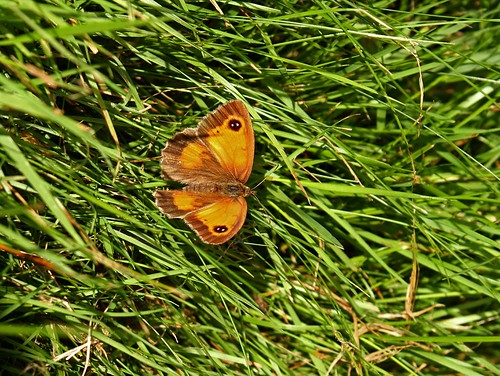
Gatekeeper

Also frequenting the garden was the equally beautifully coloured, but less poetically named, gatekeeper butterfly (Pyronia tithonus). I was pleased to see lots of butterflies here because the dreadful spring weather meant I’d seen very few around Cambridge, a horrid situation which, alas, prevailed for the rest of the summer.

Below the garden at the bottom of the cliff was lots and lots of beach with lots and lots of birds, including the ravens I mentioned earlier. And amongst them was this gull youngster. It wasn’t at all fazed by me and my son running around and seemed more curious than nervous.

A young gull – either a herring gull or a lesser black backed

Alas, I’m not sufficiently knowledgeable about gulls to be able to differentiate the first year herring gull (Larus argentatus, Dansk: Sølvmåge) from the lesser black backed gull (Larus fuscus, Dansk: sildemåge), even with my Collins bird guide to assist. And while the gull was peering at us a sandwich tern patrolled the shallows occasionally diving into the water:

Sometimes returning to the surface with a fish… and other times not:

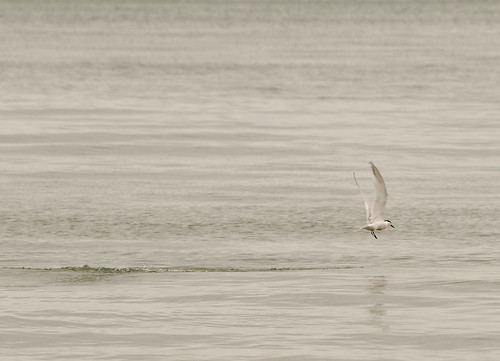
Sandwich tern (Sterna sandvicensis, Dansk: splitterne) fishing off Shanklin beach

From our limited explorations around the island it seemed to be quite distinctly in two halves. The eastern end, where we were based was green and agricultural with wide sandy beaches, and the western end, at least on the south side, was more chalk down rising to imposing cliffs toward the Needles at the far western tip. All the photographs in this post were from in and around Shanklin in the east and I’ve divided the IoW into two posts, so ‘Part 2’ will be from the western end.

Titchwell birds – the final episode

I’ve posted several times with pictures from my trip June to Titchwell on the north Norfolk coast but I’ve now exhausted my photo collection from that trip so this is the last one. There was a terrific number of bird species present the day I was there including ducks, waders, raptors, passerines and gulls, but the wildlife wasn’t confined to birds, a wall brown butterfly and a chinese water deer also putting in appearances.

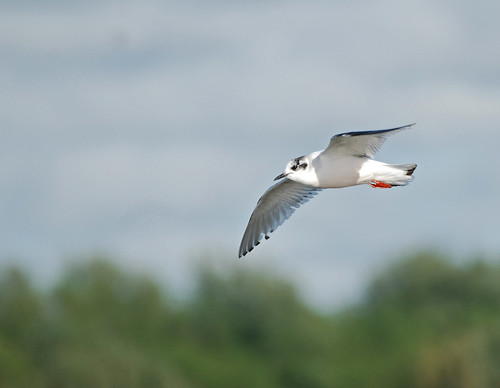
Gulls are many and often not-so-varied and can be easy to overlook: “What’s that bird?”, “Oh it’s just a gull”. But I like gulls and and it’s always good to have a new species identified and on this trip it was the little gull (Hydrocoloeus minutus, Dansk: dværgmåge). At first glance the little gull looks like a black headed gull, but it is noticeably smaller:


Little gull in winter colours – the summer plumage includes a completely black head

The other obvious difference between the two species is the colour of the beak which is black on the little gull and red on the black headed. It may also be mistaken for a tern as it swoops down on the water in a similar way to a tern but it’s not fishing it’s picking food from the surface of the water. I haven’t seen other gulls feed in this way.


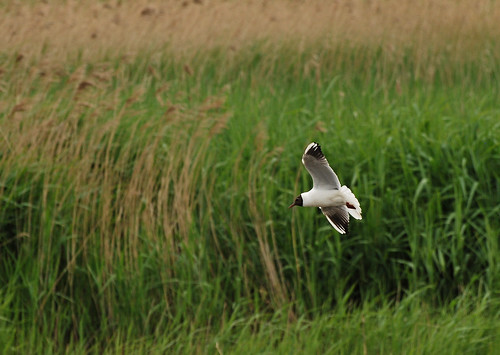
Black headed gull (Larus ridibundus, Dansk: hættemåge)

The black headed gull is common and I see large flocks of them feeding in the fields around Cambridge in the winter, unlike the little gull which is a rare breeder in the UK and a passage and winter visitor on it’s way to the Mediterranean.

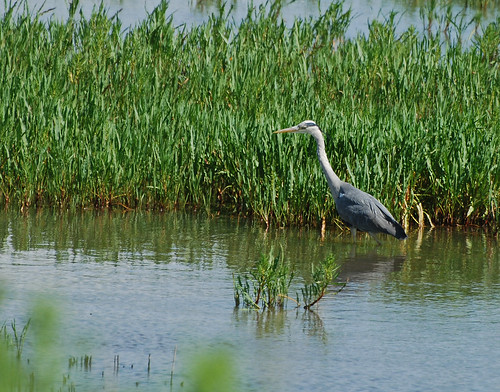
Grey heron (Ardea cinerea, Dansk: fiskehejre)

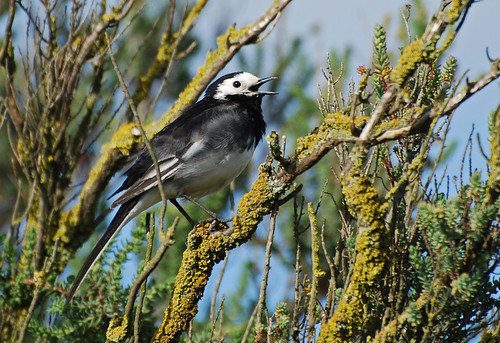
Stalking the shallows were several grey herons searching for fish and amphibians. The heron is a very effective predator unlike the pied wagtail perched just a few metres away serenading the comings and goings of serried ranks of twitchers passing to and from one of the hides:


Pied wagtail (Motacilla alba, Dansk: hvid vipstjert)

This wagtail is an adult male, his colours are much darker and the black bib more extensive than the more delicately shaded female. The pied wagtail is a resident and migrant breeder and I regularly see them patrolling lawns, meadows and carparks with their characterisitic twitching tail.

The one bird which I knew could be seen at Titchwell, but which I also knew was very elusive, so I didn’t really expect to catch a glimpse of it, was the bearded tit (Panurus biarmicus, Dansk: skægmejse). It’s one of those birds that I’ve seen pictures of and thought it almost looks unreal, like a childs drawing of an imaginary colourful songbird. A notion which seemed to be corroborated when I looked in my Collins field guide and it wasn’t listed! It transpires that it was listed, but as the ‘bearded reedling‘ instead of the ‘bearded tit‘, and it’s actually more closely related to the larks than the tits, to which it’s resemblance is only superficial. Despite the alternative name in my field guide it is listed on the British Trust for Ornithology ‘BirdFacts‘ website as the ‘bearded tit


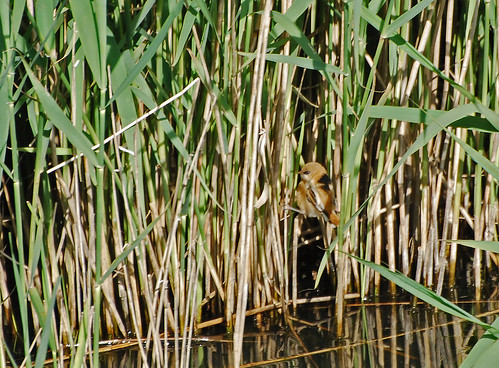
Bearded tit juvenile

The bearded tit is resident in the UK but confined to the southern and eastern extremities. However, I did see some and even managed to get a photograph, albeit a not very good one(!). This one is a youngster, identified by the black eyestripe which differentiates it from the female, and the black patch on the nape which is absent in both adult genders. Of all the birds I saw on this visit the bearded tit (or reedling) was probably the highlight.

Returning migrants and lots more besides

Occasionally, but fairly infrequently, it’s a struggle to find enough interesting nature to put together a post, and then every now and again so much happens that it’s difficult to fit it all in. Last weekend was one of the latter.

It started to get interesting as I was cycling to work on Friday morning, a bird caught my eye in a hedge outside work and first off I thought it was a bullfinch, which I’ve never seen on Cambridge Science Park before. But then I got a better look at it and it was immediately apparent it wasn’t a bullfinch, it had similar colours but in a different pattern, so I did a quick U-turn to get a better look. It turned out to be a black redstart male in full breeding regalia (Phoenicurus ochruros, Dansk: husrødstjert). He was magnificent but alas, because I was heading to work I was camera-less, so if you’ve never seen one, dig out a bird reference book and check him out, it’s worth the effort.

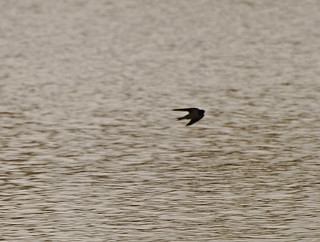
I went back to work on Saturday morning with my camera to see if he was still there but there was no sign of him so I carried on to Milton Country Park, on the northern edge of Cambridge. It was a bright sunny morning and I arrived there just after 8.30 and it was already warm. And it augured well because it turned into a real bird fest. I was hoping to see some returning migrants and as I got out the car I could hear chiffchaff (Phylloscopus collybita, Dansk: gransanger) calling in the trees around the carpark. The first migrant I actually saw was completely unexpected and turned out to be a pair of sand martins (Riparia riparia, Dansk: digesvale) which I haven’t seen for years. There were also swallows (Hirundo rustica, Dansk:  land svale) flying low over a lake and this is roughly the same time I saw the first swallow last year. Like swallows, sand martins also over winter in South Africa, but unlike swallows they nest in burrows which they excavate in sandy banks. There are some man made burrows for the sand martins at the country park but so far they’ve been ignored by the martins, but the occassional kingfisher pair have availed themselves of the opportunity.

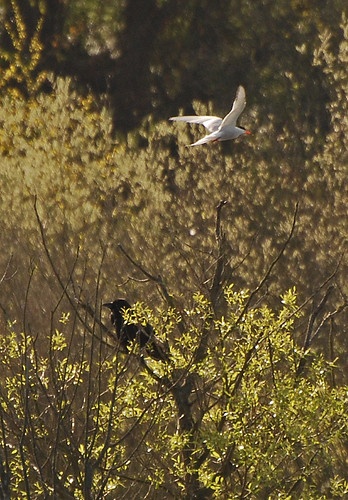
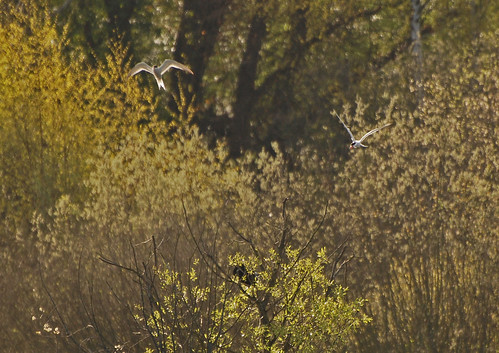
Close to where the swallow was hunting is a small island with a tree on it where cormorants (Phalacrocorax carbo, Dansk: skarv) can often be seen perched. This time there was a carrion crow (Corvus corone, Dansk: sortkrage) sat on top and a pair of common terns (Sterna hirundo, Dansk: fjordterne) were taking exception to its presence and were working as a team to dive bomb it:

A singleton…


… and in tandem

I almost felt a little sorry for the crow, but I’ve watched them terrorise so many birds, especially buzzards and other birds of prey, in a similar fashion that the sympathy was a tad less enthusiastic than it may otherwise have been.

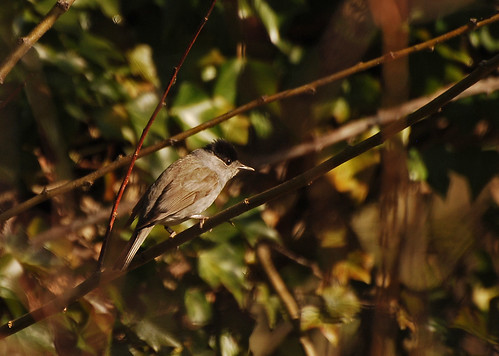
A migrant which was present all over the country park was the blackcap (Sylvia atricapilla, Dansk: munk), in one bush there were a minimum of four and possibly six or even more. They were squabbling away in the  bush presumably in the midst of a territorial dispute. I saw the first blackcap of 2012 a few weeks ago at Danbury Common in Essex during my unsuccessful mission to look for adders.


Blackcap male, the female is similar but easily distinguished because her cap is a rusty brown colour.

As well as the migrants the trees and bushes were full of the song of more familiar resident species such as the robin, blue tit, great tit, blackbird and wren. All were energetically vociferous, filling the air with a wonderful cacophany. And amongst these I caught a tantalising glimpse of a much less common species, the treecreeper (Certhia familiaris, Dansk:  træløber). Treecreepers are very aptly named and are fun to watch as they hunt insects in the crevices of tree trunks, spiralling upwards in a corkscrew pattern. A pair of sparrowhawk and a pair of buzzard were also busy performing their aerial courtship routines.

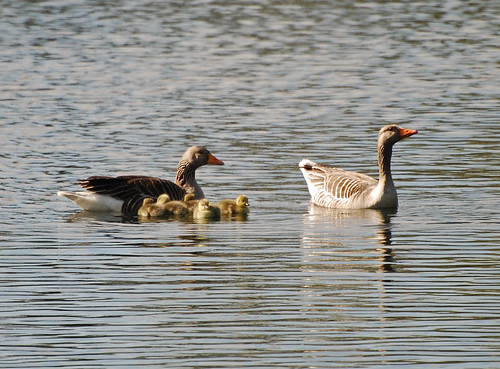
There were none of the winter ducks such as tufted duck (Aythya fuligula, Dansk: troldand), pochard (Aythya ferina, Dansk: taffeland), gadwall (Anas strepera, Dansk: knarand), teal (Anas crecca, Dansk: krikand) or widgeon (Anas penelope, Dansk: pibeand) on the water, they had all headed off north to their breeding grounds. But several birds including coot (Fulica atra, Dansk: blishøne) and greylag geese (Anser anser, Dansk: grågås) had chicks on the water:


Greylag geese with six chicks

I paused to try to get a shot of a great crested grebe (Podiceps cristatus, Dansk: toppet lappedykker), all now in full brown breeding plumage:

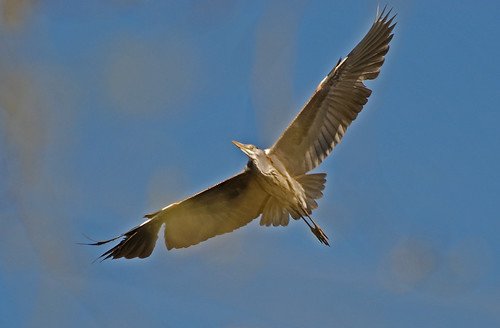
And as I stretched over the water, trying hard to get a clean shot of the grebe, and even harder not to pitch headlong into the lake, a grey heron (Ardea cinerea, Dansk: fiskehejre) flew low overhead:

It was so low I thought it must have pitched up very close to where I was but on an adjacent lake, and a quick scan revealed it sat in the top of a tree being pestered by the common tern that had earlier been harrassing the carrion crow:

The terns were deeply unhappy with any potential predator, although they were less keen to buzz a pair of sparrowhawks which were in the air above the same stretch of water!