Category Archives: Countryside walks

Falco tinnunculus

It’s always good to see birds of prey and even better when they are nesting. This year has been particularly good around Histon with a kestrel nest, at least two barn owl (Tyto alba, Dansk: slørugle) nests – of which more in a later post – and at least two little owl (Athene noctua, Dansk: kirkeugle) nests. And that’s just the ones I know of, I’m fairly sure there’ll be sparrowhawks nesting in reasonably close proximity too.

Back to the kestrels though. In previous posts I’ve mentioned my favourite tree which is a really big old poplar on my (and lots of other folks) regular dog walking route. This year it played host to a family of kestrels (Falco tinnunculus, Dansk: tårnfalk). Initially I was concerned that being so close to a well-used public footpath the disturbance would be too great. Also, the nest was 7-8m up the tree and directly above a bench where the local kids sometimes hang out in the evenings, so on the face of it not the best spot for a pair of falcons to raise a brood.

The adult male kestrel standing guard over his nest site

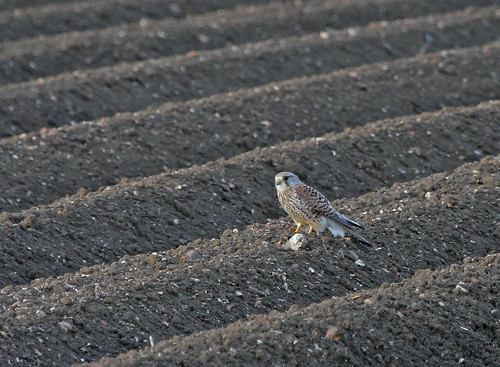
The male and the female were in constant attendance around the nest site and on this occasion both were present. As I watched the male he flew off so I walked on past to avoid causing too much disturbance. As I departed the female flew a second diversionary line out the tree in another direction, alighting on the ground around 50m from the tree, on top of a furrow which had been ploughed to take potato plants which had not yet sprouted. So she was very conspicuous but keeping an eagle eye (kestrel eye?) on myself and the dog:

In general though the kestrels adults seemed fairly relaxed about all the activity going on around their chosen nursery.

At this point in time, at the end of April, the nest would have had eggs in which are incubated for approximately 4 weeks before hatching. They produced three youngsters which I’ll update you on in a later post.

Getting more up to date, I just got back from exploring the coast on the Isle of Wight, off the south coast of England, and the birds of prey there were numerous. Buzzards were plentiful and on the cliff tops peregrine falcons were much in evidence, with four separate sightings on different days and different locations, one of them chasing a raven which was highly vocal in proclaiming its disapproval. I didn’t get any pictures of the peregrines but I’ll post some raven shots in the near future.

Cowslips and corn buntings

When spring sprung this year it sprung in style and it was quite glorious. At that time of year the migrants return from distant lands and recolonise the countryside.

One bird that also returns to the farmland around Histon, but from closer to home, is the corn bunting (Emberiza calandra, Dansk: bomlærke). The corn bunting is a resident breeder in the UK, but as with most other species local to me it disappears from the fields round here as soon as the harvest begins, usually during the first week in August, not to return until March or April.

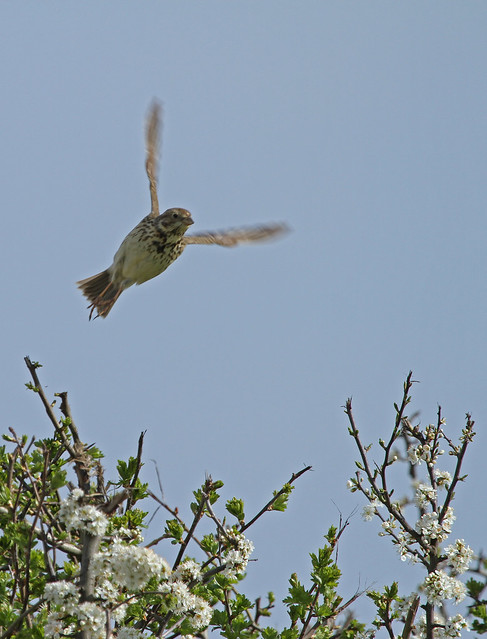
Male corn bunting taking flight from the top of the hawthorn blossom

The corn bunting is a lovely creature which is very distinctive when you know it. From a disatnce it looks like another random little brown bird, but it sits atop the wheat stems and the hedgerows calling and the call can be heard from many metres away. And like most little brown guys, when you see them close up they don’t appear quite so uninteresting.

A few months ago I got involved with a group of local people here who were working to prevent the development of this farmland for housing by our local council. The council said they had done an environmental survey and they provided us with a copy. It was an interesting insight into how these people work. The survey was commisioned by the agent the council had employed to manage the development (conflict of interest?), and it was undertaken the week after the harvest. The  conclusion in the survey was that there would be little or no damage to the local environment and no red listed or BAP (Biodiversity Action Plan) species would be affected. But I know from my recordings over the last five years that virtually all the wildlife – birds, mammals and insects – disappears as soon as the harvest starts. But my records, which I made available to the council,  also show that I have recorded 74 bird species there of which no less than 13 are red listed! Including the humble corn bunting.

The plan to develop the land was subsequently rejected and I hope my data played a part in the decision making process.

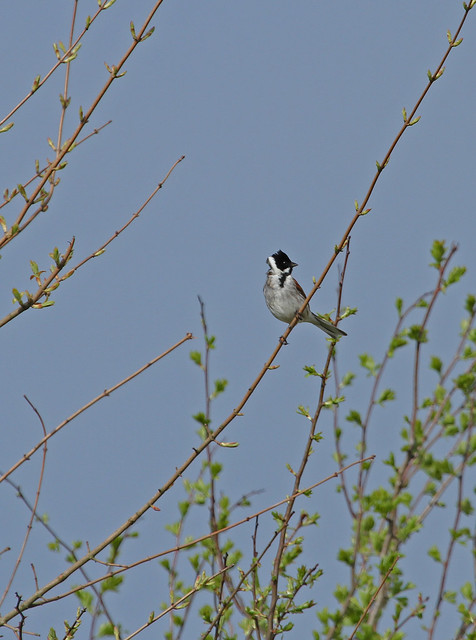
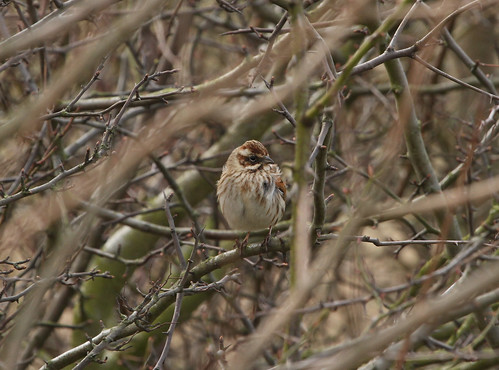
All the pictures in this post were taken on a sunny Sunday aftenoon at the end of April and another handsome bunting which frequents the drainage ditches and the hedgerows and was much in evidence was the reed bunting (Emberiza schoeniclus, Dansk: rørspurv).

Male reed bunting resplendent in his black cap and moustaches

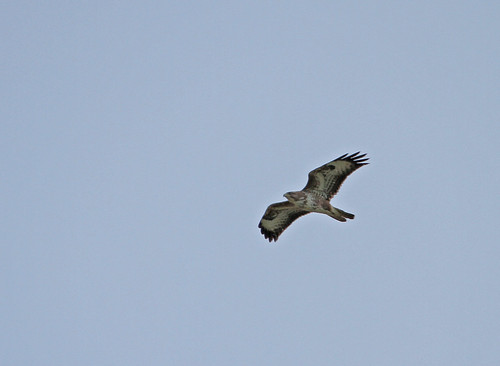
Whilst the buntings, finches and other small passerines were announcing their availability from the top of the undergrowth a buzzard patrolled the skies above looking for prey:

Buzzard, Buteo buteo, (Dansk: musvåge)

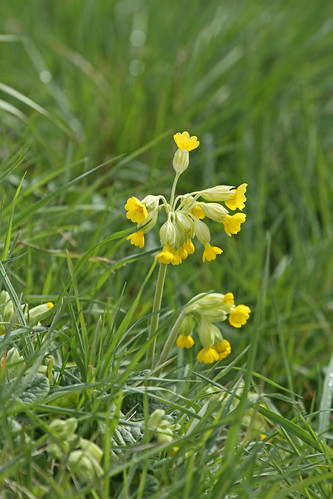
And one of my favourite harbingers of fair weather to come is the cowslip:

Cowslip, Primula veris

Cowslip flowers were picked in the not too distant past to make wine with, but as it is no longer common this practise has waned. Despite that, the seed is now included in commercial wild seed mix and the cowslip can be seen in large numbers on seeded motorway verges. This one is not one of those though, it is one of thousands lining a drainage ditch on a farm in Histon.

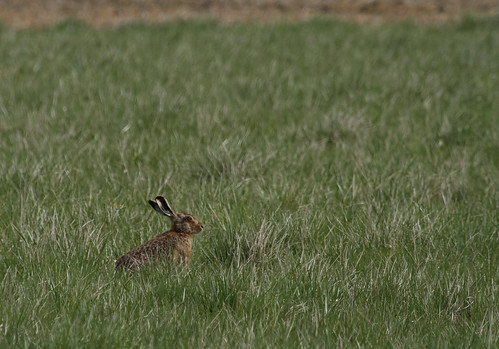
A carrion crow (Corvus corone, Dansk: sortkrage) was perched precariously on top of the hedge along the cowslip ditch and a hare was also close by and watching intently to make sure the dog kept a safe distance! The local hares seem fairly relaxed about the dog even though he’s a lurcher and can still move pretty rapidly. May be they can see that he’s too old to pose a real threat.

European or brown hare (Lepus europaeus)

This year seems to have been good for hares and I see them in many of the local fields in good numbers almost every time I venture there. There are also plenty of rabbits, but the hares are easily distinguished by their size, they are much bigger than rabbits, and the hares have very long ears with distinctive black tips which the rabbits don’t.

This was my first real sunny warm outing of the year and it gave me a good feeling that this year may turn out to be a good one for wildlife. And generally it’s living up to its billing. So far…

The way it should be

My last post showed some random weather at the end of March and in this one all the photographs were taken during the following weekend when the weather was rather more in keeping with the season, the way it should be.

Another of the great British bird of prey success stories over the last two decades has been the resurgence of the buzzard (Buteo buteo, Dansk: musvåge). Up until the mid 1990’s I’d only seen buzzards on summer holidays in Denmark and the occasional sighting on the western periphery of the UK, in south Wales or in Cornwall. But then I noticed they were creeping further eastwards up the M5, year by year, and now they can be seen all over England, and it’s not at all surprising to see them over my garden. I think a major contributory factor to the increase in raptor populations has been the ban on the use of DDT.


A buzzard soaring over the farmland on the edge of Histon.

DDT, or dichlorodiphenyltrichloroethane…

…was originally extremely effective in the control of insects but is very persistent in the biosphere, and because of its chemical properties it accumulates in the fatty tissues of apex predators such as raptors. The toxic effect was to cause thinning of the eggshells which would break before the chicks were ready to emerge. The consequences were devastating for many species inclusing sparrowhawks in the UK as well as peregrine falcons and bald eagles in the USA. The systematic use of DDT has been outlawed for many years  now, although restricted localised use for the control of malaria is still sanctioned, but here in the UK the long term benefit of the ban has been dramatic with these magnificent birds once again a relatively common site in our skies.

Other birds species were making the most of the change in the weather at the start of April too, including this female reed bunting (Emberiza schoeniclus, Dansk: rørspurv):

Reed buntings have been a common site in the fields to the north of Histon since the weather has warmed up and the males with their black and white heads cling to the top of wheat stems proclaiming their availability. The females are more reclusive but can often be seen perched in bushes

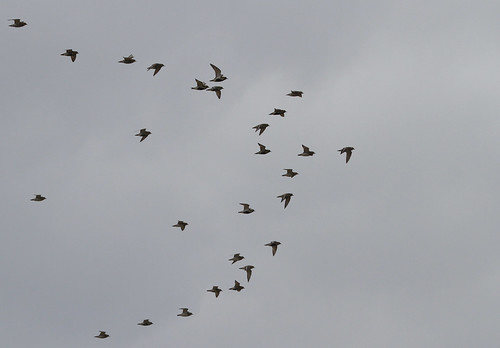
A less common visitor to the fields is the golden plover (Pluvialis apricaria, Dansk, hjejle). I love to see the plovers, because when they do arrive they come mob handed, and on this occasion there was a flock of approximately 500 birds which looped round at high speed in extended skeins which was great to watch!


Skeins of golden plovers

Golden plovers are amber listed in the UK but not of concern in Europe so I hope that means that the overall population is stable and we continue to see them over the UK. An amusing little factoid about the golden plover which I’ve unashamedly borrowed from the British Trust for Ornithology is that a question about the flight speed of the golden plover raised by a member of a shoot in Wexford, Ireland, prompted Sir Hugh Beaver to found the Guinness Book of Records in 1955.  And if you’re keen to know, the speed of the golden plover is around 60mph (100kmph).

The rook, Corvus frugilegus, Dansk: sibirisk allike

All the photographs in this post were taken during a walk in the fields adjacent to my home the weekend after the snow, except the rook. This miscreant had lifted the fatball feeder from the branch in the crab apple tree and dropped it to the floor where it commenced to single handedly empty it. But as it posed for several portraits in the process I reasoned that it earned it’s fill. I like crows and especially the rooks, they seem to have a sense of devilment akin to a childs… if not even a tad more sophisticated. Through history though, alas not everyone had such a benign attitude to the rook (and just about every other creature!), which you can read about here.

The birds and the bees

Insects have been hit hard by climatic aberrations in recent years and on my meanderings around the Cambridgeshire countryside this year numbers of bees and butterflies sightings have been down compared to previous years. It’s now the middle of June and I saw the first dragons of the year today; two damselflies. I also read this week in ‘The Guardian‘ newspaper that a third of managed honeybee colonies in the USA were wiped out in 2012. This article makes very sobering reading. And it’s a similar story in Europe, but in Europe neonicotinoid pesticides, which have been implicated in colony collapse disorder, have been banned for two years to evaluate their effect on honeybees. My concern is that the onslaught on the bees is complicated and removing one variable may not show a significant effect in the limited two year duration of the ban. But I hope it does!

Early last month the sun finally broke through and gave us some insect friendly weather and it was remarkable how quickly the microfauna emerged.

Beefly – Bombylius major

Beeflies are found over large parts of the globe and can be seen hovering in sunny glades from the springtime. The narwhal of the Dipteran world, the spike looks fearsome but is only used to probe flowers for nectar, there is  no sting. Beeflies procreate by flicking their eggs into the entrance to the burrows of wasps and bees where the larvae feed on the grubs of the occupants.

A pair of hoverflies doing their best to rectify the decline in the insect population

I think these hoverflies are ‘Eristalis pertinax’ but I’m not certain. It was good to see them though, especially as they were taking their biological responsibilities so seriously.
Addendum: on the subject of climatic aberration mentioned at the top of this post I just found and read with increasing concern this link:

http://robertscribbler.wordpress.com/2013/04/12/human-climate-change-is-wrecking-the-jet-stream-uk-met-office-calls-emergency-meeting/

which my blogging buddy Sam posted on her excellent WP blog ‘Science on the Land‘. This provides a chilling insight (in every sense) into why the weather in the northern hemisphere is behaving the way it is. And it doesn’t look as though it’s going to get any better folks.

Flowers for all seasons

Last year in springtime the weather was dreadful and I didn’t many chances to take photographs for weeks. So I trawled back through my archive and found these old pictures of wild flowers which I thought I would post to brighten things up a tad. But by the time I got round to posting it was too late in the year so the post got parked until this year.

And the flowers are now blooming again, so two years after I took the pictures now seems like a good time to share them! I won’t bore you botanical minutiae this time, but I hope you enjoy the pictures!

Greater periwinkle

(Vinca Major)

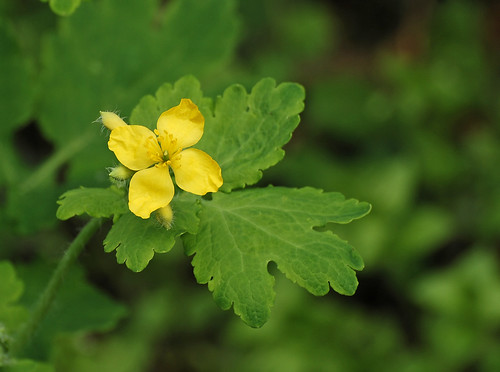
Greater celandine

(Chelidonium majus)

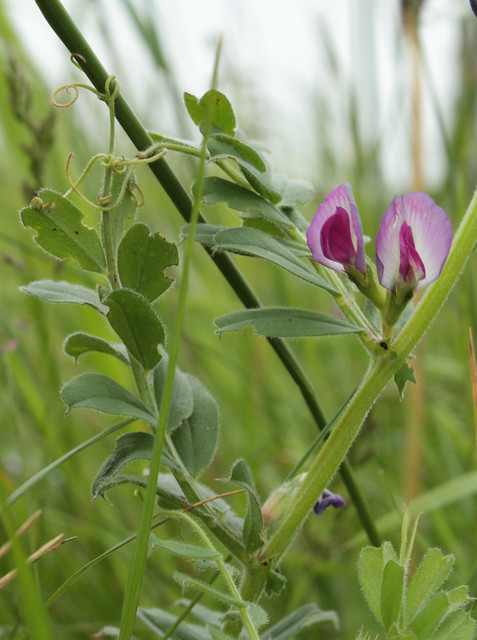
Common vetch

(Vicia sativa)

White campion

(Silene alba)

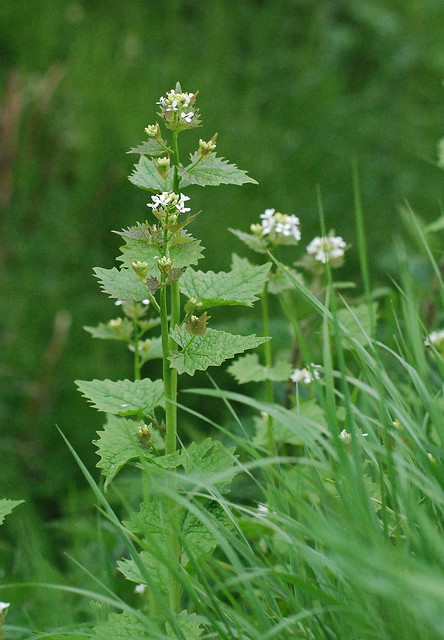
Jack By The Hedge

(Alliara petiolata)

Herb bennet

(Geum urbanum)

Ever the optimist

The font of all wisdom in my area for what birdlife is around is the Cambridge Bird Club ‘What’s About‘ blog. A short while ago there was a report of a sighting of a bittern at one of my regular nature walks, Milton Country Park. This was an exciting development because I’ve never seen a bittern before, so on the following Saturday morning I set off before dawn to be in situ at sun up to try and see it. The bittern (Botaurus stellaris, Dansk: Rørdrum) is a small brown heron which lives in reedbeds and is so perfectly camouflaged it is almost impossible to find until it breaks cover. It’s famous for the ‘booming‘ call of the male which can be heard up to 1km away, so I set off hopeful of not only seeing one but maybe hearing it boom too. Ever the optimist!

The conservation status of the bittern in the UK is red, meaning it is scarce and under threat. Alas, the chap I was hoping to catch a glimpse of was very scarce indeed, to the point of being completely absent. Oh well, next time maybe. But every cloud and all that, even though the bittern had absconded there was other birdlife in abundance.

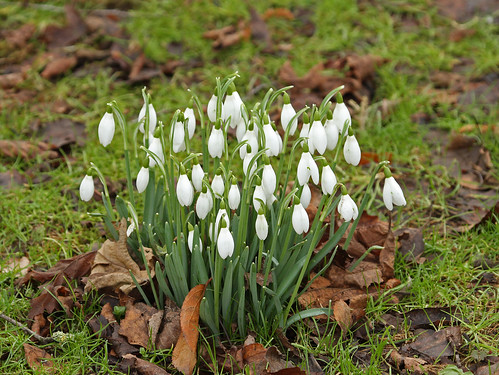
And not only birds, snowdrops were blossoming on the forest floor

The Country Park is made up of old gravel or quarry pits surrounded by a mixture of grassy scrub and mature woodland. Up in the treetops great spottted woodpeckers were hammering holes…

Great spotted woodpecker (Dendrocops major, Dansk: stor flagspætte)

I think this one is a female – the male has a red patch on the back of his neck which I think was absent on this one. The woodpeckers drumming sound results from the frequency of drilling rather than the power. They have energy absorbing tissues in the head to prevent brain damage and they strike at a frequency of 10-40 times a second which makes the tree trunk resonate, and that’s how they create their unique sound. Treecreepers were spiralling up these trees too, but they were just too quick to get a photograph.

But on the lakes there were hundreds and hundreds of water birds of all types:

Courting great crested grebes (Podiceps cristatus, Dansk: toppet lappedykker)

The full mating ritual of the great crested grebe is a wonderful sight. I’ve only ever seen it a couple of times and it involves swimming away from each other to a distance of 20-30m or so, then turning and swimming rapidly towards each other and when they meet they rise up in a vigorous display of necking before settling back into the water facing each other and creating a heart shape with their heads and necks. This is repeated mofre tha once and is utterly absorbing and delightful to watch. I was fervently hoping that my pair here were going to perform but they were content to simply preen, commune and doze. Still lovely though.

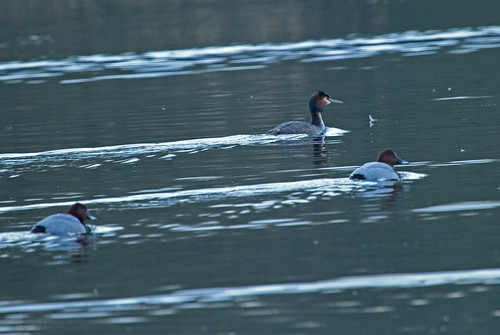
Another male great crested grebe with a pair of male pochard in hot pursuit (Aythya ferina, Dansk: taffeland)

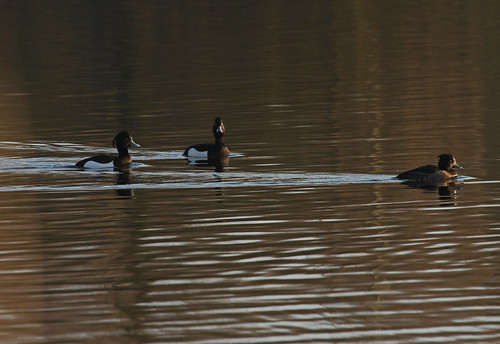
Two male tufted ducks (Aythya fuligula, Dansk: troldand) eyeing a lady with bad intent. Love, or something, was in the air!

Both pochard and tufted duck are divers and the rapid spread of the tufted duck in the UK in the 19th century is though to be the result of colonisation of UK waterways by the zebra mussel which originates in southern Russia.

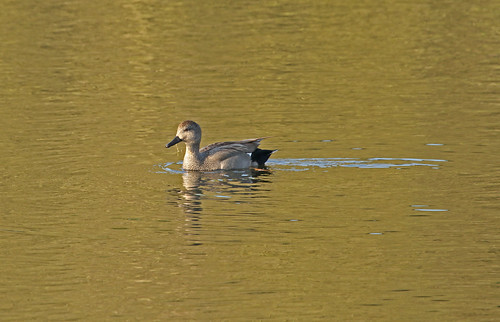
A male gadwall (Anas strepera, Dansk: knarand)

On a grey murky day the gadwall looks like a dull grey/brown duck but when the sun shines on them they are quite handsome birds, easily recognised on the water by the black rump, general brown plumage and the grey/black beak.

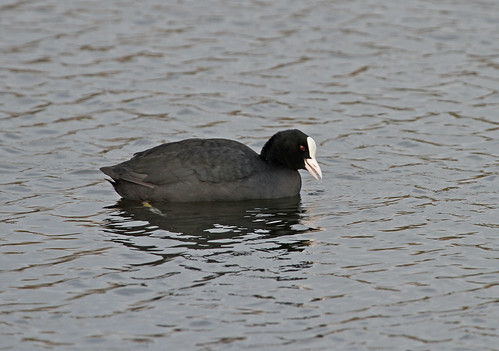
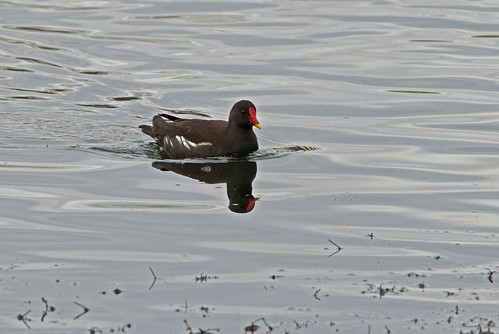
Coot and moorhen (Fulica atra, Dansk: blishøne and Gallinula chloropus, Dansk: grønbenet rørhøne, respectively) are both members of the family Rallidae along with water rail (which I saw on a previous recent visit to the Country Park, but not this one, even though I spent 10-15 minutes quietly looking where I saw one before) and crakes, which aren’t to be found in these parts.

The coot…

…and the moorhen

The male coots were in the mood for love and fighting out on the water on all the lakes, and were too numerous to count, and the occasional, more secretive and less aggressive, moorhen ventured into view from the reeds at the lake edges.


The brown heads are male wigeon, the black and white ones are male tufted duck, the two brown ones in the foreground are a pair of gadwall and out of focus at the back is another gadwall and a coot

As the sun came up the birds on the water semed to spring into life and large groups of various species busy feeding. All the pictures in this post were taken in a couple of hours or so from dawn until 10-11am and within a 300m radius. But as the sun arose and the light changed the colour of the water changed dramatically and gave some wonderfully varied backgrounds.

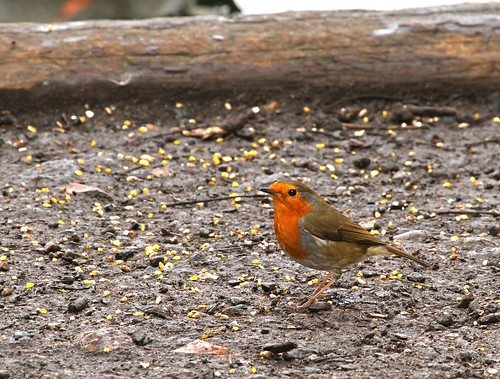
I stopped at a gap in the undergrowth to photograph the various species above and as I stood snapping the robin hopped into view between me and the water pecking at the seeds on the ground left by a benevolent walker for the ducks:

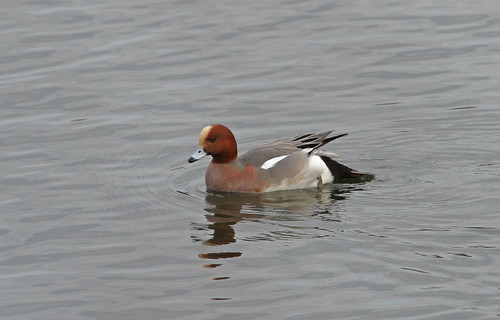
I think the most colourful, and therefore my favourite duck of that morning was the wigeon:

A pair of wigeon (Anas penelope, Dansk: pibeand), the male behind, the lady in front

The male on his own – resplendent in his psychedelic finery

The wigeon is a resident breeder in the UK and it’s conservation status is amber, which surprised me because I see plenty of them on the lakes around Cambridgeshire. They are vegetarians feeding on leaves and shoots and rhizomes, and in my view they are one of our prettiest ducks.

So no bittern on this trip but lots of other wildlife on the water and in the trees!

Mating Mutes

The sun is shining a lot now and the snow has totally disappeared. Unlike two weekends ago which was bitterly cold and the lakes at Milton Country Park were partially iced over. It’s not always easy to see all the water birds but they had been coralled into smaller areas by the ice. Ducks abounded at the park with teal (Anas crecca, Dansk: krikand), gadwall (Anas strepera, Dansk: knarand), wigeon (Anas penelope, Dansk: pibeand) and tufted duck (Aythya fuligula, Dansk: troldand) in numbers, as well as the customary mallard (Anas platyrhynchos, Dansk: gråand). There were two highlights of the trip, a goldcrest was busy hunting in a bush just a few feet away and seemed undisturbed by our presence. Goldcrest (Regulus regulus, Dansk: fuglekonge) are beautiful little birds, they are our smallest breeding species, weighing 4-7 grams, and the northern populations migrate south in winter with Scandinavian individuals crossing the North Sea to overwinter in the UK.

Mute swan pair with a male tufted duck in the background

I didn’t manage to get pictures of the goldcrest, which is a pity, but I did manage to get pictures of the second highlight, which was a pair of mute swans (Cygnus olor, Dansk: knopsvane). And if the goldcrest is our smallest breeder, the mute swan is one of the biggest (if  not thee biggest), weighing in at a hefty 10.5-12kg, and breeding is what this pair had in mind.

Mute swans pair for life and the courtship dance is delightful to watch, they gracefully circled each other, repeatedly intertwining their necks:

And the dance culminated in mating. The male climbed on board the female and grasped the back of her neck with his beak, the whole thing lasted just a few seconds, which was just as well for the lady as her head was held underwater and she actually disappeared from view.

And after mating they rose up, breast to breast out of the water and continued the necking dance:

Finally, they relaxed back into the water and finished the ritual by bobbing their heads towards each other, and apart from the mating moments the whole thing was very calm and sedate. I think mutes are simply regal, they are very big, powerful, animals and I can’t hink of any creature which is quite so pristine.

And shortly after mating the male climbed out of the water onto the ice for a post-coital stretch up to his full height and opened his wings, surrounded by a retinue of coot (Fulica atra, Dansk: blishøne) and gadwall. A fitting finale to this series of captivating natural events.

Anachronous insecta

A few posts ago I showed you some of the spider I encountered in the short spell of good weather we had in the late summer and early autumn. I think maybe some species were making hay whilst the sun was shining because there were also a lot of hoverflies around at that time too. And here are  three of the species I found. It’s the wrong time of year to be posting about hoverflies, hence the title of the post, but I haven’t been able to get out with my camera so I reckon a hoverfly post is better than none at all! Identifying hoverflies can be tricky because there are species which look very similar to each other and I’m no expert, so I hope my identifications are accurate but if any of you spot an error please let me know.

Eristalis tenax

Eristalis tenax is a type of hoverfly known as a ‘drone fly’, so called because they mimic honey bee drones. They are common throughout the UK and the females, which mate before overwintering and laying their eggs in the springtime, can be seen in any month of the year because they emerge from hibernation to feed when the weather warms up sufficiently. The larvae of this species are called ‘rat-tailed maggots’ and feed in sewage outflows and rotting carcasses – the more putrid it is the more they seem to like it! They are aquatic and the reason they are called ‘rat-tailed’ is that they have an extendable tube which can protrude up to around 5cm which they poke out of the water and use to breath air.

Tapered drone fly – Eristalis pertinax

The tapered drone fly is so called because the male has a tapered abdomen which is visible on this individual. It is otherwise a similar species to E. tenax and it’s larvae are also known as rat-tailed maggots. Apart from the taper it’s also distinguishable from E. tenax by it front legs which are pale.

My favourite hoverfly I found this year is this one:

The footballer – Helophilus pendulus

It’s called ‘the footballer’ because it’s colours are likened to a football shirt. It’s scientific name means ‘dangling sun lover’. The larvae of this species feed on detritus and have been found in wet manure, drains and in very wet sawdust. It’s widespread throughout the UK and can be seen throughout the summer in bright sunny locations in hedgerows. Despite the unsavoury but indispensable habits of the larvae of all of these species they transform into the most handsome adults.

I haven’t done a dedicated Christmas post this year so here’s wishing you all a very merry Christmas and a happy and healthy 2013!

Diapause and Diminishing Diversity

Capreolus capreolus, aka the roe deer, is native to the UK and can be seen in good numbers in the Fens. During an evening stroll there in July I encountered several. As well as being delightful to look at they have some interesting reproductive biochemistry. The roe deer rut takes place in July and August but the fawns are not born until the following May or June, nearly a year after the rut. The length of roe deer gestation had puzzled zoologists for a very long time and then they discovered that the roe undergoes delayed implantation, or ’embryonic diapause‘.

A roe deer peering at me as I meandered around Wicken Fen

But that wasn’t the end of the story. It was assumed that hormonal messages from the mother would tell the dormant fertilised egg, or ‘blastocyst‘ when it should implant into the endometrial layer of the uterus, but the search for the maternal hormonal trigger which has been observed in other mammals drew a blank. It transpires the trigger is a novel mechanism whereby the embryo, which at that stage consists of around 30 cells and has its own internal timer mechanism, secretes a messenger molecule called ‘rdPAG’ (roe deer Pregnancy Associated Glycoprotein) which precipitates a maternal hormone cascade of oestrogens that initiates the second stage of the pregnancy with implantation of the embryo. This is a remarkable piece of biology because it is orchestrated by the embryo, not the mother, and ensures the fawn is born during the favourable weather conditions of the summer thereby guaranteeing it sufficient time to prepare for the winter.

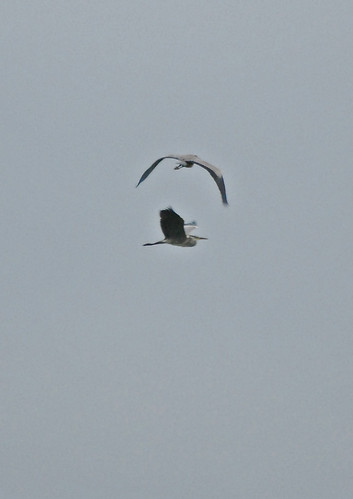
A visit to Wicken Fen always provides multiple unique photographic opportunities such as this pair of grey herons whose paths crossed, almost on a collision course:

Wicken Fen was mentioned in a BBC News article a couple of days ago about the importance of the Fens as a wildlife haven. The article is about a study into the biodiversity of fenland since 1670. Apparently, since the start of the study period 100 species of birds, bees and butterflies have been lost from the Fens and in total 504(!) rare species have not been recorded there in the last 25 years. A moments comtemplation on that rate of biodiversity loss is terrifying, and the implications of it even more so. It boggles my mind that the political decision makers, who are aware of all the environmental devastation, don’t appear to give a damn about it. Or at least not enough to want to do anything about it.

Despite that the Fens are still a very important refuge for endangered species, which I can vouch for based on my observations made whilst wandering around Wicken. The Fens are much maligned but are a unique and important haven for many species of all kinds of wildlife.

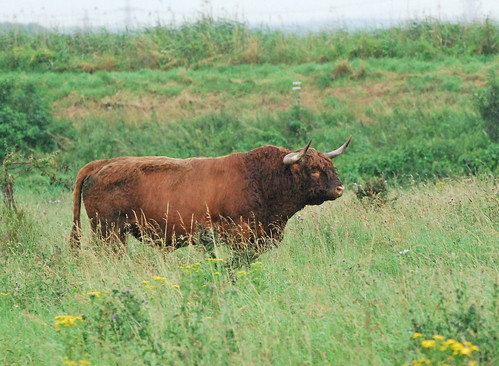
In order to manage and maintain the flora of the Fen which then provides shelter and sustenance for a multitude of other species, horses and cattle have been installed there, one of which is this magnificent chap:

This image doesn’t really do him justice, he is absolutely enormous – like a minibus on legs!

Flowers and frogs at Milton Country Park

Not long after my lunchtime spin around Cambridge Science Park I paid a visit to Milton Country Park which is about a mile from where I work, as the crow flies. Wild flowers were everywhere, the sun was out, and there was lots to see including a family of treecreepers (Certhia familiaris, Dansk: træløber). Prior to this I’ve only seen treecreepers individually but this time a whole family of at least five birds was flitting around a tree trunk before flying to an adjacent tree. Treecreepers are fun to watch, they begin hunting low down on a tree trunk and climb up it in a spiral pattern to ensure they don’t miss any insects lurking in the crevices of the bark, they are very aptly named. I didn’t have my long lens with me so I couldn’t get any photographs of the treecreepers, but I did capture some gorgeous flowers on this outing:


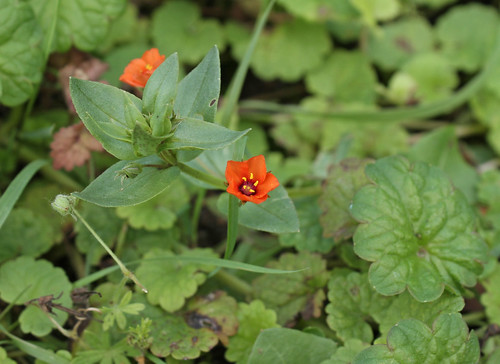
Scarlet pimpernel flowers

I’ve never noticed scarlet pimpernel (Anagallis arvensis) growing around Cambridge before but I’ll be happy if it spreads. The flowers, which were less than a centimetre across, open in the morning and close mid afternoon and were shooting from amongst the short grass. It’s common in England but less so in Scotland.

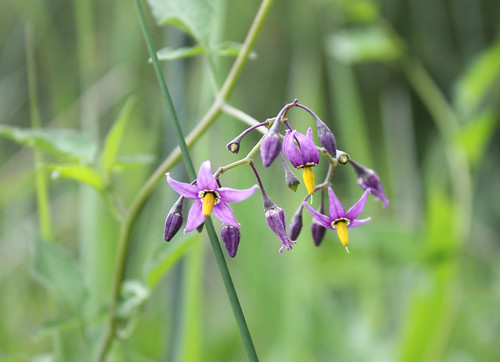
The purple and yellow flowers of the woody nightshade flowers (Solanum dulcamara) were illuminating the undergrowth:


Woody nightshade

The flowers of the woody nightshade are beautiful and eventually give way to berries which are green before they ripen into a lovely deep red colour. As the colour may suggest they are toxic, the main ingredient being an alkaloid called ‘solanine‘ (an alkaloid is a plant-derived nitrogen containing compound which can exert a physiological effect on humans. More infamous members of this category include opium, cocaine and marijuana).

The glycoalkaloid ‘solanine’ found in members of the Solanaceae family including the nightshades and potatoes

Solanine is also the active ingredient in deadly nightshade, Atropa belladonna, and is the compound which makes green potatoes toxic! The green pigmentation is due to chlorophyll which is produced when potato tubers become exposed to light and is not therefore toxic, but it is produced along with solanine. Solanine isn’t degraded by cooking so eating lots of green spuds is a bad idea.

As you might expect, solanine has physiological properties which make it a useful compound. Ancient Greeks would take it before consulting the priestess Pythia, the Oracle of Delphi, to utillise its halucinogenic properties. And Italian ladies used the sap of the deadly nightshade in days of yore to dilate their pupils as they believed this made them more beautiful. Hence the specific name of the deadly nightshade ‘belladonna‘ (‘beautiful lady‘ in Italian). It was also used by torturers as a medieval truth drug to extract confessions. In more recent and enlightened times therapeutic doses have been used to treat a range of conditions incuding inflammatory eye diseases such as uveitis, and it has also shown inhibitory properties when applied to melanoma (skin cancer) cells. It’s amazing stuff!


Common frog – Rana temporaria

A frog hopped across the path in front of me and hunkered down in the undergrowth to avoid being spotted and/or predated, so I got up close to capture some portraits. I was within 8-12 inches and it didn’t flinch, so I took half a dozen pictures before it hopped off deeper into the bush.

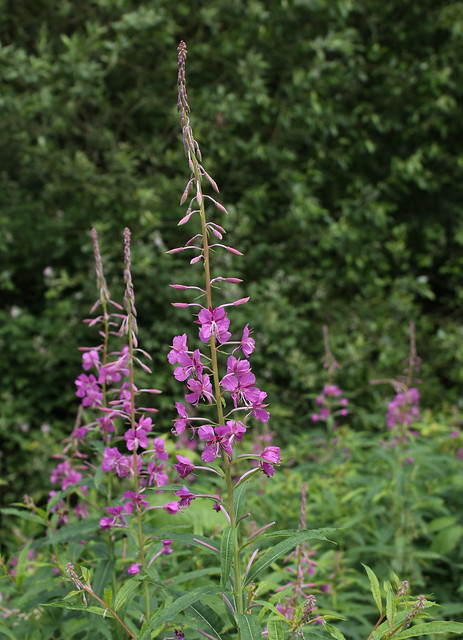
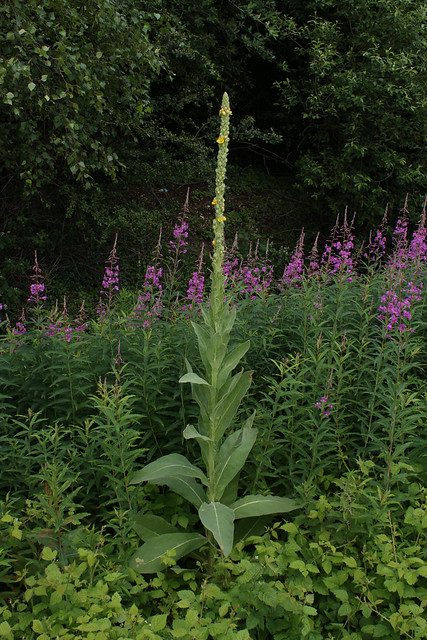
Rosebay willowherb – Chamerion angustifolium

At the edge of a lake a stand of rosebay willowherb was just coming into flower. The flower spikes and leaves of willowherb have been used to treat grumbly bowels and apparently it makes a good mouthwash too. The willowherb was interspersed with spears of aarons rod:

Aarons rod – Verbascum thapsus

This aarons rod was a very fresh example and was only just coming into flower but when in full bloom the spear is full of yellow flowers from the leaves to the apex. They have been lining my route to work since June and there are still some hardy individuals lingering on into the autumn. Aarons rod has been used medicinally as an expectorant to treat coughs and for numerous other conditions including colic, eczema, boils and warts. It’s a very versatile plant.

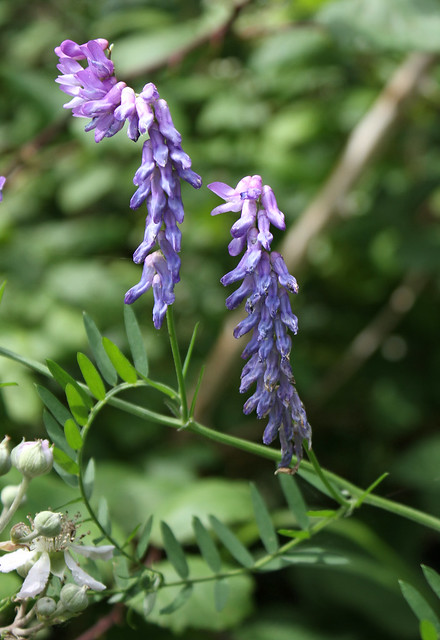
Tufted vetch – Vicia cracca

Many shrubs and bushes were festooned with the flowers of tufted vetch which is a European native and has also been introduced to the Americas where it is a weed. The flower heads were several inches long and a rather fetching blue/purple colour. It grows over other plants by shooting out tendrils which grasp stems and provide an anchor for further encroachment. It can grow up to 2m tall and can strangle smaller plants. But the flowers are lovely