Category Archives: Ornithology

Summer songbirds mainly, especially linnet

The summer solstice was a couple of weeks ago, the weather is warm and sunny and the evenings are light until after 10pm. For the last week I’ve been heading out across the fields in all hours of daylight and the wildlife has changed significantly. Until a few weeks ago there was alot of bird activity around the nests and I could watch whitethroat and blackcap in the same place for several weeks before that.


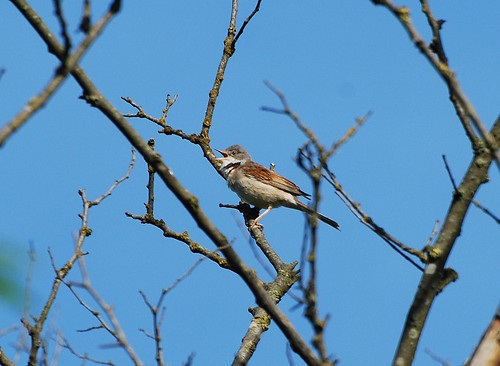
Common whitethroat about to head for the nest

The birds are still around but they have dispersed and a tad more legwork is required to see the same species I was seeing 2-3 weeks ago. But now, the first broods of the next generation have all fledged and while my garden has played host to families of starling, great tit, and goldfinch – the fledglings easily distinguished from the adults by their lack of a crimson face – further afield, the hedgerows are thronged with linnet, whitethroat, reed bunting, corn bunting and yellowhammer.


An adult goldfinch and two fledglings on the niger seed feeder in my garden. The speckled brown and lack of a red face makes the youngsters easy to identify.

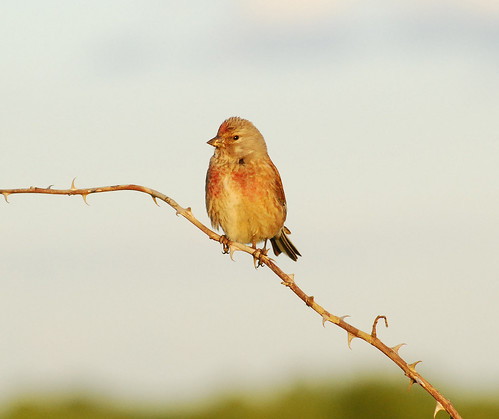
Another finch of which there are many adults and fledglings in the countryside are linnet. Linnet are one of my favourite birds for several reasons: they are delightful to look at with their cerise breast patches, they have a lovely song as they fly overhead and as long as I don’t do anything daft they will often sit tight and let me get really close to photograph them.
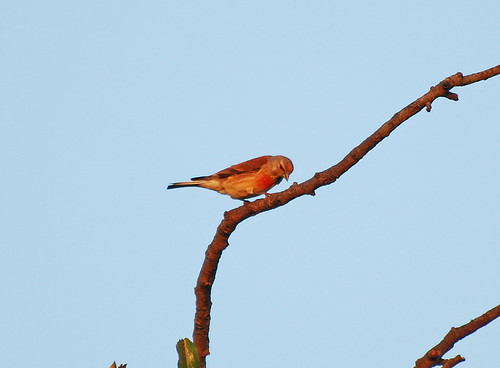

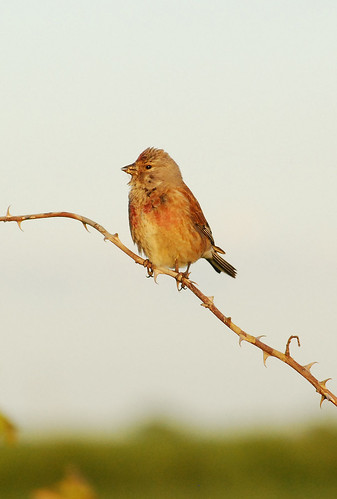
A cock linnet, underlit by the late evening sun, showing several diagnostic freatures including the cerise breast, grey head and pale grey grey cheekspot and the crimson spot on the forehead

Rather interestingly the taxonomic nomenclature is Carduelis cannabina, which approximately translates from the Latin as the ‘cannabis finch’! The linnets diet consists of small seeds so I imagine the name derives from the days when hemp was grown to make rope and they were seen in numbers feeding on the seeds.

There is a field of oil seed rape on the edge of Histon which I had always imagined to be devoid of wildlife but in the last few weeks families of linnet, reed bunting, greenfinch and whitethroat are regularly perched on top of the rape plants.


Greenfinch male in the middle of the rape field

The rape seed pods are full of small black seeds and if you squeeze one seed between your fingers there’s enough oil in it to make the ends of your thumb and forefinger really greasy, so it’s easy to see why rape is a lucrative crop and why it is a good energy source for songbirds.


Female linnet perched on top of a hawthorn tree at the edge of the rape field, she doesn’t have the cerise breast patches of the male, but lovely colours none the less

Linnet are migrant and resident breeders and passage and winter visitors. In the winter they can be seen in flocks of several hundred over farmland and often mingle with other finches. There conservation status is red due to population decline over the last forty years even though the European population numbers between 10 and 30 million pairs! Despite the overall numbers, along with a multitude of other bird species they are the victims of habitat destruction and the systemic use of herbicides which kill off their food supplies.


Cock linnet perched on top of an apple tree also on the edge of the rape field…

… and another one sitting on power lines. Look at the colour of that breast – they’re beautiful birds!

So if you can’t think of anything else to do this weekend and you feel like some gentle excercise and peace and quiet take a walk in the countryside and keep your eyes open for all the songbirds.

Many species of butterfly including large and small white, red admiral, small tortoiseshell, ringlet and small skippers were flapping lazily around the hedges on Guns Lane this morning, basking in the warm sunshine and I saw the first gatekeepers of the year today too:

A gatekeeper probing for nectar in ragwort flowers

All in all, it’s well worth a trip to the countryside armed with a pair of binoculars!

Heading south

Last Friday I found myself on the M40 heading south to Windsor. I wasn’t anticipating a particularly eventful trip from a wildlife perspective, but it turned out to be quite remarkable.

My first port of call was my parents house in Northampton, where a great spotted woodwecker and her chicks were feeding on a hanging peanut feeder:


Female great spotted woodpecker eating fatballs in my folks garden. She is easily distinguished from the male due to the lack of a red patch on the nape of the neck. Juveniles also lack the red nape but she was feeding two juveniles so it was obvious she was an adult female

My folks back garden has been a real haven for birdlife in the last few weeks and is currently home to families of great tit, goldfinch and carrion crow too. My Dad places a couple of flower pot stands full of fresh water on his garage roof every day and the carrion crows and rooks then rock up with beaks full of dry bread they have scavenged in the locality and dunk it in the water until it is completely sodden from where they carry it off to feed their chicks.


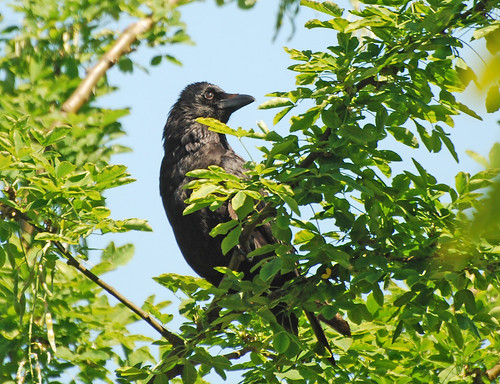
Carrion crow fledgling, it’s not immediately obvious from this shot but it has very short stumpy tail feathers – diagnostic of a fresh-faced youngster

My folks garden is around only 50m away from a long spinney of old trees and consequently they get a great variety of birds and are currently playing host to a jay, a pair of nuthatch, numerous goldfinch, dunnock, blackbirds etc, etc…


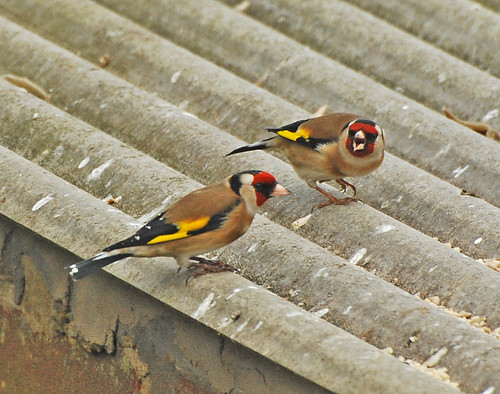
A pair of goldfinch settling a dispute on the garage roof

After a brief stop off in Northampton I headed off south to Maidenhead. One of the original release sites where attempts were made to establish new red kite populations was on the M40 corridor, and not long after passing Oxford I spotted the first one. Shortly after that there was another… and another… and another. From then on down to Windsor there were groups of up to five over the motorway or the adjacent fields every couple of minutes, and I counted 30-40 individuals in that short distance. (Alas I didn’t have my camera with me from here on, so this post is a bit thin on pictures, but I hope the words are sufficient to hold your interest!)

Later on, in the evening, I took a walk along the Thames at Maidenhead where a pair of geat crested grebe were performing a courtship dance. This involved necking followed by diving to collect weed from the riverbed which they presented to the partner when they reached the surface. Overhead, red kite, swallows, swifts and house martins were all wheeling around at various heights hoovering up flies, and the martins were flying to and fro from nests built under the eaves of the houses on the riverside, feeding their young. And an arctic tern was patrolling up and down along the river making the occcasional dive after an unfortunate fish. I love watching terns hunt, they’re amazing fliers, so it was great to see one here.

Heading back north again on Saturday evening there weren’t the numbers of kites I’d seen on Friday, but there were still a few to be seen. All in all, the red kite conservation story is an amazingly successful one and it’s good to see that human intervention can sometimes correct an egregious wrong perpetrated in the past!

A quick stroll round the meadow

Yesterday evening I accompanied the dog on a very quick circuit around Rowleys Meadow. I didn’t take my camera because I didn’t expect to be gone for very long, but fortunately I did pick up my binoculars.

Venturing along Guns Lane to the gap in the hedge which serves as the entrance to the Meadow I could hear a blackcap uttering its call in the undergrowth. As I was about to go through the gap it flew past me just in front and alighted in the bramble a few feet away and continued calling. It then circled around me for a minute or so as I entered the Meadow and sat singing in the trees and brambles while I stood in the hedge and watched. I didn’t linger for long as I guessed it was probably guarding a nearby nest. If only I’d had my camera with me!


Blackcap male  – from a previous foray into the meadow

I’ve never spent so long so close to a blackcap, and it was lovely to see. There are a good number of them in the Meadow, and at least one nest, and they’re present in the hedgerows around the more open fields to the east of here too.

Moving on around the Meadow, chiffchaff were on parade in their customary locations and common whitethroat were singing on top of the brambles and in the low scrub.


Common whitethroat male proclaiming his territory

There are numerous common whitethroat in and around the Meadow which can be heard singing all through the day and many of the bramble thickets are home to their nests.


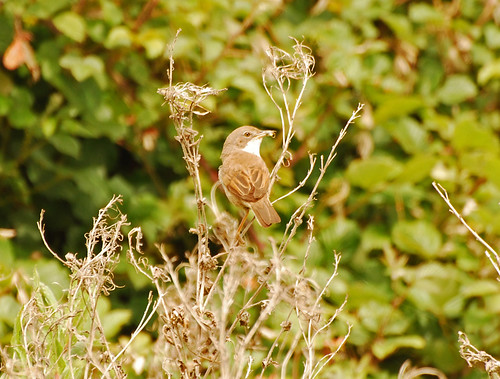
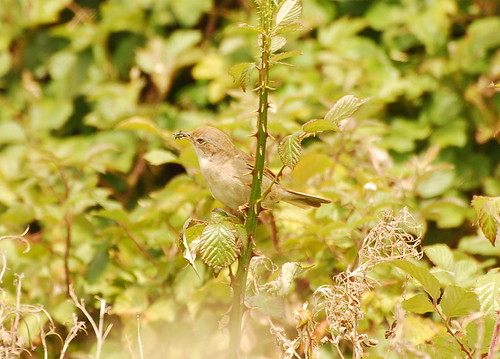
This female common whitethroat was waiting for me to move on before heading for the nest. I crouched down and hid in the long grass just long enough to get these photographs

When seen close up the female whitethroat is quite different to the male both in demeanour and plumage. She isn’t as bold in proclaiming her presence and her colours are more subdued, she doesn’t have the blue grey head of the male.

A kestrel was hovering over the Meadow at various heights for the duration of our walk, diving down into the undergrowth in pursuit of unwary rodents, but he didn’t seem to catch any. But next to the path there was evidence of another predator kill – the empty carcass from a sparrowhawk meal. The brown feathers remaining suggested it was a starling chick but it could also have been a blackbird or song thrush. There was insufficient forensic left to allow an unambiguous identification. Nature at its most brutal, but sparrowhawks have chicks to feed too. On the subject of our local birds of prey, a young buzzard was learning to fly over the Meadow today, it’s plumage was ragged and it was a less than competent aeronaut, and it’s great that they’re breeding in the area.

The other highlight of my quick stroll last night was the number of green woodpeckers. I counted seven, including two sightings of two together, one pair of which were squabbling on the ground. It’s quite possible, even likely, that I counted at least one of them twice, but I think there must have been at least 4-5 individuals.


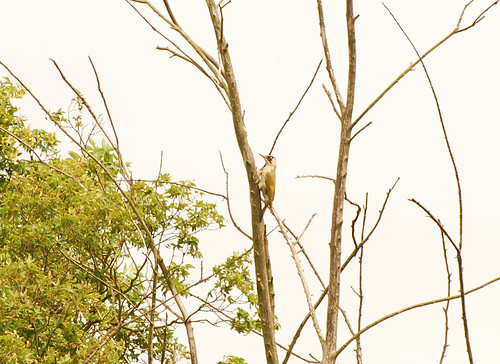
A green woodpecker that I flushed out the grass

There’s lots of birdlife around at the moment and they all seem to be breeding successfully, including the local starling population.

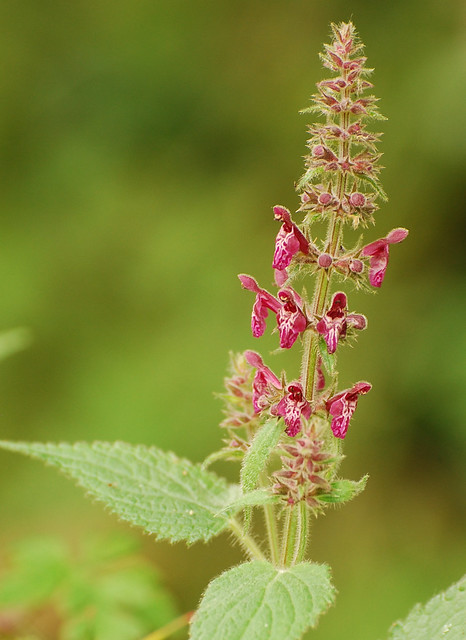
And before I finish, I want to share this wild flower with you:

How gorgeous is that?!

It’s the flowerhead of hedge woundwort (Stachys sylvatica) which has just started blossoming in the hedgerows along Guns Lane in Histon. It contains an antiseptic oil which was utilised in days of yore in wound dressings, hence the name. Absolutely exquisite.

The birds and the bees (and the flowers)

As our warmest and driest Spring on record turns into what is shaping up to be a warm and dry Summer, nature’s great events are occurring apace to exploit the prevailing climatic conditions.

The first swifts were seen over Histon 3 weeks ago (by me at least) after their heroic journey back to their breeding sites from overwintering in Africa. To celebrate this event I’ve spent several hours sitting in the garden of the Castle pub on Castle Hill in Cambridge enjoying a few convivial sharpeners and watching the swifts shrieking through the sky like an avian aerobatic team. I can heartily recommend both activities!

Wild flowers, including one of my favourites, white campion, are now in bloom:

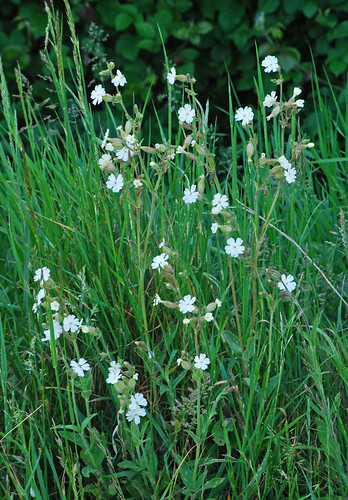
White campion, Silene latifolia, decorating ditches and hedgerows

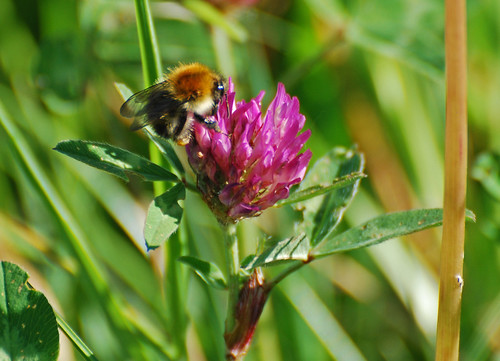
White campion is a dioecious plant which means the male and female reproductive machinery are on separate flowers. It grows in well drained earth and flowers from Spring to Autumn and is now delineating my walks across the open countryside. Another one of my favourite wild flowers is red clover (Trifolium pratense) which is a gorgeous colour and provides nourishment for bumble bees:


Red clover flower being harvested for pollen and nectar by a common carder bee (Bombus pascuorum). This is the national flower of Denmark.

And of course the local birdlife has been very busy breeding and raising chicks. Alot of species started this process earlier this year due to the unusually warm weather in Spring. I have a pair of blue tits raising a brood in the nestbox in my crab apple tree and my friend told me of a family of song thrushes which fledged from his garden a month ago. Which is very early.

A pair of great tit have been feeding their chicks on crushed peanuts which I put out on my bird feeder over the last month and last week they fledged and the whole family were feeding in my garden for just a day or two before they ventured further afield. (If you put nuts out for the birds during the breeding season please make sure you use crushed nuts as inexperienced parents can try to feed whole nuts to chicks and this can have fatal consequences). Great tits have over 70 different vocalisations which I think is remarkable, almost simple language! And on my explorations along the fields and hedgerows around Histon last weekend (21st May, 2011) I saw more great tit, blackcap and whitethroat all feeding gangs of fledglings:


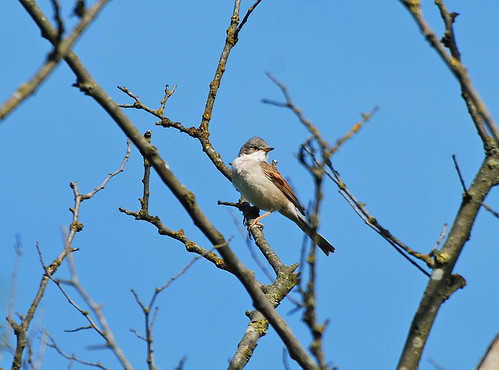
Common whitethroat male, Sylvia communis

There are two species of whitethroat to be found locally, the common and the lesser (Sylvia curruca). They are distinguished by their song, which I won’t try to describe because I’ve never yet read a book which gives the remotest idea of what birdsong actually sounds like by a written description! But if you want to compare them try here for the common whitethroat, and here for the lesser whitethroat.


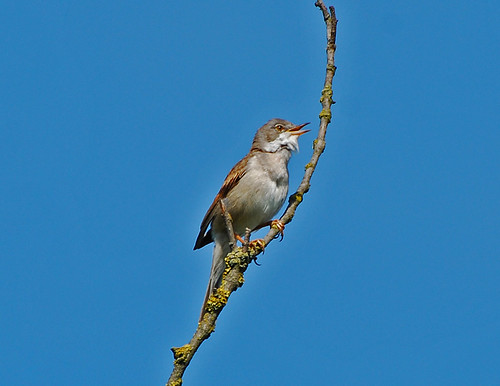
And another male whitethroat, this chap was singing long and loud, punctuated with characteristic jerky flights straight up in the air and back to the same spot

There are a good number of common whitethroat in the hedgerows north of Cambridge, lesser whitethroat are also here but are not so numerous. There are other distinguishing features between the two species, the lesser, as the name suggests is smaller (~11cm long compared to ~13 for the common), and is generally more grey with a pale grey head and noticeably darker grey ‘ear’ patches. It also has dark grey legs. Both species overwinter in sub-Saharan Africa, the common in central Africa and the lesser in eastern Africa.

Linnet can be regularly seen flying around the bramble thickets on the edges of the village and perching and singing on top of them. On Saturday early in the morning a fracas was going on in an elderbery tree in Rowleys Meadow in Histon which ended when a jay was chased out of the tree by a family of linnet and a family of whitethroat. The jay alighted on an adjacent shed to suss out the lie of the land and contemplate another raid whilst the indignant songbirds dispersed into some scrub to hide. Eventually the jay decided to keep his powder dry and disappeared into a nearby wood. Jays, like other members of the crow family, will raid nests of smaller birds for eggs and chicks, so it’s a perilous business being a small bird with a family to rear.


A linnet male perching on a bramble. When they’re not protecting a nest I’ve managed to sneak within 15 feet of linnet perched like this.

Linnet, Carduelis cannabina, are abundant resident and migrant breeders, although their numbers, as with many of our songbirds, are declining, and they are also passage and winter visitors. Due to their declining numbers over the past 40 years or so their conservation status is red, indicating they are globally threatened. They are finches which live in open country and farmland and feed on seeds.

Many species of moths, butterflies, bees, flowers and a plethora of other creatures are all appearing as trhe seasons are progressing and there’s something new to see every week!

April birdwatch

The activities of the birds in my garden have changed significantly in the last 2-3 weeks. Until then I was seeing multiple blackbird, robin, starling, goldfinch, chaffinch, dunnock, blue tit, great tit, collared dove and house sparrow with less frequent visits by long tailed tit. Since then a pair of wood pigeon have virtually taken up residence in my back garden and hoover up all the bird food before the smaller species get a look in. There is still the occasional dunnock and blackbird on the ground and much less frequent visits by blue tit, robin, starling and chaffinch but the goldfinch have all but vacated. This is interesting because when I’m outside I regularly see and hear groups of goldfinch in the trees around the garden but something seems to be keeping them away from my feeder.

My friend Chris told me he had a songthrush rearing chicks in a nest in a tree in his garden and she fledged four youngsters last week, which is very early in the year, so hopefully she’ll fit in another brood this year. But his garden has been subject to the attentions of a sparrowhawk in recent months so he was worried it would catch the fledglings, but clever use of carefully placed hanging bamboo canes has successfully deterred the hawk and all four fledglings seem to have successfully flown the coop. Songthrush 4, sparrowhawk nil.

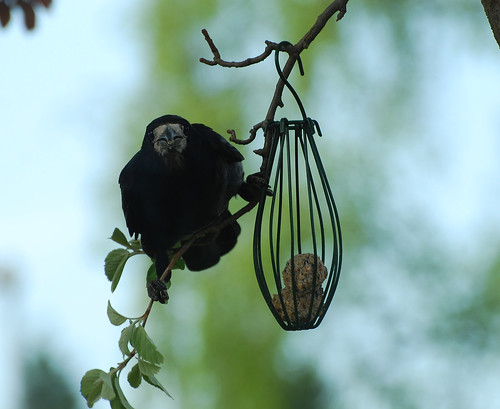
Continuing with garden birds, last week it occurred to me that the fat balls hanging in my front garden were requiring replenishment rather more frequently than usual so I guessed the nesting birds were feeding more often. The reason turned out to be rather more amusing:


One of the local rooks has worked out that these are edible…

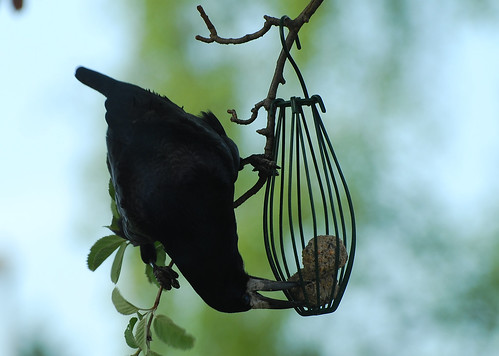
…and that it can reach them. And it takes alot of fat ball to fill a hungry rook!

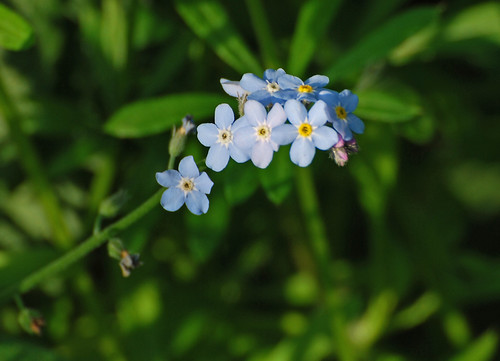
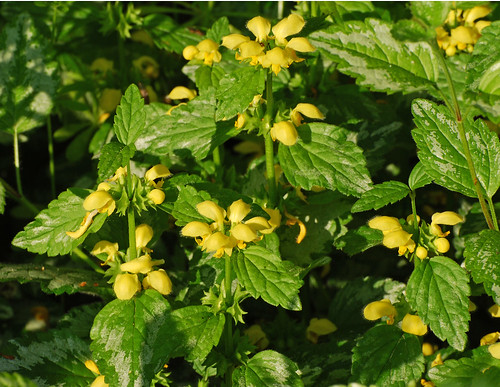
Slightly further afield in the hedgrows and scrub bordering the farmland around Histon it’s a very good time to survey the local wildlife. As I mentioned in a previous post many species of wild flower now including forget-me-not, yellow archangel…


Forget-me-not

Yellow archangel – Lamiastrum galeobdolon, this variegated version is an invading subspecies ‘argentatum’

…herb robert, cow parsley and periwinkle are all in bloom and lining the paths through the countryside filling them with a palette of colour.

And in the fields, trees and bushes there is an abundance of birdlife:


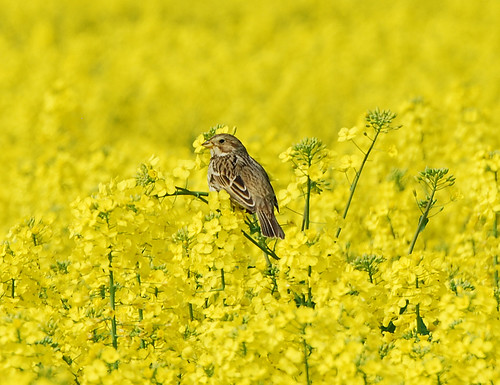
Corn bunting perched in the midst of a field of oil seed rape

The countryside is ablaze with the yellow of rape flowers right now and just occasionally a photographic opportunity such as this one arises. I’m not particularly keen on the vast swathes of rape but it created a lovely backdrop for this corn bunting which are becoming increasingly uncommon.

It’s not unusual to see and hear bullfinch in one patch of scrub near the church in Histon, which is a regular destination for my birdwatching outings. That makes me very happy because I used to see them all the time when I was a kid in the 1970’s but since the 80’s they seem to have been persecuted to near extinction in alot of the UK because of their fondness for the green shoots of commercial fruit trees. They are still fairly elusive but I managed to get this photograph of a male (just!):


Male bullfinch – the female has similar markings but they are not pink she is more pale grey/brown

And in the same field as the bullfinch linnet are in residence, as are willow warbler, chiffchaff and blackcap which have now returned from over wintering in Africa:


Blackcap male

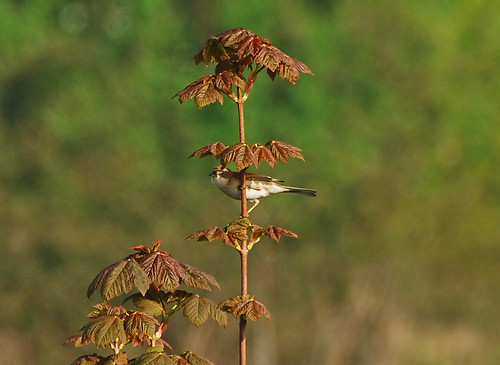
Chiffchaff

…as are whitethroat:


A female whitehroat, one of a pair patrolling a patch of brambles in the middle of the field

This field is an amazing place, I reckon it’s approximately 10-12 acres and it comprises several habitats including open-ish grass, it’s sorrounded by some old established trees: oak, ash and horse chestnut with hedgerow joining up the old trees consisting mainly of hawthorn and in the field itself there are alot of ash and other saplings and some large patches of bramble. Consequently it provides good supplies of food and cover for nesting for a number of different species. Green woodpeckers can be constantly heard yaffling to each other:

…and birds of prey including kestrel, sparrowhawk and buzzard are regularly in the skies above. The green woodpecker are there all year round and are usually hidden in the grass so I’ll flush one off the ground only for it to disappear into a tree too distant to allow a photograph. So this is about the best image I have of one. Most of the common or garden birds are regulars here too, house sparrow, dunnock, blue tit, great tit, long tailed tit:

…and chaffinch

…blackbird, songthrush, rook, crow and magpie are all present every day. So a small area of mixed scrub an the edge of the village supports a wonderful number of our birds.

There’s lots to see by simply look up in the village too. On the way back from the playground in Impington with my kids today we cycled along a road under a tree as a jay emerged from a silver birch on the other side of the road and landed in the tree a few metres over our heads. We all stopped to look at it and marvel at it’s amazing colours, and it looked at us for a minute or two before flapping off higher up the tree.

Wandering warblers

In the last two to three weeks I’ve seen several of our migrant bird species which have been returning from Africa and Eastern Europe for the breeding season in the UK. And in the sunny weather we’re experiencing this month lots of bird species, migrant and resident, can be seen during an early morning walk.

Last Sunday the weather was glorious, there was very little wind so there was no traffic noise so the only sound in the air was the buzzing of insects and the singing of birds. And there were plenty.

I set off with my friend from work, Dave, who is very knowledgeable about wildlife and a very good photographer too (check out his website here for some stunning images). Dave had come over so I could show him the local Histon wildlife and it didn’t disappoint. Within a couple of hundred metres of leaving my house we were watching a group of five blackcap chasing each other through the trees.


Male blackcap perched in an ash tree

Male blackcap are very aptly named, they have a very prominent black cap which stops just above the eye, the female and juveniles less so, theirs are a lovely rufous brown colour and also very distinctive. The blackcap is a short distance migrant in western and southern Europe and I’ve heard that there is now a population in eastern Europe which migrates to Western Europe and the UK instead of heading south. Maybe that’s down to global warming causing increased spring temperatures here.

Other migrants which we saw in good numbers, and which I’ve seen around north Cambridge for the last three weeks or so, are chiffchaff, willow warbler and whitethroat. The chiffchaff heads south to the Mediterranean for winter and some individuals carry on to sub-Saharan Africa.

The willow warbler heads further south to tropical sub-Saharan Africa for the winter:


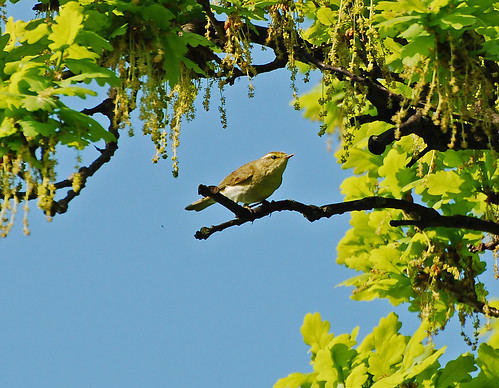
Willow warbler sitting in the top of a hawthorn tree

Chiffchaff and willow warbler are very difficult to tell apart visually, but they can easily be distinguished by their song. The chiffchaff is named after it’s call which is a single note sung with alternating pitch, the willow warblers song is more musical and easily distinguished from the chiffchaff.

Whitethroat of which there are two species – common and lesser – over-winter in sub-Saharan and northeast Africa respectively.

Common whitethroat male singing from his perch on a bramble

It’s good to see the migrants returning from Africa, I don’t know what percentage of individuals that start what must be an extremely hazardous journey make it back to the UK, but the willow warbler in particular is a very common bird so good numbers must make it.

The other migrant which I’ve seen in the last week, which is the real harbinger of summer, is the swallow. I only saw a single one first time on the 16th April, which was busy hoovering up flies over a field of oil seed rape, but yesterday I counted 7 sightings over the same field, so I think the numbers are increasing. And since then we’ve had real summer weather!

April in bloom

A walk along a hedgerow can be a particulalry rewarding experience just now. The trees are all in leaf and horse chestnut (Aesculus hippocastanum) trees are in bloom and hawthorn (Crataegus monogyna) is puntuating the hedgerows with gorgeous stretches of white flowers,


Willow warbler (Phylloscopus trochilus) beautifully fremed by hawthorn blossom on a sunny day in April

Wildflowers are also in bloom, and lining my walk routes this month are  cowslips (Primula veris):

…and white deadnettle (Lamium album)

The cowslip, a member of the Primula family which includes primrose and oxlip, are not as common as they used to be but occasionally a roadside verge or a bank or edge of a ditch will be swathed in yellow from their flowers. The cowslip could be confused with the similar oxlip but the flowers of the oxlip are more pale and more open, like those of a primrose. Until recent times it was used  to make wine and the garlands on Maypoles, and has been used medicinally to treat headaches, whooping cough and as a diuretic and expectorant.

Conversely, white deadnettle is much more common and can be found lining field edges, road verges and hedgerows. It flowers from March to December and the nectar is at the back of the flower so can only be fed on by larger insects such as bumble bees which can open up the flower to get to the nectar. It is known as a ‘deadnettle’ because its leaves resemble the stinging nettle but it can’t sting because it doesn’t have the stinging hairs. It is easily distinguished from the stinger by its flowers which are white or pink compared to the stinging nettle flowers which are small and green. It has historically been used in herbal remedies for catarrh and the young leaves and flowers can be eaten as a vegetable.

Many other flowers are blooming now such as the common-or-garden buttercup (Ranunclus acris), daisy (Bellis perennis) and dandelion (Taraxacum offficinale):


Dandelion flower, named from the French for ‘lions tooth’ – Dent de lion

Dandelion flowers heads are made up of many smaller florets and are open in the daytime but close up at night. The leaves have been used in salads in many countries either raw or blanched in boiling water to remove any bitter flavour, and the roots can be roasted and ground into a coffee-type drink. It has been used as a traditional remedy for urinary tract infections and as a diuretic.


A dandelion seedhead – a masterpice of natural architecture!

Cow parsley mallow and other wild flowers will all b e in full bloom on the near future and the flies and butterflies that depend on them will also be out and about.

Guns Lane bird walk 2nd April 2011

I acquired a voice recorder last week. It’s tiny – not much bigger than a  cigarette lighter – and it means I can record what I see alot more accurately as I don’t need to rely on memory. Which is a good thing as my memory is not brilliant. The weather was glorious on Saturday and Sunday morning so the timing of my acquisition was pretty good because there was an awful lot to record when I was out and about.  The birds are very busy right now building nests and in the last couple of weeks blackbirds have been collecting strands of hay ejected from the rabbit hutch in my garden and I’ve seen various other species with beaks full of grass, twigs and moss.

Apart from enjoying the sunshine I saw two species of bird for the first time this year – blackcap and linnet. A pair of linnet appeared to be in residence in a bramble at the southeastern end of Rowleys Meadow, Histon. (On the map, Rowleys Meadow is the area of green scrub in the middle.)

Linnet perched on top of a bramble

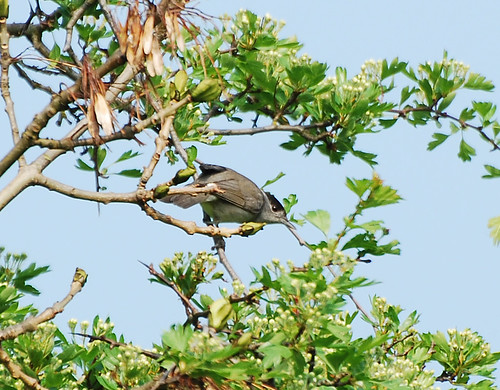
The blackcap were in the northwestern hedge row at the opposite end of the field to the linnet and perched, tantalisingly, directly over my head, so my photographs are all of the underside. I saw one pair together and two individuals on this walk which is almost as many as I’ve seen in Histon in total in the last three years.

Also in the same hedge along the northwest periphery were several yellowhammer and in the bright sunshine the colours were amazing:


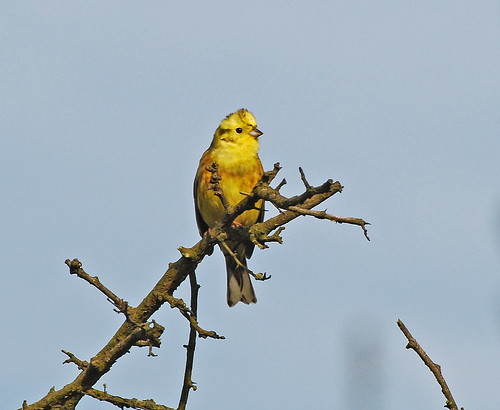
Yellowhammer male sitting atop a branch beautifully lit by the early morning sun

Yellowhammer are a species of bunting that are resident in the UK so can be seen all year round and breed here. They feed predominantly on seeds but also on insects which they harvest from the ground. I often see them perched on top of hedgerows and they fly to the ground when flushed where, despite their colour, are often next to impossible to see. The female has similar markings to the male but  is much less yellow.

Pair of yellowhammer, male  on the left and female to the right – I was very pleased to get this picture as they’re normally so difficult to see on the ground
Yellowhammer are currently on the red list due to the decline in numbers over recent years, although there seem to be good numbers in my locality and I’ve even had one feeding in my garden!

Many species of birds were busy this weekend, including a buzzard, a pair of sparrowhawk wheeling around way up high, and a pair of kestrel. Closer to the ground, blacdbird, chaffinch, greenfinch, long tailed tit and songthrush were all very much in evidence.


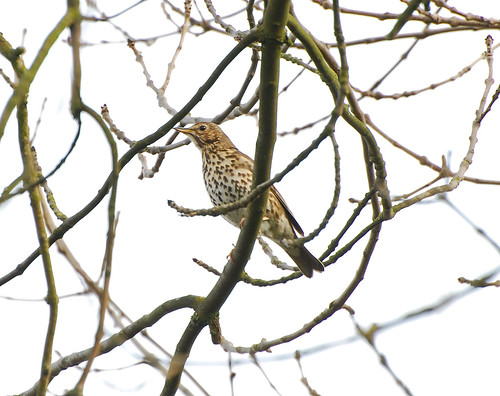
The unmistakably speckled underside of a songthrush

Butterflies are also starting to emerge in the warm weather and a couple of red admirals and two others which I couldn’t see close enough to identify were floating along the brambles.

A good photograaph of a blackcap eluded me this weekend as I only managed to shoot it from directly underneath so the cap wasn’t visible, but I shall have another look this weekend and hopefully post a ;picture next time.

Springtime song

The weather this  Saturday was glorious – no wind, blue sky and warm sunshine. Perfect for a stroll around the countryside. So I set off around 8am and apart from the warmth, the first thing I noticed was the air laden with the  fragrances of spring blossom.

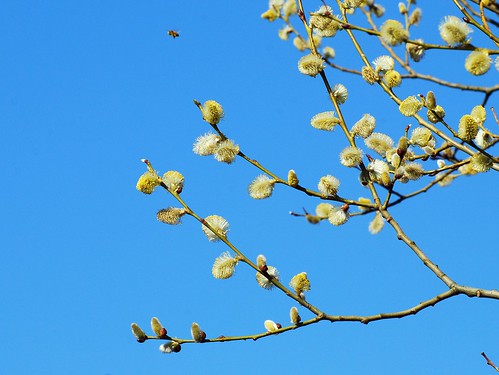
In the last week the spring weather has caused trees and flowers including the willow to blossom…


Pussy willow – the furry catkin of the willow tree against a gorgeous blue sky, and a lone honeybee

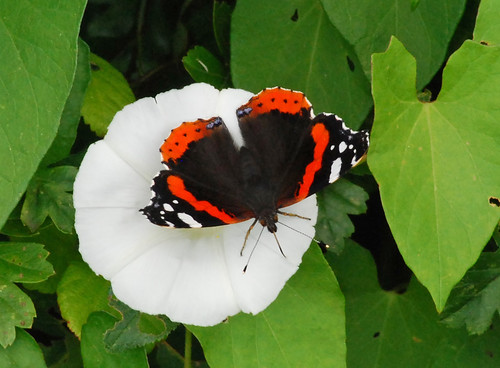
Butterflies are waking up after hibernation. A red admiral (Vanessa atalanta) flew through my garden last week and a friend told me he saw a brimstone in his garden and another wended its way gently past a window at work today.

Red admiral on a bindweed flower
Red admiral feeding on a convulvulus flower

Red admiral are resident and can be seen all year round when weather permits. Brimstone (Gonepteryx rhamni) are also resident and hibernate over the winter but they are now out and about aroused by the warm weather. Bumble bees have also become more abundant in the last few weeks and I now see them on most days.

The birds are all singing and a walk through parks and fields is accompanied by the song of greenfinch, blue tit, great tit, dunnock and robin, most noticeably. And on my hike across the fields abundant yellowhammer, reed bunting and corn bunting, three Emberiza species, were all in full voice:


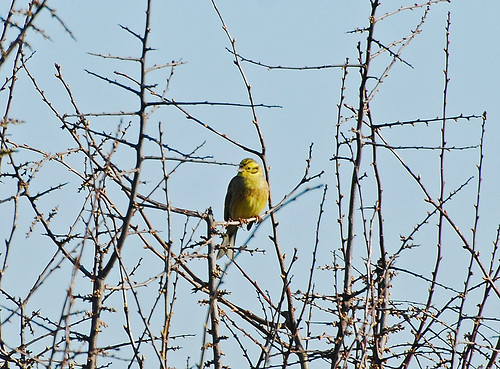
E.citrinella – one of many yellowhammer, this one is a male, patrolling the hedgerows

E.schoeniclus – reed bunting male

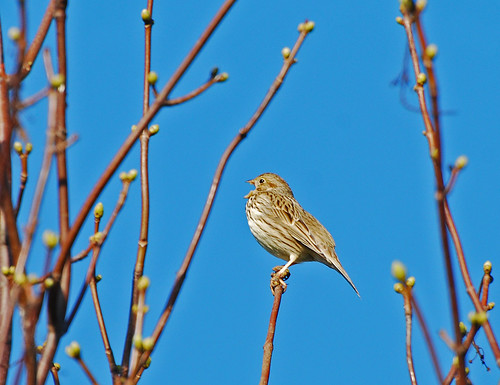
E.calandra – corn bunting making its very distinctive call

Yellowhammer, reed bunting and corn bunting perch in hedgerows and  make feeding forays to the ground in the neighbouring fields where they feast on seeds and during the breeding season and  summer will eat invertebrates. I pass one location where there has been a mixed group of 20-30 reed bunting and yellowhammer present regularly over the last month. Corn bunting have made a recent comeback to the fields around Histon, they disappear at harvest time, middle to end of August, and reappear in the Spring when they can be seen perched on top of brambles, bushes and short trees making their very characteristic song.

Skylark were also singing constantly. Farmland species such as these have seen their habitat severely depleted in recent times, consequently their numbers are reduced as a result.

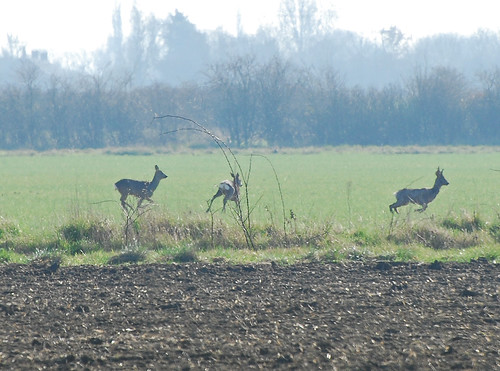
A red fox and a small group of roe deer put in appearances, the fox was heading a cross the fields to Landbeach heading away from a place I photographed cubs last year, so I hope they are breeding here again this year.


Roe deer – Capreolus capreolus – the leader on the right is sporting native antlers

A pair of crows chased off a buzzard which thermalled over the fields before disappearing into the haze towards Waterbeach and a flock of several hundred black headed gulls squawked noisily over the fields. I observed them for several minutes with binoculars and I think they were all black heads, but there could have been a few individuals of other species mixed in. A sparrowhawk flew at very high speed from the Linnet Hedge across South Bean Field before rising up and passing through a gap in the treeline, causing mayhem with the birdlife in the gardens beyond and a female kestrel was looking for rodents in the South Fallow Field. It was the first time I’d seen birds of prey here for several months so it was great to see three species on one walk.

Bad birdwatching

The title of this post is unashamedly borrowed from the book “How to be a bad birdwatcher” by Simon Barnes (The Times sports writer and RSPB columnist), which I started reading today while I was waiting for my son to finish his swimming lesson. Having discovered what was meant by ‘bad birdwatching’ I can’t think of a better way to describe my fascination with birds and wildlife:

“…the first aim of being a bad birdwatcher: the calm delight of the utterly normal, and the rare and sudden delight of the utterly unexpected”. Genius.

I’ll write a review of the book when I’ve finished it, but please don’t hold your breath, reading a book is a fragmented and necessarily slow process these days.

Please forgive my rambling but there is a point to this. This morning I was planning to head to the lake beside the A14 between Histon and the northern edge of Cambridge to look for grebes, geese, ducks and cormorants. However, in the course of the last week I’ve seen green woodpecker on several occasions in and around the carpark at work on Cambridge Science Park. As I still don’t have a good photograph of a green woodpecker I reasoned an early morning stroll around work may enable me to put that straight. So that is where I headed.

Initially there were no woodpeckers to be seen but on a dull grey morning the trees and bushes were alive with birdsong:


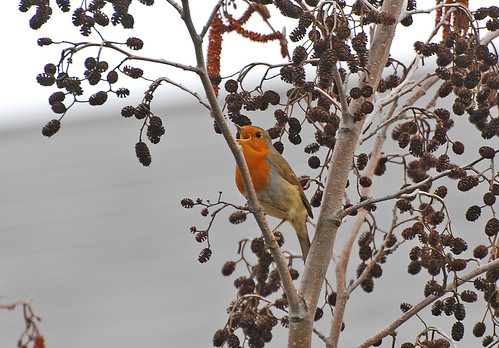
Robin singing his heart out in an alder tree. He wasn’t alone, plentiful dunnock and wrens were doing the same

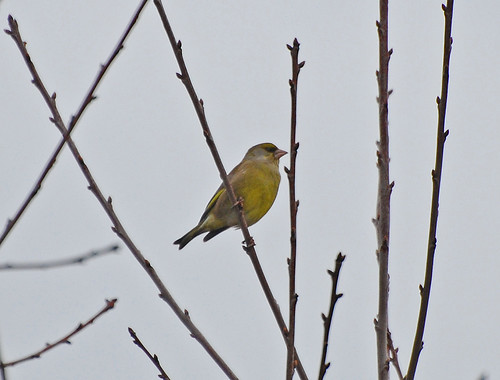
…as were numerous greenfinch, but this one clammed up as soon as I tried to photograph him. (Whilst taking this picture I was approached by a security man who said my camera looked like a shotgun. With the lens hood on at full zoom maybe a blunderbuss… but not a shotgun, surely!)

Cambridge Science Park is located on the northern edge of Cambridge bordered by the A14 to the north and the A10 to the east, it is around 1km in diameter and in keeping with the rest of this part of Cambridgeshire is as flat as a pancake. It was created in 1970 and some of the old trees and scrub remain between the buildings and the landscaping. These, along with small lakes and streams in drainage ditches form a good variety of habitat which is generally undisturbed.

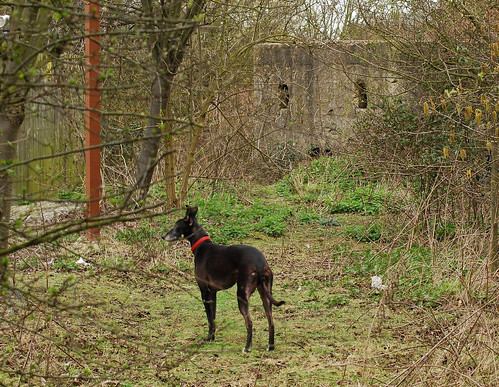
I’ve worked on Cambridge Science Park for 15 years but I had no idea this  WWII pillbox was tucked away in the undergrowth until yesterday. (The pole in front of the dog has bat boxes at the top so I was very pleased to see the proactive approach to conservation).

Consequently there is alot of birdlife, from kestrels and sparrowhawks to water birds – ducks, coot, moorhen – and songbirds – greenfinch, goldfinch, great tit and I’ve seen goldcrest and lapwing on rare occasions. There are plentiful rabbit too and as a result it’s not uncommon to see foxes out the window hunting for a meal.

The Science Park was vibrant with birdsong during my walk and as time progressed the sun came out and it got warmer. I didn’t see any unusual species but the sheer numbers and volume of sound made for a very enjoyable walk.


One of numerous dunnock livening up the Science Park with their Springtime singing…

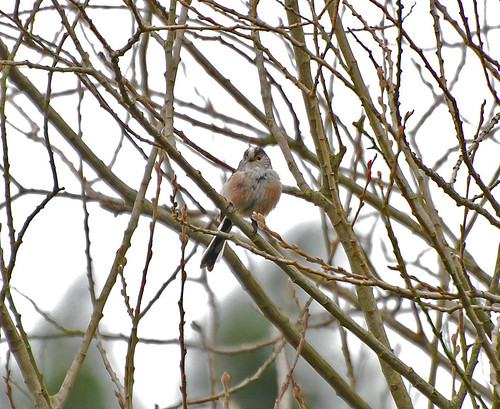
…and one of a flock of long tailed tit

A male great tit feeding on one of several bird feeding stations

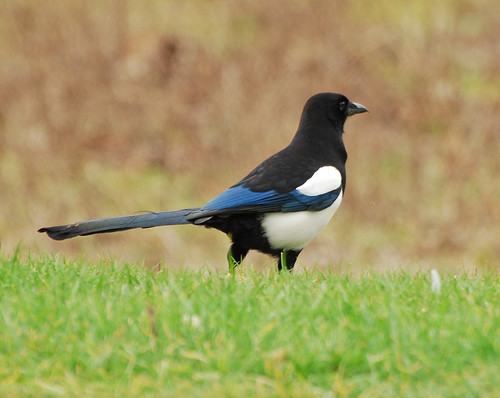
… a magpie

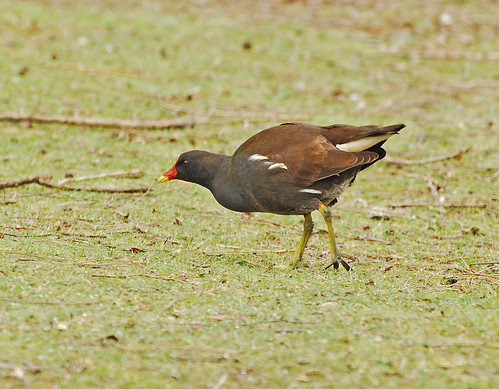
…and a moorhen

Lots of birdlife to be seen, and all within a 500m radius of where I work. But I still hadn’t seen a green woodpecker. So I decided to head over to the lake within 500m of the Science Park where I know there are waterfowl including greylag geese… and green woodpeckers.

The lake didn’t disappoint. There were moorhen, mallard, greylag geese, great crested grebes – and even a single green woodpecker which was flushed up from the ground and disapperad into some distant and inaccessible trees.


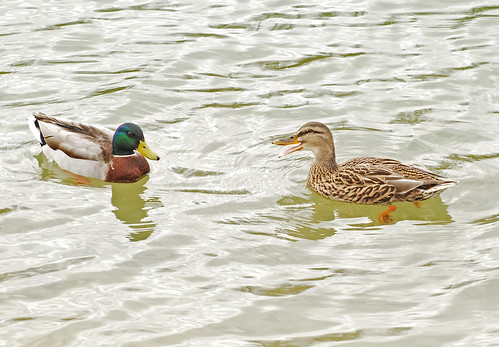
Male, left, and female mallard

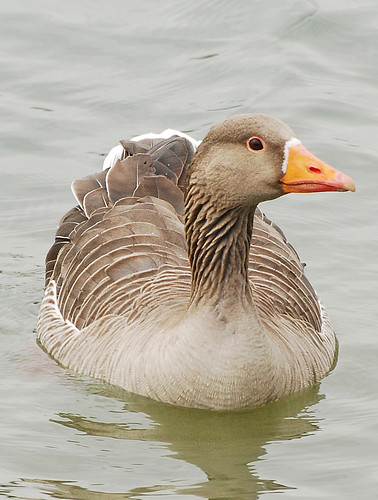
Greylag goose

The greylag goose is the bulkiest of the Anser goose genus and is the species (Anser anser) from which domesticated geese originate. Studies of greylag geese led the zoologist Konrad Lorenz to rediscover the theory of imprinting – the phenomenon you are probably familiar with, of baby nidifugous birds (those which leave the nest at a very early age) imprinting on their parents, which can be a human being if that is the first creature they encounter after hatching.

Konrad Lorenz was an interesting man and a glance at his Wikipedia entry reveals he was an Austrian biological scientist, born in 1903. He graduated from Vienna University as a medic in 1928 and received his zoological doctorate in 1933. He joined the Nazi Party and indicated his support for their ‘racial hygeine‘ theories (one of the worst obscenities of the 20th century in my opinion), accepted a chair at the University of Konigsberg in 1940, joined the Wehrmacht as a medic and was shortly after captured by the Russians and eventually repatriated to Germany in 1948. He went on to study aspects of animal behaviour, later extrapolating these to apply to humans, and in 1973 he received the Nobel Prize for medicine for studies on social behaviour patterns.

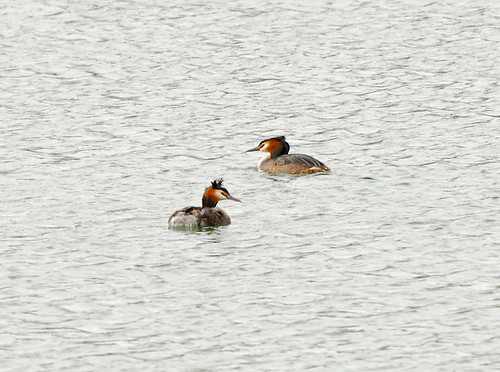
Returning to natural history, there was a pair of great crested grebe on the lake which I were hoping were going to display:

But this time I was unlucky. When displaying, they swim away from each other then turn simultaneously and swim rapidly toward each other and when they meet they rear up in a necking dance before repeating the whole process. I haven’t yet been able to get photographs of this beautiful courtship ritual, but I’ll keep looking.

I said at the top of this post that there was a point to the ‘bad birdwatching’ reference. I set out yesterday specifically to try to photograph green woodpeckers which I think are spectacular. I only caught a fleeting glimpse of a woodpecker, and no pictures, but I had a lovely time looking and seeing all the other wildlife.

So I guess by Simon Barnes definition I’m a fairly shabby example of the birdwatching fraternity! But I’ll live with that.