Tag Archives: Nature

Correction – Volucella zonaria

In my post ‘Backyard Safari‘ from September 15th I included this photograph of a magnificent hoverfly which I identified as Volucella inanis:

I subsequently received a comment from Roger Morris of the Hoverfly Recording Scheme (HRS) to let me know that I had incorrectly identified the fly and it is in fact Volucella zonaria. So thanks to Roger for putting me straight.

When it appeared in my garden I mistook it for a hornet, it’s our largest hoverfly and I’ve seen it described as a ‘hornet mimic’. The adults feed on flowers such as buddleia which may be why it appeared in my garden, and the larvae feed on the detritus which accumulates in the cavity at the bottom of wasp nests. It wasn’t recorded as resident in the UK until the 1940’s when it appeared around London and then spread across the south of England to the west country. It’s population is still most dense in the south east but it is regularly recorded in the east Midlands with occasional recordings in the northwest of the country.

Lunchtime nature walk

Several years ago I took a lunchtime walk around the lakes on the Science Park in Cambridge and the banks of one of the lakes to a depth of 5-10m was absolutely jumping with froglets. These little guys must have just emerged from the shallows en masse, there were literally 10’s of thousands of them and when I stood still it looked as though the grass was moving. It was an amazing sight.

I took another walk around the same lake this summer and the frogs were there again, not in anything like the numbers the first time I saw them, but big numbers nonetheless. They were the young of the common frog, Rana temporaria. Fortunately, this time I had a camera with me and I managed to get a picture of this little chap. As you can see, he was tiny, smaller than a clover leaf which was approximately 1cm across.


A tiny froglet seeking cover under a clover leaf


Scarce chaser in flight, reflected in the lake

The timing of my foray was just as the rains were subsiding and several species of darter, hawker and chaser dragonflies were busy hunting over the lakes, including this adult male scarce chaser, Libellula fulva. I’ve decided to try to photograph dragonflies in the act of doing soemthing other than sitting still and this the first shot I have of one flying. Not brilliant, but OK for a first attempt!

Because the Science Park is all neatly kempt and the grass cut regularly it’s not the best place to see wild flowers. So it was a pleasant surprise to see an orchid lurking in the undergrowth close to the lake where the blades of the grass cutters can’t reach.

Common spotted orchid – Dactylorhiza fuchsii

I think of all orchids as being terribly exotic, but this little beauty is relatively common, as its name suggests. It’s found over nearly all of the UK and thrives on a wide range of habitats including marshy wetland, chalk downland and also colonises wasteland. It’s a favourite food source for day flying moths and gets its name from the purple spotted leaves which are clearly visible on this flower.

Flowers and foliage

The greatest thing about a sodden Springtime was the abundance of bloom that resulted. So I spent alot of time this year recording the wild flowers and foliage that flourished in the wake of the deluge.

Some years ago I attended a lecture in which the speaker said that due to modern farming methods which involve the use of mechanisation and toxic chemicals to create a sterile monoculture,  verges and drainage ditches have now become an invaluable seed bank where many of our wild flowers can still prevail. Without these unpolluted conduits criss-crossing the countryside the flora seeking refuge there would be even more threatened. This idea seems to be born out in my local area as the drainage ditches are indeed full of wild flowers year on year.

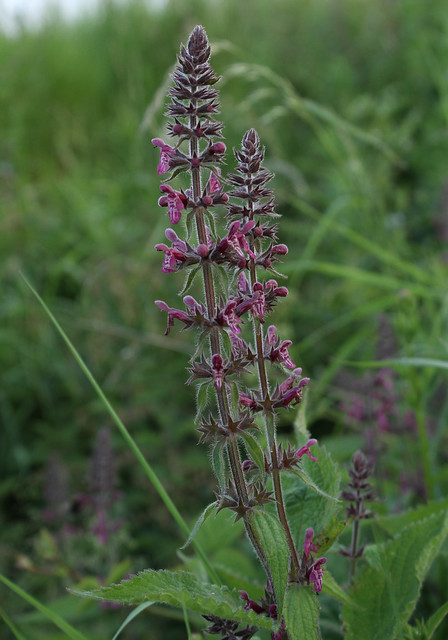
Hedge woundwort – Stachys sylvatica

Hedge woundwort has lined the field margins and ditches in greater abundance this year than in previous years, its delicate purple flowerheads, growing up to around a metre tall, poking  over the top of the ditches. It’s a lovely flower and it gets its name from its preference for hedgerows and because the crushed leaves were traditionally applied to wounds to stem bleeding.

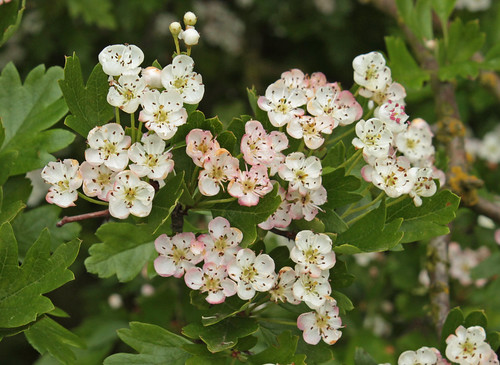
Hawthorn flowers lined all the hedgerows ealier in the year and heralded a glut of berries which are currently providing rich pickings for the birds, and will continue to do so well into the colder months.

Hawthorn blossom – Crataegus monogyna

The October 2012 edition of British Trust for Ornithology’s BirdTrack reveals that the migrant redwings (Turdus iliacus, Dansk: vindrossel) should be arriving here from Scandinavia any day now and will be followed closely by the fieldfare (Turdus pilaris, Dansk: sjagger), and the hedges fulls of haws will help to replenish their fat reserves after the migration across the North Sea. I think I saw my first redwing over Histon on Sunday, they have a characteristically undulating flight during which they fold back their wings and form a teardrop shape, which is what my sighting today was doing. So the fieldfare should be along soon too, according to the BTO.


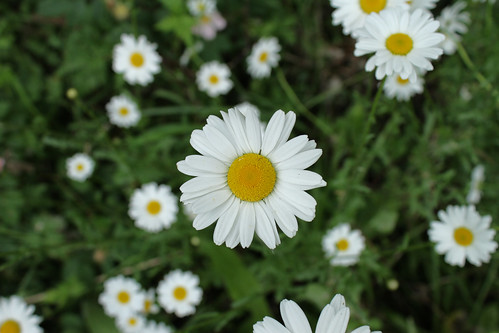
Oxeye daisy – Leucanthemum vulgare

Oxeye daisies are my Mother’s favourite flower and she has been pestering me to publish a picture of one. This year they lined my cycle route to work alongside the Cambridge Guided Busway in their thousands so I’m finally able to complete my commission. So, Ma, this one’s yours!

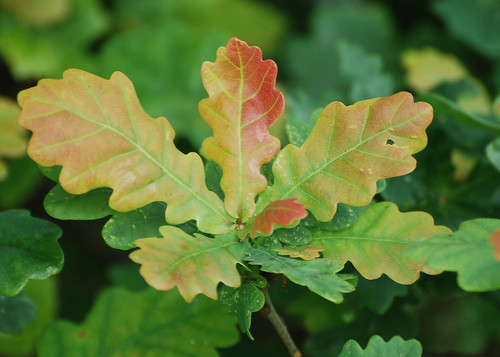
The wild flowers have been spectacular but the leaves and some of the trees have also been contributing their own splash of colour to the countryside such as the cluster of oak leaves below.

(Dramatic interlude: Wow, the first goldfinches (Carduelis carduelis Dansk: stillits) arrived on my niger seed feeder a couple of days ago after being absent through the summer and until a minute ago there was an adult and a late fledgling feeding there. I just caught a blurr out the corner of my eye as I was writing this post and looked up just in time to see a sparrowhawk (Accipiter nisus, Dansk: Spurvehøg) swoop through a gap in the buddleia bush next to the feeders, the goldfinches fled but it all happened too fast to see if the hawk was successful. It was all over in less than a second!)

Back to the oak leaves though, they were lovely colours, almost autumnal. Oak trees are amazing organisms, in fact they are substantially more than organisms, they are ecosystems in their own right. They live to be several centuries old and when coppiced or pollarded (pollarding is pruning back a tree to the top of the trunk to promote new branch growth, compared to coppicing which is pruning it back to ground level), but there are numerous examples of oaks living for 1000-1500 years. And they become home to hundreds of other species of fungi, lichens, insects, birds and mammals.


Oak leaf cluster – Quercus robur – the English oak

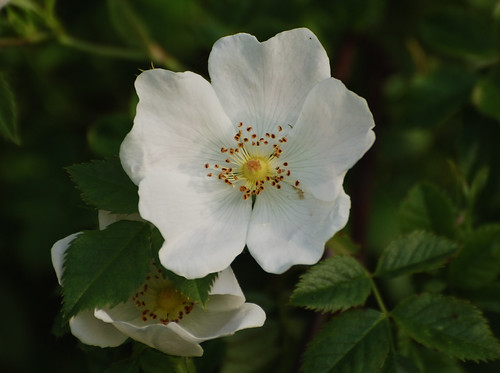
And right next to the oak was this gorgeous, delicate field rose. The field rose, Rosa arvensis, grows in hedges and has white to cream coloured flowers and lovely golden yellow anthers. It flowers later than the dog rose (Rosa canina) which has pink flowers and the leaves are smaller. Later in the autumn the flowers turn into bright red hips which provide food for birds as well as humans. When I was a kid we used to have rosehip syrup which was sweet and delicious and I’ve been toying with the idea of trying to make some. If I succeed in creating something pleasant I’ll post the recipe here.

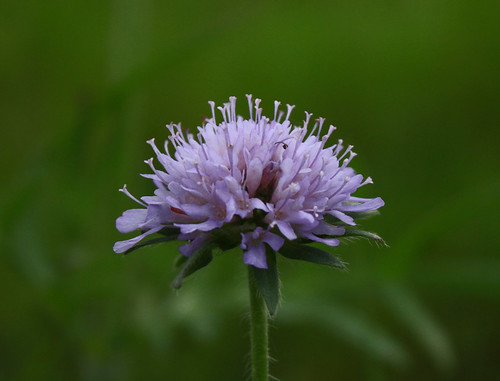
Without doubt my favourite wild flower is the field scabius (Knautia arvensis). I think they’re utterly beautiful and if I have a camera to hand I struggle to walk past one! Fortunately for me the field margins around here are replete with them so I’m rarely short of photographic opportunities.

The glorious flower of the field scabius

And from side on:

The hue of the flowers can vary from a pale pastel shade to quite dark purple. Each flower contains male stamens which can be seen protruding from this flower from between the female florets. The stamen consists of the filament (the stalk) and the anther (the pollen bearing part at the end of the filament). The stamens die back before the female florets mature in order to prevent self-fertilisation. Field scabius is named afer the German botanist Dr Knaut and has historically been used to treat skin ailments such as scabies and eczema.

Titchwell birds – the final episode

I’ve posted several times with pictures from my trip June to Titchwell on the north Norfolk coast but I’ve now exhausted my photo collection from that trip so this is the last one. There was a terrific number of bird species present the day I was there including ducks, waders, raptors, passerines and gulls, but the wildlife wasn’t confined to birds, a wall brown butterfly and a chinese water deer also putting in appearances.

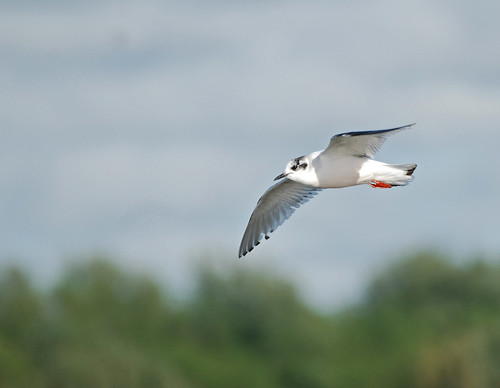
Gulls are many and often not-so-varied and can be easy to overlook: “What’s that bird?”, “Oh it’s just a gull”. But I like gulls and and it’s always good to have a new species identified and on this trip it was the little gull (Hydrocoloeus minutus, Dansk: dværgmåge). At first glance the little gull looks like a black headed gull, but it is noticeably smaller:


Little gull in winter colours – the summer plumage includes a completely black head

The other obvious difference between the two species is the colour of the beak which is black on the little gull and red on the black headed. It may also be mistaken for a tern as it swoops down on the water in a similar way to a tern but it’s not fishing it’s picking food from the surface of the water. I haven’t seen other gulls feed in this way.


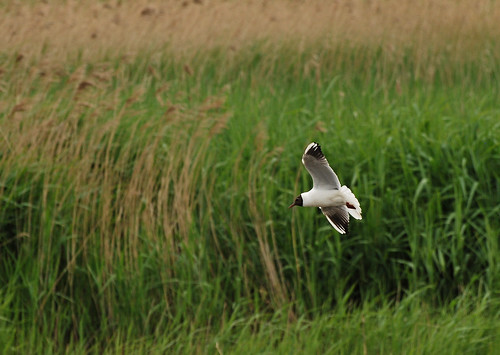
Black headed gull (Larus ridibundus, Dansk: hættemåge)

The black headed gull is common and I see large flocks of them feeding in the fields around Cambridge in the winter, unlike the little gull which is a rare breeder in the UK and a passage and winter visitor on it’s way to the Mediterranean.

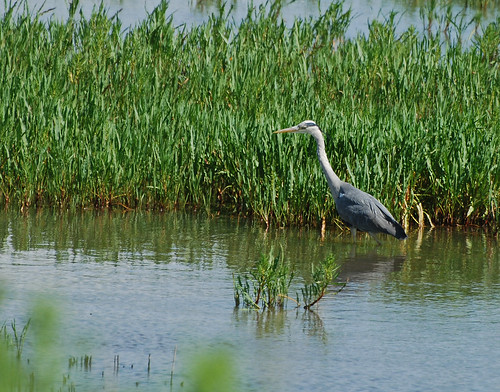
Grey heron (Ardea cinerea, Dansk: fiskehejre)

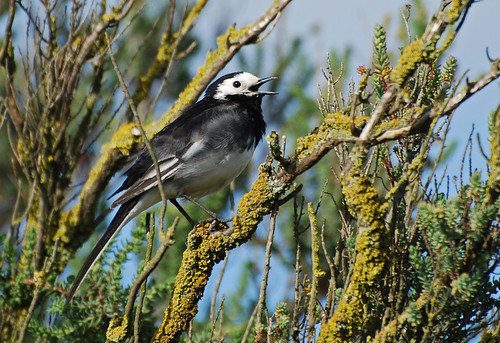
Stalking the shallows were several grey herons searching for fish and amphibians. The heron is a very effective predator unlike the pied wagtail perched just a few metres away serenading the comings and goings of serried ranks of twitchers passing to and from one of the hides:


Pied wagtail (Motacilla alba, Dansk: hvid vipstjert)

This wagtail is an adult male, his colours are much darker and the black bib more extensive than the more delicately shaded female. The pied wagtail is a resident and migrant breeder and I regularly see them patrolling lawns, meadows and carparks with their characterisitic twitching tail.

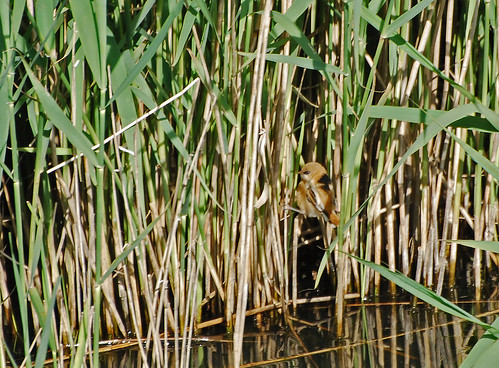
The one bird which I knew could be seen at Titchwell, but which I also knew was very elusive, so I didn’t really expect to catch a glimpse of it, was the bearded tit (Panurus biarmicus, Dansk: skægmejse). It’s one of those birds that I’ve seen pictures of and thought it almost looks unreal, like a childs drawing of an imaginary colourful songbird. A notion which seemed to be corroborated when I looked in my Collins field guide and it wasn’t listed! It transpires that it was listed, but as the ‘bearded reedling‘ instead of the ‘bearded tit‘, and it’s actually more closely related to the larks than the tits, to which it’s resemblance is only superficial. Despite the alternative name in my field guide it is listed on the British Trust for Ornithology ‘BirdFacts‘ website as the ‘bearded tit


Bearded tit juvenile

The bearded tit is resident in the UK but confined to the southern and eastern extremities. However, I did see some and even managed to get a photograph, albeit a not very good one(!). This one is a youngster, identified by the black eyestripe which differentiates it from the female, and the black patch on the nape which is absent in both adult genders. Of all the birds I saw on this visit the bearded tit (or reedling) was probably the highlight.

Histon wildlife

I’ve been meandering around the country over the summer so my local flora and fauna have been a tad neglected here. So here are a few of my favourite photographs from Histon.

Wild flowers and grasses shot up to shoulder height in no time at all through the spring and into the summer and everywhere was lush and verdant, watered by the seemingly endless rain that started a few days after the hosepipe ban at the beginning of April, and carried on until early July. The rains were good for the greenery but not good for butterflies and other insects, so it was good to see the large skippers emerge at the end of June.


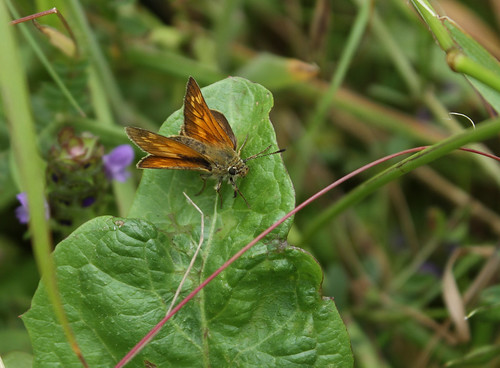
Large skipper  – Ochlodes faunus

The large skipper ususally emerges in June and July, so the earlier stages in its life cycle must be particularly well water-proofed to have survived the spring! The caterpillars feed on orchard grass (Dactylis glomerata) which is common in meadows and hedgerows, and the adults seek nectar from a range of flowers including birdsfoot trefoil, dandelion, yarrow and field scabius. All of these are common in my local fields which explains their annual presence around here.


Small skipper – Thymelicus sylvestris

Both the skippers here appear to be females, the genders are differentiated by the presence of ‘androconica‘ on the forewings of the males. These are lines of dark, specialised pheromone producing cells which appear to be absent on both these butterflies.


Field poppies – Papaver rhoeas

A journey through the countryside in July and August was a gorgeous sight this year due to the abundance of poppies. The red field poppy, also called the ‘Flanders poppy’ is, of course, the symbol of remembrance in the UK for the slain of the two World Wars. They seemed to be everywhere, and fields which would normally be plain green were a sea of red, and my local fields were no different. It transpired that this was also a consequence of the rains but not for the reason you may think. As well as watering the earth and creating good conditions for alot of plants the rain also washed away the herbicides used by the farmers to protect the monocultures we’re accustomed to seeing in the fields. Which shows how rapidly nature can regain lost territory when the opportunity arises.


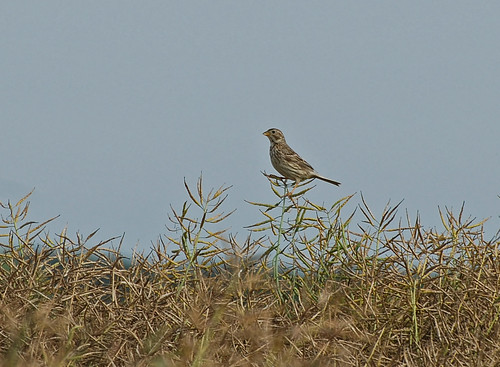
Corn bunting – Emberiza calandra

Another of my local fields was planted up with rape this year. I’ve previously disliked rape because it has a completely unnatural colour, and the smell is not too pleasant either. But since I’ve been getting close to it and seeing the variety of birdlife it supports I’m changing my mind. Not least because it plays host to corn bunting which are becoming increasingly uncommon due to loss of habitat. This rape field regularly had linnet, reed bunting and corn bunting feeding on the seedpods which are extremely rich in oil and therefore a good energy source for small songbirds.

Reed bunting male – Emberiza schoeniclus – perched on top of the mature rape plants resplendent with his black head and white collar

Skylark numbers have been dropping across the UK due to modern farming methods but I hope that my local patch is bucking the trend because year on year there always appear to be good numbers of them. The combined song of a multitude of skylarks as they slowly climb and then drop like a stone is one of natures wonders in my opinion, so it’s good to see them in the skies here.

Skylark – Alauda arvensis

Looking through my photographs for this year there has been alot to see but it seems it many species were scarce until July. Maybe that’s because the dreadful weather meant that I wasn’t looking quite so hard, but I think many natural phenomena were late this year due to climatic extremes. But many species eventually appeared so they are still out there. I’m hoping we now have a year of relatively normal weather from here on so the wildlife has a chance to recover.

Geddington swallows

A couple of months ago I was at my sisters place in Geddington, a small village in the Northamptonshire countryside which is right next door to one of the original release sites for the reintroduction of red kites into the UK. Consequently, one doesn’t have to look too hard to see red kites there, but on this particular trip it was swallows that were the stars of the show.

Geddington is a very old village and the cottages in the middle, one of which is occupied by my sister, are built from Northamptonshire ironstone, which is a gorgeous building material. Not only is her house built with it but so is her very substantial shed. She leaves the door to the shed open all the time because there are bats roosting there, and in the summer swallows use nests built in the eaves there.


A brood of swallows on the verge of fledging

Swallows (Hirundo rustica, Dansk: landsvale) migrate here from South Africa in the Spring and they generally arrive back around the second weekend in May. They return to the same place every year and often refurbish an old nest which can be used year after year, and there are records of the same nest being used for decades.

I usually get an excited phone call from my sister in the middle of May to tell me her swallows have returned. They come back again and again and she comes over all maternal when the first one arrives.


A pair of very recent fledglings which haven’t yet plucked up the courage to venture outside

They have now done all their breeding and feeding up and are congregating on roof tops and power lines and contemplating the enormous feat of flying down through Europe, across the Mediterranean and the Sahara desert before crossing the rest of sub-Saharan Africa to South Africa. Where they will spend the next 6 months before doing the whole thing again in reverse. Awesome!
Fenland safari

Wicken Fen is the largest remaining area of true fen in England and has survived because it has been conserved by encasing it in what is effectively a gigantic plastic bag. The earth on the Fen is waterlogged and if the bag weren’t there the water would simply drain away leaving very rich agricultural soils but none of the wildlife associated with fenland habitats. Another result of the water retention is that the Fen is 6-8 feet above the surrounding farmland and the earth literally shakes if you jump hard on the ground as it’s like a saturated sponge.

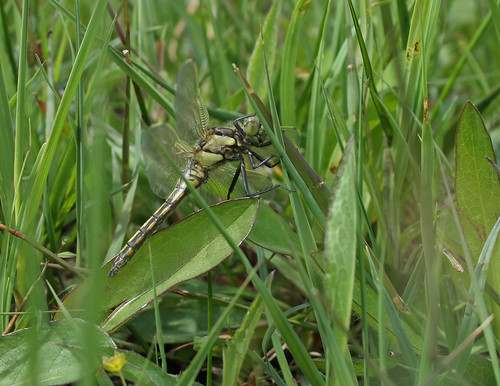
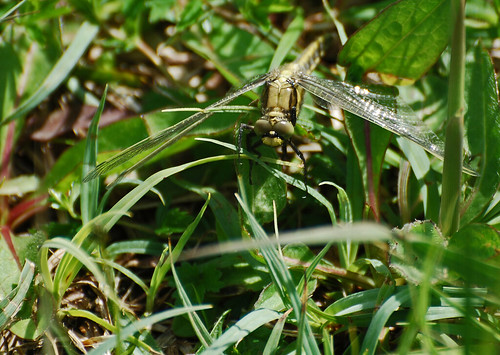
Because of the water the predominant habitats are reedbeds and waterways which is reflected in the wildlife. The Fen is so rich in wildlife that a hike around there is like a mini safari! I was there on a hot and sunny Sunday morning in June and wildlife of all sorts abounded. In particular the insects were very busy. This dragonfly had recently emerged from the larval stage as an adult and was sitting in the grass drying out before taking to the air.


Black tailed skimmer youngster preparing for it’s first flights

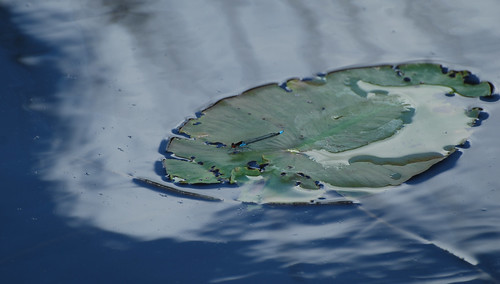
The young skimmer was on the edge of a path which ran alongside one of the lodes (man made water courses) and on the water opposite the skimmer were lily pads and sitting on one of them was a damselfly, warming itself up in the morning sunshine.


Red eyed damselfly (Erythromma najas) in beautiful repose on a lily pad, surrounded by reflections of the clouds

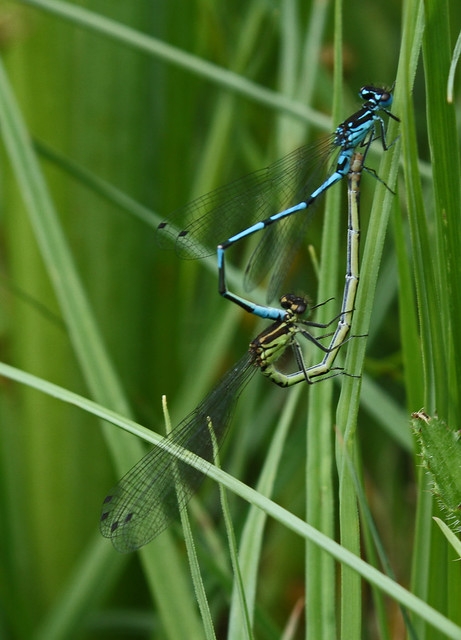
And of course, that time of year is the season for lurv for many creatures, including this pair of variable damseflies (Coenagrion pulchellum) which are in the process of mating. The male is the blue one and he is clasping the female by gripping the back of her head – the pronotum – whilst she has pressed her genitalia against his abdomen to receive the sperm.

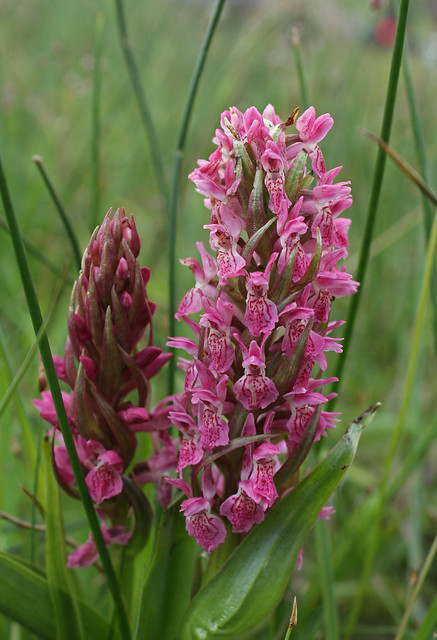
As well the inscect diversity the unique habitat of the Fen is home to lots of beautiful plants and flowers, including this common spotted orchid. This orchid is indeed common and can be found in fens, marshes and other wetlands all over England, but is rare in Scotland. Common, or not, I think all orchids are spectacular flowers and it was really good to see them in such numbers on the Fen.

Common spotted orchid – Dactylorhiza fuchsi

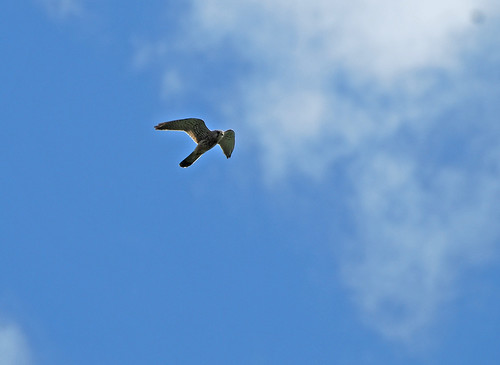
Whilst I was busying myself trying to get photogrpahs of the dragons and orchids a kestrel (Falco tinnunculus, Dansk: tårnfalk) was busy overhead. But even better than that a hobby (Falco subbuteo, Dansk: lærkefalk) was on the hunt for dragonflies and small birds.

The hobby is a small falcon which can be seen in these parts in the summer and hunts low over farmland and reedbeds at phenomenal speed. It’s one of very few predators that can hunt swallows and swifts in flight. This one was doing exactly that and in the distance, a few hundred metres away were at least another two. So I guess it was a family and the chicks had recently fledged and the adults were showing them the ropes. So I whiled away a good half an hour watching their breathtaking aerobatic exploits!


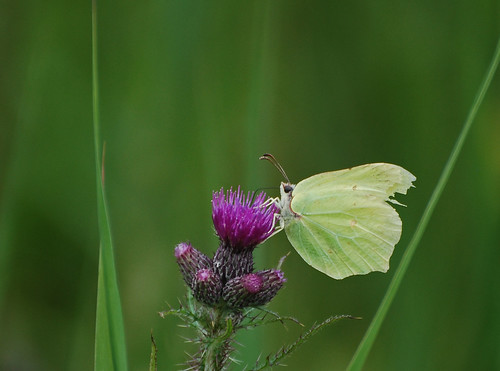
Brimstone butterfly sipping nectar from a thistle flower

I did volutary work at Wicken for 3 years or so back around the turn of the Millenium. It was incredibly rewarding and a good opportunity for a lab-based sedentary person such as myself to get outside and do some donkey work under the sky. One of the projects I worked on back then was scrub clearance to create an area suitable for butterflies to breed. I went and had a look at it on this walk for the first time since I helped to create it and it was very different. The scrub we cleared had been replaced by less scrubby, more proper woodland, trees, and there was small open glades with grasses and wild flowers. Whilst I was in there I flushed a leveret, which is about the closest I’ve ever been to a wild hare, it had been sitting tight but made a run for it when I got just a tad too close – about 5m!

So I didn’t manage a picture of the hare but I did manage a shot of the brimstone butterfly above (Gonepteryx rhamni), which I thought was absolutely lovely, sitting on the purple flower and framed by the two grass stems. It was terribly obliging and let me move all round it to get the best angle for a portrait. So this is about the best shot and one I’m very pleased with. I hope you like it too!

The magnificent marsh harrier

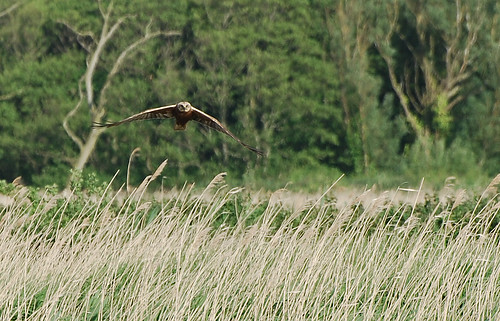
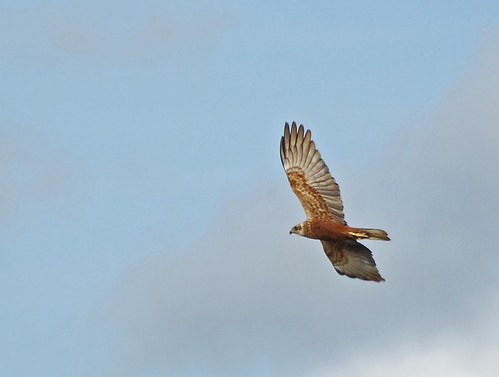
During a day spent at RSPB Titchwell on the north Norfolk coast in June the bird sightings were many and varied but one of the undoubted highlights for me was a marsh harrier which made regular appearances throughout the day.


Here’s looking at you…
A marsh harrier (Circus aeruginosus, Dansk – rørhøg) doing as the name suggest – harrying the marshes

The marsh harrier is one of our least numerous birds with around 400 females in the UK. According to the British trust for Ornithology it almost became extinct in the UK but has made a small recovery. It lives and breeds in reedbeds but during it’s recovery it has learnt to frequent farmland too. With the destruction of its normal habitat that adaptation may prove to be its saviour.

Marsh harriers hunt small mammals and birds and can be seen gliding over marshland and reedbeds with their wings in a characteristic shallow ‘V’ shape. It is restricted to East Anglia in the UK and its conservation status is Amber due to the declines seen in the past.

Despite its amber staus in the UK it is a species of least concern in the rest of Europe, which is good news. Hopefully a few more will find their way here to swell the UK population. They can mostly be seen here in nature reserves and the small number of locations where reedbeds and wetlands have not been drained.

One of the best reserves for harriers is Wicken Fen lying between Cambridge and Ely, and this is the only place where I’ve seen marsh harriers and hen harriers in the air at the same time. Wicken is owned by the National Trust and has a hundred year expansion plan which involves buying up the surrounding farmland as the soils becomes progressively downgraded and ultimately exhausted. So in around 100 years time it should be an enormous area of fen and home to large numbers of rare birds such as the harriers. So they may not be so rare then. Fingers crossed!

At long last

After a summer of fixing and painting and holidaying I can now sit down and devote the time to pick up where I left off with blog posting. I’ve collected lots of photographs and I’m about 20 posts behind, so here goes…

Since I acquired my new camera earlier on in the summer I’ve been crawling around in the undergrowth taking pictures of wild flowers and here are a few of them.

Wimpole Hall Farm is a stately home to the west of Cambridge which is owned by the National Trust and is set in extensive park and farmland. A stroll round the park there earlier in the summer was as rewarding as ever with a buzzard and a couple of great spotted woodpeckers putting in appearances, but I didn’t have my zoom lens with me so I was restricted to photographing things which were close by and didn’t move too quickly.

Growing in the shade of a line of trees were bugle flowers…


Bugle – Ajuga reptans

Bugle is related to self heal (Prunella vulgaris), they are both members of the family Lamiaceae and both have medicinal properties.

According to Nicholas Culpeper, the 17th century English botanist and renowned herbalist:

Self-Heal whereby when you are hurt, you may heal yourself, it is an especial herb for inward or outward wounds. Take it inwardly in syrups for inward wounds, outwardly in unguents and plasters for outward. As Self-Heal is like Bugle in form, so also in the qualities and virtues, serving for all purposes, whereunto Bugle is applied with good success either inwardly or outwardly, for inward wounds or ulcers in the body, for bruises or falls and hurts. If it be combined with Bugle, Sanicle and other like wound herbs, it will be more effectual to wash and inject into ulcers in the parts outwardly…. It is an especial remedy for all green wounds to close the lips of them and to keep the place from further inconveniences. The juice used with oil of roses to annoint the temples and forehead is very effectual to remove the headache, and the same mixed with honey of roses cleaneth and healeth ulcers in the mouth and throat.’

I’m not sure what Culpeper means by ‘green wounds‘ but it makes me glad I live in the penicillin age. Indeed he died of tuberculosis at the tender age of 37. No herbs could cure that.


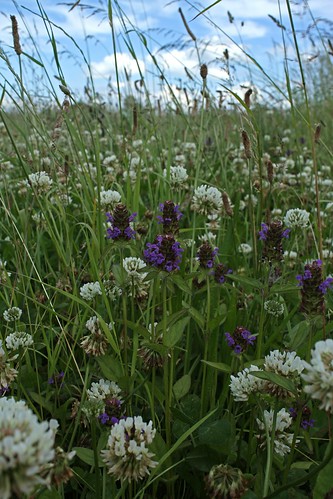
Purple self-heal

This picture is an attempt to give a feel for what an English meadow looks like in summer, two of my favourite flowers – self-heal and white clover (Trifolium repens) set in the long grass against a blue ‘Simpsons sky‘.

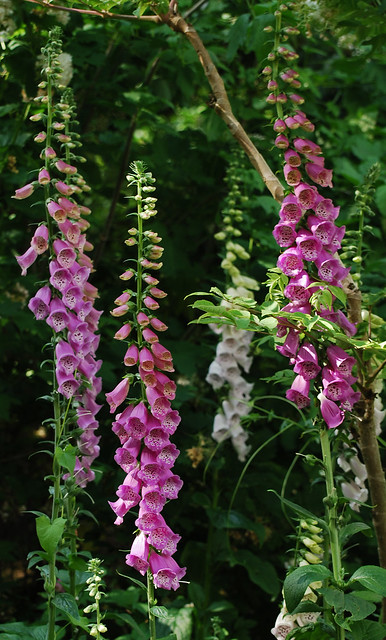
Another name for bugle is ‘carpenters herb’ due to its ability to stem bleeding, although it appears it does this not by catalysing the clotting process but by lowering blood pressure and heart rate in a similar way to digitalis, the active pharmaceutical compound which gives foxgloves their toxicity:

Foxgloves, Digitalis purpurea, growing next to the path to the cafe at Wimpole

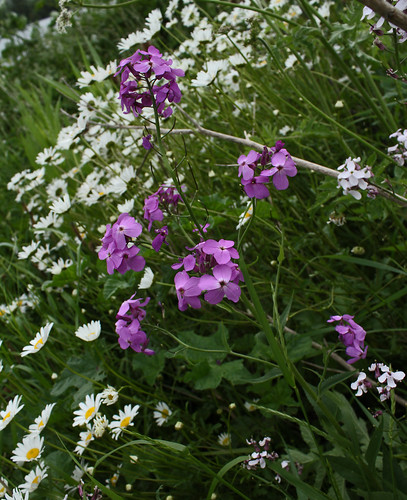
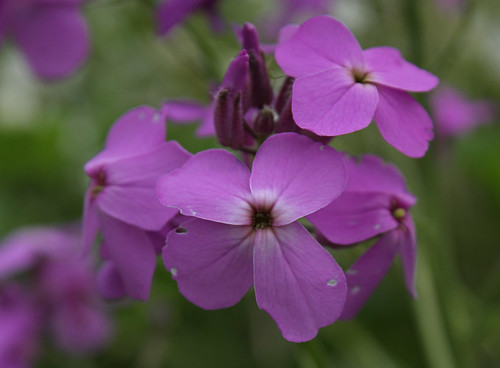
On another foray into the countryside in June, this time to RSPB Fen Drayton, I was specifically looking for oxeye daisy and in amongst the daisies were these lovely dames violets (Hesperis matronalis). Dames violet originates in the Mediterranean but has colonised the UK after escaping from gardens. It has been used as an ‘antiscorbutic’, i.e. to treat scurvy.

Oxeye daisy (Leucanthemum vulgare) and dames violet growing slongside the Cambridge Guided Busway at RSPB Fen Drayton
Dames violet flowers

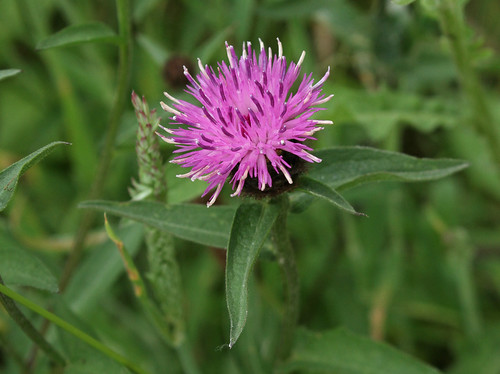
Also growing alongside the busway were lesser knapweed (Centaurea nigra), which I think is rather lovely and not ‘lesser‘ or a ‘weed‘! I’d be happy for it to grow in my garden…

Lesser knapweed – I couldn’t find any reference to medicinal or herbal uses of lesser knapweed

…and ragged robin (Lychnis flos-cuculi):

I couldn’t find any reference to medicinal uses of ragged robin either but it’s also rather beautiful and small clusters of it punctuated tracts of grass mixed with other flowers.

There’ll be more flowers to come, and butterflies… birds… mammals etc. etc.

The iconic avocet

‘Iconic’ is a word that is overused, but in the case of the avocet it is entirely appropriate. Those of you from the UK – and possibly some of you from further afield – may know that in the UK the avocet is the emblem of the Royal Society for the Protection of Birds – the RSPB.

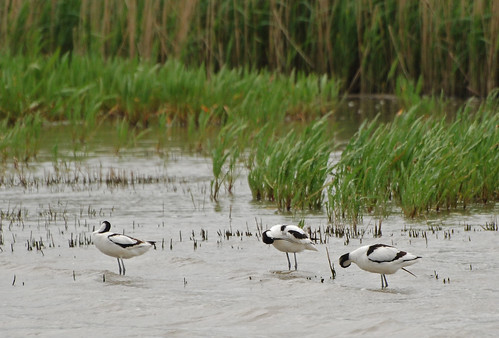
A trio of avocet feeding on the water at RSPB Titchwell as a pair of swift hunt winged insects just overhead

The avocet (Recurvirostra avosetta, Dansk: klyde) had all but died out – in fact it may have totally died out – in the UK in the 19th century, but in the 1940’s a breeding population from the European mainland re-established itself when the coastal mudflats along the east coast of England were flooded as a defensive measure against a possible German invasion. So there you go, just occasionally something good can result from a war!

Avocet can be seen breeding on the east coast of England in the summer, and they are resident in the southwest during the winter, they are also winter and passage visitors. It is therefore an early symbol of conservation success and it was originally adopted by the RSPB in 1955 as the their symbol to adorn the new RSPB tie. Its continued success led it to be adopted as the RSPB logo in 1970. They are beautiful birds and they can be pretty feisty when it comes to guarding their territory.

The long upturned beak of the avocet, from which it gets it’s generic name, ‘Recurvirostra’, along with its black and white plumage makes it completely unmistakable. I have seen avocet before but not in such numbers and not so close and it was only on this trip that I realised they have very distinctive pale blue legs. So all in all it’s a very striking bird.

The upturned bill has a functional aspect too. It is the upper mandible which is curved and the avocet use it to stir up the sediment by sweeping it across the surface from side to side dislodging crustaceans, insects and worms which they detect by touch. The one below had captured a meal and the dark shadow just in front of its beak is a cloud of sediment churned up by the scything beak.

As with just about every species on the planet, including humans, the main threat to the avocet comes from inconsiderate human activity including reclamation of wetlands, depletion of water levels in rivers, infrastructure development and pollution by polychlorinated biphenyls (PCB’s), insecticides and heavy metals. Despite that, the global population is estimated to be between 210-460,000 individuals. It’s unclear if those numbers are stable, but as some populations decline others are increasing. So hopefully they’re OK for the time being.

I’ve been up to my eyeballs in non-blogging stuff in the last month so I’ve been struggling to keep up to date with all your blogs. The pace is unlikely to let up before September but I’ll try to visit as many as I can in the meantime. I will be back!