Category Archives: Walks around Cambridge and Histon

Wildlife sightings in Cambridge

Anachronous insecta

A few posts ago I showed you some of the spider I encountered in the short spell of good weather we had in the late summer and early autumn. I think maybe some species were making hay whilst the sun was shining because there were also a lot of hoverflies around at that time too. And here are  three of the species I found. It’s the wrong time of year to be posting about hoverflies, hence the title of the post, but I haven’t been able to get out with my camera so I reckon a hoverfly post is better than none at all! Identifying hoverflies can be tricky because there are species which look very similar to each other and I’m no expert, so I hope my identifications are accurate but if any of you spot an error please let me know.

Eristalis tenax

Eristalis tenax is a type of hoverfly known as a ‘drone fly’, so called because they mimic honey bee drones. They are common throughout the UK and the females, which mate before overwintering and laying their eggs in the springtime, can be seen in any month of the year because they emerge from hibernation to feed when the weather warms up sufficiently. The larvae of this species are called ‘rat-tailed maggots’ and feed in sewage outflows and rotting carcasses – the more putrid it is the more they seem to like it! They are aquatic and the reason they are called ‘rat-tailed’ is that they have an extendable tube which can protrude up to around 5cm which they poke out of the water and use to breath air.

Tapered drone fly – Eristalis pertinax

The tapered drone fly is so called because the male has a tapered abdomen which is visible on this individual. It is otherwise a similar species to E. tenax and it’s larvae are also known as rat-tailed maggots. Apart from the taper it’s also distinguishable from E. tenax by it front legs which are pale.

My favourite hoverfly I found this year is this one:

The footballer – Helophilus pendulus

It’s called ‘the footballer’ because it’s colours are likened to a football shirt. It’s scientific name means ‘dangling sun lover’. The larvae of this species feed on detritus and have been found in wet manure, drains and in very wet sawdust. It’s widespread throughout the UK and can be seen throughout the summer in bright sunny locations in hedgerows. Despite the unsavoury but indispensable habits of the larvae of all of these species they transform into the most handsome adults.

I haven’t done a dedicated Christmas post this year so here’s wishing you all a very merry Christmas and a happy and healthy 2013!

The Four Spot and the Strawberry

Regular readers of The Naturephile may have noticed numerous references to the loopy weather we have experienced in this part of the world this year, in particular the wetness of the spring and the subsequent brevity of the summer. And you may also have cottoned on to the fact that I have a spider fascination.

Despite the unusual summer weather conditions, later on in the summer and into the autumn I found lots of spiders including two species which I haven’t seen here before. Common garden spider webs (Araneus diadematus) adorned every surface in my garden in the autumn and this particularly nice example was strung between two hawksbeard stems in the local meadow:

Garden spider web bejewelled with dew

One of the most intricate webs I found was that of the labyrinth orb weaver (Agelena labyrinthica), they’re amazing constructions and most of them aren’t very visible until there’s a cold morning and the webs are laden with dew, then it’s possible to see that they adorn all the hedgrows and undergrowth.

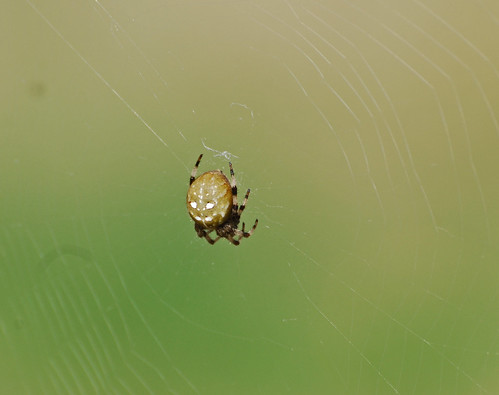
The two species I found which I hadn’t seen before were the four spot orb weaver (Araneus quadratus) and the strawberry spider (Araneus alsine, aka orange wheel weaving spider).

The green body of the four spot orb weaver

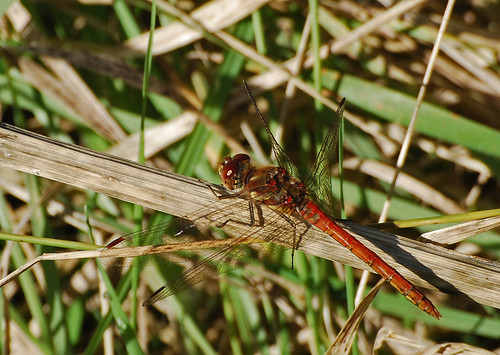
Both my initial encounters with these little beauties were a little unnerving because I was unaware that spiders with these colours were lurking in my local undergrowth. The four spot flew past me at high speed when I snagged it’s trip line when I was trying to get in position to photograph a male common darter dragonfly:

https://i0.wp.com/farm9.staticflickr.com/8066/8155314987_f0c0087b41.jpgA male common darter dragon – non-arachnid interloper in this post

And a strawberry spider dropped down a few centimetres from my eyes when I was unlocking my gate! All I saw was a bright red bulbous abdomen so my first thought was “Bloody hell, it’s a black widow!”. So I ran to get my camera before it disappeared. Both of these were females and around the same size as a regular garden spider, but as you can see the colours were very different.

The bright red body of the aptly named strawberry spider

Another spider I found in my garden this year was the missing sector spider (Zygiella x-notata). I was intrigued by the name of the missing sector spider and it transpires it comes from the design of the web. If the planar, circular web is a clockface, the part between 11 and 12 o’clock has no spiral threads, so is effectively a ‘missing sector’.

The missing sector spider making a meal out of a cranefly

This particular individual was busy securing a cranefly and it seemed to take great pains to ensure the fly was maximally envenomated. It spent a couple of minutes running around the struggling fly, inflicting multiple bites before wrapping it up in a cocoon of silk and carrying it off to be hung from the window frame and consumed at leisure.

Flowers and frogs at Milton Country Park

Not long after my lunchtime spin around Cambridge Science Park I paid a visit to Milton Country Park which is about a mile from where I work, as the crow flies. Wild flowers were everywhere, the sun was out, and there was lots to see including a family of treecreepers (Certhia familiaris, Dansk: træløber). Prior to this I’ve only seen treecreepers individually but this time a whole family of at least five birds was flitting around a tree trunk before flying to an adjacent tree. Treecreepers are fun to watch, they begin hunting low down on a tree trunk and climb up it in a spiral pattern to ensure they don’t miss any insects lurking in the crevices of the bark, they are very aptly named. I didn’t have my long lens with me so I couldn’t get any photographs of the treecreepers, but I did capture some gorgeous flowers on this outing:


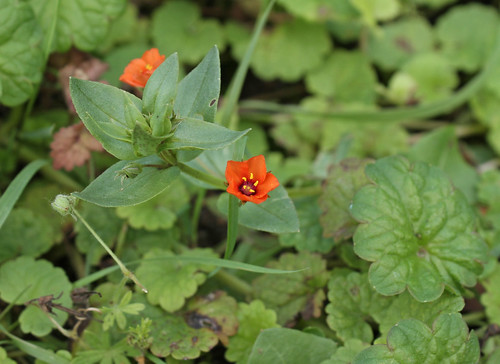
Scarlet pimpernel flowers

I’ve never noticed scarlet pimpernel (Anagallis arvensis) growing around Cambridge before but I’ll be happy if it spreads. The flowers, which were less than a centimetre across, open in the morning and close mid afternoon and were shooting from amongst the short grass. It’s common in England but less so in Scotland.

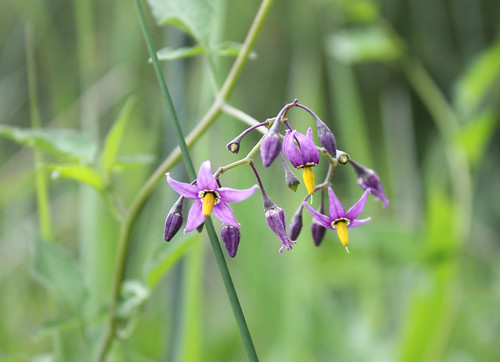
The purple and yellow flowers of the woody nightshade flowers (Solanum dulcamara) were illuminating the undergrowth:


Woody nightshade

The flowers of the woody nightshade are beautiful and eventually give way to berries which are green before they ripen into a lovely deep red colour. As the colour may suggest they are toxic, the main ingredient being an alkaloid called ‘solanine‘ (an alkaloid is a plant-derived nitrogen containing compound which can exert a physiological effect on humans. More infamous members of this category include opium, cocaine and marijuana).

The glycoalkaloid ‘solanine’ found in members of the Solanaceae family including the nightshades and potatoes

Solanine is also the active ingredient in deadly nightshade, Atropa belladonna, and is the compound which makes green potatoes toxic! The green pigmentation is due to chlorophyll which is produced when potato tubers become exposed to light and is not therefore toxic, but it is produced along with solanine. Solanine isn’t degraded by cooking so eating lots of green spuds is a bad idea.

As you might expect, solanine has physiological properties which make it a useful compound. Ancient Greeks would take it before consulting the priestess Pythia, the Oracle of Delphi, to utillise its halucinogenic properties. And Italian ladies used the sap of the deadly nightshade in days of yore to dilate their pupils as they believed this made them more beautiful. Hence the specific name of the deadly nightshade ‘belladonna‘ (‘beautiful lady‘ in Italian). It was also used by torturers as a medieval truth drug to extract confessions. In more recent and enlightened times therapeutic doses have been used to treat a range of conditions incuding inflammatory eye diseases such as uveitis, and it has also shown inhibitory properties when applied to melanoma (skin cancer) cells. It’s amazing stuff!


Common frog – Rana temporaria

A frog hopped across the path in front of me and hunkered down in the undergrowth to avoid being spotted and/or predated, so I got up close to capture some portraits. I was within 8-12 inches and it didn’t flinch, so I took half a dozen pictures before it hopped off deeper into the bush.

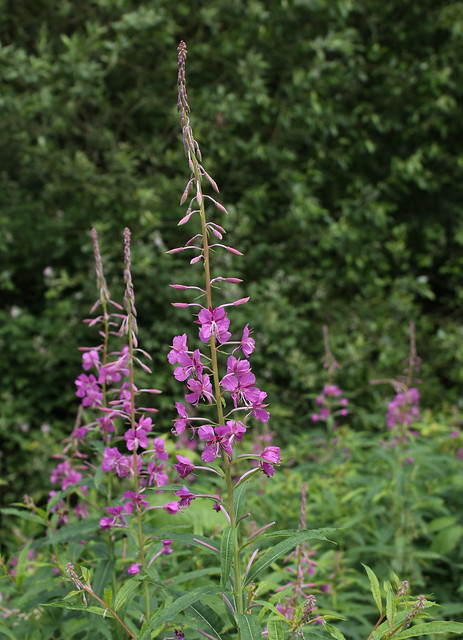
Rosebay willowherb – Chamerion angustifolium

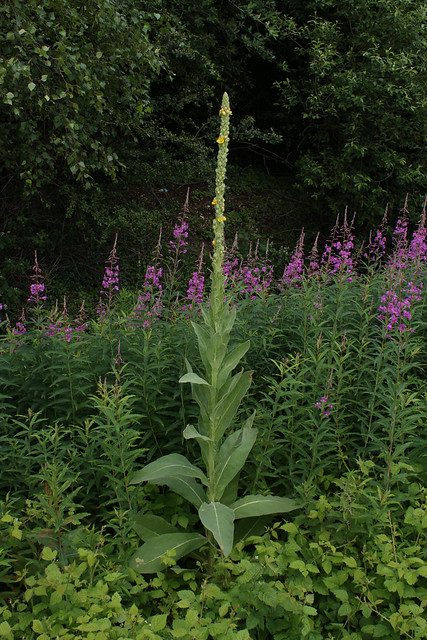
At the edge of a lake a stand of rosebay willowherb was just coming into flower. The flower spikes and leaves of willowherb have been used to treat grumbly bowels and apparently it makes a good mouthwash too. The willowherb was interspersed with spears of aarons rod:

Aarons rod – Verbascum thapsus

This aarons rod was a very fresh example and was only just coming into flower but when in full bloom the spear is full of yellow flowers from the leaves to the apex. They have been lining my route to work since June and there are still some hardy individuals lingering on into the autumn. Aarons rod has been used medicinally as an expectorant to treat coughs and for numerous other conditions including colic, eczema, boils and warts. It’s a very versatile plant.

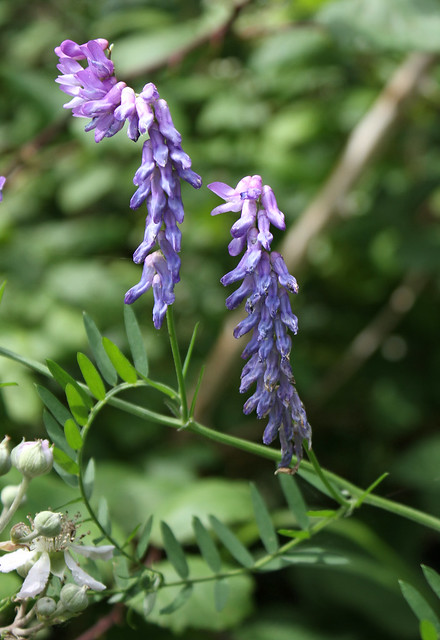
Tufted vetch – Vicia cracca

Many shrubs and bushes were festooned with the flowers of tufted vetch which is a European native and has also been introduced to the Americas where it is a weed. The flower heads were several inches long and a rather fetching blue/purple colour. It grows over other plants by shooting out tendrils which grasp stems and provide an anchor for further encroachment. It can grow up to 2m tall and can strangle smaller plants. But the flowers are lovely

Flowers and foliage

The greatest thing about a sodden Springtime was the abundance of bloom that resulted. So I spent alot of time this year recording the wild flowers and foliage that flourished in the wake of the deluge.

Some years ago I attended a lecture in which the speaker said that due to modern farming methods which involve the use of mechanisation and toxic chemicals to create a sterile monoculture,  verges and drainage ditches have now become an invaluable seed bank where many of our wild flowers can still prevail. Without these unpolluted conduits criss-crossing the countryside the flora seeking refuge there would be even more threatened. This idea seems to be born out in my local area as the drainage ditches are indeed full of wild flowers year on year.

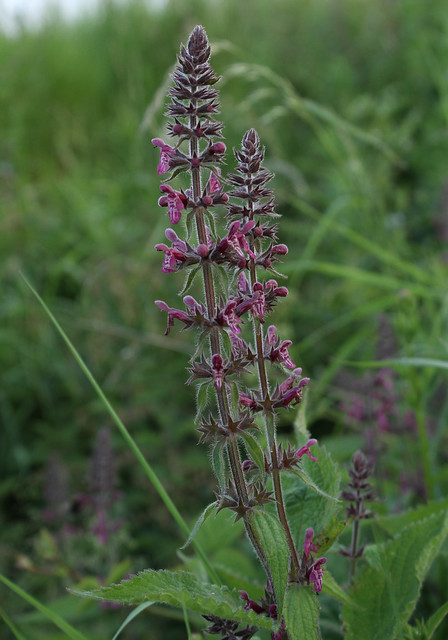
Hedge woundwort – Stachys sylvatica

Hedge woundwort has lined the field margins and ditches in greater abundance this year than in previous years, its delicate purple flowerheads, growing up to around a metre tall, poking  over the top of the ditches. It’s a lovely flower and it gets its name from its preference for hedgerows and because the crushed leaves were traditionally applied to wounds to stem bleeding.

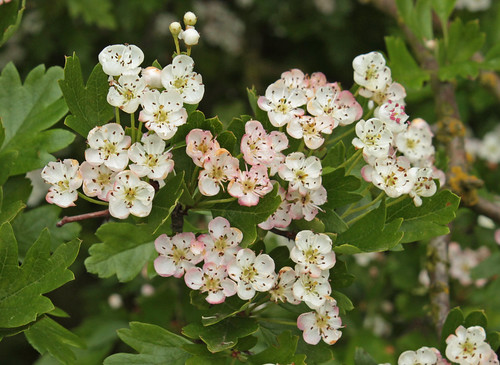
Hawthorn flowers lined all the hedgerows ealier in the year and heralded a glut of berries which are currently providing rich pickings for the birds, and will continue to do so well into the colder months.

Hawthorn blossom – Crataegus monogyna

The October 2012 edition of British Trust for Ornithology’s BirdTrack reveals that the migrant redwings (Turdus iliacus, Dansk: vindrossel) should be arriving here from Scandinavia any day now and will be followed closely by the fieldfare (Turdus pilaris, Dansk: sjagger), and the hedges fulls of haws will help to replenish their fat reserves after the migration across the North Sea. I think I saw my first redwing over Histon on Sunday, they have a characteristically undulating flight during which they fold back their wings and form a teardrop shape, which is what my sighting today was doing. So the fieldfare should be along soon too, according to the BTO.


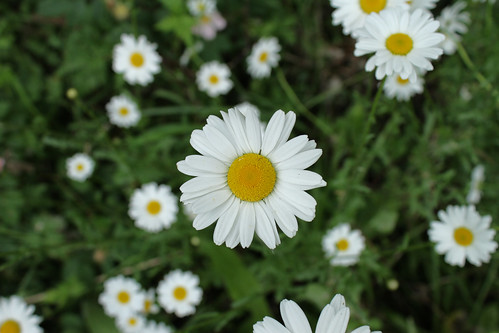
Oxeye daisy – Leucanthemum vulgare

Oxeye daisies are my Mother’s favourite flower and she has been pestering me to publish a picture of one. This year they lined my cycle route to work alongside the Cambridge Guided Busway in their thousands so I’m finally able to complete my commission. So, Ma, this one’s yours!

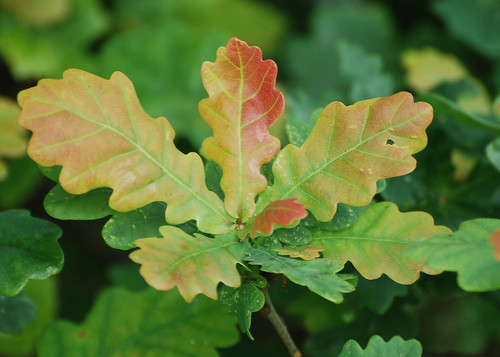
The wild flowers have been spectacular but the leaves and some of the trees have also been contributing their own splash of colour to the countryside such as the cluster of oak leaves below.

(Dramatic interlude: Wow, the first goldfinches (Carduelis carduelis Dansk: stillits) arrived on my niger seed feeder a couple of days ago after being absent through the summer and until a minute ago there was an adult and a late fledgling feeding there. I just caught a blurr out the corner of my eye as I was writing this post and looked up just in time to see a sparrowhawk (Accipiter nisus, Dansk: Spurvehøg) swoop through a gap in the buddleia bush next to the feeders, the goldfinches fled but it all happened too fast to see if the hawk was successful. It was all over in less than a second!)

Back to the oak leaves though, they were lovely colours, almost autumnal. Oak trees are amazing organisms, in fact they are substantially more than organisms, they are ecosystems in their own right. They live to be several centuries old and when coppiced or pollarded (pollarding is pruning back a tree to the top of the trunk to promote new branch growth, compared to coppicing which is pruning it back to ground level), but there are numerous examples of oaks living for 1000-1500 years. And they become home to hundreds of other species of fungi, lichens, insects, birds and mammals.


Oak leaf cluster – Quercus robur – the English oak

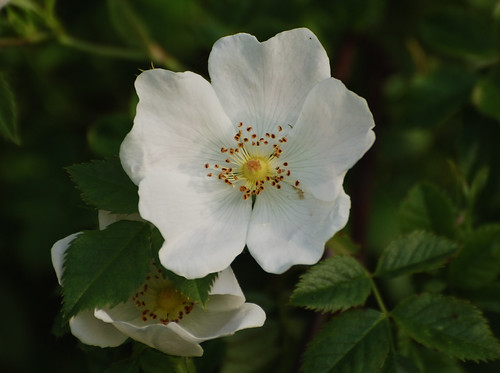
And right next to the oak was this gorgeous, delicate field rose. The field rose, Rosa arvensis, grows in hedges and has white to cream coloured flowers and lovely golden yellow anthers. It flowers later than the dog rose (Rosa canina) which has pink flowers and the leaves are smaller. Later in the autumn the flowers turn into bright red hips which provide food for birds as well as humans. When I was a kid we used to have rosehip syrup which was sweet and delicious and I’ve been toying with the idea of trying to make some. If I succeed in creating something pleasant I’ll post the recipe here.

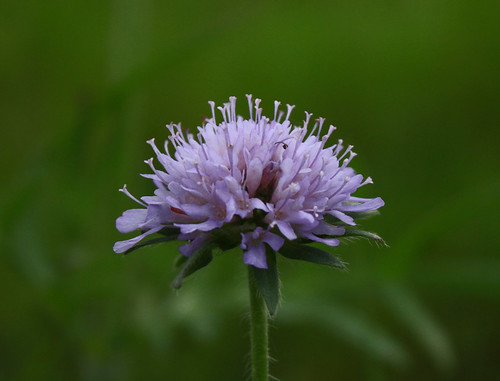
Without doubt my favourite wild flower is the field scabius (Knautia arvensis). I think they’re utterly beautiful and if I have a camera to hand I struggle to walk past one! Fortunately for me the field margins around here are replete with them so I’m rarely short of photographic opportunities.

The glorious flower of the field scabius

And from side on:

The hue of the flowers can vary from a pale pastel shade to quite dark purple. Each flower contains male stamens which can be seen protruding from this flower from between the female florets. The stamen consists of the filament (the stalk) and the anther (the pollen bearing part at the end of the filament). The stamens die back before the female florets mature in order to prevent self-fertilisation. Field scabius is named afer the German botanist Dr Knaut and has historically been used to treat skin ailments such as scabies and eczema.

Histon wildlife

I’ve been meandering around the country over the summer so my local flora and fauna have been a tad neglected here. So here are a few of my favourite photographs from Histon.

Wild flowers and grasses shot up to shoulder height in no time at all through the spring and into the summer and everywhere was lush and verdant, watered by the seemingly endless rain that started a few days after the hosepipe ban at the beginning of April, and carried on until early July. The rains were good for the greenery but not good for butterflies and other insects, so it was good to see the large skippers emerge at the end of June.


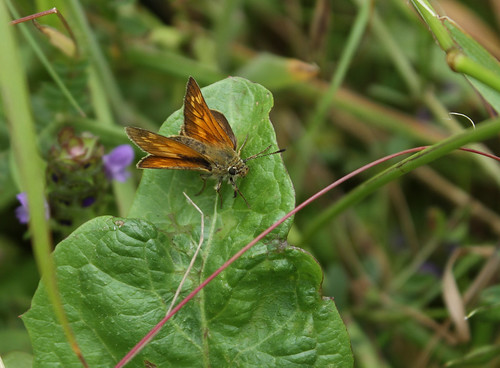
Large skipper  – Ochlodes faunus

The large skipper ususally emerges in June and July, so the earlier stages in its life cycle must be particularly well water-proofed to have survived the spring! The caterpillars feed on orchard grass (Dactylis glomerata) which is common in meadows and hedgerows, and the adults seek nectar from a range of flowers including birdsfoot trefoil, dandelion, yarrow and field scabius. All of these are common in my local fields which explains their annual presence around here.


Small skipper – Thymelicus sylvestris

Both the skippers here appear to be females, the genders are differentiated by the presence of ‘androconica‘ on the forewings of the males. These are lines of dark, specialised pheromone producing cells which appear to be absent on both these butterflies.


Field poppies – Papaver rhoeas

A journey through the countryside in July and August was a gorgeous sight this year due to the abundance of poppies. The red field poppy, also called the ‘Flanders poppy’ is, of course, the symbol of remembrance in the UK for the slain of the two World Wars. They seemed to be everywhere, and fields which would normally be plain green were a sea of red, and my local fields were no different. It transpired that this was also a consequence of the rains but not for the reason you may think. As well as watering the earth and creating good conditions for alot of plants the rain also washed away the herbicides used by the farmers to protect the monocultures we’re accustomed to seeing in the fields. Which shows how rapidly nature can regain lost territory when the opportunity arises.


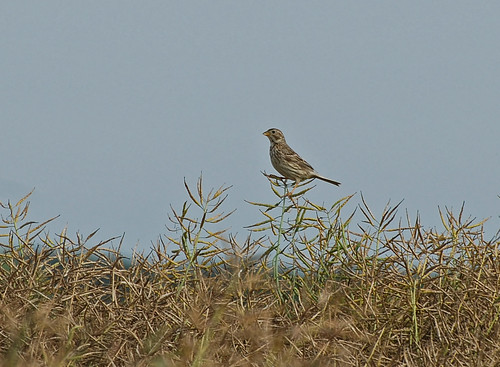
Corn bunting – Emberiza calandra

Another of my local fields was planted up with rape this year. I’ve previously disliked rape because it has a completely unnatural colour, and the smell is not too pleasant either. But since I’ve been getting close to it and seeing the variety of birdlife it supports I’m changing my mind. Not least because it plays host to corn bunting which are becoming increasingly uncommon due to loss of habitat. This rape field regularly had linnet, reed bunting and corn bunting feeding on the seedpods which are extremely rich in oil and therefore a good energy source for small songbirds.

Reed bunting male – Emberiza schoeniclus – perched on top of the mature rape plants resplendent with his black head and white collar

Skylark numbers have been dropping across the UK due to modern farming methods but I hope that my local patch is bucking the trend because year on year there always appear to be good numbers of them. The combined song of a multitude of skylarks as they slowly climb and then drop like a stone is one of natures wonders in my opinion, so it’s good to see them in the skies here.

Skylark – Alauda arvensis

Looking through my photographs for this year there has been alot to see but it seems it many species were scarce until July. Maybe that’s because the dreadful weather meant that I wasn’t looking quite so hard, but I think many natural phenomena were late this year due to climatic extremes. But many species eventually appeared so they are still out there. I’m hoping we now have a year of relatively normal weather from here on so the wildlife has a chance to recover.

At long last

After a summer of fixing and painting and holidaying I can now sit down and devote the time to pick up where I left off with blog posting. I’ve collected lots of photographs and I’m about 20 posts behind, so here goes…

Since I acquired my new camera earlier on in the summer I’ve been crawling around in the undergrowth taking pictures of wild flowers and here are a few of them.

Wimpole Hall Farm is a stately home to the west of Cambridge which is owned by the National Trust and is set in extensive park and farmland. A stroll round the park there earlier in the summer was as rewarding as ever with a buzzard and a couple of great spotted woodpeckers putting in appearances, but I didn’t have my zoom lens with me so I was restricted to photographing things which were close by and didn’t move too quickly.

Growing in the shade of a line of trees were bugle flowers…


Bugle – Ajuga reptans

Bugle is related to self heal (Prunella vulgaris), they are both members of the family Lamiaceae and both have medicinal properties.

According to Nicholas Culpeper, the 17th century English botanist and renowned herbalist:

Self-Heal whereby when you are hurt, you may heal yourself, it is an especial herb for inward or outward wounds. Take it inwardly in syrups for inward wounds, outwardly in unguents and plasters for outward. As Self-Heal is like Bugle in form, so also in the qualities and virtues, serving for all purposes, whereunto Bugle is applied with good success either inwardly or outwardly, for inward wounds or ulcers in the body, for bruises or falls and hurts. If it be combined with Bugle, Sanicle and other like wound herbs, it will be more effectual to wash and inject into ulcers in the parts outwardly…. It is an especial remedy for all green wounds to close the lips of them and to keep the place from further inconveniences. The juice used with oil of roses to annoint the temples and forehead is very effectual to remove the headache, and the same mixed with honey of roses cleaneth and healeth ulcers in the mouth and throat.’

I’m not sure what Culpeper means by ‘green wounds‘ but it makes me glad I live in the penicillin age. Indeed he died of tuberculosis at the tender age of 37. No herbs could cure that.


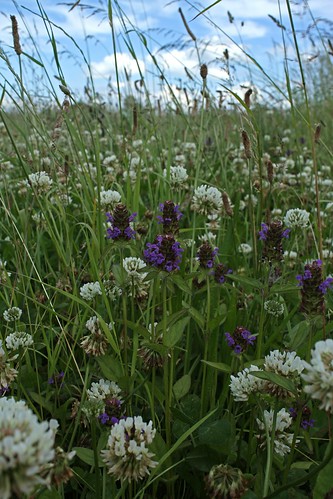
Purple self-heal

This picture is an attempt to give a feel for what an English meadow looks like in summer, two of my favourite flowers – self-heal and white clover (Trifolium repens) set in the long grass against a blue ‘Simpsons sky‘.

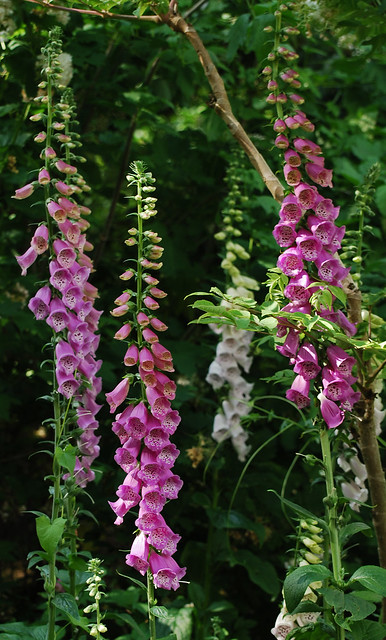
Another name for bugle is ‘carpenters herb’ due to its ability to stem bleeding, although it appears it does this not by catalysing the clotting process but by lowering blood pressure and heart rate in a similar way to digitalis, the active pharmaceutical compound which gives foxgloves their toxicity:

Foxgloves, Digitalis purpurea, growing next to the path to the cafe at Wimpole

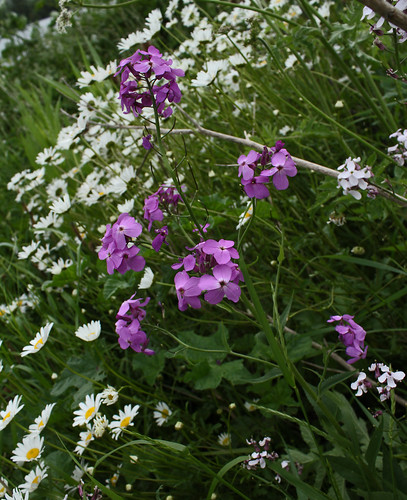
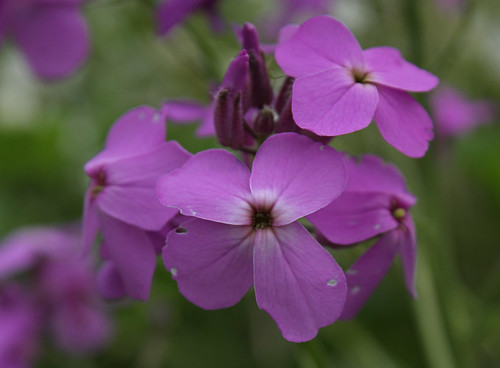
On another foray into the countryside in June, this time to RSPB Fen Drayton, I was specifically looking for oxeye daisy and in amongst the daisies were these lovely dames violets (Hesperis matronalis). Dames violet originates in the Mediterranean but has colonised the UK after escaping from gardens. It has been used as an ‘antiscorbutic’, i.e. to treat scurvy.

Oxeye daisy (Leucanthemum vulgare) and dames violet growing slongside the Cambridge Guided Busway at RSPB Fen Drayton
Dames violet flowers

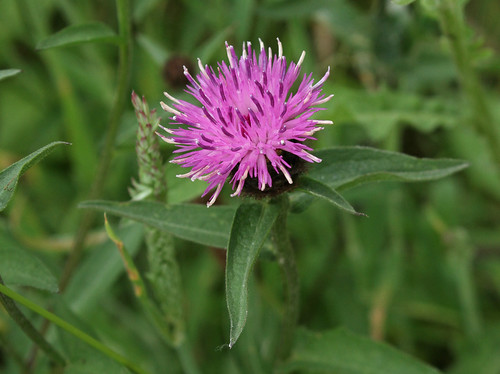
Also growing alongside the busway were lesser knapweed (Centaurea nigra), which I think is rather lovely and not ‘lesser‘ or a ‘weed‘! I’d be happy for it to grow in my garden…

Lesser knapweed – I couldn’t find any reference to medicinal or herbal uses of lesser knapweed

…and ragged robin (Lychnis flos-cuculi):

I couldn’t find any reference to medicinal uses of ragged robin either but it’s also rather beautiful and small clusters of it punctuated tracts of grass mixed with other flowers.

There’ll be more flowers to come, and butterflies… birds… mammals etc. etc.

More wild flowers

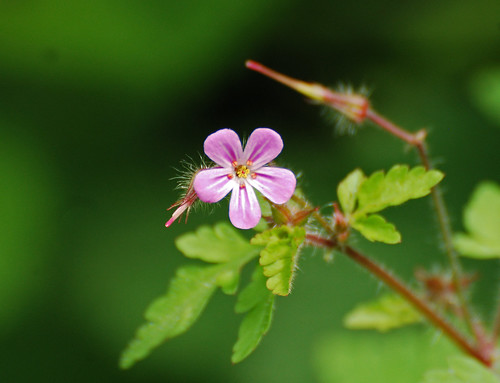
I keep seeing herb robert lining my route to work and in the hedgerows along my regular footpaths. It’s a member of the Geranium genus and is found in hedgerows, woods and on disturbed ground


Herb robert – Geranium robertianum

I’m a tad confused by this plant because it has all the normal attributes of herb robert; the pink flowers, leaf shape, hairy buds and stems, but this one has the same bud shape as a cranesbill and a quick web search hasn’t yielded another image of herb robert with seed pods shaped like this. (So if I’ve made a taxonomic error please let me know!). Herb robert smells quite unpleasant and has been used as an insect repellant.


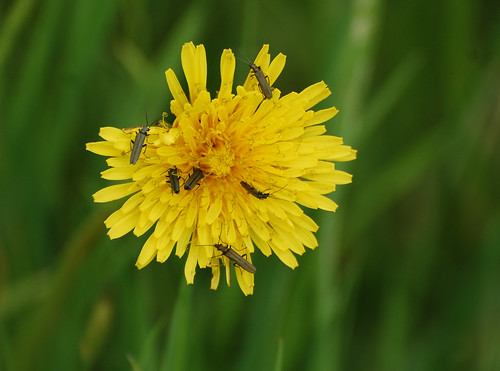
Dandelion – Taraxacum officinale

These pictures were taken a few weeks ago and at that time they were loaded with insect life, this danselion has six flower beetles (Oedemera nobilis) foraging on it, and it wasn’t at all unusual to see flowers in the meadow with this many bugs and more feeding on them.


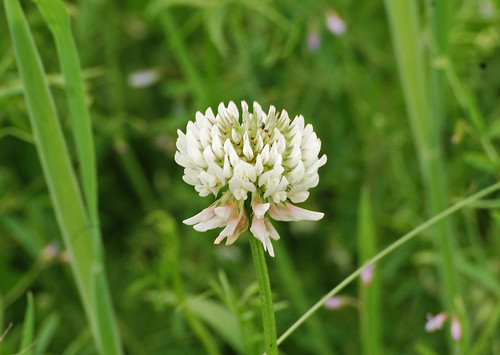
White clover – Trifolium repens

Clover grows abundantly in grassland. It is pollinated primarily by bumble bees but as bumble bee numbers decline it has become a major source of nectar for honey bees, therefore beekeepers became important people for cattle farmers who grow clover as a fodder crop for their livestock.

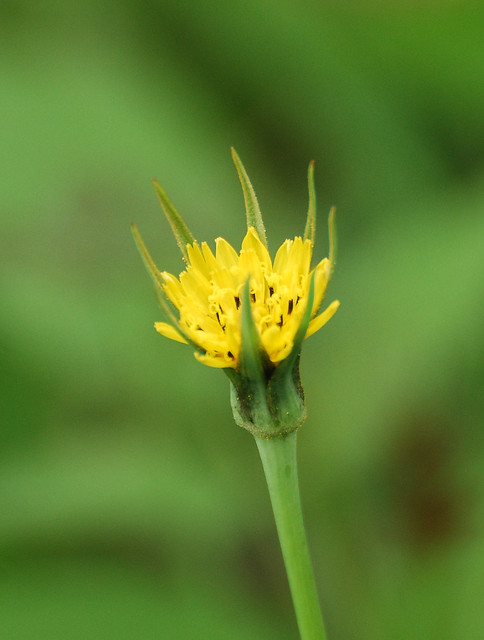
Jack go to bed at noon – Tragopogon pratensis

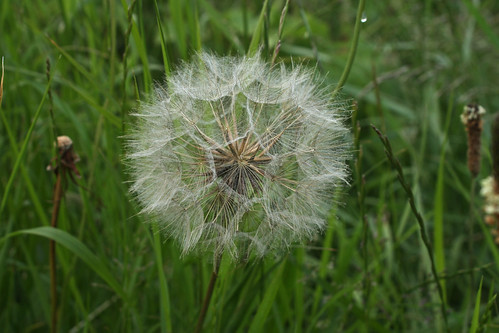
The lovely yellow star of ‘jack go to bed at noon’ is so named because the flowers open early in the morning and close up again at noon. It is also known as ‘goats beard’ and is a native annual in the UK. It has a milky latex sap which, according to Wiki, children from the countryside in Armenia make bubble gum from. It has a wonderful seedhead which is much bigger than than the dandelion and has fewer larger seeds.


Jack go to bed at noon seedhead

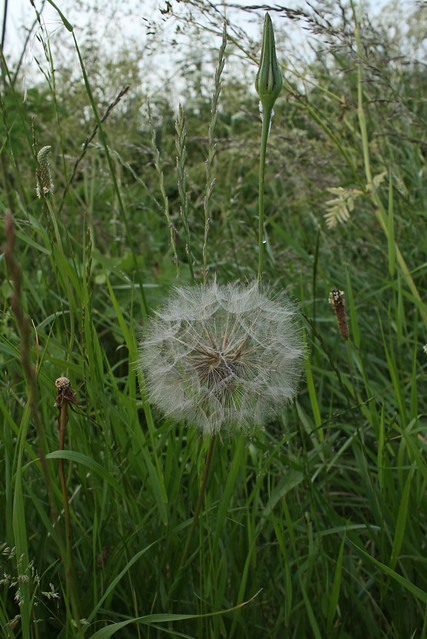
As with alot of other wild flowers, they are rampant just now because of the warm wet weather and are numerous in fallow fields and hedgerows.

A jack go to bed at noon seedhead with a closed flower behind it at the edge of a field

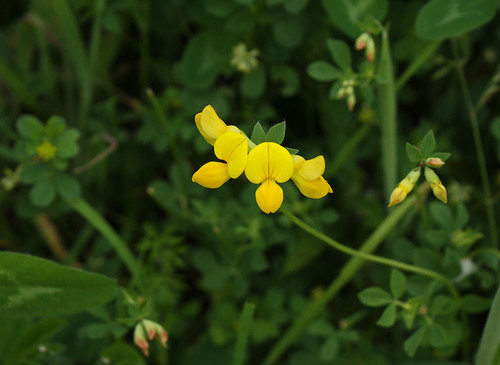
Also common around Cambridge right now is the birdsfoot trefoil. The flowers here are a gorgeous golden yellow but can also have red or orange which gives them their other common name: bacon and eggs.


Birdsfoot trefoil – Lotus corniculatus

Birdfoot trefoil is a legume which means it can actively fix nitrogen from the atmosphere. It can do this with the help of symbiotic bacteria which colonise root nodules and convert inert atmospheric nitrogen into ammonia, a form of nitrogen which plants can use. This ability makes the legumes a natural fertiliser because nitrogen is required by all plants, but unless they can fix it in this way they are reliant on alternative sources in the soil. Poor soil can be boosted by the application of other fertilisers such as good old fashioned manure, or more recently ‘NPK’ (Nitrogen/Phosphorus/Potassium, ‘K‘ being the chemical symbol for potassium). Or, when cycles of crop rotation are used, one of the crops used may be another legume, such as peas, which can help to replenish nitrogen levels in the soil naturally.

Wee brown birdies

In the brief intervals between howling gales and torrential rain in these parts we’ve had the occasional glimpse of sunshine, and in those moments I’ve managed to grab a few pictures of some small birds; those little ones that look small and brown at a distance and can defy attempts at identification.

I’ve been a little concerned at the small numbers of certain migrants which have returned to my local patch, in particular blackcap, yellow wagtail and whitethroat.


Common whitethroat – Sylvia communis, one of the few to return to the Meadow in 2012

Last year at this time I would expect to see 5-10 whitethroat during a circumnavigation of the Meadow but this year I hadn’t seen any until I spotted this one and his mate, last week, bringing food to the nest. I also found another pair which I think are nesting in a tree on the other side of the track to this pair, but I’m yet to confirm that. And I still haven’t seen a single blackcap or yellow wagtail in 2012. Hopefully they made a successful migration back here and are just elsewhere, but I do miss ’em, they liven up my walks with the dog.


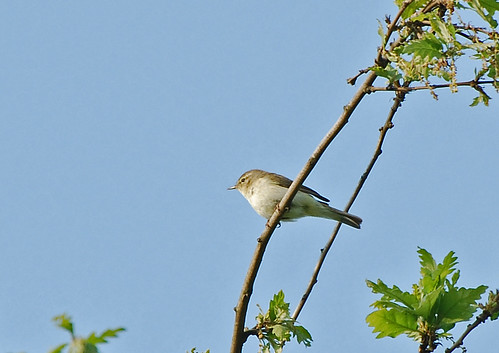
Chiffchaff – Phylloscopus collybita

A wandering warbler which has returned in numbers is the chiffchaff, and I hear them singing almost everywhere I go. This one was in a field here in Histon, and let me get close enough to take this picture, which is my favourite chiffchaff shot.

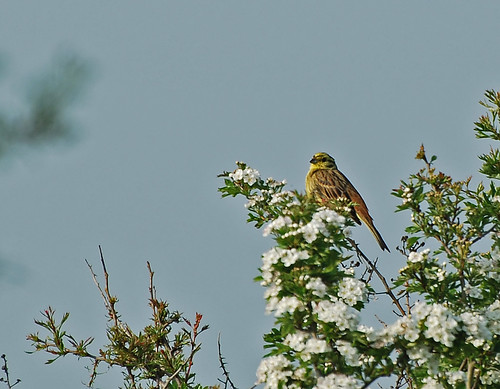
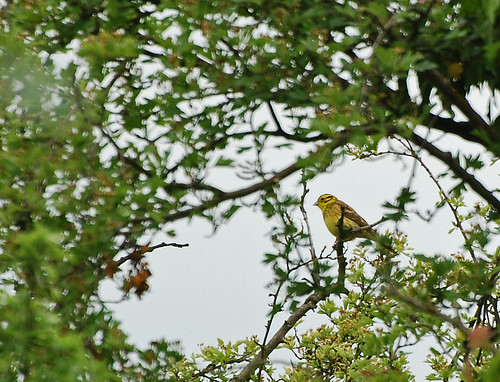
The rest of the birds in this posts are not migrants in the UK and I see them all year round. The yellowhammer is a bunting that has a very distinctive song, described in numerous field guides as ‘a-little-bit-of-bread-with-no-cheese‘. Which is a very good example of the pitfalls of trying to over-interpret birdsong! I was with my daughter when we saw (and heard) this one calling, and after telling her about the ‘little-bit-of-bread…’ thing we spent the rest of the walk thinking up alternatives. My favourite was ‘I’m-going-down-the-pub-for-a-beer‘.

Yellowhammers – Emberiza citrinella

I was particularly pleased with the second yellowhammer picture because I like the out-of-focus foliage surrounding the focussed bird. I recently upgraded my DSLR to one with more sophisticated focussing capabilities than my ageing Nikon D40x, which all my pictures up to now have been taken with. And one of the main reasons was so I could focus more quickly on small birds in bushes, such as this one, where the foliage was moving around in the breeze causing the camera to struggle to find focus. This picture was taken with my D40x and I was surprised by how well it turned out, so maybe I’d have delayed upgrading if I’d captured this image first!


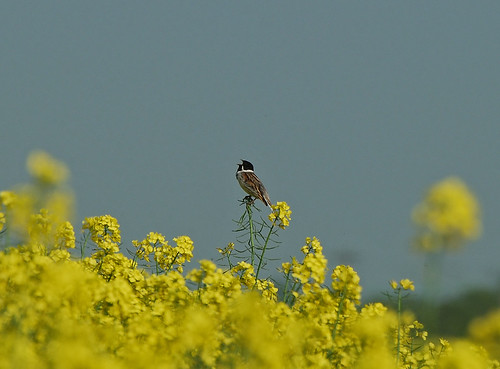
Reed bunting – Emberiza schoeniclus

Reed buntings are present in the local fields and hedgerows all year round and this little chap, for he is indeed a male, was singing long and loud perched on the top of the rape flowers. A circuit around this field is an ornothological treat, on one lap I’d expect to see several reed buntings, at least one or two corn bunting, lots of skylark and occasionally linnet and goldfinch. And on Saturday (9th June) there were two bullfinch, an adult male, resplendent in his black cap and peach breast, and a male youngster, the same colours but a tad smaller and with more muted colours, perched in a tree together on the edge of the field.


Dunnock – Prunella modularis

And my favourite little brown bird is the dunnock, which are also here all year round, and in the winter are regular visitors to my garden. These two were transporting food to the youngsters in the nest in the midst of a bramble thicket. Fortunately, despite the low numbers of migrants in my locality there are still enough birds around to liven up a walk in the countryside.

Insects and molluscs

Over the last couple of weeks I’ve been out and about photographing wild flowers, and of course the raison d’etre of flowers is to produce the reproductive cells of the plant in order to ensure survival. And as plants are immobile they rely on other vectors to connect the male and female parts, that can be the wind and the rain but many flowers are exquisitely evolved to attract one or more species of insect to carry the pollen to the ovum and effect fertilisation.

So in the course of photographing the flowers some of them were hosting a pollinator or two:

Tree bumble bee – Bombus hypnorum

This tree bumle bee was sipping nectar from the flower of the white deadnettle. It’s one of the insects that is strong enough to get to the back of the flower and take the nectar. Flowers have evolved in this way such that the insects have to pass the stamen, which is where the pollen, or plant sperm, is produced. The stamen is made up of the filament and the anther, and foraging insects brush against the anther picking up pollen which they carry to the next flower where it is deposited on the female part of the plant – the ‘carpel’, and fertilisation ensues.

There are various species of bees in the UK but only around half a dozen common ones. Bees are in trouble in this country and no one seems to know why, both honey bees, which live in colonies, and solitary bumble bees are dying out at an alarming rate.

Buff tailed bumble bee – Bombus terrestris

The buff tail above was in a particularly poorly condition and had tiny mites crawling on it’s body so I imagine it didn’t do much more pollinating.

Soldier beetle – Cantharis rustica

The soldier beetles are related to the fireflies and they get their common generic name from one species which is bright red and is therefore named after the ‘redcoats‘ – English soldiers from days of yore. The larvae and the adults are carnivorous, the larvae feeding on insect eggs and caterpillars and the adults on aphids. They also feed on nectar and can therefore pollinate too.


Black slug – Arion ater

Alot of people have an aversion to slugs because of the damage they can do to fruit and vegetables, but this chap was out in the field making a meal out of a couple of dandelion seedheads. I don’t think they contribute much to pollination and they are predated by frogs and toads and also hedgehogs. Although I’ve heard that if too much of a hedgehog’s diet consists of slugs, parasitic worms living in the slugs can get into the lungs of the hedghog and kill it because its lungs fill up with fluid. Which sounds pretty unpleasant but I guess it’s not the fault of the poor old slug!


Brimstone moth – Opisthograptis luteolata

The brimstone moth is a splendid creature with a wingspan of 32-37 mm. It’s common and widespread across the UK. In the warmer climes of  the southern UK there can be three generations in a year but in the north there is only one brood per annum, and adults can be seen on the wing between April and October. The caterpillars feed on various trees and bushes including hawthorn and blackthorn.

A couple of weeks ago after days of rainfall which had moistened everything I found a 50m stretch of verge which was crawling, literally, with hundreds of yellow and brown snails.


Brown lipped snails – Ceppaea nemoralis. Just a few of the hundreds that were making the most of the damp conditions

The ‘lip‘ of the snails in their name is the front edge of the shell which can be seen in the next two pictures and is lighter brown on the yellow one and a much darker brown on the brown one:

Snails are predated by songthrushes. They pick up the snail by the fleshy part and crack the shell on a handy stone. Some years ago I was sitting at home on my own reading a book and everything was very quiet. I heard ‘tap tap tap’ on the front door, but when I went to answer it their was no one there. So I went back to my book. A few mintes later I heard the same tapping and again there was no one there, so I opened the door to have a look up the street and rather than a visitor there was a collection of broken snail shells on my front doorstep. It transpires the tapping I’d heard was a songthrush using my front doorstep as an anvil to swing the snails against and hammer open the shells!

More blooming flowers

Hedgerows, field borders and roadside verges continue to thrive in this part of the world as a result of the recent rainy weather. Nettles are in abundance at the moment, in particular the white deadnettle (Lamium album):

The white deadnettle is, as the name suggests, not a stinger, and it’s common all over the UK, Europe and Asia. It’s white or pink flowers need to be prised open in order to reach the nectar at the back of the flower so only bulky insects such as bumble bees can reach it. It flowers from March to December so it can provide a food source for these insects for most of the year.

According to the Royal Botanic Gardens at Kew, the leaves and flowers can be eaten raw when they are young and tender and the fresh leaves can also be boiled and eaten as a vegetable. The flowers can also be boiled in water and used as a traditional herbal remedy for catarrh and dropsy, which is another name for oedema, or build up of fluid under the skin. The roots can be boiled in wine, which will extract compounds that are insoluble in water into the alcohol fraction of the wine, and the resulting concoction can be used as a remedy for kidney stones. White deadnettle is also used as a herbal treatment for benign prostate hyperplasia, which is enlargement of the prostate gland, and for gastrointestinal problems. So this humble hedgerow plant has the potential to provide a plethora of therapeutic compounds.

The white deadnettle is also known as bee nettle, blind nettle, day nettle, deaf nettle, dog nettle, snake flower and white archangel.

And the other nettle which is springing up everywhere is the much maligned stinging nettle, Urtica dioica:

The flowers of the stinger are tiny and green and grow in strings which are several centimetres long. The stinging mechanism is via hairs, or ‘trichomes‘, and each one has a bulbous end that breaks off when brushed by a passer by, leaving a sharp hollow tube. The tube acts like a tiny hypodermic needle that injects a cocktail of irritant chemicals including histamine and acetycholine which potentiate an inflammatory immune response which is the cause of the stinging sensation. The sting protects the nettle from grazers but also offers protection for other species which are resistant to the sting and the stinging nettle is therefore home to various species of insect and is an important refuge for caterpillars such as that of the peacock butterfly. Before slashing them down in your garden see if you can’t find an out-of-the-way corner to let them grow and provide a home for the butterflies.

Cooking the nettle leaves removes the sting and they are rich in vitamin C so they are used to make soup, herbal tea and, latterly, pesto and in the production of a cheese called ‘yarg‘ from Cornwall.

Charlock, Sinapis arvensis

The yellow flowers of the charlock plant, also known as carlock, corn mustard, field kale, kedlock, kerlock, kinkle, wild kale and wild mustard, have sprung up along the field-side drainage ditches and hogweed, Heracleum sphondylium, is well established too:

Hogweed flowerhead

Hogweed grows all over Europe and flowers from June to August. The flowers burst out of large pods at the top of the stems and are initially pink but fade to white. The young shoots are reputed to be good to eat with a flavour similar to asparagus and the plant gets its name because it was gathered to provide feed for pigs in times past. Hogweed is also known as cow parsnip, cadweed, clogweed, eltrot, giant parsnip, madnep and meadow parsnip.

Pansy, Viola arvensis

Lurking along the edge of the nearby rape fields, almost hidden in the undergrowth, are pansies. The name of the pansy originates from the French word ‘pensee‘ – thought. It is also know as heart’s ease, ladies’ delight and stepmother’s flower.


Hedgerow cranesbill, Geranium pyrenaicum

Hedgrow cranesbill, aka mountain cranesbill, is very common at the moment. It flowers from May to August and it gets it’s name from the shape of the seedpod in some species of geranium which is long and pointed and said to resemble the beak of the crane.

Herb bennet, Geum urbanum

According to the RHS herb bennet also has a number of colourful names: blessed herb, city avens, clove root, colewort, Indian chocolate, minarta, St Benedict’s herb, star of the earth, water flower and wood avens. This plant grows in shaded spots and flowers from May to August. It has aromatic roots which have been used to flavour ale and give off a smell of cloves so it was hung by the door to ward off evil spirits. It was also used medicinally by the Romans as a substitute for quinine.

My day job is in the pharmaceutical industry so I have a professional interest in chemicals which could have medicinal applications either on their own or as cocktails of compounds which may be contained in the same plant. So when I’m researching a post like this I wonder how many species we’ve lost due to modern agricultutal practices and how much herbal knowledge and potential drug molecules have passed into history. Many have probably been lost but there are still thousands remaining to provide us with food, herbs and spices, medicines, and to add the wonderful shapes and colours to the countryside.