Category Archives: Migrants

More ducks and more waders at RSPB Titchwell

This is the final instalment from my trip to Norfolk when I ended up at the RSPB reserve at Titchwell. Even though it was in the middle of January and it had been ferociously cold at 6.30am before the sun rose and warmed the earth, by midday it was a bright, sunny and warm day. Perfect conditions really for a trip to the coast to see the wildlife.
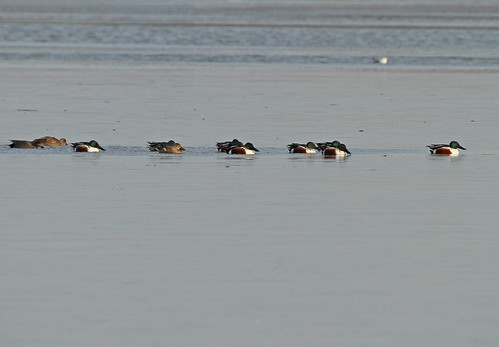
A raft of shovellers (Anas clypeata, Dansk: skeand)

The reserve at Titchwell consists of two fresh water lakes separated from the sea by a high dune. And to the west lies an expanse of scrubland which provides more space for wild birds and animals to exist unmolested. Consequently, and because of its location on the north Norfolk coast, it’s a very good place to see  many water birds some of which can be rare sightings, such as the spoonbill.

There were no spoonbills to be seen on this trip but there were plenty of other species including shoveller, whose Danish name ‘skeand‘ translates as ‘spoon-duck‘ for reasons easily divined. Another of my favourite ducks, because of it’s gorgeous colours, is the diminutive teal:
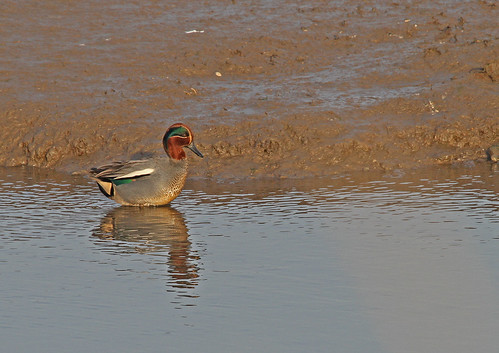
Male teal (Anas crecca, Dansk: krikand)

The teal is about half the size of the chunky shoveller and there are around 2000 pairs breeding here in the summer. I like etymology, so the collective noun for teal – a ‘spring‘ (because of they they rise en masse almost vertically when flushed) – is a fun one. Both the teal and the shoveller, which has 700 breeding pairs in the UK, are amber listed. But a ray of hope for these threatened water birds is that huge areas on the east coast of England have been opened up to the sea and allowed to flood as a mitigation of the worse ravages of the effect on the oceans of climate change, and this will hopefully create homes for hundreds of thousands of resident birds and migrant vistors throughout the year.
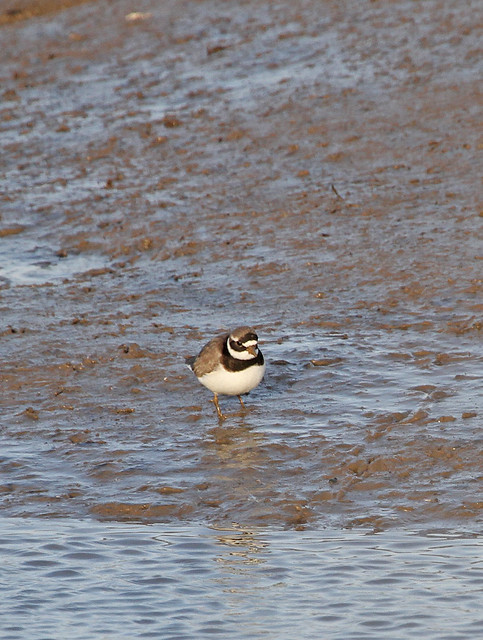
Ringed plover (Charadrius hiaticula, Dansk: stor præstekrave)

There are 110-180,000 pairs of ringed plover in Europe and around 4% of them breed in the UK, but the numbers and range of these have been steadily declining, so this species has earned red conservation status in the UK, although it is a species of least concern in Europe as a whole. Hopefully the new coastal habitats being created here will help to reverse this trend.

The next four pictures are of birds which appeared in the previous two posts and were photographed at Snettisham, but one of the great things about Titchwell is that it’s possible to get close to the wildlife. And as they were there too I’ve included these images in this post because I like them:
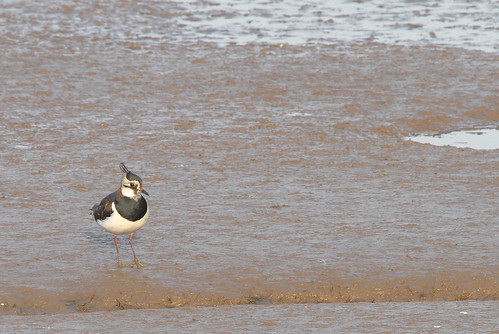
Lapwing (Vanellus vanellus, Dansk: vibe)
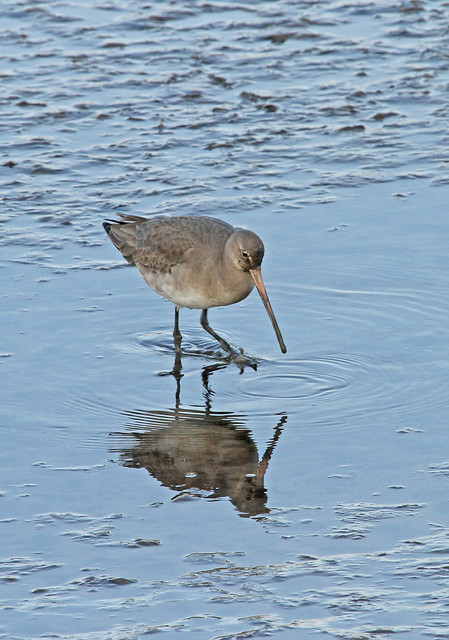
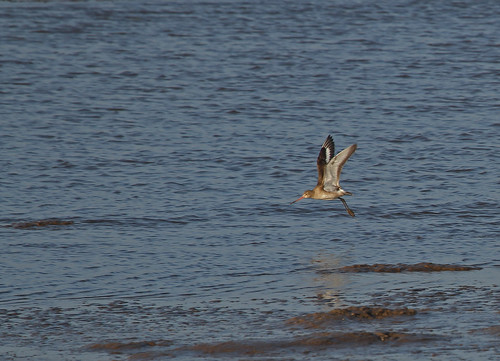
Black tailed godwit (Limosa limosa, Dansk: stor kobbersneppe)

I really like the ripples and the reflections of the godwit in this image.

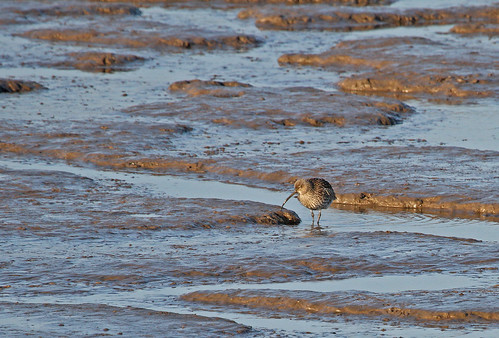
Curlew (Numenius arquata, Dansk: storspove)
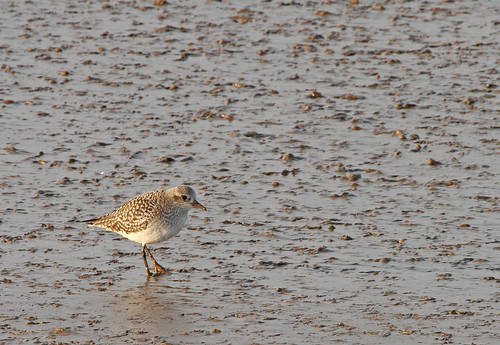
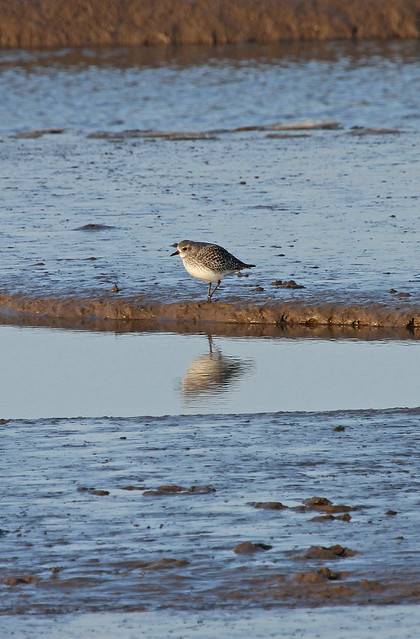
Grey plover (Pluvialis squatarola, Dansk: strandhjejle)

Another thing that I like about this collection of pictures is that it demonstrates the importance of mudflats for these birds to find the molluscs and crustaceans they need to refuel. It doesn’t make for the most interesting background for a wildlife portrait, unless there are some photogenic reflections, but I guess it focusses the eye on the subject!

There was no image of this small seabird in the previous, at least not on it’s own, but there may have been significant numbers mixed in with the huge flocks of dunlin:
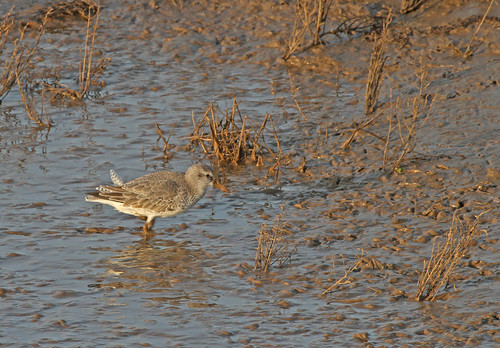
Knot (Calidris canutus, Dansk: islandsk ryle)

The knot is another of those truly magnificent creatures that breeds in the northern Arctic (a real feat of survival in it’s own right) and then migrates to its winter feeding grounds as far as south Africa, south America and Australia. And then a few months later they do the same journey in reverse. I wonder how many miles one of these little birds can cover in its whole lifetime – and all under it’s own steam? I can’t help but have immense respect for them!
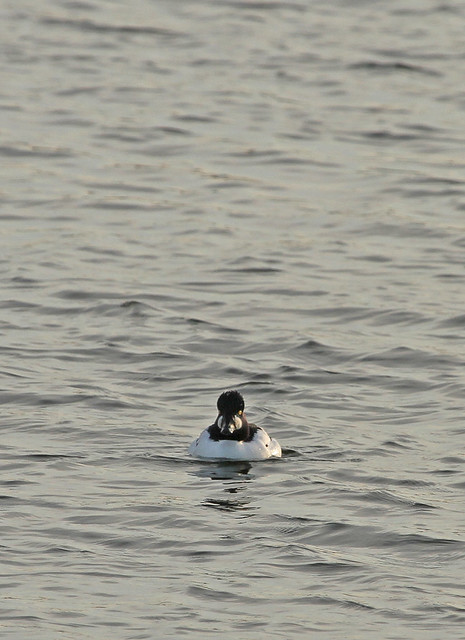
Ducks and more waders

I wrote a couple of posts a while ago about a trip to the north Norfolk coast in the depths of winter, but I didn’t get round to completing the story. All the wader (‘shore birds’ in N.America) images in that post were taken on the beach at Snettisham, and as I was leaving there at around half past nine in the mornng to head along the coast a short hop to the RSPB reserve at Titchwell, the sun had risen and more birds were discernible on the previously invisible small lakes immediately behind the beach.

A handsome male goldeneye (Bucephela clangula, Dansk: hvinand)

The goldeneye is a diving duck which has recently colonised Britain and there is an annual breeding population of around 200 pairs but it’s also a winter visitor when around 27,000 individuals arrive here to seek sustenance on lakes, rivers and tidal mudflats.

A lone redshank poking around for molluscs and crustaceans in the tidal mud (Tringa totanus, Dansk: rødben)

Also prominent on tidal mud flats is the redshank, or ‘the sentinel of the marsh‘ as it’s often the first bird to raise the alarm when a disturbance occurs, is amber listed in the UK although there are 24-25,000 breeeding pairs and up to 130,000 winter visitors. As with many other birds, encroachment by humans and habitat destruction has limited their range and therefore numbers in the UK. But despite their struggle with humans I always expect to see redshank when I visit the coast, and the other wader that I’d be very concerned if I didn’t see is the unmistakable oystercatcher:

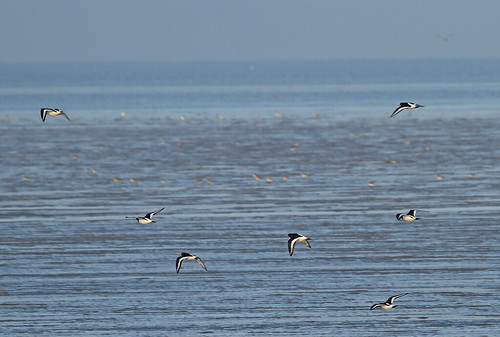
A few members of a big flock of oystercatchers passing overhead (Haematopus ostralegus, Dansk: strandskade)

Despite high expectations of seeing some of the 340,000 wintering UK oystercatchers their conservation status in the UK is amber, the European status is ‘vulnerable’ and globally they are ‘near threatened’ due to recent population decline. But there are still good numbers of them in the UK so I hope their numbers can be stabilised.

Another amber listed wader in the UK is the grey plover:

Grey plover (Pluvialis squatarola, Dansk: strandhjejle)

The grey plover is a truly global bird, it breeds on the Russian tundra and in northern North America but can be found as far afield as southern Asia, Africa and even Australia – it has a huge annual range! So it’s remarkable to think that this little guy came from Canada or northern Russia to feed on a Norfolk beach – and also that some of its relatives may be in Australia. It seems that many of our birds are struggling, including the statuesque black tailed godwit which is faring even less well than the grey plover and is red listed in the UK.
Black tailed godwit taking flight (Limosa limosa, Dansk: stor kobbersneppe)

According to the BTO (British Trust for Ornithology) the taxonomic name derives from the Latin word ‘limus‘ meaning ‘mud‘. In order to name such a handsome bird ‘Muddy muddy‘ I can only imagine that particular  taxonomist was having a bad day. It deserves better! The black tailed godwit also breeds in the north and like the grey plover can also be found in southern Asia, South Africa and Australia. Another accomplished globe trotter.

Curlew (Numenius arquata, Dansk: storspove)

The largest European wader is the curlew which can be easily distinguished by it’s enormous downcurved beak and it’s equally unique call. Alas for the curlew, it is also red listed in the UK with 66,000 pairs recorded by the BTO in the UK in summer 2009. Even though it’s numbers are declining it’s still not unusual to see one or more on an outing to the coast.

At this point, between 9 and 10am, I decamped along the coast to Titchwell, pausing mid way where another iconic winter visitor was patrolling an adjacent hedgerow:

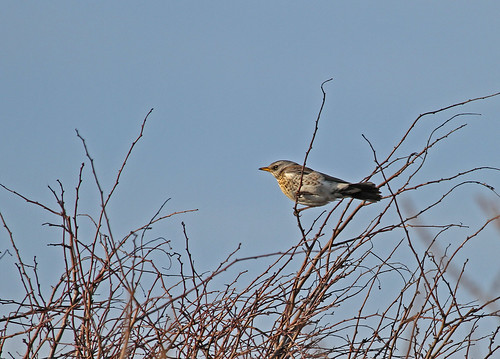
Fieldfare (Turdus pilaris, Dansk: sjagger)

It’s pretty depressing to report that the fieldfare is also red listed, but fortunately this is a local UK phenomenon and it is a species of least concern in Europe and globally. It’s our most colourful thrush and visits the UK from Scandinavia in the winter when it can be seen in large flocks in fields and hedgerows, often mixed in with redwing – another Scandinavian thrush which overwinters in the comparatively warmer climes of the UK.

Winter in the Wash

One of the ‘must see‘ natural events in the UK occurs in the winter when hundreds of thousands of ducks, waders and, in particular, geese spend the season on the mudflats of the Wash. The Wash is a huge bay on the east coast of England into which the rivers Witham, Welland, Nene and Great Ouse all drain into the North Sea.

When the tide recedes, like Morecambe Bay in the previous post, enormous areas of mudflats are exposed which provide sustenance and a roost site for colossal numbers of birds. Every morning at dawn thousands of geese take flight to head inland to feed, and the geese are what everyone goes there to see.

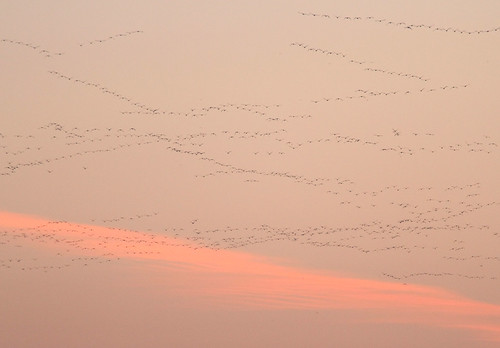
Multiple skeins of pink footed geese at Snettisham at dawn (Anser brachyrhynchus, Dansk: kortnæbbet gås)

I arrived at the coast at Snettisham on the north Norfolk coast around 6am when it was just starting to get light. Already sizable flocks of geese were in the air and I was concerned that I’d missed most of them. But then as the sun rose higher gargantuan flocks started to pass overhead and it was a truly incredible sight!

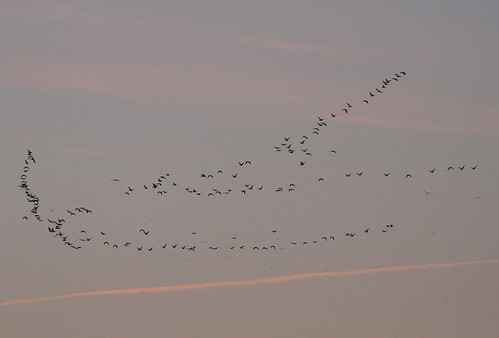
I don’t know how many thousands of geese were there but at the end of the day I went back to the same place to see them return. It was getting dark and all was still, so, as in the morning, I thought I’d missed them. And then they appeared, quite suddenly in their tens of thousands. I tried to estimate the numbers by counting small numbers of each wave and multiplying up, and I estimated there were between 30-40,000 birds returning.

Skeins within skeins, I like this formation

And if you’ve ever spent any time near geese you’ll know that they’re not afraid to announce their presence, so the other thing that I hadn’t expected, but maybe I should have done, was the noise. It was a magnificent cacophony! And not just the squawking, but the sound of them flying when they came over lower to the ground.

These birds breed in the summer up in the Arctic, in Greenland, Iceland and Spitsbergen and then head south to the relatively balmy conditions of the UK coast in winter (!).

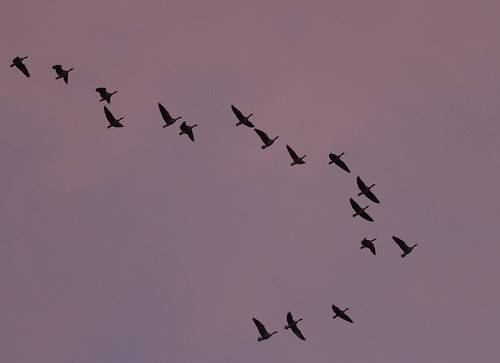
Another skein of pink footed geese passing low overhead

It’s unknown why geese fly in skeins, but it’s thought to provide an aerodynamic advantage to the ones behind as they slipstream in turbulent air generated by the bird in front. Which makes me wonder if they constantly switch the pacemaker or if the biggest and strongest bird is always the one at the front.

I estimated there were around 500 birds in this huge flock, but even that was a tiny proportion of the total

To see this meant getting up and out at 4am which is never my favourite thing to do, and it was ferociously cold, but it was worth it to see such a unique spectacle. And as the sun rose and it got lighter, it soon became apparent that the geese weren’t the only seabirds in the area:

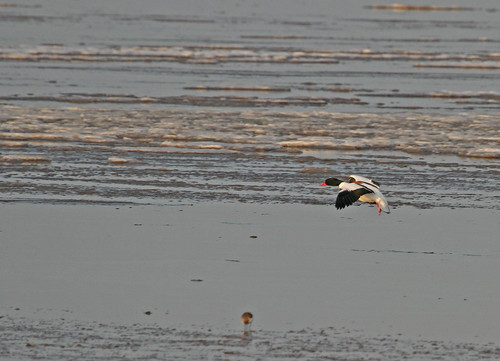
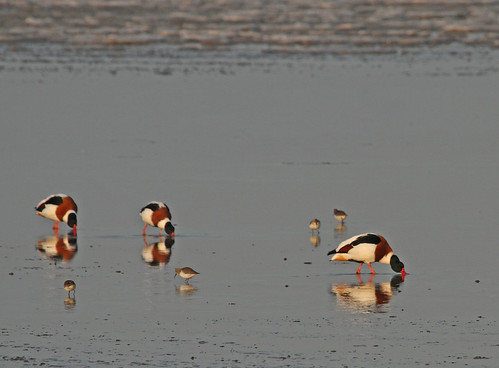
A shelduck (Tadorna tadorna, Dansk: gravand) on final approach past a lone dunlin in the foreground

Small flocks of shelduck and dunlin were mingling and feeding close in to the shore

The Wash is now not the only significant area of coastal mudflat in East Anglia. In order to attempt to mitigate some of the anticipated ravages of climate change, flood defences protecting areas of farmland on the coast further south in Essex have been deliberately breached. This has allowed the land to be reclaimed by the sea and to regenerate the tidal mudflats that were there before humans originally interfered. The new habitat  was created with the millions of tons of earth removed the ground under London in order to build the Crossrail tube train tunnels. And as soon as this happened the wildlife started to recolonise, and even though it is still fairly barren in comparison to established habitat, I hope that in the near future it will also provide refuge to hundreds of thousands more birds, and lots of other wildlife too.

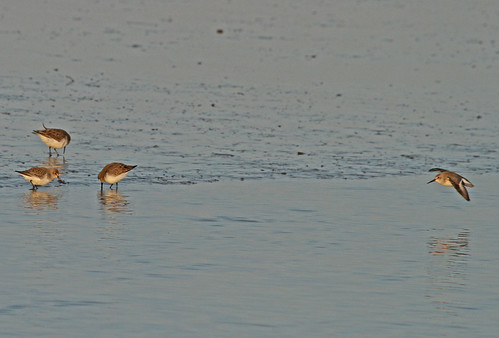
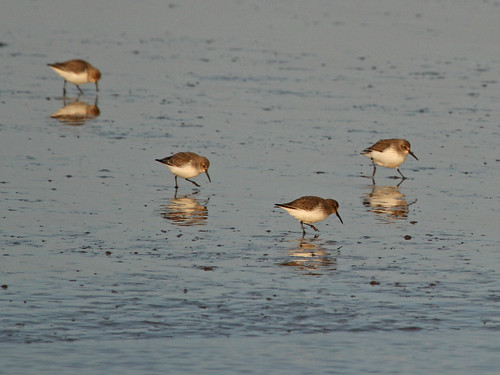
Dunlin (Calidris alpina, Dansk: almindelig ryle)

But more of dunlin in the next post, and plenty more species of sea birds both at Snettisham and after that at the RSPB coastal reserve at Titchwell.

The ultimate songbird

In the springtime this year I took a trip to Paxton Pits nature reserve which is a cluster of lakes on the edge of St Neots near Bedford created by gravel extraction. They cover a sizable area and are interspersed with woodland and scrub and incorporates a SSSI (Site of Special Scientific Interest).  One of the reasons for going there in springtime is to hear the song of the nightingale for which the Pits are a recognised site.

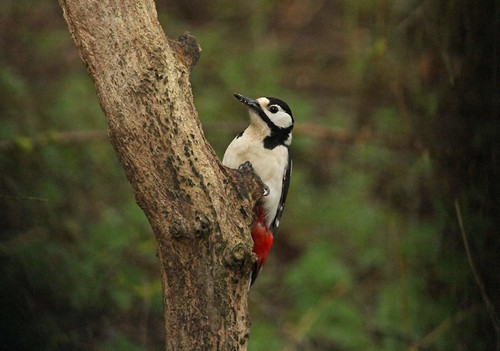
Early signs weren’t hopeful as the skies were grey and it was cold and raining. So not the best conditions for seeing or hearing songbirds in full voice. And first off, there was very little of anything, and then a great spotted woodpecker put in an appearance low down on a tree trunk.

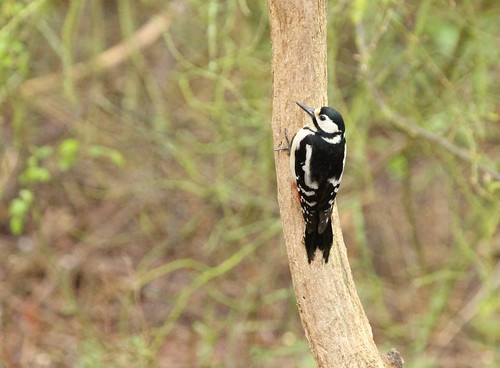
Great spotted woodpecker (Dendrocopos major, Dansk: stor flagspætte)

This one is a female, the main difference between her and the male is the lack of a red patch on the nape of her neck. I was pleased to get so close to a great spot as they’re normally higher up and not so easy to photograph. They feed on insects which they dig out from crevices in tree bark, but will also take birds eggs and I’ve heard they take chicks too which they can find when they enlarge the holes in bird boxes to get to the nest – which is one of the reasons why the entrance to bird boxes for small birds now have metal surrounds.

The sound of a woodpecker drumming carries for a very long distance, not because of the volume but because the frequency of the drumming has a strike rate of 10-40 per second which causes the tree to resonate.

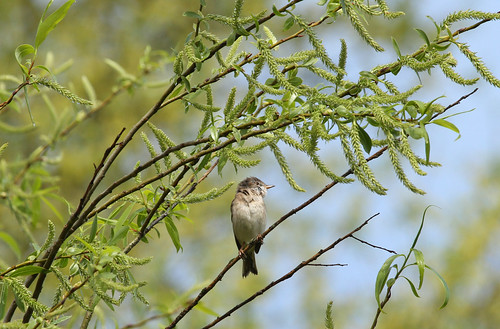
Shortly after the encounter with the woodpecker the clouds cleared and it turned into a warm sunny day, much more suitable for songbird encounters, and the first one was a whitethroat:

Common whitethroat (Sylvia communis, Dansk: tornsanger)

The whitethroat is one of our non-resident warblers which were just arriving in the UK from their annual migration back from sub Saharan Africa. When they’re attracting a mate they do a mad little jerky flight heading roughly straight up from the top of a bush and dropping straight back down again, and while they do it they have a distinctive song. But as distinctive as it is, it’s not in the same league as the ultimate songbird:

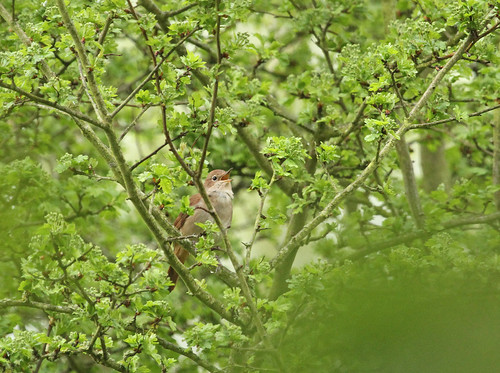
Nightingale (Lucinia megarhynchos, Dansk: sydlig nattergal)

The nightingale is a fairly drab little bird to look at, but the song is incredible. And when it has returned here in the spring after migration, also from tropical Africa it starts to sing… and people will flock from miles around to hear it. Alas, as with many bird species the nightingale is red listed in the UK and in desperate need of protection, consequently this was the first time I managed to photograph one.

There are ponds and shallow pools on the site of the Pits too, and these are being nurtured to encourage dragonflies and amphibians such as this great crested newt:

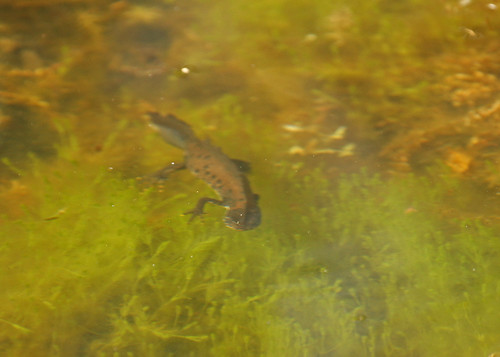
Great crested newt (Triturus cristatus, Dansk: stor vandsalamander)

Great crested newts are also endangered in the UK due to habitat destruction and are therefore heavily protected. It was good to see an adult male in his full breeding regalia, he’s a spectacular beast.

Loch Mallachie

Loch Garten is mainly associated with the osprey and is the home of the flagship RSPB reserve set up to protect and provide access to this most remarkable of birds.

But the osprey isn’t the only bird to be seen in this part of the world, and as I’d never been here before I was really hoping to see crested tit and Scottish crossbill in the coniferous forest around the lake. Suffice to say, despite looking long and hard I saw neither. But far from being despondent I see it as an excellent reason to go back there and try again!

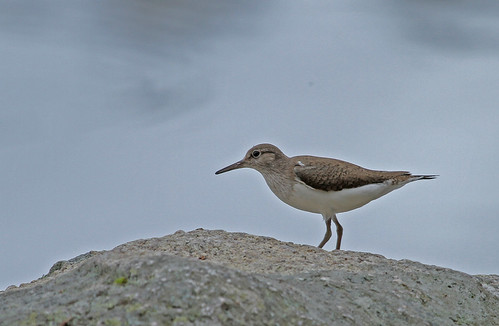
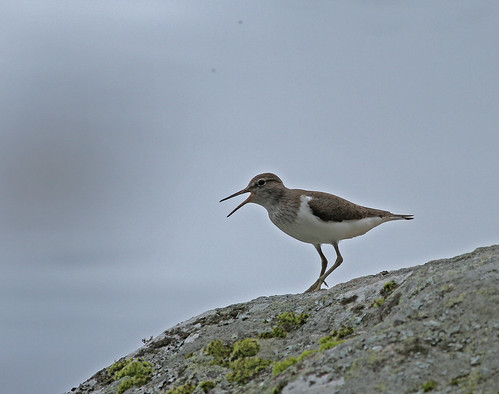
Common sandpiper – Actitis hypoleucos, Dansk: mudderklire

In the same part of Abernethy Forest and a short distance from Loch Garten is Loch Malachie, so myself and my companion decided to explore there after drawing a blank on tits and crossbills at Garten.  But instead of them, we found common sandpipers and in my book that’s a fair exchange:

The sandpipers are very neat little waders and there were several of them patrolling the large boulders on the shore of the lake. They weren’t overly impressed with our presence and to show their disquiet made several low looping flights along the shore and around behind us through the woods, which felt like an unusual place to see a sandpiper in flight. So we collected a few photographs and retreated to leave them in peace.

Goldeneye – Bucephala clangula, Dansk: hvinand

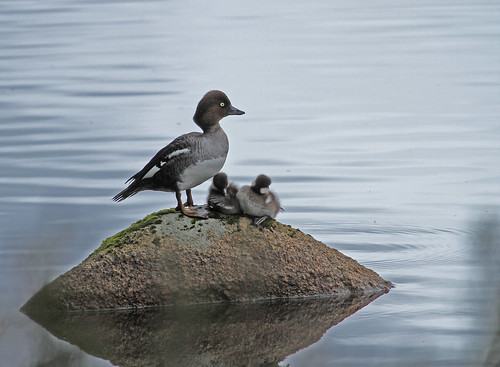
On the same piece of shore line as the sandpipers was this female goldeneye with a pair of chicks. The goldeneye overwinters over much of the UK but has a very small breeding population of only a couple of hundred pairs, largely due to a program of nestboxes on Speyside – the goldeneye is unusual amongst ducks in that it nests in holes in trees. There was no male accompanying this family which is pity because they’re spectacular!

It  was a grey, damp, overcast morning in the Abernethy Forest around Loch Malachie and may be because of that it was eerily quiet. There were very few songbirds and the ones we saw most of were wren and chaffinch, which are also common visitors to my garden. But then we saw a spotted flycatcher which is definitely not a visitor to my garden:

Spotted flycatcher – Muscacapa striata, Dansk: fluesnapper

The spotted flycatcher is a migrant breeder to the UK, it overwinters in Africa and is red listed due to overall decline as a result of decreasing prey species caused by pollution and insecticide use (>30% over 10 years). Despite that, the European population is estimated to be 42-66 million individual birds (according to Birdlife International).

Apart from the beautiful wildlife, what I really noticed in the forest was the complete absence of human noise polution (it was silent apart from the wind and the birds), and the smell of the pine forest, and there are few natural aromas as delicious as the fresh smell of pine mixed in with the leaf mould underfoot. But the best thing was the silence!

Late autumn migrant

The autumn and the spring are the best times to be keeping a look out for migrants which, in the case of Cambridge, are often passing through on their way to a destination further north. The summer visitors such as swallow and swift are usually on their way to Africa by mid autumn, as the winter migrants such as fieldfare and redwing are beginning to arrive here to escape the freezing winters of Scandinavia.

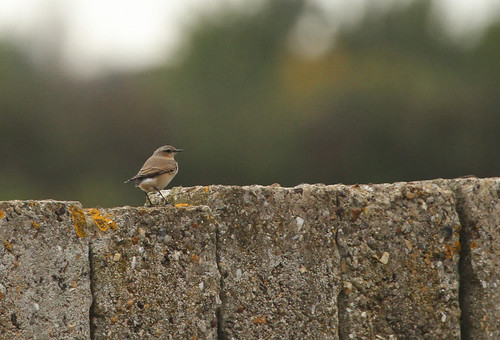
A couple of years ago I saw a black redstart on Cambridge Science Park, which is a very rare sighting in this part of the world, at least for me. It was here for less than 24hr before heading further north and west. And this autumn my unusual sighting was a female wheatear:

Female wheatear (Oenenthe oenanthe, Dansk: stenpikker)

Wheatear are handsome birds and this one was the first one I’ve seen in the fields in Histon. I only had the one sighting, and as it was in the third week in October she wouldn’t have tarried as she wended her way back to overwinter in Africa.

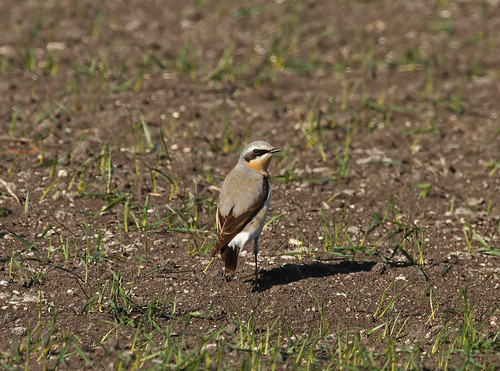
Last year I saw a small group of wheatear in a field near Wicken Fen, this time it was in springtime so they were on their way north, including this beautiful male:

I think that as we head into December all the winter visitors that are coming this way may already be here, and I’ll hopefully be able to share pictures of other wanderers in the near future.

The disappearing dove

Every year millions of migrating songbirds heading from Africa to Europe get blown out of the sky by weird people with shotguns. That combined with the policy in the UK of destroying habitat at an alarming rate is making life impossibly possibly difficult for some of our iconic bird species, one of which is the turtle dove (Streptopelia turtur, Dansk: turteldue).

But last summer I was exploring one of my regular haunts, Milton Country Park, on the northern edge of Cambridge, on a warm Saturday morning and the air was buzzing with insects including this handome hoverfly known as the ‘footballer‘ due to its rather fetching black and yellow striped thorax. This species is common in England reaching a peak in July which is when I snapped this individual.

The footballer hoverfly – Helophilus pendulus

And hoverflies aren’t the only abundant insects to be found in July. Milton Country Park is also home to mumerous species of Odonata, the dragonflies (Anisoptera) and damselflies (Zygoptera).

Common blue damselfly – Enallagma cyathigerum – perched on a seedhead

The Park has 4 big lakes:

MCP map

…and a few other streams and pools, and despite the abundant human presence it remains a haven for some properly exotic wildlife including a bittern that appeared for a week or so last year, and the occasional osprey stopping off on migration from sub-Saharan Africa to breeding sites further north in the UK.

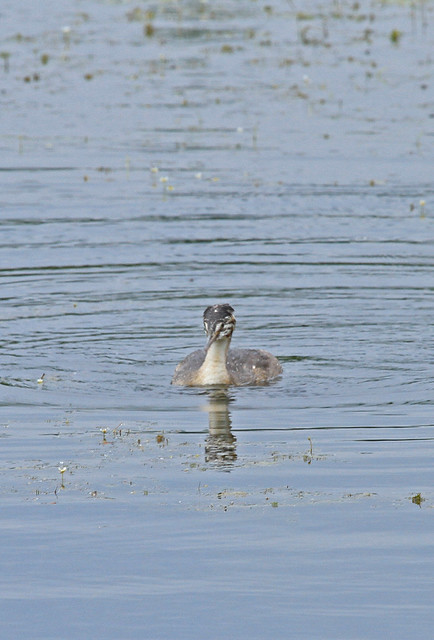
The great crested grebe (Podiceps cristatus, Dansk: toppet lappedykker) isn’t an exotic migrant but it’s a beautiful bird and can always be found here:

The grebe was almost hunted to extinction because its dense feathers were coveted as a substitute for fur. But it has recovered and can now be found on lakes over most of the UK. The one above is an adult and the one below still has the striped head markings of a juvenile.


But getting back to the point, the undoubted star of the show on this trip was the turtle dove:

The turtle dove is in very serious decline, I believe we have lost around 97% of our breeding population and it is anticipated it will become extinct in the UK by 2020 as it’s also under increasing pressure in Europe. The reason for its catastrophic decline is that it feeds on seeds from cereals and other plants and both of these are a scarce commodity in the fields of the UK at the time the doves need them.

So the birds arrive here in the UK exhausted after a heroic migration across the Sahara and the Mediterranean. And those that avoid the gun-toting imbeciles in southern Europe arrive here to find there’s not enough food. So as it takes them a long time to rest and feed and get back into breeding condition, they only have time for a maximum of one brood per season before they have to head all the way back. And this enforced curtailment of there breeding window means they just can’t sustain their numbers.

They arrive back in the UK from around mid April so I’ll try to capture some more photographs before they finally stop coming here all together.

When the sun stood still

The plane through the centre of the earth and the sun is called the ‘ecliptic‘ and it describes the apparent path of the sun around the earth. And the plane through the centre of the earth – on the earth’s equator – is called the ‘celestial equator‘. There is an angle between these two planes of 23.4o and this angle is known as the ‘obliquity of the ecliptic‘.

It is the obliquity of the ecliptic which gives rise to our seasons, because as the earth moves around the sun a point on the surface will be closer to the sun in summer and further away in winter. The mid winter and mid summer solstices are the midpoints of those two seasons and at the  midsummer solstice the perceived height of the sun in the sky is at its maximum ‘declination‘ – the angle between the ecliptic and the orbital plane. So whereas the solstices occur when the angle is at its maximum  23.4o, the vernal and autumnal equinoxes occur when the angle between the two planes is at its minimum, i.e. 0o, or when the celestial equator intersects with the ecliptic.

The summer solstice occurs in the northern hemisphere on June 21st and on this years solstice I found myself walking in the countryside late into the evening. It was a proper midusmmer day; sunny, warm and sultry, and the fields were full of wild flowers.

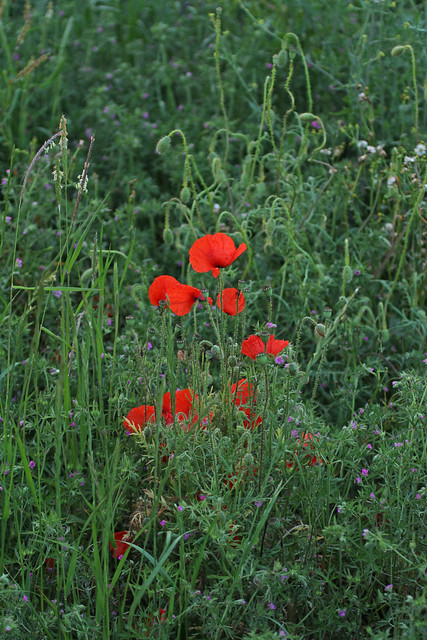
Field poppy – papaver rhoeas -my all time favourite wild flower. There’s nothing quite so spectacular as a field full of red poppies!

The field poppy is also known as the ‘Flanders poppy’ from the battle fields of WW1 – which seems wholely appropriate as I’m writing this on Remembrance Sunday. I find it difficult to photograph poppies and get the colours just right, but I really like these flowers against the green background. They were snapped in the field below, which was a riot of floral colour throughout the summer:

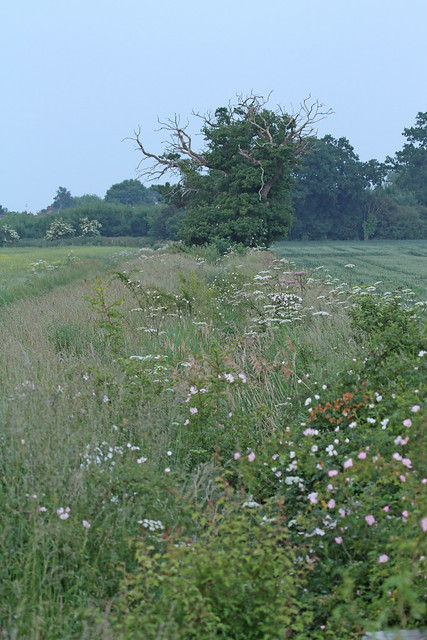
Looking along the drainage ditch which divides two arable fields

The old oak tree in this picture was home to a barn owl nest this year and I spent several evenings sitting in the undergrowth watching the toing and froing of the adults bringing prey to the nest. I didn’t get to see the fledglings but I’m hoping they were successful and return next year. And it was along this stretch of ditch where I photographed the yellowhammer, linnet and whitethroat I posted recently.

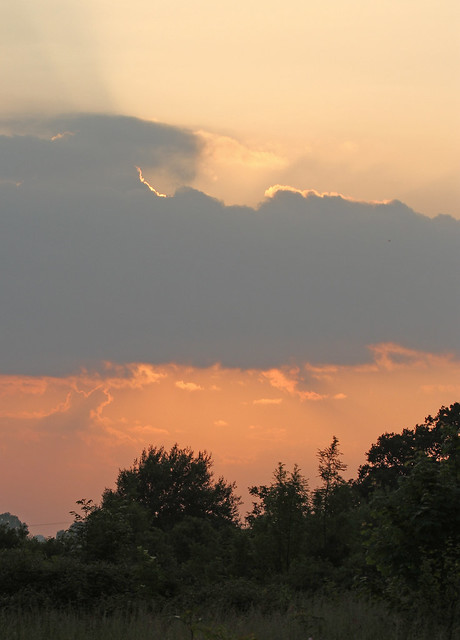
Not quite sunset, but the colours were breathtaking

And of course at that time of year, late in the day when the sun is getting low in the sky, the skyscapes can be magnificent .

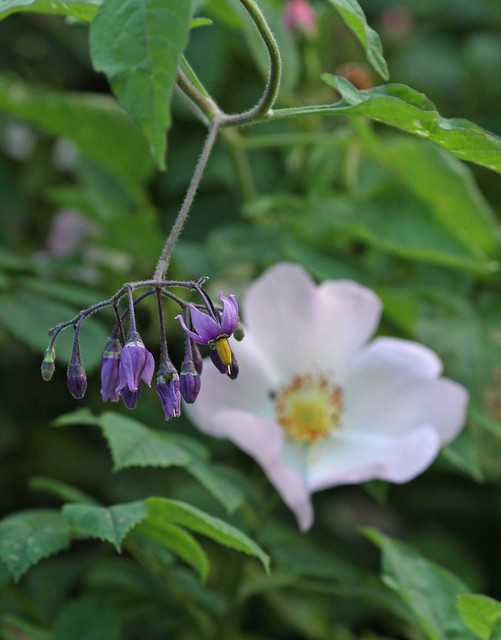
Another flower which was sprouting in the hedgerows was woody nightshade, Solanum dulcamara, which is closely related to deadly nightshade, and the potato which is rather less toxic than it’s relatives – unless the potatos are green when they contain the same toxin. So don’t eat the green ones (or nightshade berries)!

Woody nightshade flowers with a dog rose in the background

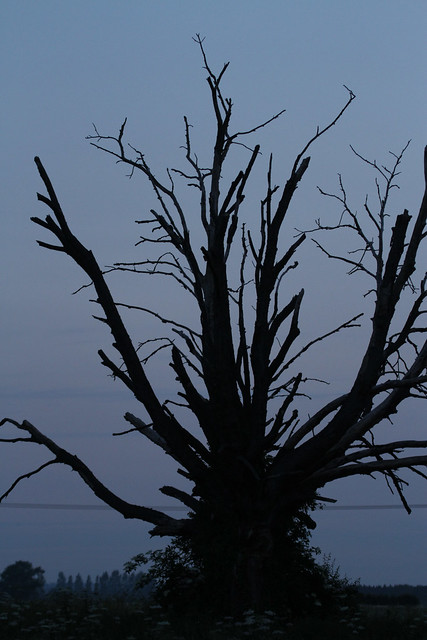
Toward the end of my stroll it was getting darker and in the midst of a line of imposing horse chestnut trees is this dead one silhouetted against the crepuscular blueness of the western sky after sunset.


On another dead tree stump adjacent to this one was a kestrel eating its prey and it let me stand close by and watch it for several minutes which was remarkable in itself, but to give you an idea of how close I was I could actually hear it tearing the flesh off the bone! He must have been very hungry.

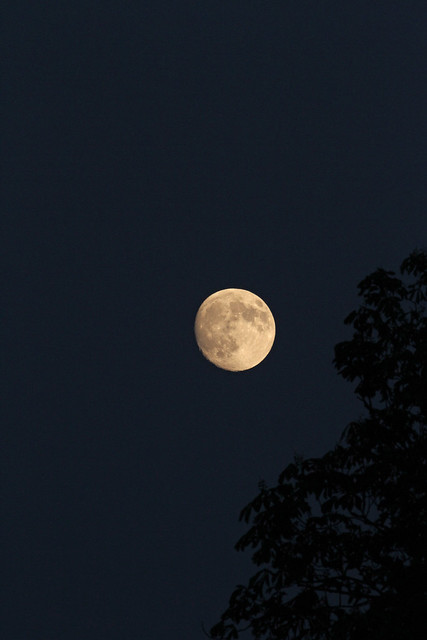
The moon emerging from behind a horse chestnut tree

And right at the end of the walk it was night time proper, and on midsummers day this year there was also a full moon.

The word ‘solstice‘ is derived from the Latin for ‘the sun stands still’ because the sun has stopped rising in the sky and begins it’s journey back across the ecliptic to bring summer to the southern hemisphere, leaving winter for us in the north. But I wasn’t thinking about that as I soaked up the summer warmth on midsummers day.

The busiest burdock

In my last post I wrote about the wildlife to the north of Histon. This post is about the wildlife to the west of the village. The two areas are divided by a main road and they are quite different in character. The north is very open with big open fields lined with ditches and hedgerows and the west has more trees and scrub.

In mid June I ventured there to compare the birdlife with that to the north, because I normally see less farmland birds like skylark, corn bunting and yellowhammer here, but more finches and migrant warblers like chiffchaff, willow warbler and whitethroat.

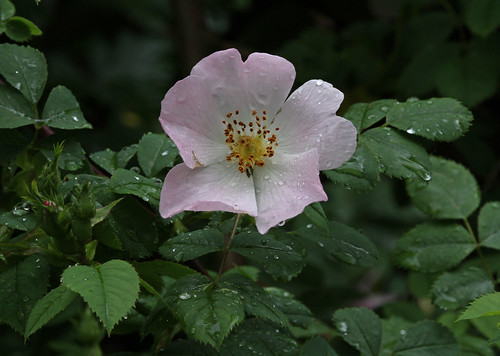
Dog rose (Rosa canina) bejewelled with raindrops

There had been a refreshing shower shortly before I set out which had left the flowers on a rose bush bejewelled with raindrops. It was a good time of year for the wild flowers as the ground had not dried out and there was plenty of sunshine. And of course, if the wild flowers are in good shape, there’s plenty of food for insects and therefore abundant sustenance for birds too.

(And on the subject of insects there was a news report from the BBC today regarding the short-haired bumblebee (Bombus subterraneus) which became extinct in the UK in 2000, but was reintroduced to an RSPB reserve at Dungeness in Kent and is now successfully breeding. Great news!)

But I digress. The dog rose flower was in the local meadow, but passing through there to the farmland beyond there is a field which is lined with drainage ditches, hedgerows and wide unmown borders which support a wealth of wildlife including wild flowers, bumble bees, dragon flies and birds. One of the wild flowers there is the burdock, Arctium minus, which has enormous spiky leaves and big burs which get stuck to your clothes, and on this walk there was a burdock patch that was full of songbirds:

A cock linnet resplendent in his sumptuous breeding regalia: the crimson bindi and rosy breast

The linnet (Carduelis cannabina, Dansk: tornirisk) were omnipresent here throughout the summer, and occasionally a yellowhammer (Emberiza citrinella, Dansk: gulspurv) appeared too. It’s easy to find yellowhammers if they’re in residence because of their characteristic song (a-little-bit-of-bread-with-no-cheese).

The striking colour of the male yellowhammer

And the yellowhammer song carries on the wind for hundreds of metres and because they are so colourful they’re easy to spot with a pair of binoculars.

A male whitethroat watching an adult linnet feeding a fledgling

At least one pair of whitethroat (Sylvia communis, Dansk: tornsanger) were nesting on the edge of this field too. The whitethroat are amber listed and the conservation status of the linnet and the yellowhammer is red list due to decline in their numbers. And in a very old oak tree just a few metres from here was a pair of barn owls (Tyto alba, Dansk: slørugle) nesting, and their status is also amber, but more about those in a later post.

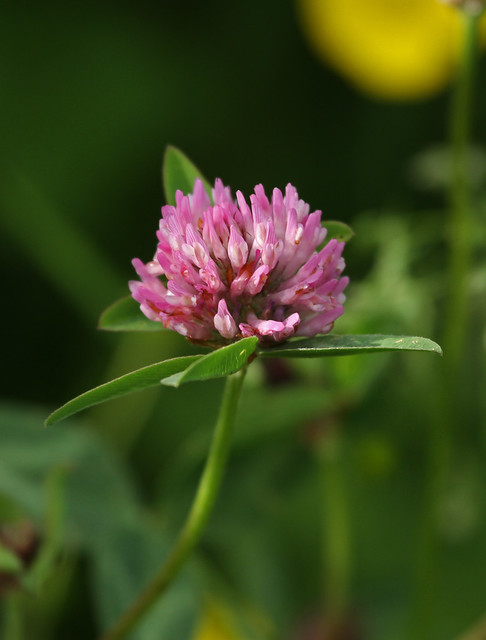
Red clover – Trifolium pratense – the national flower of Denmark

The birds were twittering, and so am I

When the summer eventually arrived this year it arrived with a bang and three months of glorious sunshine ensued which finally came to an end last weekend (but I’m still hoping we have an Indian summer). In early to mid June I spent a lot of time catching up with the local migrants, and all the other wild creatures around the village. I saw more swifts, swallows and house martins over Histon than I’ve ever seen and migrant numbers seemed healthy. This maybe because I was out and about and able to see them, or, hopefully, because more of them arrived and bred successfully this year.

The pictures here were taken one weekend in early June when I ventured across the farmland to the north of my village. Because of the wet spring followed by proper sunshine the verges, hedgerows and meadows were verdant and laden with fruit and flowers.

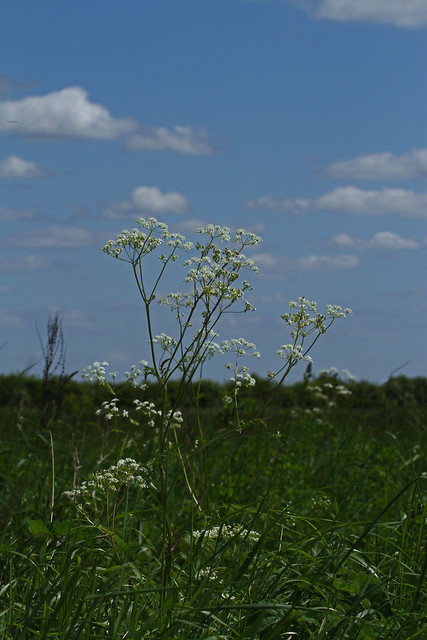
Cow parsley in the meadow against a summer sky

Many of my walks in these fields included lots of sightings of brown hare. I see occasional hares here so it’s no surprise, but what was surprising this year was the sheer numbers.

Brown hares (Lepus europaeus) – males chasing off rivals for the attentions of the ladies

There are four hares in shot here but there were more in the field to the left and more in the same field to the right. It wasn’t unusual to see ten or more on one of these excursions; they also seemed to be enjoying the hot summer. Fingers crossed they had a successful breeding season too.

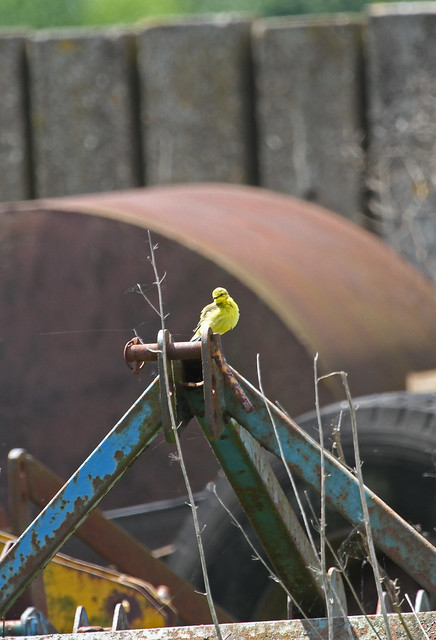
One of the migrants I’ve been hoping to see for the last three years, and which hadn’t put in an appearance was the yellow wagtail (Motacilla flava, Dansk: gul vipstjert). These little birds are spectacular and completely unmistakeable, and despite being a species of least concern in mainland Europe it is red listed here with only 15000 territories recorded in the UK in 2009.

Yellow wagtail perched on an old farm machine

This handsome chap was my only sighting of a yellow wagtail this year. They are one of those amazing small creatures, like the swallow, which spend the summer here in the UK but overwinter in South Africa. When they’re here they tend to frequent fields with livestock where they feed on the accompanying insects. Whilst there are no adjacent cattle or sheep here there is an enormous pile of manure which also attracts clouds of insects. I’ve seen wagtails here before but not for a several years, so it was good to see one again.

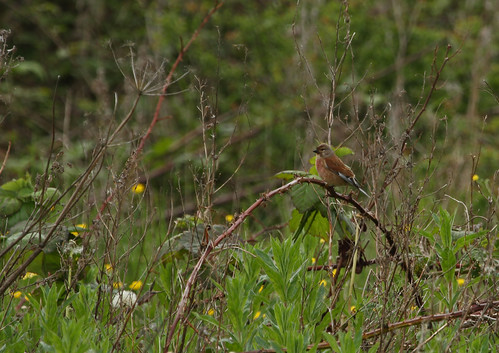
Cock linnet (Carduelis cannabina, Dansk: tornirisk)

And another red listed bird, which I’ve also posted about recently, is the linnet. Unlike the yellow wagtail, despite their red listing, I see linnet in the fields every year, and the occasional flock of several hundred in the winter. They get their specific name from their like of cannabis. Not for it’s pharmaceutical properties (at least as far as I’m aware) but because in the old days when hemp was grown to make rope they fed on the seeds.

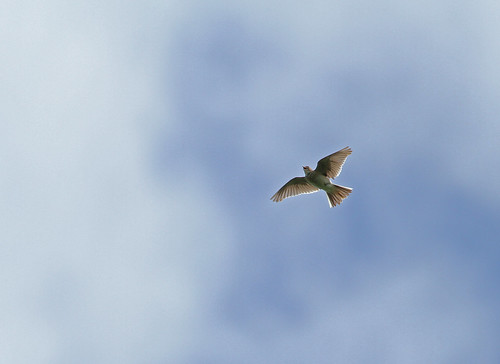
The wildlife on this weekend was abundant with a few rarities, so very high quality, but from a photographic point of view it was rather less auspicious. But I hope this skylark (Alauda arvensis, Dansk: sanglærke) makes up for that:

Skylark singing in the sky above my head

Skylark are not easy to capture because they’re ususally too high in the sky, or  moving too fast, or in a sky which is just too bright for good photography. But on this occasion the lark was very accomodating and there is just enough light to give the plumage a diaphanous quality which I really like, without overexposing it. The skylark is also red listed due to collapse in its numbers as a result of intensive arable agriculture, but there is a healthy population of them round here and there are often too many to count on a warm sunny morning!

By the way, I’ve just linked my blog to a Twitter account which you can have a look at here: @Thenaturephile. There’s not much in it yet as I only set it up at the weekend, but if you fancy taking a look please let me know what you think.