Category Archives: UK wildlife

Loch Mallachie

Loch Garten is mainly associated with the osprey and is the home of the flagship RSPB reserve set up to protect and provide access to this most remarkable of birds.

But the osprey isn’t the only bird to be seen in this part of the world, and as I’d never been here before I was really hoping to see crested tit and Scottish crossbill in the coniferous forest around the lake. Suffice to say, despite looking long and hard I saw neither. But far from being despondent I see it as an excellent reason to go back there and try again!

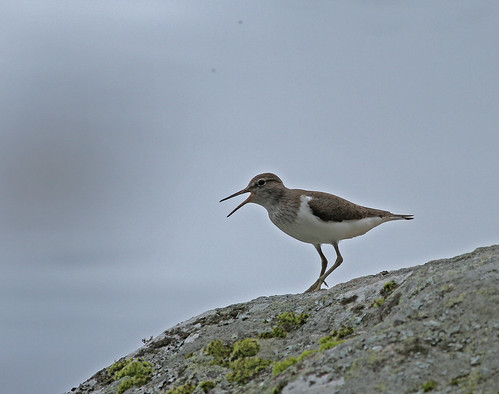
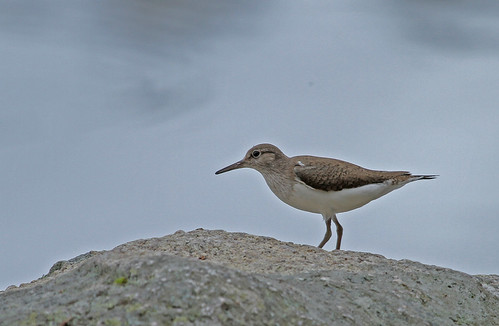
Common sandpiper – Actitis hypoleucos, Dansk: mudderklire

In the same part of Abernethy Forest and a short distance from Loch Garten is Loch Malachie, so myself and my companion decided to explore there after drawing a blank on tits and crossbills at Garten.  But instead of them, we found common sandpipers and in my book that’s a fair exchange:

The sandpipers are very neat little waders and there were several of them patrolling the large boulders on the shore of the lake. They weren’t overly impressed with our presence and to show their disquiet made several low looping flights along the shore and around behind us through the woods, which felt like an unusual place to see a sandpiper in flight. So we collected a few photographs and retreated to leave them in peace.

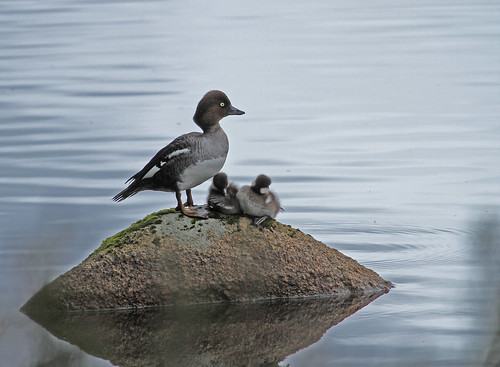
Goldeneye – Bucephala clangula, Dansk: hvinand

On the same piece of shore line as the sandpipers was this female goldeneye with a pair of chicks. The goldeneye overwinters over much of the UK but has a very small breeding population of only a couple of hundred pairs, largely due to a program of nestboxes on Speyside – the goldeneye is unusual amongst ducks in that it nests in holes in trees. There was no male accompanying this family which is pity because they’re spectacular!

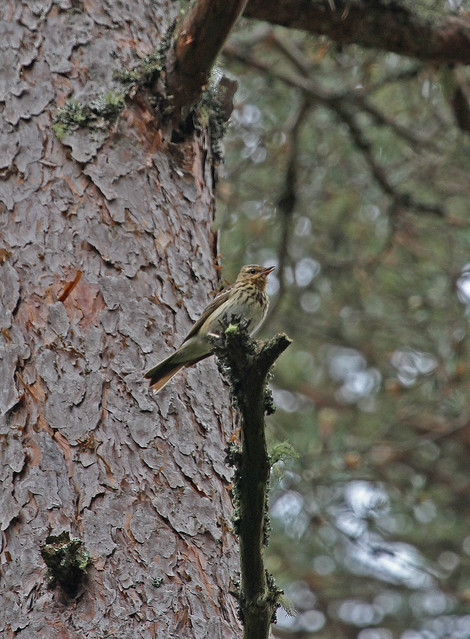
It  was a grey, damp, overcast morning in the Abernethy Forest around Loch Malachie and may be because of that it was eerily quiet. There were very few songbirds and the ones we saw most of were wren and chaffinch, which are also common visitors to my garden. But then we saw a spotted flycatcher which is definitely not a visitor to my garden:

Spotted flycatcher – Muscacapa striata, Dansk: fluesnapper

The spotted flycatcher is a migrant breeder to the UK, it overwinters in Africa and is red listed due to overall decline as a result of decreasing prey species caused by pollution and insecticide use (>30% over 10 years). Despite that, the European population is estimated to be 42-66 million individual birds (according to Birdlife International).

Apart from the beautiful wildlife, what I really noticed in the forest was the complete absence of human noise polution (it was silent apart from the wind and the birds), and the smell of the pine forest, and there are few natural aromas as delicious as the fresh smell of pine mixed in with the leaf mould underfoot. But the best thing was the silence!

Late autumn migrant

The autumn and the spring are the best times to be keeping a look out for migrants which, in the case of Cambridge, are often passing through on their way to a destination further north. The summer visitors such as swallow and swift are usually on their way to Africa by mid autumn, as the winter migrants such as fieldfare and redwing are beginning to arrive here to escape the freezing winters of Scandinavia.

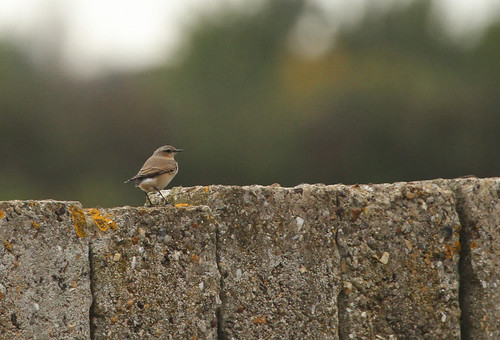
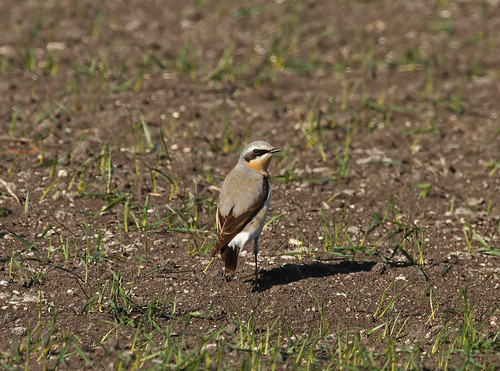
A couple of years ago I saw a black redstart on Cambridge Science Park, which is a very rare sighting in this part of the world, at least for me. It was here for less than 24hr before heading further north and west. And this autumn my unusual sighting was a female wheatear:

Female wheatear (Oenenthe oenanthe, Dansk: stenpikker)

Wheatear are handsome birds and this one was the first one I’ve seen in the fields in Histon. I only had the one sighting, and as it was in the third week in October she wouldn’t have tarried as she wended her way back to overwinter in Africa.

Last year I saw a small group of wheatear in a field near Wicken Fen, this time it was in springtime so they were on their way north, including this beautiful male:

I think that as we head into December all the winter visitors that are coming this way may already be here, and I’ll hopefully be able to share pictures of other wanderers in the near future.

Spiders, dragons, damsels and reptiles

During my trip to Scotland earlier in the year with my friend we stayed at Boat of Garten in Speyside which is close by Loch Garten in the Abernethy Forest, the primary location in the UK for seeing ospreys. So, as well as the ospreys, one of the iconic ‘must-see’ creatures on my wish list was the pine marten (Martes martes), but we had fairly low expectation of seeing one so we booked an evening with Speyside Wildlife in a purpose built pine marten viewing hide. We spent the evening there with half a dozen other folk and a knowledgeable guide who told us all about the local wildlife. We saw a deer and a badger and then a couple of hours later, well after dark, a pine marten appeared and spent several minutes feeding right in front of us, just a few feet away. So it was well worth the wait! It fed from a branch right outside the window and it was a truly beautiful animal, and what struck me most was its size, it was much bigger than I’d anticipated. Because it was night time and I didn’t want to disturb teh marten there are no photographs, but if you want to see one there are images on Speyside Wildlife’s website if you follow the link above and browse to the Gallery. It was an evening well spent!

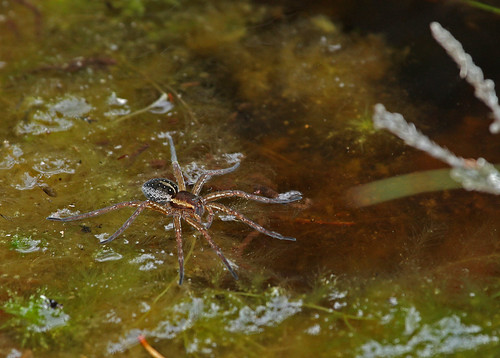
An unidentified, but spectacular, floating spider

The morning after the marten hide we set off into Abernethy Forest, stopping off at RSPB Loch Garten to see the resident osprey which duly obliged and perched on the nest. There were lots of other small birds, in particular siskin, mobbing the feeders around the visitor centre, but after the osprey we headed off into the forest on a dragon hunt.

We found a small pool in the forest but the weather was grey and cool so the dragons were still under cover, but a magnificent spider was hunting on the surface. There are tiny dents in the water at the end of its legs where the surface tension is being tested but is still holding firm and supporting the weight of the spider. My knowledge of arachnidis is miniscule so I sent this photograph to the British Arachnological Society in the hope that they could identify it, but they said without dissecting it they couldn’t unambiguously name it.

In the absence of dragons we decamped to another much bigger pool a couple of miles away, and as we arrived there the sun emerged and brought the dragons out. It got very warm very quickly and they appeared in their hundreds:

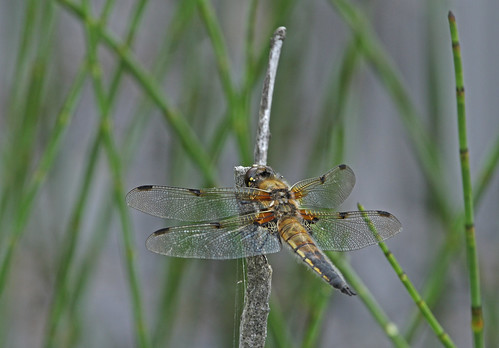
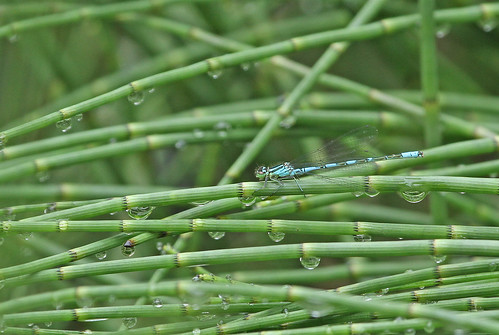
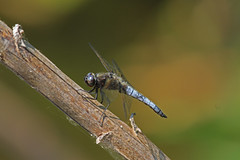
Four spot chaser – Libellula quadrimaculataNorthern damselfly – Coenagrion hastulatum

The four spotted chaser is common all over the UK and can be seen in my neck of the woods too, but the northern damsel is only found in a few small lochs – or ‘lochans‘ – in Scotland. Consequently I’d never seen this one before. It can be identified by the bottom half of the eye which is green, and segment 2 of the thorax has a black marking resembling the ace of spades.

And while squadrons of dragons patrolled the air, the suns warmth had also enticed out a modern day dinosaur who was patrolling the marsh around the edge of the lake:

Common lizard – Zootoca vivipara

And now the sun was out we headed back to the original pool with increased hopes of finding a white faced darter and lo and behold we found a newly emerged one:

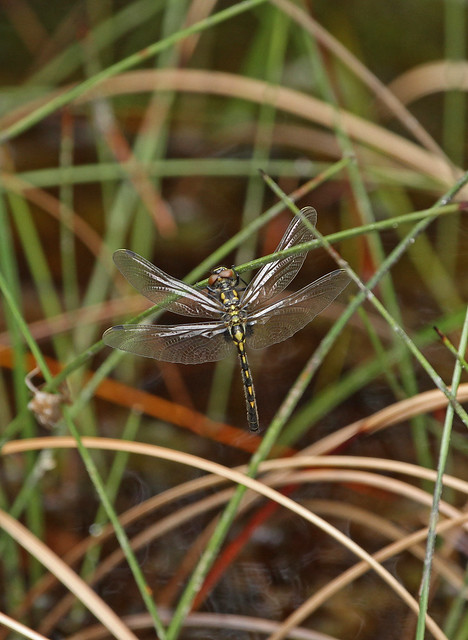
A very newly emerged white faced darter – Leuchorrhinia dubia

This species is limited to just a few sites in England and Scotland, it has declined in recent decades due to habitat destruction, pollution, etc, etc – all the usual reasons why human activity is causing species loss. This was the only one we saw here and I couldn’t get into position to photograph its white face, but I was very pleased to see such a pristine example of a species I hadn’t seen before.

Loch Ruthven

This year marked the occasion of the start of my 51st orbit around the sun, and to celebrate the event myself and my friend, who also reached the same milestone, took a trip in June to the Cairngorms in Scotland. It was a terrific excursion, the sun shone for most of the trip, and we spent the whole time out in the wilds. Before we went we convened in the pub several times to ‘plan‘ our campaign and one of our plans was to compile a short priority list of species we’d like to see. My list consisted of osprey, crested tit, crossbill and pine marten. And my friends list also included pine marten along with various dragonflies including white faced darter and northern damselfly – neither of which can be found in Cambridgeshire.

As we were intent on packing in as much Celtic wildlife watching as we could in three days it was a busy trip. So our first stop after arriving at Inverness and picking up a hire car was at Loch Ruthven. Truth be told, there wasn’t a huge amount going on here, but it was a lovely spot to burn an hour relaxing after the hassle of travel, flights etc.


Little grebe, or dabchick, (Tachybaptus ruficollis, Dansk: lille lappedykker)

Like other grebes, this one is a diver, reaching a depth of a metre to feed on molluscs, small fish and insects. Shakespeare referred to it as the ‘dive-dapper’ and according tho the British trust for ornithology it is the only bird to have the first three letters of the alphabet consecutively…  and I bet you’re glad you know that!

The little grebe is a resident and migrant breeder in the UK as well as being a winter visitor and covers a large part of the globe across Eurasia as far east as New Guinea and sub-Saharan Africa.

A pair of teal (Anas crecca, Dansk: krikand)

Teal, like most ducks, are striking, handsome birds and their markings make them easily identifiable. They are passage and winter visitors here as well as being resident breeders. They frequent shallow water, and like the little grebe their conservation status in the UK is amber, with 2100 breeding pairs here.

So even though Loch Ruthven wasn’t bristling with rare and previously unseen wildlife (for myself, at least) it was a very pleasant start to our exploration of that corner of the UK. We speculated at the time that next time we visit we may need a passport and visa, but I’m pleased that our neighbours didn’t vote to secede from the UK in the September referendum!

Isle of Wight Part 2

The IoW avians:

We took our annual holiday two years running at Shanklin on the Isle of Wight, and one thing I noticed during the first visit was that there were ravens on the cliff face behind the beach at Shanklin. As I didn’t manage to take any close-up photographs of them on the first visit I resolved to try a bit harder the second time around.

Then one afternoon I found myself on the seafront with the kids and the usual gulls were wheeling and squawking in the air:

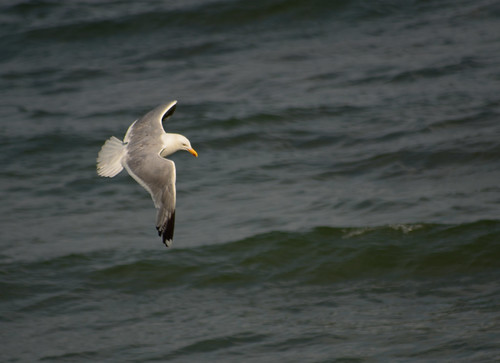
Herring gull – Larus argentatus (Dansk: Sølvmåge)

I like herring gulls, their shrieking call is reminiscent of fun-filled childhood trips to the seaside. And it makes me laugh how easily they overcome their natural fear of humans and come right up close to try to scrounge a chip.

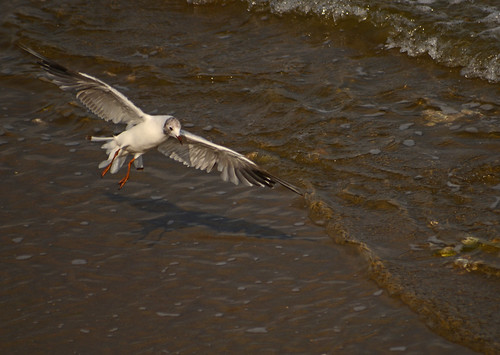
And another gull which frequents the coasts of the UK, but which I see more of on the fields inland is the black headed gull:

Black headed gull, Chroicocephalus ridibundus (Dansk: hættemåge) – undercarriage down for a landing on the beach

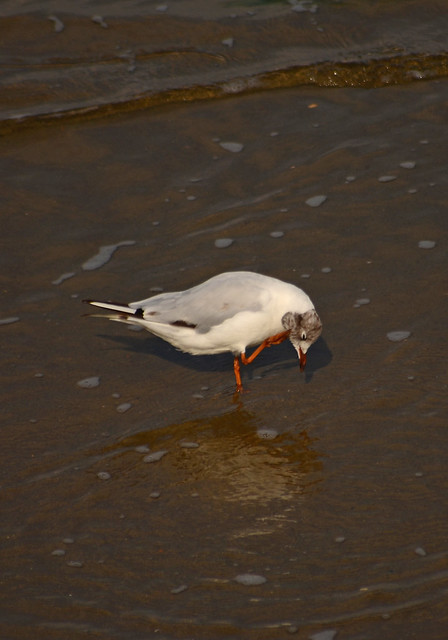
Having touched down a quick pause for a pre-prandial scratch before poking around in the silt for something to eat

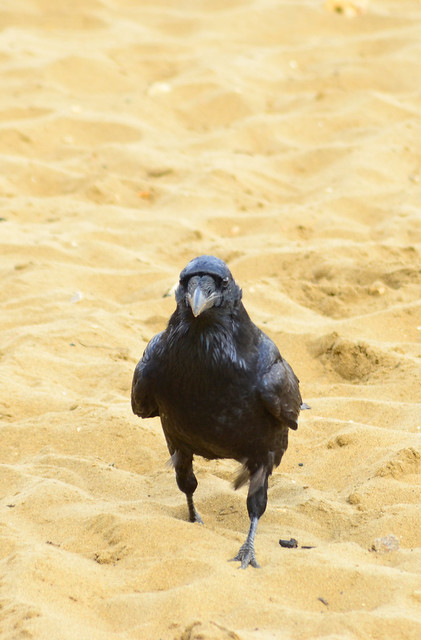
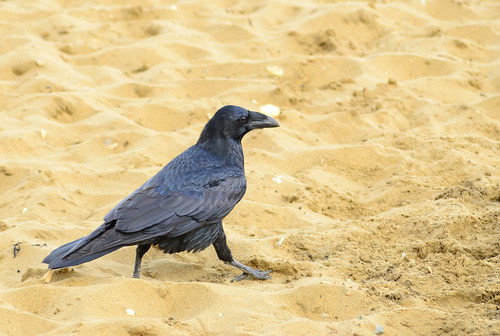
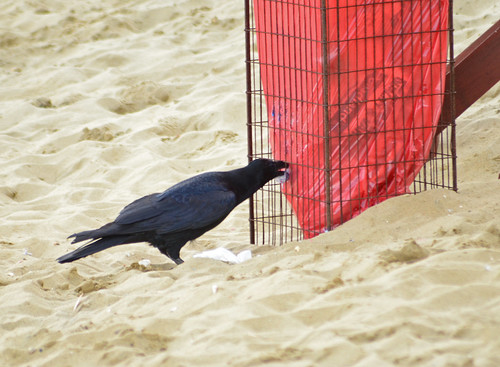
And while the gulls were doing their thing I noticed a big black shape on the cliffs a few hundred metres away which I thought could be a raven. So I chivvied the kids along the beach to get closer and sure enough it was indeed a raven. It flew down from the cliffs onto the beach and landed around 30-40m away but as I was of the opinion that ravens would be like the other crows, not terribly comfortable being in close proximity to humans, I gathered the children close and told them to be calm. But as we stood and watched it strolled down the beach towards us and didn’t appear to be remotely fazed by our presence, or for that matter, anyone elses:

Close encounter with a raven (Corvus corax, Dansk: ravn)

He strolled on past with a purposeful gait and what struck me was the size of him. Ravens are huge! I’d read before that they are the size of buzzards and seeing one this close it’s easy to see they really are.

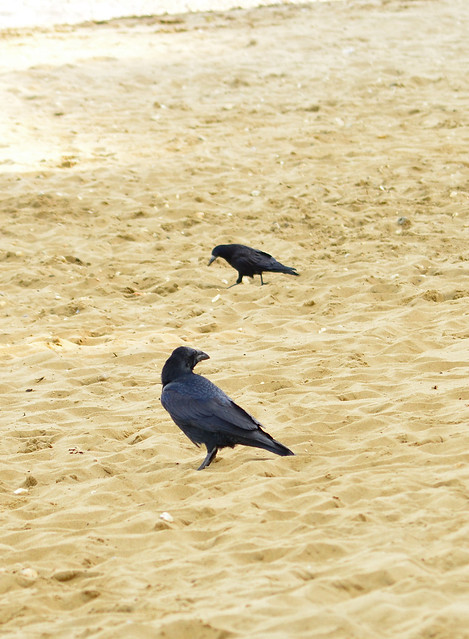
So for comparison, an obliging rook posed in the background, and even though the rook is 5-10m further away the size difference is stark. There’s no confusing this chap for any other type of corvid!

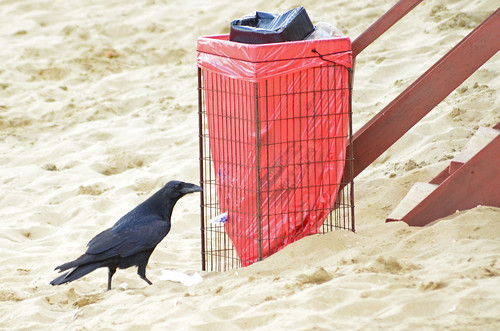
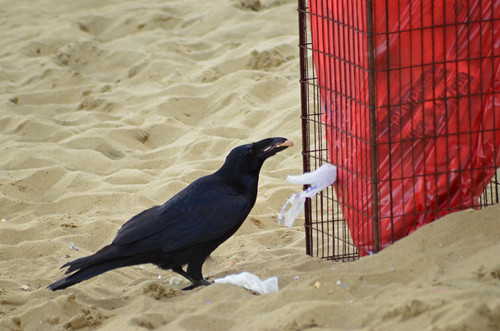
And the reason the raven was behaving as bold as brass was that it was on a mission to examine the contants of a litter bin for a late afternoon snack:

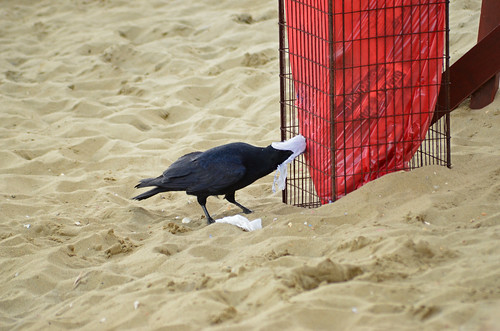
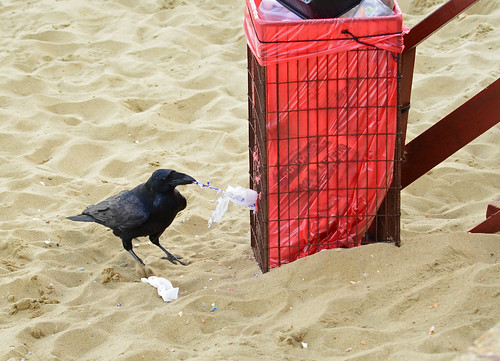
First it made a small incision with its powerful beak – one of natures tools that’s magnificently fit for purpose. Once access was gained, it proceeded to extract the contents through this hole and snaffle up all the pieces of food jettisoned by that afternoons beach goers:

When I left it was still emptying the bin and was only distracted once when a large group of noisy folk walked right past, but he just hopped away a few metres and waited for them to pass before burying his head inside the bin once more to continue the meal.

I really like this series of shots because it shows a spectacular and enigmatic bird being incredibly resourceful, and it’s the first time I manage to get really close to a raven.

Some years ago I went kayaking in the Johnson Strait between British Columbia and the Canadian mainland to see orcas, and while I was there I learnt a bit about the indigenous people of that region, the Haida indians. As with many indigenous folk, they had a conservation minded and mystical relationship with their environment because their very survival depended entirely on the forests and oceans and the inhabitants thereof.

And one of the creatures they held in particular reverence was the raven. A modern day Haida called Bill Reid has written a book consisting of a series of short stories based around the orca, the eagle, the bear and of course, the raven, all from Haida legend going back centuries to a time before Europeans intervened and ruined everything. If you ever stumble across a copy buy it and enjoy it, it’s called ‘The Raven Steals the Light’ (ISBN 1-55054-481-0).

Isle of Wight 2013

Part 1 – Lepidoptera

I’ve already grumbled in earlier posts about how the weather over the last three years leading up to 2014 was cold and unpredictable here in the UK, and how it had a very bad effect on our wildlife. In particular, overall numbers, and numbers of species, of butterflies, which are very sensitive to environmental change, seem to have been dramatically affected over those three years here in Cambridge at least.

But last year whilst on holiday on the Isle of Wight I took a walk from Shanklin up to the old WW2 radar station which is the highest point on the island, and apart from a flypast by a peregrine falcon, the most eyectaching natural phenomena were the butterflies, which seemed to be in direct contrast to the previous three years.
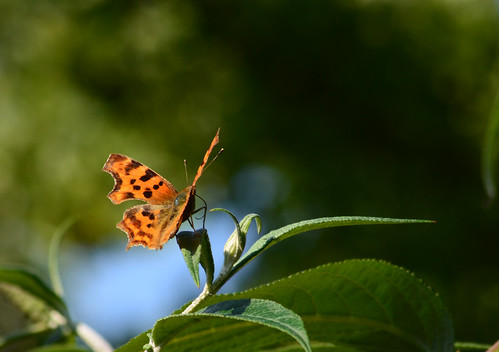
Comma – Polygonia c-album

The first part of my route took me through a wooded area bound by sea cliffs on one side and farmland on the other. A huge buddleia bush overhung the pathway which was hosting numerous species of butterfly, including the comma, above, and a painted lady, of which I’d seen plenty in 2010 but virtually none in the intervening years when the weather had turned bleak.
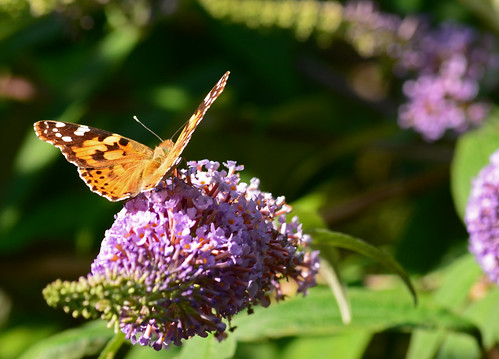
Painted lady – Vanessa cardui

The comma is resident to the UK and in recent years its numbers and range have actually increased and this has puzzled the entomologists as it is bucking a general trend amongst all butterflies here in the UK. in contrast, the painted lady is a handsome migrant which, according to my field guide, may or may not show up in the UK, consequently the entire population depends on immigration from Africa. But that raises the question what happens to the adults that are born here?

But since my guide was published, some research has been published where populations were tracked in and out of the UK on their migration routes by radar, and it revealed that painted ladies leave the country at high altitude – 500-1000m – where they can’t be seen by eye. The application of technology is revealing many hitherto unknown phenomena about many species and it’s interesting that up until now it was thought the whole UK population of painted ladies died out each year simply because they fly back just out of visual range.  And even more amazingly, it has now been discovered that this species takes up to six generations to make a circular 14000km (9000 miles) round trip from the Arctic Circle to Sub-Saharan Africa!

Which raises another mind boggling question: how is it hard wired into this tiny creature to make successive steps of this awesome migratory feat, covering half the globe, all in the same direction, at any one time? Unbelievable! But on the other hand, if populations on a previous leg of the journey take a hit for whatever reason it may be the explanation of why population size can vary so much from year to year in the UK.
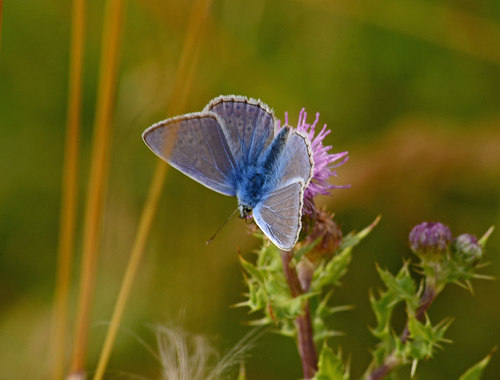
Common blue male  – Polyommatus icarus

After emerging from the woods I climbed a steep incline, crossing the main Shanklin to Ventnor road and up the chalk downland of Boniface Down towards the WW2 radar station. Consequently, the terrain and the vegetation changed and so did the butterflies. The common blue is another species which I sighted frequently before the three year cold snap of 2011-14, but this male was the first one I’d spotted for a while.
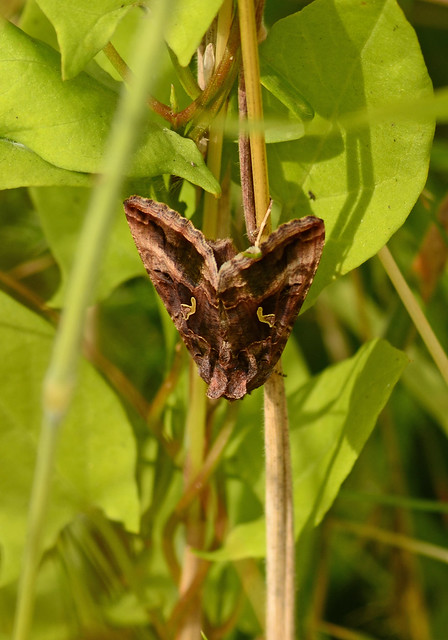
Silver Y moth – Autographa gamma

The silver Y – it’s easy to see how it got its name – is a migrant moth which isn’t peculiar to chalk downlands and can be seen in most habitats, including the farmlands here around Cambridge, and this one was soaking up the sunshine on the down.
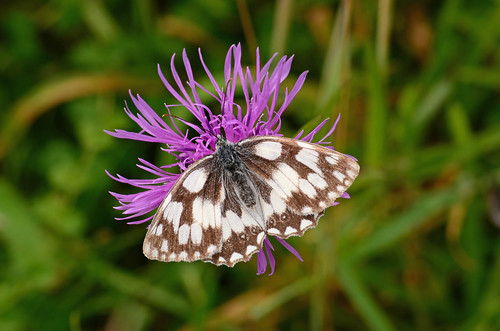
Marbled white  – Melanargia galathea

But the real gem of this trip was the marbled white, of which there were numerous examples fluttering around the down, and this one was sipping nectar from a greater knapweed flower. The marbled white is a UK resident and its favoured habitat is chalk downland.

Emerging on the top of the downland the vegetation changed to primarily low scrub consisting of acres of thistles which were home to more gatekeepers than I’ve ever seen before in one spot, I’m not exaggerating when I say there were literally hundreds of them. The information board at the entrance said that small coppers were also in residence but I only saw one and unfortunately it didn’t settle, which was a pity because they’re beautiful little brown and orange chaps and I wanted to get a photograph of one to share. Oh well, next time.
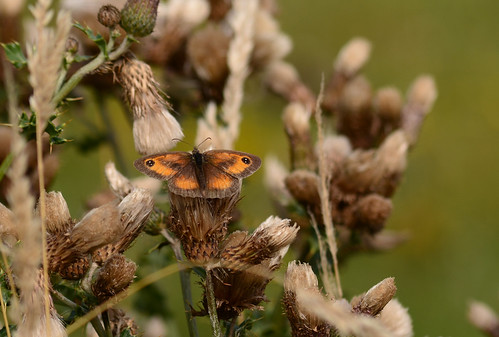
Gatekeeper – Pyronia tythonus – this one is a male, identifiable by the brown patches on the forewings, the ‘sex brands’

During the winter of 2013-14 and so far through this year the weather has warmed up, the cold, the rain and the high winds have all abated allowing many species to start to recover. It’s been a good year so far for butterflies and dragonflies, and hopefully lots more insects and the other creatures that predate them. The resilience of the natural world is astonishing, but I’m hoping we get another couple of mild years so the recovering wildlife can consolidate its numbers before the next big change in the weather.

The views from the top of Boniface Down were lovely. The cliffs on the southern edge of the island falling away to the English Channel were to the left, and when I looked north I could see mainland England. It’s not discernible in this photograph but the Solent and the south coast of the mainland are in the distance:

The only bird I managed to photograph up there was this little fellow who I think is a meadow pippit:

The pippits were very busy feeding youngsters, toing and froing across the scrub with beaks full of insects.

And the other reason I hiked up the hill was to see the old radar station at RAF Ventnor at the top of Boniface Down. This was one of the original installations set up before WW2 and was instrumental in detecting and reporting the massed attacks on southern England by the Luftwaffe during the Battle of Britain.

The remaining pair of radar towers at RAF Ventnor – there were originally six

The station was twice bombed by the Luftwaffe and I believe it holds the dubious distinction of being the only radar station to be destroyed by the enemy!

Dragonfly drama

Early last Saturday morning I set off for Paxton Pits, a group of lakes on the edge of St Neots, between Bedford and Cambridge. It was anticapted that we wouldn’t see much birdlife but there could be some inteersting dragonfly activity. And apart from a lone turtle dove (which justifies the trip on its own!) and a sparrowhawk, we noticed surprisingly few birds. But the Odanata were there in abundance with large numbers of various species of damsels and true dragons.


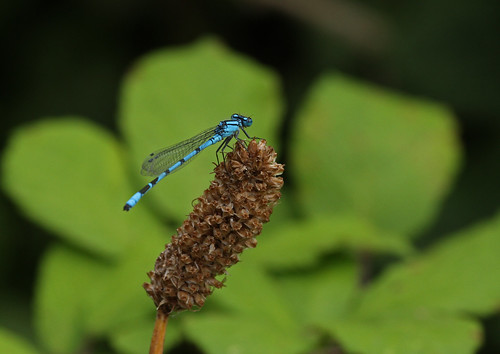
Common blue damselfly

I spotted this common blue (Enallagma cyathigerum) before I’d even got out the car. This one a male, was perched on a seed head at the edge of the carpark and there were several others in the vicinity warming themselves up in the early morning sunshine. At the other side of the carpark is the visitor centre which has a small pond outside and over the pond were a red eyed damsel (Erythromma najas) and another common blue warming up on the same rush leaf:

Paxton Pits are disused gravel workings and have been turned into a nature reserve that is managed by Huntingdonshire District Council with the back up of the voluteers of the ‘Friends of Paxton Pits’. If you happen to be contemplating a visit to the Pits, there is a lot of information on their website: (https://sites.google.com/site/paxtonpitsnaturereserve/home), and the reserve also has a blog where sightings at the lakes can be recorded: (http://paxtonpits.blogspot.co.uk/). The website lists all the Odanata that have been resident there and many of them were on display on Saturday. They don’t all emerge at the same time of year so it would never be possible to see all of them during one visit.


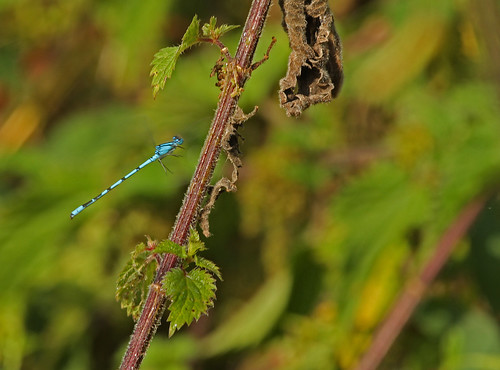
Another common blue damsel on final approach to land on a stinging nettle stem

The Pits are adjacent to the River Great Ouse and swarms (literally!) of banded demoiselles (Calopteryx splendens) were fluttering within 20m or so of the banks of the river. The banded demoiselle is one of two species of demoiselle in the UK and the only one in the east of England, and I think they’re absolutely beautiful as they sparkle in direct sunlight:

A female banded demoiselle perched on top of a nettle (I like the background here – out of focus brambles)

The other species of UK demoiselle is called the ‘beautiful demoiselle’ (Calopteryx virgo) and is found in the south and west but not the east. It is most easily distinguished from the banded version because the wing pigmentation in the male extends to the base of the wing, so it’s a much bigger spot than those on the wings of these banded demoiselles:

Above and below: male banded demoiselles
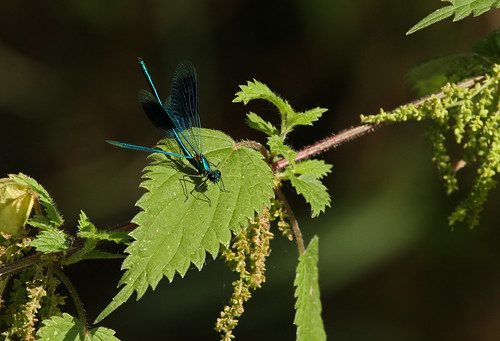
And the female beautiful demoiselle  has broader wings with a brown tint that’s lacking in the banded demoiselle. The male demoiselles were busy chasing females with all thoughts turned to mating.

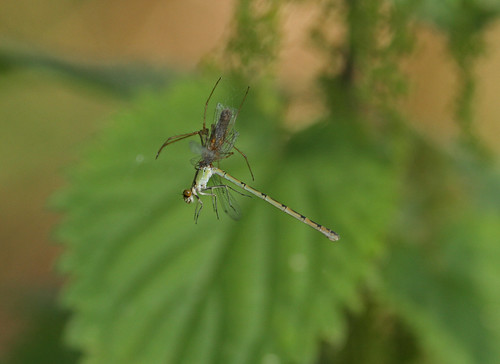
But in the midst of all the the mating activity, danger, as always, was lurking in the undergrowth. This unfortunate female common blue damsel had been caught in  a spider web and was in the midst of a mortal struggle with the owner, which she eventually lost:

The male common blue was also caught in the web and was struggling to extricate himself. Fortunately for him, all the spiders efforts were needed to subdue the female and whilst it was otherwise distracted he made his escape whilst the female eventually succumbed to the spider venom.

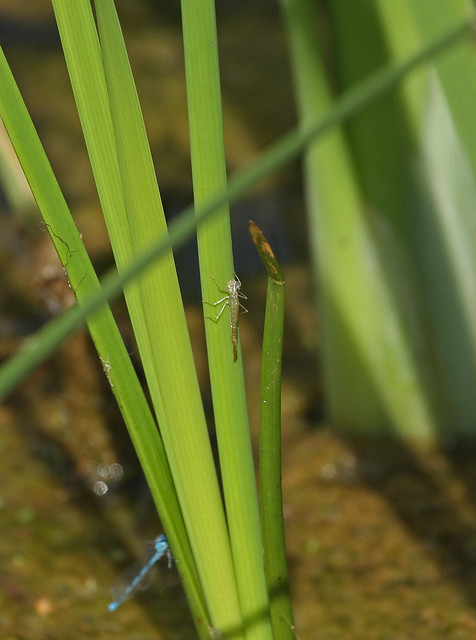
A dragonfly larva having scaled a stem to leave the water will shortly burst out of its skin and fly off as an adult dragon

It’s also that time of year when dragonfly larvae are metamorphosing into adults. The larval stage of all dragonflies is aquatic and so they require gills or ‘caudal lamellae‘ to breath underwater, and these can be seen protruding from the end of the abdomen of the larva above. At the end of its aquatic life the larva climbs a stem out of the water and emerges from its larval skin as an adult, leaving behind its discarded outer casing, or ‘exuvia‘:

Dragonfly exuvia  – a dried out larval husk left behind on a rush stem after the new adult has flown
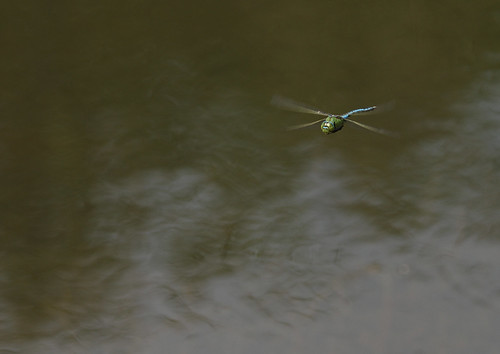
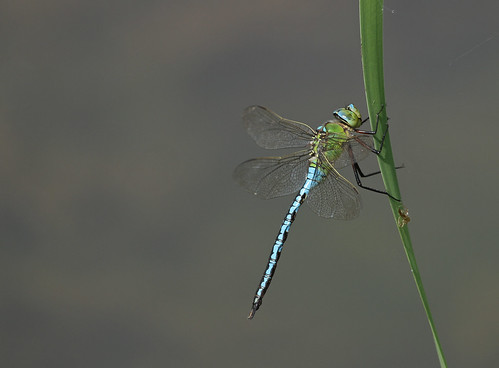
As well as the damsels, several species of true dragons were on the wing including brown hawker, migrant hawker, black tailed skimmer, and the grandaddy of all UK dragons, the emperor (Anax imperator):

Emperor dragonfly male patrolling his stretch of water against allcomers

The emperor, as its name suggests, is a whopper. It is also an aggressive defender of its territory, a consummate aeronaut and a ferocious hunter, taking prey as big as other dragonflies. It’s easily distinguished from other dragons by its sheer bulk, the apple green thorax and the drooping abdomen. I sat and watched this one for some time and he rewarded my patience by posing for a portrait on a stem just  a few metres away:

And after all the dragon activity I peered into the water on the way home and spotted this little chap:

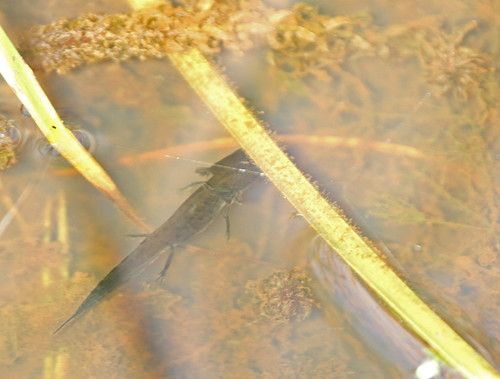
A young newt

I don’t know what species of newt this is but it’s still so young it hasn’t adapted to air breathing and still has its feathery gills which are visible just in front of the fore legs.

It’s been a long time since I last posted so it’s good to be back Life should be generally less busy for the back end of the year and I’ve got lots to share, so hopefully I can start to post more regularly again!

Birds and bees…

…and butterflies.

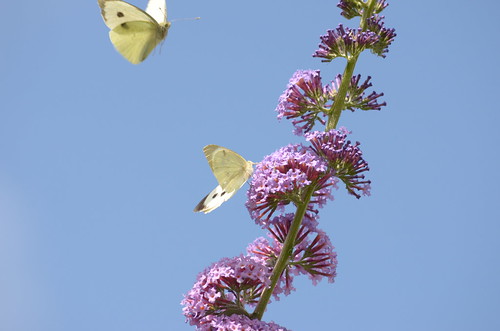
A male large white butterfly (Pieris brassicae, aka the ‘cabbage white’) zeroing in on a potential mate…

I normally try to avoid taking photographs of UK wildlife on imported garden plants, in this case buddleia, species of which grow endemically on several continents, and I believe our UK variety arrived here from the Himalayas.

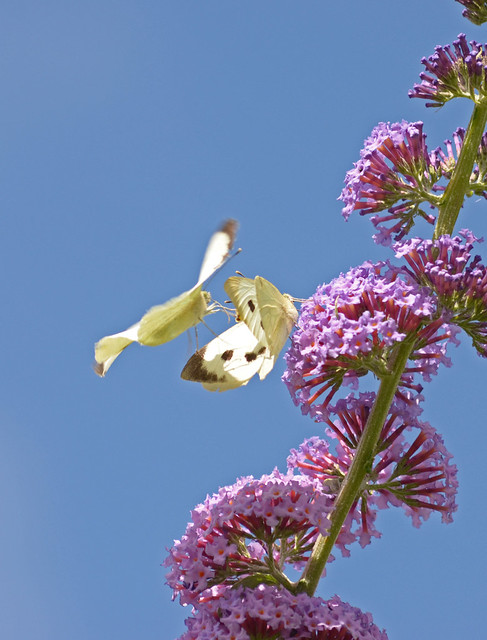
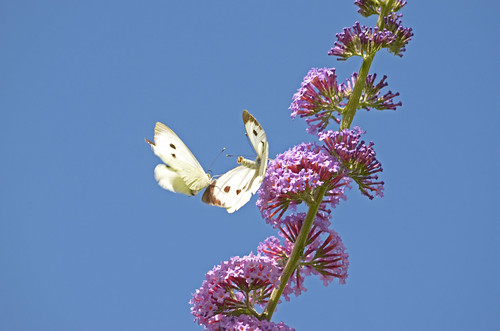
No longer anything ‘potential’ about her!

But in this instance the drama was so compelling (and I was testing out my new macro zoom that I introduced in the last post) so I decided to share this sequence.

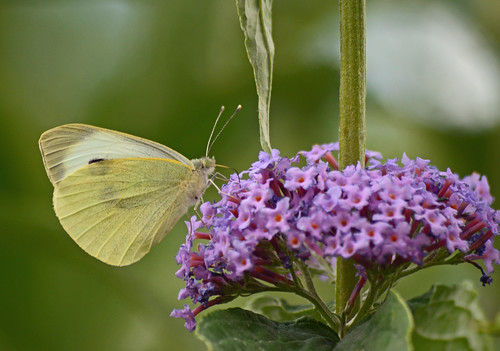
Several mating events ensued after which the male settled on a lower flowerhead to sip nectar and replenish his energy reserves:

The large white, along with the small white (Pieris rapae), are known as the ‘cabbage whites‘ because they lay their eggs on members of the cabbage family and the caterpillars can do a lot of damage to cultivated cabbages. But I’m quite happy to share my cabbage allowance with them and I love to see them fluttering through my garden and along the hedgerows.

Tyto alba

A few posts ago in ‘The Owl and the Woodpecker‘ I mentioned that a pair of robins may have started getting fruity in my garden as early as the begining of January. And then last Friday I saw another robin feeding a fledgling on the grass outside work, so it looks as though the avian breeding cycle may have been able to start early this year. I hope it has, and that it allows other species to recover some of their numbers too.

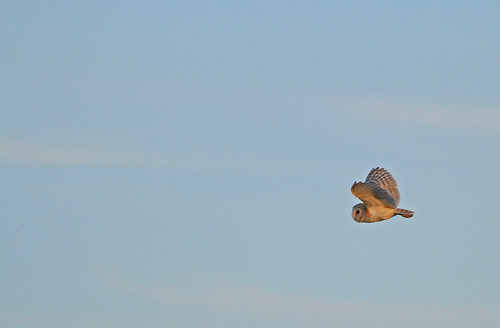
Also in that post, I talked about our local barn owls, of which we had two breeding pairs in and around the village last year. And one gloriously sunny evening in July myself and my daughter, Sophie, set off across the fields with a portable hide, binoculars and a camera to try to see the owls and take some photographs. I know where the owls nest so we tried to get in position to see them heading to and from the nest site via a circuitous route to avoid disturbing them.

A barn owl, Tyto alba, heading out on a hunting mission

We eventually found a spot at the top of a drainage ditch between two fields around 150m from the shed where the owls had built the nest, and we didn’t have to wait long for them to appear. Truth be told I’ve always had a thing about all owls, but especially barn owls. I think they’re beautiful and iconic creatures, and very reminiscent of warm summers evenings in the English countryside. It’s always an exciting moment when I catch sight of one.

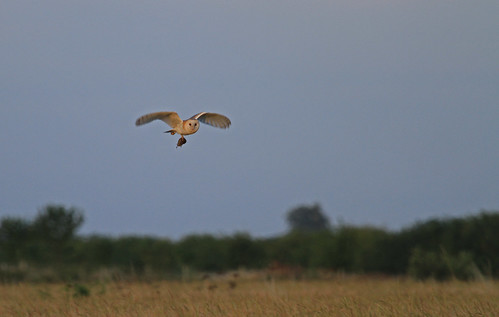
And the other thing that struck me as we sat and watched these was how they are incredibly efficient predators:

…and heading back again clutching the booty

We sat and watched them coming and going for about an hour and in that time they arrived 6 times with prey. So on average every 10 minutes one of the parents returned with a meal for a youngster, this one was carrying a rodent in its talons which it delivered to the nest, spent a couple of minutes with the youngsters, then departed on the next foray.

And another meal being delivered

And they carried on hunting into the dusk at which point we upped sticks and headed for home. I don’t know how long the owls carried on hunting but the parents seemed to be so successful that they may not have needed to carry on for much longer, after which they would have spent the night at a roost site separate from the nest with the youngsters in.

It was a glorious evening and Sophie was beside herself as one of the owls flew right overhead and looked straight at her, as barn owls are wont to do, as she looked straight at it. A memory that will stay with me, and her I hope, for a very long time!

Brampton Wood

Again, harping back to last July, I took a stroll around a piece of woodland called Brampton Wood with a good friend of mine who is a bit of an expert on butterflies. Which is why we went to Brampton, which is ancient woodland made up primarily of oak, ash and maple and is famed for it’s exotic and scarce Lepidopterans such as black hairstreak, white admiral and silver washed fritillary.

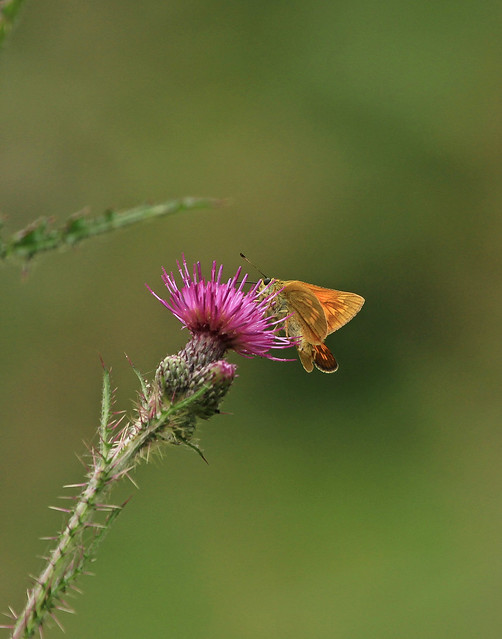
Large skipper – Ochlodes sylvanus

We didn’t see any of the rare species, mainly because the weather was generally unsuitable, but probably also because we were talking too much and not paying sufficient attention, but the species we did see gave some lovely photographs.

The large skipper is part of a big family of butterflies called the Hesperiidae or the ‘skippers‘, so called because they dash around from flower to flower in a skipping motion. They are also easily distinguished as a skipper because of the way they fold there wings at different angles when they are perched (for those of you with an aeronautical interest they remind me of the US Navy plane the F18 Hornet).

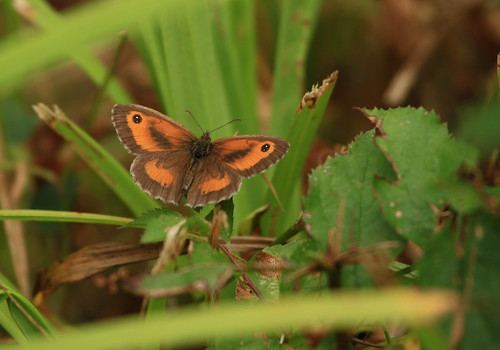
Gatekeeper, Pyronia tithonus, patrolling a leafy ride

The gatekeeper is a common hedgerow butterfly, but as with all the other wildlife in this part of the world, it suffers at the hands of intensive agriculture particularly when that involves grubbing out hedgerows. In 2010 my daighter and I did the annual ‘Big Butterfly Count’ in a scrubby field at the end of our road and we counted 11 species in the allotted 15 minute window, including the gatekeeper. A few weeks ago the tenant farmer, obviously a public spirited soul, grubbed out all the scrub and brambles which were home to all the butteflies, so I suspect numbers of all Lepidoptera, and the resident dragonflies, will be severely depleted this year. Which is a real shame as the field is fallow and not doused with chemicals so was a particularly good site for insects. The dark patches adjacent to the black spots on the forewings of the butterfly here are called the ‘sex brand‘ and mark this one out as a male, the same markings being absent in the female. The gatekeeper is also known as the ‘hedge brown’ which gives you a clue as to its preferred habitat.

The splendid creatrure below isn’t a butterfly, it’s a six spot burnet moth:

Six spot burnet – Zygaena filipendulae – adding some additional colour to a thistle head

The burnet moths consist of the burnets and forester families, they are day flying creatures and all have club shaped antennae. The six spot burnet is found in grassland feeding on thistles, scabius and and knapweeds, and its flight season is from late June to August. Apparently the red spots can sometimes be yellow, but I’ve never seen a yellow one.